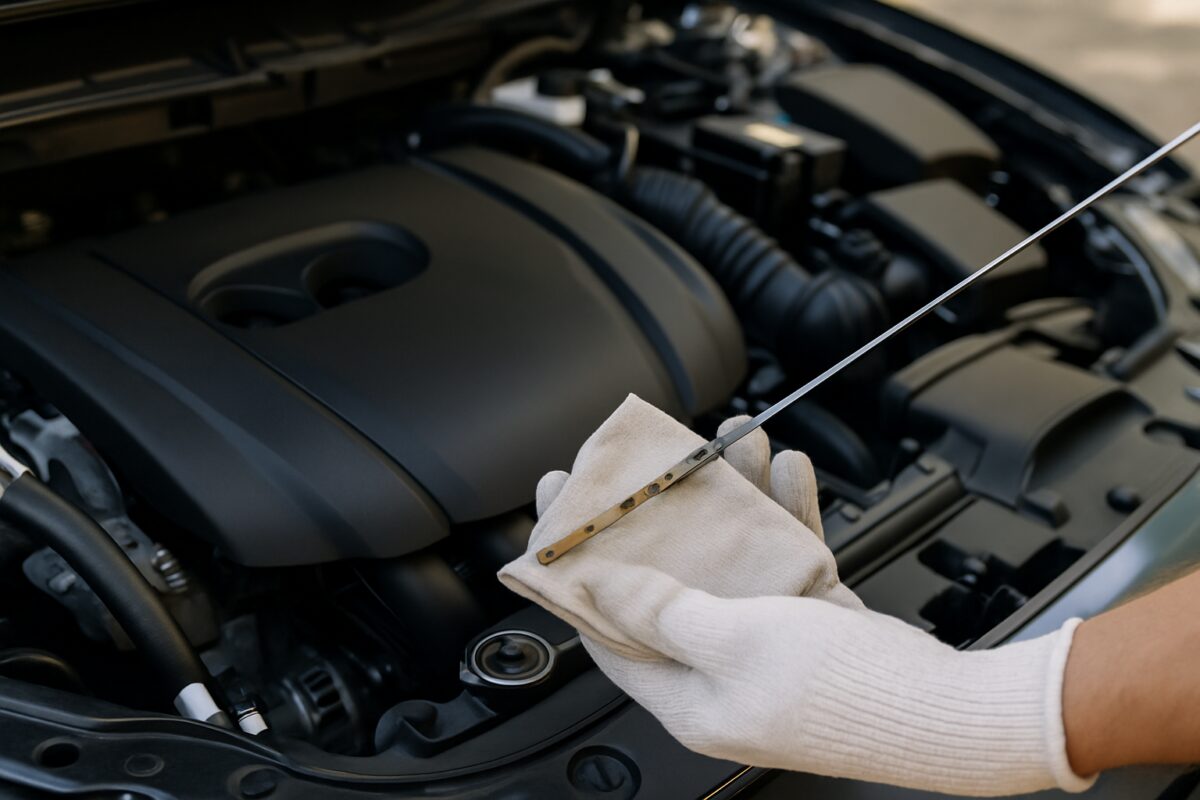
Checking your engine oil level requires a clean dipstick, a level surface, and a warm (but not hot) engine. Park on level ground, turn off the engine for 5-10 minutes, pull the dipstick, clean it, reinsert fully, then withdraw to read the oil level between minimum and maximum marks.
Tools & parts required
Before checking your oil level, gather these essential items to ensure accurate readings and proper maintenance.
Parts needed:
- Engine oil (if topping up required)
- Clean cloth or paper towels
- Funnel (for adding oil)
Tools required:
- Oil dipstick (usually built into engine)
- Clean rag
- Torch or mobile phone light (if needed)
Always ensure you’re using the correct oil grade specified in your owner’s manual – using wrong viscosity can damage your engine.
Safety precautions
Oil checking is generally safe, but basic precautions prevent accidents and ensure accurate readings.
Work on level ground to get precise measurements. Never check oil on a hot engine – wait 5-10 minutes after driving. Keep a fire extinguisher nearby when working with automotive fluids. Wear safety gloves to protect hands from hot components and dirty oil residue.
Ensure the battery terminals are secure before starting any engine work, and always engage the handbrake.
Step-by-step instructions
Follow these detailed steps for accurate oil level readings that maintain engine health.
Step 1: Prepare your vehicle
Park on completely level ground and engage the handbrake. Turn off the engine and wait 5-10 minutes. This settling time allows oil to drain back into the sump, giving you an accurate reading. Checking immediately after driving gives false low readings.
Step 2: Locate the dipstick
Open the bonnet and locate the oil dipstick. It typically has a yellow or orange handle marked “ENGINE OIL” or shows an oil can symbol. Some modern vehicles use electronic sensors instead of traditional dipsticks – check your owner’s manual.
Step 3: Remove and clean the dipstick
Pull the dipstick straight out with steady pressure. Clean it thoroughly with a lint-free cloth, removing all oil residue. This prevents contaminated readings and ensures you can clearly see the oil level markings.
Step 4: Reinsert the dipstick
Push the dipstick all the way back into its tube until fully seated. Wait 2-3 seconds, then withdraw it slowly. This ensures oil coats the stick properly for an accurate reading.
Step 5: Read the oil level
Examine where the oil film ends on the dipstick. The level should sit between the minimum and maximum marks, ideally closer to maximum. If below minimum, add oil gradually through the oil filter housing or designated filler cap.
Step 6: Add oil if necessary
If oil level is low, remove the oil filler cap and add small amounts (250ml at a time) using a funnel. Check level frequently – overfilling damages seals and gaskets. Replace the dipstick and filler cap securely.
Common mistakes to avoid
These frequent errors lead to inaccurate readings and potential engine damage.
Checking hot oil: Many drivers check oil immediately after driving. Hot oil expands and hasn’t settled, giving false readings. Always wait 5-10 minutes.
Uneven ground: Checking on slopes or uneven surfaces skews readings significantly. Your oil pan isn’t level, so neither is your measurement.
Dirty dipstick: Not cleaning the dipstick properly makes reading levels impossible. Old oil residue masks fresh oil lines.
Overfilling: Adding too much oil at once causes overflow. Excess oil creates pressure that damages gaskets and seals throughout your engine.
Our mechanics at AutoPartsPro recommend checking oil weekly rather than monthly – early detection prevents expensive engine repairs.
When should you check oil level?
Regular monitoring prevents costly engine damage and ensures optimal performance throughout your vehicle’s lifetime.
Check oil level weekly, especially on high-mileage vehicles. Always inspect before long journeys or after hearing unusual engine noises. Modern engines consume oil normally – typically 1 litre per 1,000 miles on older vehicles.
Check more frequently if you notice blue exhaust smoke, oil spots on your driveway, or engine warning lights. These symptoms indicate potential leaks or burning oil that requires immediate attention.
New vehicles need monitoring too – break-in periods often involve higher oil consumption as engine components settle.
Related maintenance you can do at the same time
While checking oil, inspect other vital fluids and components to maximise your maintenance efficiency.
Check your air filter condition – dirty filters reduce performance and increase fuel consumption. Inspect coolant levels in the expansion tank and look for signs of leaks.
Examine belts for cracking or fraying, particularly the v-ribbed belt that drives multiple accessories. Check brake fluid levels and colour – dark fluid needs changing.
Inspect the radiator hose for bulges or soft spots that indicate impending failure. These simple checks prevent roadside breakdowns.
Frequently asked questions
How often should I check my engine oil level?
Check oil level weekly or before long journeys. High-mileage vehicles may need more frequent monitoring due to increased consumption rates.
What if my dipstick shows no oil?
Stop driving immediately and add oil. Running without sufficient lubrication causes severe engine damage within minutes of operation.
Can I check oil level when the engine is hot?
Never check oil on a hot engine. Wait 5-10 minutes for accurate readings and to avoid burns from hot components.
What does it mean if oil level is above maximum?
Overfilled oil creates pressure that damages seals and gaskets. Drain excess immediately to prevent expensive repairs and component failure.
Why does my oil level change between checks?
Normal consumption varies with driving conditions, engine age, and oil quality. Sudden changes indicate leaks or burning requiring professional inspection.
Regular oil level monitoring forms the foundation of preventive maintenance that extends engine life significantly. Combined with quality spark plugs and proper servicing intervals, this simple check protects your investment and ensures reliable motoring for years ahead.

 Loading...