Engine replacement cost for removal and installation ranges from £2,500 to £8,000, with labour accounting for 40-60% of total expenses. Used engines cost £1,000-3,500 whilst new units range from £3,000-6,000. Professional installation typically requires 15-30 hours, making proper planning and quality parts selection essential for successful completion.
Quick answer summary
The complete engine replacement cost encompasses several critical factors that directly impact your final bill. Labour charges form the largest expense component, typically ranging from £1,500 to £4,800 depending on your vehicle’s complexity and local garage rates.
Used engines offer significant savings but carry inherent risks regarding longevity and warranty coverage. New engines provide peace of mind through comprehensive warranties and guaranteed performance, justifying their premium pricing.
Tools & parts required
Professional engine replacement demands specialised equipment and high-quality components to ensure successful completion and long-term reliability.
Parts needed:
- Replacement engine (new or reconditioned)
- New gaskets and seals kit
- Fresh engine oil and filter
- Coolant and additives
- New spark plugs (petrol engines)
- Replacement fluids for all systems
Tools required:
- Engine crane or hoist (minimum 2-tonne capacity)
- Comprehensive socket and spanner sets
- Torque wrench with appropriate range
- Engine support beam
- Transmission jack
- Diagnostic scanner for fault code clearing
Always verify engine compatibility using your vehicle’s chassis number and engine code before ordering. Mismatched engines can result in expensive fitting complications and performance issues.
Safety precautions
Engine replacement involves significant safety risks that require proper preparation and protective measures throughout the entire process.
Work in a well-ventilated workshop with adequate ceiling height for engine removal. Disconnect the battery terminals and ensure all electrical systems are isolated before beginning work.
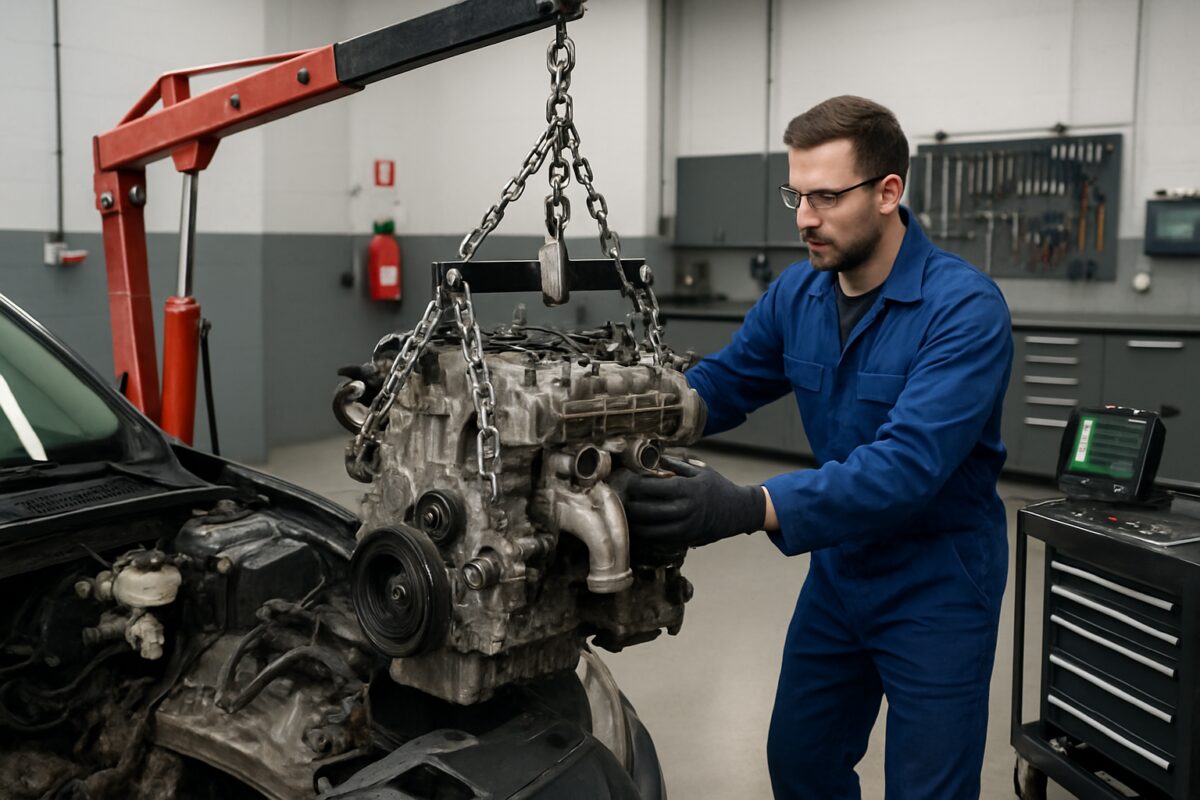
Use proper lifting equipment rated for your engine’s weight. Most modern engines weigh between 150-300kg, requiring professional-grade lifting apparatus and secure anchor points.
Wear appropriate safety gear including steel-toed boots, safety glasses, and cut-resistant gloves. Keep fire extinguishing equipment nearby when working with fuel systems and electrical components.
Step-by-step instructions
Professional engine replacement follows a systematic approach to ensure proper removal, installation, and commissioning of your new powerplant.
Step 1: Vehicle preparation and fluid drainage
Begin by removing the bonnet and securing all loose panels. Drain all engine fluids including oil, coolant, and fuel where necessary. Remove the air intake system and disconnect all electrical connections, labelling each for reassembly.
Mark and photograph connector positions before removal to prevent confusion during installation. This documentation proves invaluable when reconnecting complex wiring harnesses.
Step 2: Ancillary component removal
Remove the radiator, cooling fan, and associated cooling system components. Disconnect the exhaust system at the exhaust manifold and remove the transmission coupling.
Modern vehicles require systematic disconnection of numerous sensors and control modules. Take particular care with fragile plastic connectors and routing clips.
Step 3: Engine removal
Position the engine crane and attach lifting chains to designated lifting points. Support the transmission with a suitable jack before removing engine mount bolts.
Lift the engine slowly whilst checking for remaining connections. Common oversight items include earth straps, fuel lines, and brake servo vacuum pipes.
Step 4: New engine preparation
Inspect your replacement engine thoroughly before installation. Check for shipping damage, missing components, and fluid levels. Install new oil filter and fill with fresh oil to manufacturer’s specifications.
Transfer necessary components from your old engine if not included with the replacement unit. This typically includes ancillary drive components and specific sensors.
Step 5: Installation and commissioning
Lower the new engine into position, ensuring proper alignment with transmission and mounting points. Reconnect all systems in reverse order of removal, using new gaskets and seals throughout.
Fill all fluid systems and perform initial startup procedures. Monitor for leaks, unusual noises, and proper operating temperatures during the first running period.
Common mistakes to avoid
Engine replacement projects often encounter preventable issues that can significantly increase costs and completion time.
Rushing the disconnection process frequently results in damaged connectors and broken mounting brackets. Take time to properly document and photograph all connections before removal.
Reusing old gaskets and seals represents false economy that often leads to costly leaks and repeat work. Always fit new sealing components throughout the installation process.
Incorrect torque specifications can cause component failure or inadequate sealing. Use a calibrated torque wrench and follow manufacturer’s tightening sequences precisely.
Failing to prime oil systems before initial startup can cause catastrophic bearing damage. Always pre-fill oil galleries and rotate the engine manually before applying starter power.
When should you replace your engine?
Engine replacement becomes economically viable when repair costs exceed 60-70% of your vehicle’s current market value or when multiple major components require simultaneous replacement.
Catastrophic failures such as cracked cylinder blocks, severe bottom-end bearing damage, or multiple cylinder head problems typically warrant complete engine replacement rather than piecemeal repairs.
High-mileage engines showing compression loss, excessive oil consumption, and cooling system problems often benefit from replacement rather than continued maintenance expenses.
Consider your vehicle’s overall condition and remaining service life when evaluating engine replacement economics. A sound chassis with good transmission and suspension systems justifies major engine investment.
Related maintenance you can perform simultaneously
Engine replacement provides an ideal opportunity to address related maintenance items that are normally difficult to access during routine servicing.
Replace the clutch assembly if your vehicle uses manual transmission. Access is optimal during engine removal, avoiding future labour duplication. Consider upgrading to a performance clutch kit if increased power output is planned.
Service the cooling system completely, including radiator, water pump, and all hoses. Fresh coolant and new system components ensure optimal thermal management for your new engine.
Upgrade the exhaust system if the existing components show wear or restrictions. A properly matched exhaust system optimises performance and sound characteristics.
Consider replacing worn suspension components and engine mounts whilst the engine bay is accessible. This comprehensive approach maximises efficiency and minimises future downtime.
Our experienced mechanics at AutoPartsPro recommend treating engine replacement as a complete powertrain refresh opportunity. Addressing multiple systems simultaneously provides better long-term value and reliability.
Frequently asked questions
How long does engine replacement typically take?
Professional engine replacement requires 15-30 hours depending on vehicle complexity, access restrictions, and additional work performed. Modern vehicles with sophisticated electronics typically require extended installation time.
Should I choose a used or remanufactured engine?
Remanufactured engines offer better reliability than used units whilst costing less than new. They include warranty coverage and updated components addressing known failure points.
What warranty coverage can I expect?
New engines typically include 2-3 year warranties whilst remanufactured units offer 12-24 months coverage. Used engines generally provide 3-6 months warranty with limited scope.
Will my vehicle’s performance change after engine replacement?
A properly matched replacement engine should maintain original performance characteristics. Remanufactured units may actually improve performance through updated specifications and tighter tolerances.
Can I upgrade to a more powerful engine during replacement?
Engine upgrades require consideration of transmission capacity, cooling system adequacy, and electronic compatibility. Professional consultation ensures successful integration and reliable operation.
Successful engine replacement requires careful planning, quality components, and proper installation techniques. Whether choosing new, remanufactured, or used engines, selecting appropriate parts and following systematic procedures ensures optimal results. Professional installation combined with comprehensive system servicing provides the foundation for many years of reliable motoring with your refreshed powerplant.

 Loading...