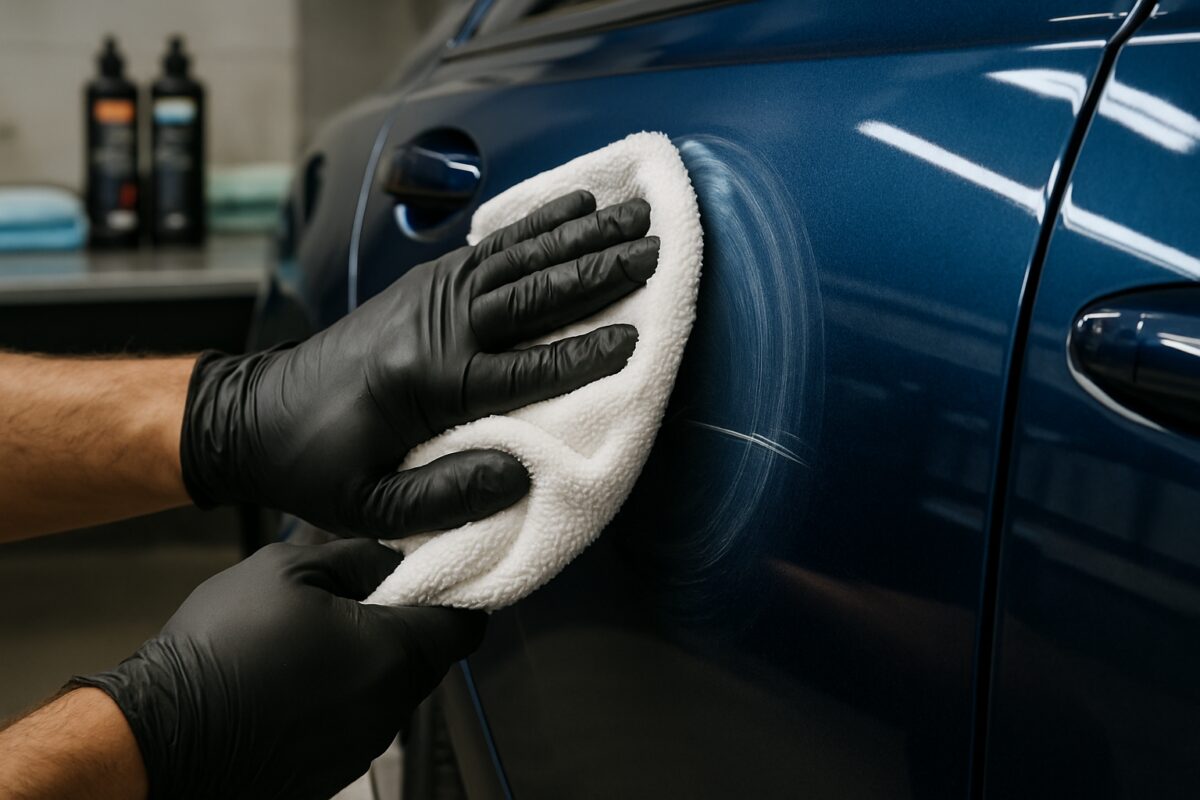
Buffing out car scratches requires the right compound, microfibre cloths, and proper technique. Surface scratches can be removed using polishing compound applied in circular motions, whilst deeper scratches need touch-up paint first. The process involves cleaning the area, applying compound gradually, and polishing to restore the paintwork’s original shine.
Tools & parts required
Having the correct materials makes all the difference between a professional finish and a botched repair job. The wrong products can damage your paintwork permanently.
Parts needed
- Polishing compound (vehicle-specific)
- Touch-up paint (colour-matched)
- Primer pen
- Clear coat spray
- Masking tape
- Fine-grit sandpaper (2000-3000 grit)
Tools required
- Microfibre cloths (several clean ones)
- Polishing machine or buffer (optional)
- Soft applicator pads
- Clean water bucket
- Car wash soap
- Detailing spray
Always test polishing compound on a hidden area first to ensure compatibility with your vehicle’s paint system.
Safety precautions
Working safely protects both you and your vehicle’s finish. Proper preparation prevents costly mistakes.
Work in shade away from direct sunlight to prevent compounds from drying too quickly. Wear nitrile gloves to protect your hands from chemicals. Ensure the vehicle surface is cool to touch before starting work. Keep additional lighting nearby for proper scratch inspection.
Never work on hot paintwork as this can cause permanent swirl marks. Remove jewellery that might scratch the surface during the repair process.
Step-by-step instructions
Step 1: Assess the scratch depth
Run your fingernail perpendicular across the scratch. If it catches, you’re dealing with a deep scratch requiring touch-up paint. Surface scratches that don’t catch the nail can be polished out directly.
Clean the scratched area thoroughly with car wash soap and water. Dry completely with a clean microfibre cloth. Proper assessment prevents wasted effort on inappropriate repair methods.
Step 2: Clean and prepare the area
Wash the entire panel to remove dirt and contaminants. Any debris left on the surface will create additional scratches during polishing. Use detailing spray to remove any remaining residue.
Mask surrounding areas with tape if working near trim pieces or bumper sections. This prevents accidental damage to adjacent surfaces.
Step 3: Apply touch-up paint (for deep scratches)
Deep scratches need primer first, followed by colour-matched paint. Apply thin coats using a fine brush, allowing each layer to dry completely. Build up the paint level gradually rather than applying thick coats.
Sand gently with 2000-grit paper once paint has cured (24-48 hours). The goal is to level the repaired area with the surrounding paintwork.
Step 4: Apply polishing compound
Place a small amount of compound on a microfibre cloth or applicator pad. Work in circular motions with moderate pressure, covering an area about 60cm square at a time.
Start with light pressure and increase gradually. The compound should begin to haze as it works. Continue until the scratch disappears or significantly diminishes.
Step 5: Remove residue and inspect
Clean away compound residue with a fresh microfibre cloth. Inspect the repair under good lighting. Multiple applications may be necessary for stubborn scratches.
Apply car wax or paint sealant to protect the repaired area. This step is crucial for long-term durability of your repair work.
Professional tip from AutoPartsPro mechanics: Work in small sections and keep compound moist throughout the process for best results.
Common mistakes to avoid
Using too much pressure creates swirl marks that are harder to remove than the original scratch. Heavy-handed polishing can burn through the clear coat, requiring expensive professional repair.
Working in direct sunlight causes compounds to dry too quickly, reducing their effectiveness. Always work in shade or during cooler parts of the day.
Skipping the cleaning stage traps dirt under the compound, creating additional scratches. Clean surfaces are essential for successful scratch removal.
Using household products like toothpaste or baking soda can damage modern paint systems permanently. Stick to automotive-specific products designed for your vehicle’s finish.
When should you attempt scratch repair?
Surface scratches that haven’t penetrated the clear coat respond well to polishing compound. These typically appear white or light-coloured against dark paint.
Scratches you can feel with your fingernail usually require touch-up paint first. Very deep scratches exposing bare metal need primer, paint, and clear coat for proper repair.
Consider professional help for scratches longer than 15cm or those on curved surfaces. Panel edges and complex contours require experienced handling to avoid visible repair lines.
Fresh scratches repair more easily than old ones where dirt has embedded in the damaged clear coat. Address scratches promptly for best results.
Related maintenance you can do at the same time
While you have polishing materials out, consider addressing other paint imperfections. Headlamp restoration using similar compounds can improve visibility and vehicle appearance.
Check and clean outside mirror surfaces for scratches or hazing. The same polishing techniques work on mirror housings and plastic trim pieces.
Inspect wing mirror glass for chips that might need attention. Address multiple cosmetic issues together for efficiency and consistent results across your vehicle.
Consider applying protective wax to the entire vehicle once scratch repairs are complete. This prevents future damage and maintains the repair work you’ve just completed.
Frequently asked questions
Can toothpaste remove car scratches?
Toothpaste contains mild abrasives that can remove very light scratches, but automotive polishing compounds are far more effective and safer for car paint.
How deep can scratches be before needing professional repair?
Scratches that catch your fingernail and expose primer or metal typically require professional attention for invisible, long-lasting repairs.
Will insurance cover scratch repair costs?
Most insurance policies have deductibles higher than typical scratch repair costs, making DIY repair more economical for minor damage.
How long does polishing compound take to work?
Surface scratches usually respond within 2-3 minutes of circular polishing motion, whilst deeper clear coat damage may require multiple applications.
Can I use a machine polisher for scratch removal?
Machine polishers work faster but require experience to avoid paint damage. Hand polishing is safer for beginners and gives excellent results.
Successful scratch repair depends on matching the technique to the damage severity and using quality materials designed for automotive finishes. Taking time to assess the scratch depth properly and following the correct process ensures professional-looking results that protect your vehicle’s value. Remember that patience and proper preparation always produce better outcomes than rushing through the repair process.

 Loading...