Squeaking windscreen wipers indicate worn rubber blades, dirty windscreen surfaces, or incorrect installation. Fix this by cleaning the blades and windscreen with glass cleaner, checking blade alignment, replacing worn rubber inserts, or adjusting wiper arm tension. Most squeaking issues resolve with proper cleaning and blade replacement every 12-18 months.
Tools & parts required
Before tackling squeaking wipers, gather the essential components and tools. Having everything ready makes the job smoother and prevents multiple trips to the car.
Parts needed
- Replacement windscreen wipers (vehicle specific)
- Replacement rubber inserts
- Glass cleaner solution
- Windscreen treatment spray
Tools required
- Microfibre cloths
- Cleaning rags
- Small flat-head screwdriver
- Needle-nose pliers
- Measuring tape
Always ensure replacement wipers match your vehicle’s specific arm type and blade length. Check your owner’s manual for exact specifications to avoid compatibility issues.
Safety precautions
Working on wipers requires minimal safety measures, but proper precautions prevent damage to your windscreen and wiper mechanism.
- Park on level ground with battery disconnected
- Lift wiper arms carefully to avoid spring tension damage
- Wear safety glasses when using cleaning chemicals
- Keep replacement parts away from direct sunlight
Step-by-step instructions
Step 1: Clean the windscreen thoroughly
Start by washing the entire windscreen with quality glass cleaner. Remove all dirt, grime, and road film that causes blade drag. Pay special attention to the wiper contact areas where most squeaking originates.
Use circular motions followed by vertical strokes for streak-free results. A clean windscreen reduces friction and eliminates many squeaking problems immediately.
Step 2: Inspect and clean wiper blades
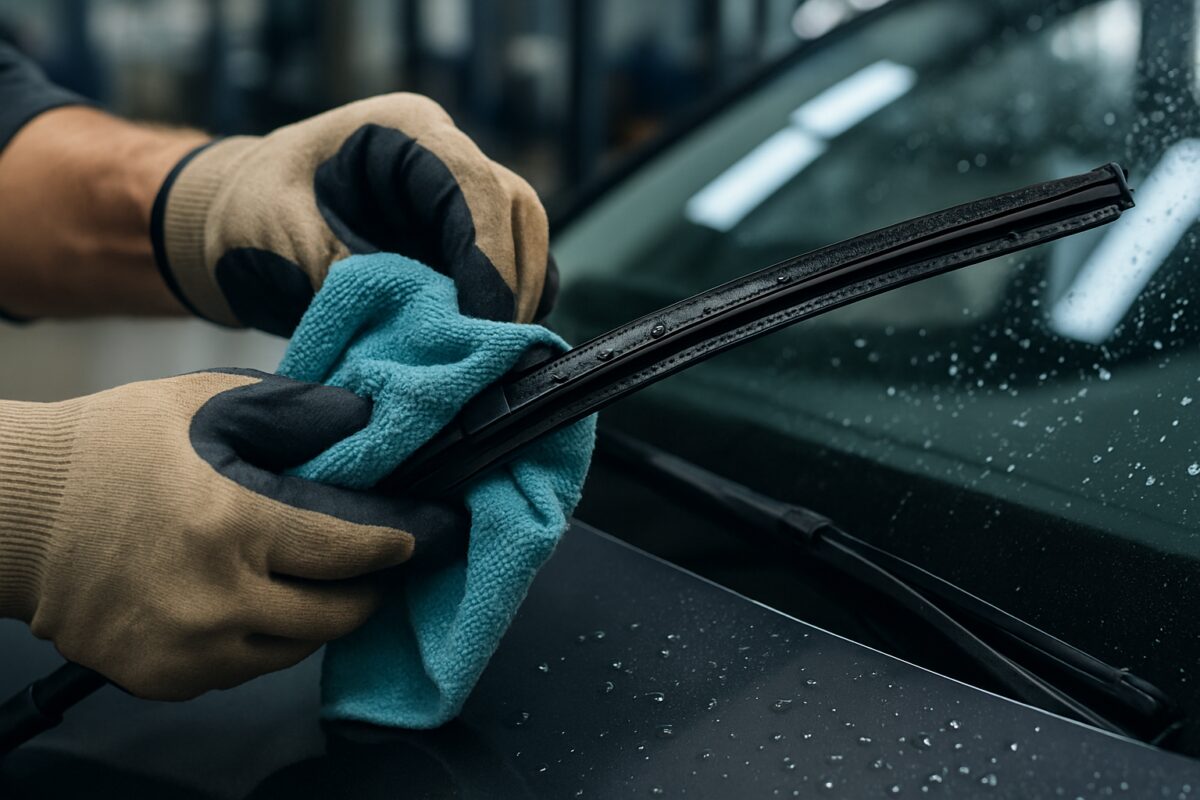
Lift each wiper arm away from the windscreen. Examine the rubber blades for cracks, tears, or hardening. Clean the blades with a damp cloth to remove accumulated debris.
Check for proper blade alignment against the windscreen. Twisted or bent blades create uneven pressure and cause squeaking. Proper wiper maintenance extends blade life significantly.
Step 3: Check wiper arm tension
Gently test the spring tension in each wiper arm. Arms with insufficient pressure allow blades to skip across the windscreen, creating noise. Too much pressure causes premature wear and squeaking.
Most wiper arms have adjustable tension. Consult your service manual for specific adjustment procedures for your vehicle model.
Step 4: Replace worn rubber inserts
If cleaning doesn’t resolve squeaking, replace the rubber inserts or entire wiper assemblies. Remove the old blades according to your wiper arm design – either clip-on, hook, or pin-type connections.
Install new blades ensuring proper alignment and secure attachment. Test the fit before lowering arms back to the windscreen.
Step 5: Test and fine-tune
Reconnect the battery and test wiper operation. Run through several cycles on different speed settings. Listen for squeaking and watch for smooth, even contact across the windscreen.
Make final adjustments to arm position or blade alignment if needed. Proper installation eliminates squeaking completely.
Common mistakes to avoid
Several errors can worsen squeaking problems or damage wiper components. Understanding these pitfalls helps ensure successful repairs.
- Using household cleaners containing ammonia on windscreens
- Forcing wiper arms beyond their natural range of motion
- Installing incorrect blade lengths or incompatible arm attachments
- Operating wipers on dry windscreens, causing premature wear
- Ignoring seasonal blade replacement schedules
Quality replacement blades and proper installation techniques prevent most squeaking issues. Invest in reliable components rather than budget alternatives.
Never run wipers without adequate moisture on the windscreen. This creates unnecessary friction and accelerates rubber degradation, leading to persistent squeaking.
When should you replace windscreen wipers?
Replace wiper blades every 12-18 months or when performance deteriorates. Signs include streaking, chattering, squeaking, or incomplete windscreen coverage.
Seasonal changes affect rubber compounds. Winter conditions harden blades, whilst summer heat causes cracking. Regular replacement schedules maintain optimal visibility and prevent squeaking.
If blades show visible wear, torn rubber, or bent frames, immediate replacement prevents windscreen damage and ensures safe driving conditions.
Related maintenance you can do at the same time
Combining wiper replacement with related maintenance saves time and money whilst improving overall vehicle condition.
- Replace cabin filter for better ventilation
- Top up windscreen washer fluid reservoir
- Clean and treat windscreen with rain-repellent coating
- Check headlamp clarity and alignment
- Inspect windscreen for chips or cracks
These complementary tasks ensure complete visibility system maintenance. Many components work together to provide clear vision during adverse weather conditions.
Frequently asked questions
Why do my wipers squeak only sometimes?
Intermittent squeaking usually indicates contaminated windscreen surfaces or inconsistent blade-to-glass contact. Weather conditions, road grime, and blade wear patterns all influence squeaking frequency.
Can I fix squeaking without replacing the entire wiper?
Yes, cleaning both windscreen and blades often eliminates squeaking. However, worn rubber requires replacement. Some blades allow rubber insert replacement without changing the entire assembly.
How long should quality wiper blades last?
Premium wiper blades typically last 12-24 months depending on climate and usage. Harsh conditions reduce lifespan, whilst regular maintenance extends blade life significantly.
What causes wipers to chatter across the windscreen?
Chattering results from insufficient arm pressure, worn blades, or windscreen contamination. Check arm tension and clean all surfaces before replacing components.
Is it safe to drive with squeaking wipers?
Squeaking wipers are safe short-term but indicate deteriorating performance. Address the issue promptly to maintain visibility and prevent windscreen damage from worn blades.
Maintaining quiet, effective windscreen wipers requires regular cleaning and timely replacement. Quality components and proper installation techniques eliminate squeaking whilst ensuring clear visibility in all weather conditions. Remember that preventive maintenance costs less than replacing damaged windscreens or dealing with visibility issues during critical driving moments.

 Loading...