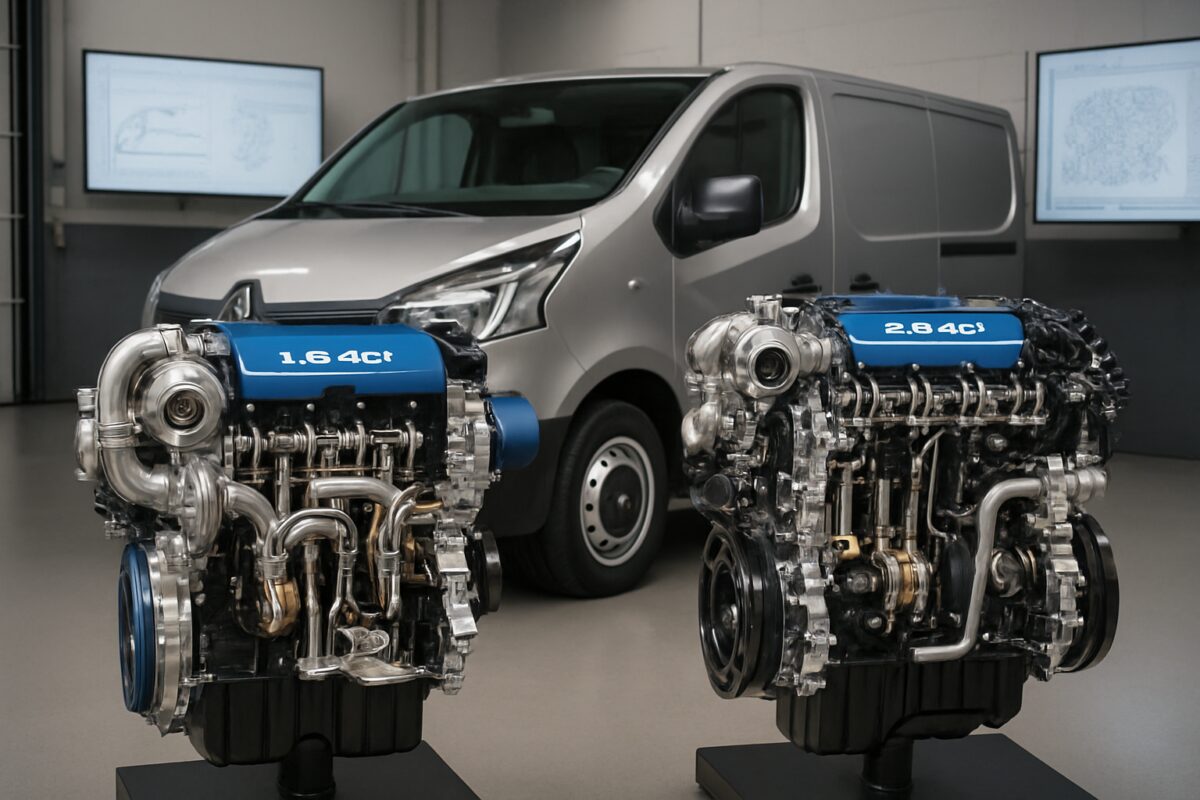
The Renault Trafic stands as a cornerstone of Europe’s commercial van market, offering versatility and reliability for businesses across the UK. The engine selection plays a crucial role in determining this van’s capability, efficiency, and overall running costs. With power outputs ranging from 95 to 170 horsepower and torque figures reaching up to 380 Nm, the Trafic’s diesel powertrains deliver the performance commercial operators demand.
| Engine | Power output | Torque | Fuel consumption | Reliability |
|---|---|---|---|---|
| 1.6 dCi 95 | 95 hp | 260 Nm | 47.1 mpg | Good |
| 1.6 dCi 120 | 120 hp | 320 Nm | 45.6 mpg | Good |
| 1.6 dCi 125 | 125 hp | 320 Nm | 44.8 mpg | Good |
| 2.0 dCi 145 | 145 hp | 340 Nm | 42.2 mpg | Very Good |
| 2.0 dCi 170 | 170 hp | 380 Nm | 40.9 mpg | Very Good |
1.6 dCi 95 engine overview
The entry-level 1.6-litre dCi 95 represents the most economical choice in the Trafic range. This inline four-cylinder turbo diesel unit features a displacement of 1,598cc and employs common rail direct injection technology. The engine operates on standard diesel fuel and produces its peak torque at relatively low revs, making it suitable for urban deliveries.
Our mechanics at AutopartsPro have found this engine particularly reliable in city applications, where frequent stop-start cycles are common. The fuel filter requires regular maintenance to ensure optimal performance.
Pros
- Excellent fuel economy reaching 47.1 mpg combined
- Lower purchase price and insurance costs
- Adequate torque for light commercial duties
- Proven reliability in urban environments
- Lower maintenance costs compared to larger engines
Cons
- Limited power for heavy loads or motorway driving
- Struggles with fully laden vans on steep gradients
- Engine can feel strained during overtaking manoeuvres
- Not suitable for frequent long-distance hauling
1.6 dCi 120/125 engines overview
The mid-range 1.6-litre offerings provide enhanced performance whilst maintaining reasonable fuel consumption. These turbocharged diesel engines share the same basic architecture as the 95 hp variant but feature improved turbocharging and engine management systems. Both versions utilise common rail injection and produce their maximum torque from 1,500 rpm.
These engines strike an excellent balance between economy and performance, making them popular choices among fleet operators. Regular oil filter changes are essential for maintaining their longevity.
Pros
- Good balance of power and fuel efficiency
- Suitable for mixed urban and motorway driving
- Comfortable performance with moderate loads
- Well-proven technology with good parts availability
- Reasonable servicing costs
Cons
- May struggle with maximum payload on hills
- Turbocharger can be expensive to replace if it fails
- DPF system requires regular motorway driving to function properly
- Slightly higher fuel consumption than the 95 hp version
2.0 dCi 145 engine overview
The 2.0-litre dCi 145 represents a significant step up in performance and refinement. This four-cylinder turbo diesel engine displaces 1,995cc and features advanced common rail injection technology. The unit produces substantial torque from low revs, making it ideal for commercial applications requiring consistent power delivery.
Professional mechanics appreciate this engine’s robust construction and reliability record. The larger displacement provides better thermal efficiency and reduces stress on internal components during heavy-duty operations.
Pros
- Strong performance with full payloads
- Smooth and refined operation
- Excellent motorway cruising ability
- Robust construction with good longevity
- Better resale value due to higher specification
Cons
- Higher initial purchase cost
- Increased fuel consumption compared to 1.6-litre units
- More expensive service items and repairs
- Complex emission control systems require proper maintenance
2.0 dCi 170 engine overview
The flagship 2.0-litre dCi 170 delivers the highest performance in the Trafic range. This turbocharged diesel engine produces 170 horsepower and 380 Nm of torque, providing exceptional capability for demanding commercial applications. The engine features variable geometry turbocharging and sophisticated engine management for optimal performance across all operating conditions.
“The 170 hp variant transforms the Trafic’s character completely, providing effortless motorway performance even when fully loaded,” notes our senior technician at AutopartsPro.
Pros
- Outstanding performance with maximum payloads
- Effortless motorway cruising and overtaking
- Excellent for long-distance commercial operations
- High torque output reduces gear changes
- Premium engine with good build quality
Cons
- Highest fuel consumption in the range
- Most expensive to purchase and insure
- Complex turbocharging system can be costly to repair
- May be overkill for light commercial duties
Maintenance cost
| Engine | Recommended Interval | Estimated Cost | Cost per 10,000 miles |
|---|---|---|---|
| 1.6 dCi 95 | 12,000 miles | £180-220 | £150-180 |
| 1.6 dCi 120/125 | 12,000 miles | £200-250 | £170-210 |
| 2.0 dCi 145 | 12,000 miles | £240-290 | £200-240 |
| 2.0 dCi 170 | 12,000 miles | £280-330 | £230-280 |
Maintenance costs vary significantly between engines, with the entry-level 95 hp unit being most economical to service. The engine oil capacity increases with larger engines, contributing to higher service costs.
Engine sound and character
The 1.6-litre engines produce a characteristic diesel clatter at idle, which becomes more refined under load. These smaller capacity units can sound slightly strained when working hard, particularly the 95 hp variant. The 2.0-litre engines offer notably quieter operation with a deeper, more authoritative note.
All engines benefit from good sound insulation in the Trafic’s cabin, making long journeys more comfortable. The turbocharged units produce a subtle whistle under acceleration, which many drivers find appealing.
“The acoustic character of these engines reflects their commercial nature – they’re designed for durability rather than refinement, though the larger units are surprisingly quiet,” explains our AutopartsPro diagnostics specialist.
Proper maintenance of the air filter system ensures optimal engine breathing and sound quality. A clogged filter can cause increased engine noise and reduced performance.
Who each engine is best for
| User Type | Recommended Engine | Reasoning |
|---|---|---|
| Urban delivery drivers | 1.6 dCi 95 | Excellent fuel economy, adequate power for city use, lower running costs |
| Mixed-use operators | 1.6 dCi 120/125 | Good balance of economy and performance, suitable for varied applications |
| Long-distance haulers | 2.0 dCi 145 | Strong motorway performance, good refinement, reliable for high mileage |
| Heavy-duty commercial users | 2.0 dCi 170 | Maximum torque for heavy loads, excellent performance across all conditions |
Frequently asked questions (FAQ)
Which Renault Trafic engine is most reliable?
The 2.0-litre dCi engines generally offer superior reliability due to their robust construction and lower stress levels during operation compared to smaller capacity units.
What’s the best Trafic engine for fuel economy?
The 1.6 dCi 95 delivers the best fuel consumption at 47.1 mpg combined, making it ideal for cost-conscious operators prioritising running costs over performance.
Do Trafic engines require DPF regeneration?
Yes, all modern Trafic diesel engines feature DPF systems requiring regular motorway driving or forced regeneration cycles to maintain proper function and avoid expensive repairs.
How often should I service my Trafic engine?
Renault recommends 12,000-mile service intervals for all Trafic engines, though severe duty cycles may require more frequent maintenance to ensure optimal reliability and performance.
Can I retrofit a more powerful engine to my Trafic?
Engine swaps are technically possible but impractical due to ECU compatibility, insurance implications, and certification requirements. Consider trading up to a higher-specification model instead for better performance.
Understanding your Trafic’s engine characteristics helps ensure you select the right variant for your specific needs. Whether prioritising economy, performance, or reliability, there’s a suitable option in the range. Regular maintenance using quality parts from professional suppliers ensures your chosen engine delivers years of dependable service.
For additional guidance on commercial vehicle maintenance, our comprehensive guides on DIY oil filter replacement and particulate filter maintenance provide valuable insights. Regular attention to consumables like the cabin filter also contributes to overall vehicle reliability and driver comfort during long working days.

 Loading...