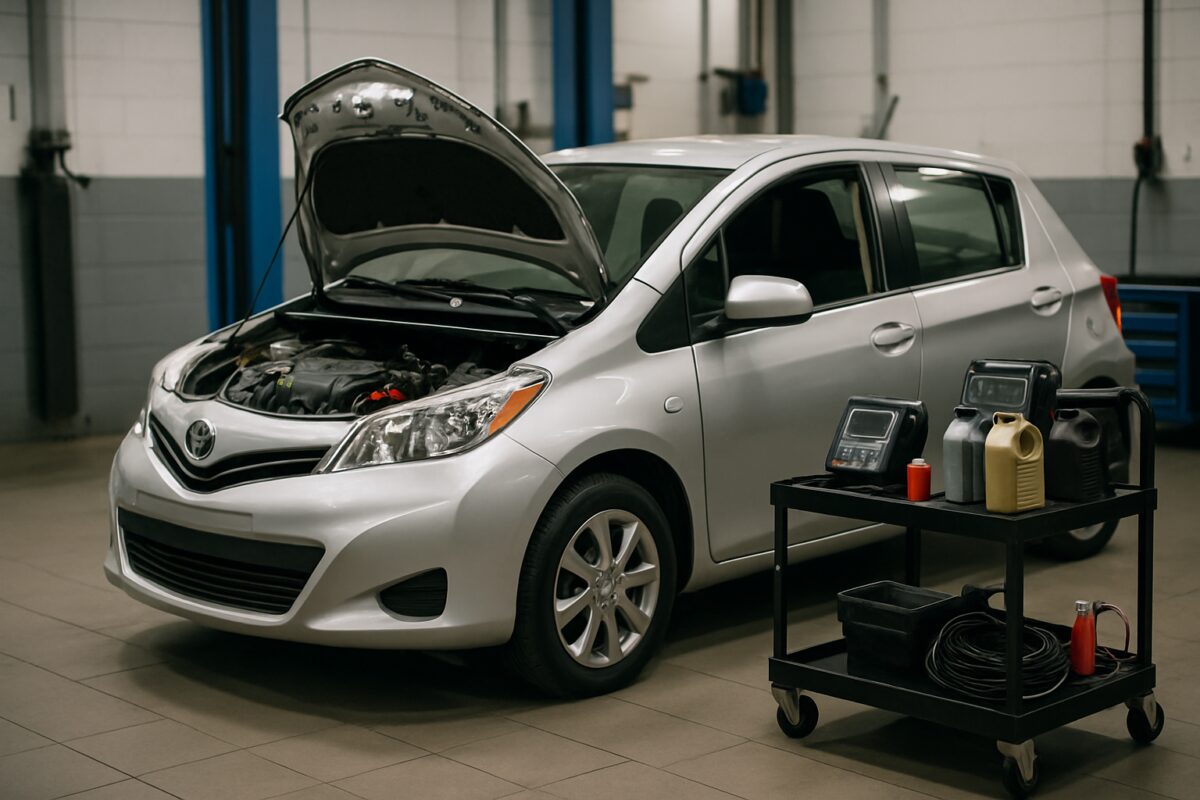
The Toyota Yaris has earned a reputation as a reliable city car, but like any vehicle, it’s not immune to mechanical issues. Understanding common Toyota Yaris problems can help you maintain your car properly and avoid costly repairs. From engine concerns to electrical faults, we’ll examine the most frequent issues that affect different generations of this popular hatchback.
Oil consumption issues
One of the most significant problems affecting Toyota Yaris models, particularly those produced between 2006-2013, is excessive oil consumption. This issue primarily affects the 1.0-litre and 1.3-litre petrol engines, where owners report having to top up engine oil every 1,000-2,000 miles.
The root cause often lies with worn piston rings or valve stem seals that allow oil to seep into the combustion chamber. When this happens, you’ll notice blue smoke from the exhaust, particularly during startup or acceleration. The problem tends to worsen over time, leading to increased emissions and potential engine damage if left untreated.
Our mechanics at Autopartspro have observed that this issue affects approximately 30% of Yaris models from this generation. Regular oil level checks become crucial, and many owners find themselves carrying spare oil in their boot. The repair typically involves engine strip-down and replacement of piston rings or valve stem seals, which can cost £800-£1,500 depending on the extent of the damage.
Power steering failures
Electric power steering problems plague many Toyota Yaris models, particularly those manufactured between 2005-2011. Drivers frequently report sudden loss of power assistance, making the steering wheel extremely heavy and difficult to turn, especially at low speeds or when parking.
The issue typically stems from faulty power steering pump motors or failing steering column sensors. Warning signs include intermittent power steering loss, unusual whining noises when turning, and dashboard warning lights. The problem often occurs without warning, creating a potential safety hazard.
Replacement of the electric power steering unit costs between £400-£800, though some owners have found success with specialist repairs costing around £200-£300. Toyota issued several technical service bulletins regarding this issue, and some vehicles may still be covered under extended warranty programmes.
Clutch problems in manual transmissions
Manual transmission Toyota Yaris models frequently experience premature clutch wear, with many requiring replacement before 60,000 miles under normal driving conditions. The symptoms include difficulty engaging gears, slipping clutch, and juddering during take-off.
The problem appears more prevalent in urban driving conditions, where frequent stop-start traffic accelerates clutch wear. Our technicians have noticed that the clutch kit components, particularly the pressure plate and release bearing, tend to fail prematurely compared to other vehicles in this class.
A complete clutch replacement typically costs £400-£700 including labour, though prices vary depending on whether you choose OEM or aftermarket components. Early intervention when symptoms first appear can sometimes extend clutch life through adjustments or minor repairs.
Warning signs your car has a problem
Recognising early warning signs can prevent minor issues from becoming major failures. Here are the key symptoms to watch for in your Toyota Yaris:
- Blue or white smoke from the exhaust indicates oil or coolant burning
- Heavy steering, especially when parking or at low speeds
- Difficulty selecting gears or clutch slipping during acceleration
How to fix the problems
| Problem | DIY Solution | Professional Repair | Estimated Cost |
|---|---|---|---|
| Oil Consumption | Regular oil level monitoring | Engine rebuild/seal replacement | £800-£1,500 |
| Power Steering | Check fuses and connections | Steering unit replacement | £400-£800 |
| Clutch Issues | Adjust driving style | Complete clutch replacement | £400-£700 |
For oil consumption issues, start by using high-quality engine oil and consider oil additives designed to reduce consumption. Power steering problems often require professional diagnosis, though checking electrical connections and fuses might resolve intermittent issues.
“Regular maintenance is your best defence against Toyota Yaris problems. We recommend checking oil levels monthly and addressing any unusual symptoms immediately rather than waiting for complete failure.” – Autopartspro Technical Team
When to see a mechanic
Certain symptoms require immediate professional attention to prevent safety hazards or expensive damage. Visit a qualified mechanic if you experience complete power steering loss, as this creates a serious safety risk, particularly in emergency situations.
Oil consumption issues warrant professional inspection when consumption exceeds 1 litre per 1,000 miles, or if you notice persistent blue smoke from the exhaust. Unusual driving sounds or vibrations also indicate problems requiring expert diagnosis.
Clutch problems need immediate attention when you cannot engage gears properly or notice burning smells during normal driving. Delaying repairs often results in more expensive secondary damage to the flywheel or transmission components.
“Don’t ignore warning signs hoping they’ll resolve themselves. Early intervention typically saves money and prevents dangerous failures.” – Autopartspro Diagnostic Specialists
Frequently asked questions (FAQ)
Are Toyota Yaris cars reliable?
Toyota Yaris models are generally reliable, though certain generations suffer from specific issues like oil consumption and power steering failures.
What’s the most common Toyota Yaris engine problem?
Excessive oil consumption affects many 2006-2013 models, requiring frequent top-ups and potentially expensive engine repairs.
How much does Toyota Yaris clutch replacement cost?
Expect to pay £400-£700 for complete clutch replacement, including parts and labour from a reputable garage.
Can I drive with Toyota Yaris power steering problems?
Driving without power steering assistance is dangerous and should be avoided, especially in urban environments or emergency situations.
Which Toyota Yaris generation is most problematic?
The second generation (2005-2013) experiences more issues, particularly oil consumption and power steering failures compared to newer models.
| Generation | Years | Common Issues | Reliability Rating |
|---|---|---|---|
| First Generation | 1999-2005 | Minor electrical issues | Good |
| Second Generation | 2005-2013 | Oil consumption, power steering | Average |
| Third Generation | 2013-2020 | CVT transmission concerns | Good |
| Fourth Generation | 2020-Present | Limited long-term data | Excellent |
Despite these known issues, proper maintenance significantly improves reliability. Regular servicing and prompt attention to warning signs help prevent most problems from developing into major failures.
Final recommendation
The Toyota Yaris remains a practical choice for urban driving, but awareness of common problems is essential for informed ownership. Focus on models from 2013 onwards to avoid the most significant oil consumption and power steering issues that plagued earlier generations.
If you’re considering a used Yaris, budget for potential clutch replacement and ensure the power steering system operates correctly during test drives. When buying used, request maintenance records and evidence of oil consumption monitoring.
For current owners experiencing problems, don’t delay repairs hoping issues will resolve themselves. Early intervention typically costs less and prevents secondary damage. At Autopartspro, we stock genuine and OEM-equivalent parts for all Toyota Yaris models, ensuring you can maintain your vehicle affordably without compromising quality. Regular preventive maintenance and prompt attention to warning signs will help you enjoy many trouble-free miles from your Yaris.

 Loading...