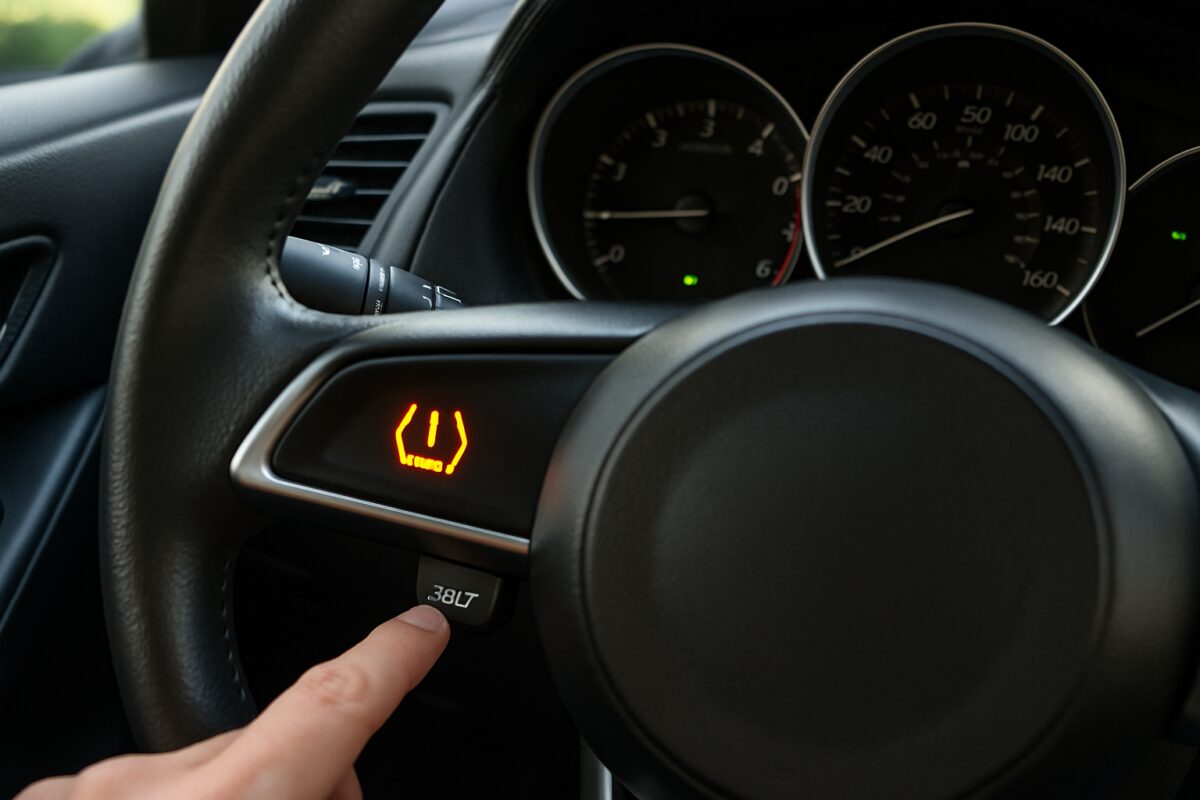
To reset your tyre pressure monitoring system (TPMS), first inflate all tyres to the correct pressure specified in your owner’s manual, then locate the TPMS reset button typically found beneath the steering wheel, in the glove compartment, or near the centre console. Hold the button until the TPMS warning light blinks three times, then release and drive for 10-15 minutes to complete the reset process.
Tools & parts required
Resetting your TPMS requires minimal equipment, but having the right tools ensures accuracy and safety.
Tools needed:
- Digital tyre pressure gauge
- Air compressor or access to petrol station pump
- Vehicle owner’s manual
- Basic hand tools (if accessing hidden reset button)
Parts that might be needed:
- Replacement TPMS sensors (if faulty)
- Valve stems (if damaged during sensor replacement)
- Battery replacement for TPMS sensors (professional service)
Always check your tyre pressures when tyres are cold for the most accurate readings, preferably before driving or after the vehicle has been stationary for at least three hours.
Safety precautions
Before attempting any TPMS reset procedure, ensure your safety and prevent potential damage to your vehicle’s systems.
Work in a safe environment away from traffic when checking tyre pressures. Ensure the vehicle is on level ground and the handbrake is engaged. Never exceed the maximum tyre pressure stated on the tyre sidewall, and always wear safety glasses when using compressed air equipment.
If you need to disconnect the battery during the reset process, ensure you have your radio code and any security codes for electronic systems.
Step-by-step instructions
Follow these detailed steps to successfully reset your TPMS and ensure proper functionality.
Step 1: Check and adjust tyre pressures
Start by locating the correct tyre pressure specification, usually found on a sticker inside the driver’s door frame or in your owner’s manual. Use a reliable digital gauge to check each tyre’s pressure, including the spare tyre if equipped with a TPMS sensor.
Inflate or deflate tyres as needed to match the manufacturer’s specifications exactly. Remember that front and rear tyres may require different pressures.
Step 2: Locate the TPMS reset button
The reset button location varies by manufacturer and model. Common locations include:
- Beneath the steering wheel, near the pedals
- Inside the glove compartment
- On the centre console
- Near the hand brake cable lever
Some vehicles use the vehicle’s infotainment system or instrument cluster menus instead of a physical button. Consult your owner’s manual for specific instructions.
Step 3: Perform the reset procedure
With the engine running and all tyres properly inflated, press and hold the TPMS reset button. The TPMS warning light bulbs on your dashboard should blink three times, then remain steady.
Release the button once you see this sequence. If using a menu-based system, navigate to the TPMS reset option and follow the on-screen prompts.
Step 4: Drive to complete the reset
Drive your vehicle at speeds above 25 mph for 10-15 minutes to allow the system to recalibrate. The TPMS warning light should turn off during this drive cycle if the reset was successful.
Monitor your dashboard for any warning lights during this process, as they may indicate issues with individual sensors or the system itself.
Step 5: Verify system operation
After completing the drive cycle, park the vehicle and turn off the engine. Restart the vehicle and check that the TPMS warning light remains off. If the light persists, repeat the reset procedure or consult a professional.
Test the system by slightly reducing pressure in one tyre to ensure the warning activates properly, then reinflate to specification.
Common mistakes to avoid
Several errors can prevent successful TPMS reset or cause system malfunctions.
Never attempt to reset the system with incorrect tyre pressures, as this will cause the system to learn incorrect baseline values. Avoid using cheap or inaccurate pressure gauges that can lead to improper inflation.
Don’t ignore the spare tyre if it’s equipped with a TPMS sensor – it must also be properly inflated. Rushing the reset procedure or not completing the drive cycle will result in system failure.
Some drivers forget to reset the system after seasonal tyre changes or after having brake rotors serviced, leading to persistent warning lights.
Remember that TPMS sensors have finite battery life, typically lasting 5-10 years. If reset procedures fail repeatedly, the sensors may need professional replacement.
When should you reset your TPMS?
Understanding when to reset your TPMS helps maintain optimal tyre performance and safety.
Reset your system whenever you adjust tyre pressures significantly, change tyres, rotate tyres, or after seasonal wheel changes. The system also requires resetting after wheel hub repairs or sensor replacement.
Many modern vehicles automatically detect pressure changes and may not require manual resets for minor adjustments. However, significant changes or maintenance work typically triggers the need for a manual reset.
If your TPMS light comes on during normal driving, check pressures immediately rather than simply resetting the system, as this indicates a genuine pressure loss that needs addressing.
Related maintenance you can do at the same time
Combining TPMS reset with other maintenance tasks saves time and ensures comprehensive vehicle care.
While checking tyre pressures, inspect tyre tread depth, sidewall condition, and look for embedded objects. This is an excellent opportunity to rotate tyres if due for service.
Check your air filter condition and consider replacing the cabin filter if it’s due for service. Inspect brake pads through the wheel spokes for wear indicators.
Consider checking and topping up all fluid levels, including brake fluid and engine oil, to maintain overall vehicle health.
Frequently asked questions
Why won’t my TPMS reset button work?
The system may not reset if tyre pressures are incorrect, sensors are faulty, or you haven’t held the button long enough. Verify all pressures match specifications exactly.
How often should I reset my TPMS?
Only reset when necessary – after tyre pressure adjustments, wheel changes, or maintenance. The system doesn’t require regular resets during normal operation.
Can I drive with the TPMS warning light on?
You can drive safely, but check tyre pressures immediately. The warning indicates low pressure or system malfunction that could affect safety and fuel efficiency.
Do all tyres need TPMS sensors?
Most vehicles require sensors in all four road tyres, and some include the spare. Check your owner’s manual for specific requirements for your vehicle.
What happens if I ignore TPMS warnings?
Ignoring warnings can lead to tyre damage, reduced fuel economy, poor handling, and potential blowouts. Address warnings promptly for safety and performance.
Proper TPMS maintenance ensures optimal tyre performance and vehicle safety. With the correct procedures and quality replacement parts when needed, your system will provide reliable monitoring for years. Regular attention to tyre pressures and prompt response to warning indicators helps maintain vehicle performance while preventing costly repairs and ensuring road safety for you and your passengers.

 Loading...