A car control arm is a critical suspension component that connects your vehicle’s wheel hub to the chassis, allowing controlled movement whilst maintaining proper wheel alignment. When a control arm fails, symptoms include clunking noises over bumps, uneven tyre wear, vibrations in the steering wheel, and poor handling. Replacement costs in the UK typically range from £150 to £400 per side, including parts and labour, though premium vehicles can cost significantly more. Addressing worn control arms promptly prevents further damage to tyres, ball joints, and other suspension components.
What exactly is a control arm and why does it matter
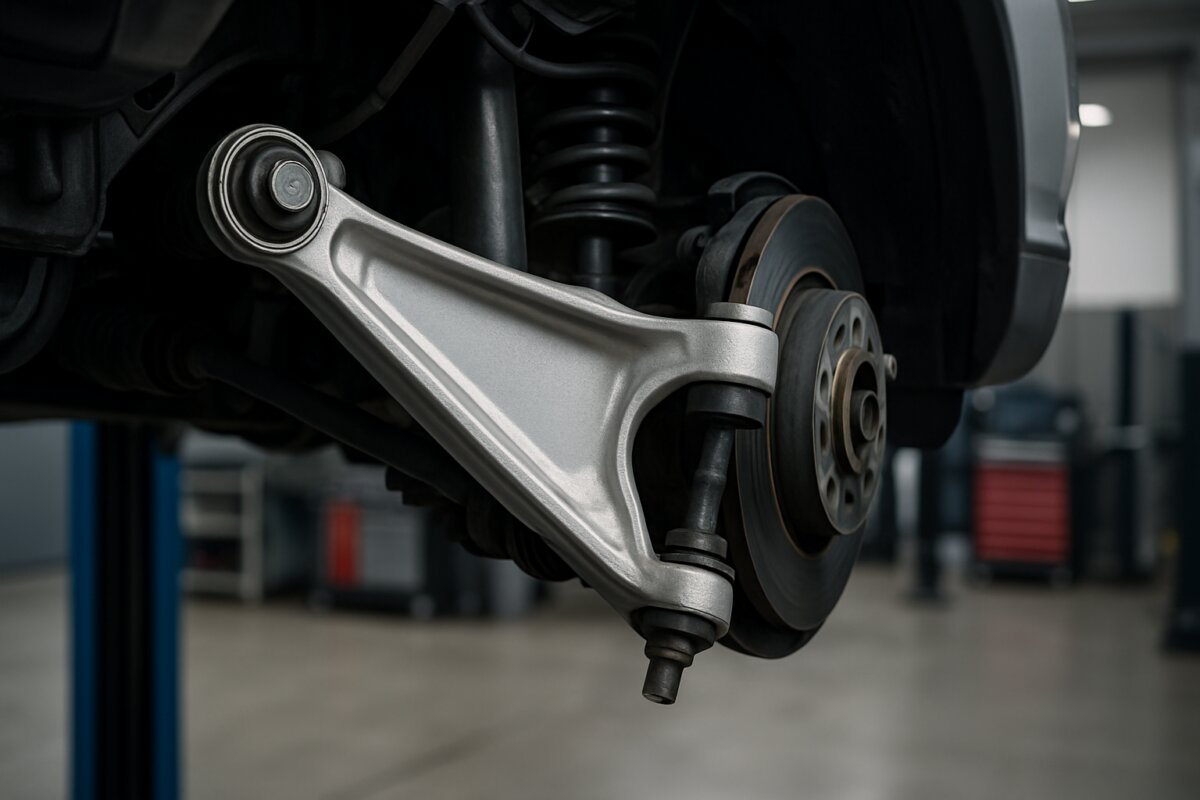
The control arm, sometimes called a wishbone or A-arm due to its distinctive shape, forms the structural link between your vehicle’s suspension and the body. This triangular-shaped component allows your wheels to move up and down whilst keeping them properly positioned relative to the road surface.
Most modern vehicles feature two control arms per wheel – an upper and lower arrangement – though many front-wheel-drive cars use a MacPherson strut design with just a lower control arm. These components endure tremendous forces during normal driving, absorbing impacts from potholes, speed bumps, and general road irregularities.
The control arm houses several crucial elements including bushings at the chassis mounting point and a ball joint at the wheel end. These allow for the necessary articulation whilst maintaining structural integrity. The bushings are typically made from rubber or polyurethane, designed to absorb vibrations and provide a comfortable ride.
Common symptoms of a failing control arm
According to Autopartspro’s mechanics, catching control arm problems early can save hundreds of pounds in collateral damage. Here are the warning signs you shouldn’t ignore:
Audible warning signs
- Clunking or banging noises when driving over bumps or rough surfaces
- Creaking sounds during steering manoeuvres, particularly at low speeds
- Rattling from the front or rear suspension that worsens on uneven roads
- Squeaking noises when the vehicle bounces, indicating worn bushings
Handling and performance indicators
- Vehicle pulling to one side during normal driving conditions
- Excessive vibration through the steering wheel, especially at motorway speeds
- Unstable or wandering steering requiring constant correction
- Poor cornering stability with noticeable body roll
- Longer stopping distances due to compromised wheel alignment
One particularly telling symptom is uneven tyre wear patterns. When control arms fail, they allow excessive camber or toe changes, causing tyres to wear on the inside or outside edges. This not only necessitates premature tyre replacement but also indicates dangerous alignment issues.
Our specialists at Autopartspro emphasise that many drivers dismiss these symptoms as normal vehicle aging. However, worn control arms compromise braking efficiency and handling precision, creating genuine safety hazards particularly during emergency manoeuvres.
What causes control arm failure
Understanding failure mechanisms helps predict when replacement becomes necessary. Control arms don’t typically fail suddenly; they deteriorate gradually through predictable wear patterns.
| Failure cause | Description | Typical timeframe |
|---|---|---|
| Bushing deterioration | Rubber perishes from age, heat, and road chemicals | 5-7 years |
| Ball joint wear | Constant movement degrades the socket and stud | 80,000-100,000 miles |
| Physical damage | Impact from potholes or debris bends the arm | Immediate |
| Corrosion | Road salt and moisture weaken metal structure | 8-10 years in UK climate |
The UK’s wet climate and liberal use of road salt accelerate control arm deterioration compared to drier climates. Vehicles in coastal areas face particularly aggressive corrosion. Additionally, our pothole-riddled roads subject suspension components to repeated shock loads that gradually loosen bushings and crack ball joint boots.
Autopartspro’s technicians note that vehicles frequently driven on poorly maintained roads or those carrying heavy loads experience accelerated control arm wear. Performance vehicles with stiffer suspension bushings may last longer but transmit more vibration into the cabin when they do begin failing.
How mechanics diagnose control arm problems
Professional diagnosis involves several systematic checks that differentiate control arm issues from other suspension problems. A proper assessment prevents unnecessary part replacement whilst ensuring genuine problems aren’t overlooked.
Visual inspection comes first. Mechanics examine the control arm for obvious damage like bends, cracks, or severe corrosion. They check bushing condition, looking for tears, excessive softness, or rubber separation from the metal sleeves. The protective boot covering the ball joint receives particular attention since a torn boot allows contamination that rapidly destroys the joint.
The physical manipulation test involves lifting the vehicle and checking for play. Using a pry bar, the technician applies force to the control arm whilst monitoring movement at the bushings and ball joint. Excessive movement indicates worn components requiring replacement. This test also reveals whether the suspension arm itself has loosened from its mounting points.
Professional testing sequence
- Road test to identify specific symptoms and conditions when they occur
- Lift vehicle on a hoist and conduct visual inspection of all suspension components
- Check for play in bushings and ball joints using appropriate leverage tools
- Measure wheel alignment parameters to identify geometry problems
- Inspect related components including shock absorbers, springs, and steering linkages
Many symptoms attributed to control arms actually originate from related components. Worn tie rod ends, failed strut bearings, or damaged sway bar links produce similar noises and handling problems. Comprehensive inspection prevents misdiagnosis and wasted expenditure on unnecessary parts.
Control arm replacement cost breakdown
Replacement costs vary considerably based on vehicle type, part quality, and labour rates. Understanding these variables helps you budget appropriately and make informed decisions about repair options.
| Vehicle category | Parts cost (per side) | Labour cost | Total typical cost |
|---|---|---|---|
| Small hatchback (Ford Fiesta, Vauxhall Corsa) | £40-£80 | £80-£120 | £120-£200 |
| Medium saloon (VW Golf, Ford Focus) | £60-£120 | £100-£150 | £160-£270 |
| Large SUV (Range Rover, BMW X5) | £150-£300 | £150-£250 | £300-£550 |
| Performance vehicle (Porsche, Mercedes AMG) | £200-£500 | £180-£300 | £380-£800 |
These figures assume replacing a single lower control arm with an aftermarket equivalent. Original equipment manufacturer (OEM) parts typically cost 30-50% more than quality aftermarket alternatives but offer guaranteed fitment and durability matching factory specifications.
Labour time varies from 1.5 to 3 hours per side depending on vehicle design. Some cars require removal of the entire hub bearing assembly or disconnection of multiple components to access the control arm. Four-wheel drive vehicles often demand more labour due to drivetrain complexity.
Additional costs to consider
Wheel alignment becomes mandatory after control arm replacement, adding £50-£80 to the total bill. Without proper alignment, your new components will wear prematurely and handling problems persist.
Many mechanics recommend replacing control arms in pairs, even if only one side shows obvious wear. This approach ensures balanced handling and prevents returning shortly for the opposite side. The incremental cost proves economical since you’re already paying for alignment and much of the labour.
Our Autopartspro specialists often identify related worn components during control arm replacement. The suspension arm bushings, ball joints, and axle bushes frequently deteriorate together. Addressing multiple worn parts simultaneously reduces overall labour costs compared to separate repair visits.
Professional tip: Request an itemised quote detailing parts brands and labour breakdown. Quality control arms with lifetime warranties cost slightly more initially but eliminate replacement concerns. Avoid ultra-cheap alternatives that fail within 12-24 months, ultimately costing more through repeated repairs.
Can you drive with a worn control arm
This question receives a firm “not recommended” from safety-conscious mechanics. Whilst a vehicle with a slightly worn control arm bushing might remain driveable for weeks or months, the risks escalate rapidly as deterioration progresses.
A severely worn control arm compromises your vehicle’s fundamental ability to maintain proper wheel position. During hard braking, the affected wheel can shift unexpectedly, causing the vehicle to pull sharply to one side. In emergency avoidance manoeuvres, the compromised suspension geometry may result in unpredictable handling that makes accident avoidance impossible.
The most dangerous scenario involves complete ball joint separation. When this occurs, the wheel loses all structural connection to the vehicle, collapsing inward and making steering control impossible. Though catastrophic failure remains relatively rare with modern components, the consequences prove severe enough to justify immediate attention when problems appear.
Continuing to drive on worn control arms accelerates damage to other expensive components. Abnormal wheel movement causes premature wear to brake rotors, brake pads, and tyres. The irregular forces transmitted through the suspension can damage wheel hubs and even crack the steering knuckle in extreme cases.
DIY replacement versus professional service
Technically competent home mechanics can replace control arms with proper tools and safety equipment. However, several factors determine whether DIY replacement makes practical sense for your situation.
Tools and equipment required
- Quality floor jack and axle stands rated for your vehicle’s weight
- Torque wrench capable of 100+ Nm for suspension fasteners
- Ball joint separator or pickle fork to disconnect the ball joint
- Various sockets, spanners, and possibly impact tools for seized fasteners
- Spring compressor if upper control arm replacement is needed
The physical work involves supporting the vehicle safely, removing the wheel, disconnecting the ball joint, unbolting the control arm from its chassis mounts, and reversing the process with the new component. Sounds straightforward, but corroded fasteners and awkward access often transform a theoretical 90-minute job into a frustrating afternoon struggle.
Professional workshops possess advantages beyond tools. Hydraulic lifts provide superior access and safety compared to jack stands. Mechanics know which fasteners inevitably seize and have equipment to handle them. Most crucially, they possess wheel alignment equipment to properly set geometry after replacement.
Autopartspro’s experienced technicians point out that DIY control arm replacement saves labour costs but requires purchasing or borrowing specialised tools. Factor in the mandatory professional alignment afterwards, and total savings often reduce to £50-£100 for several hours of potentially frustrating work. For many vehicle owners, professional service delivers better value through speed, convenience, and guaranteed results.
Choosing quality replacement parts
Not all control arms offer equivalent quality and longevity. The replacement parts market spans from budget imports to premium OEM components, with significant performance differences justifying the price variation.
Original equipment specifications should guide your selection. Quality aftermarket manufacturers produce control arms meeting or exceeding OEM standards at reduced prices. These typically include new bushings and ball joints already pressed into place, simplifying installation and ensuring component compatibility.
Budget alternatives often cut corners through thinner metal stampings, inferior bushing materials, or lower-grade ball joints. These might function adequately initially but wear faster and develop play prematurely. The resulting shortened service life makes them false economy despite attractive initial pricing.
Premium aftermarket options sometimes offer improvements over original equipment. Performance-oriented bushings use polyurethane instead of rubber, providing crisper handling response and extended service life. However, they transmit more road noise and vibration, making them better suited to sports cars than family vehicles.
When sourcing parts, verify that the control arm includes all necessary components. Some suppliers sell bare arms requiring separate bushing and ball joint purchase and pressing. Unless you possess hydraulic press access and experience, complete assemblies prove more practical despite slightly higher costs.
Preventing premature control arm wear
Whilst control arms inevitably wear through normal use, several practices extend their service life and delay replacement costs.
Avoiding potholes and road debris prevents impact damage to control arms and bushings. Obviously, this isn’t always possible on UK roads, but conscious avoidance of the worst hazards reduces shock loading that loosens bushings and bends arms.
Regular cleaning underneath your vehicle removes corrosive road salt and grime. Particularly during winter months, periodic washing of the undercarriage slows the corrosion process that weakens control arm metal and attacks bushing bond points.
Maintaining proper tyre pressures and avoiding overloading reduces suspension stress. Tyres inflated to specification absorb more impact energy before forces reach suspension components. Similarly, excessive cargo weight accelerates bushing deterioration through constant compression.
Prompt attention to leaking shock absorbers prevents collateral damage. Failed dampers allow excessive suspension movement that rapidly wears control arm bushings through increased articulation. Replacing worn dampers protects other suspension components from premature failure.
Annual inspection during routine servicing catches developing problems before they necessitate expensive repairs. Many garages include suspension checks during MOT preparation or service intervals. Taking recommended action on minor issues prevents them escalating into major failures requiring extensive component replacement.
Understanding your vehicle’s control arms, recognising failure symptoms, and addressing problems promptly keeps your car safe and roadworthy whilst managing repair costs effectively. Quality replacement parts from reputable suppliers like Autopartspro, combined with professional installation and proper alignment, restore your suspension to factory specifications. Whether you tackle the repair yourself or entrust it to skilled technicians, don’t delay addressing control arm problems. The safety implications and potential for collateral damage to other expensive components make prompt action the only sensible approach. Regular inspection and preventive maintenance maximise component life, but when replacement becomes necessary, investing in quality parts and proper installation delivers years of trouble-free motoring.
Frequently Asked Questions (FAQ)
How long do control arms typically last on a car?
Control arms generally last 90,000 to 120,000 miles under normal conditions, though UK road salt and potholes often reduce this to 60,000-80,000 miles. Harsh driving conditions and coastal environments accelerate wear considerably.
Can I replace just one control arm or must I do both sides?
You can replace a single control arm, but mechanics recommend pairs for balanced handling. If one side has failed, the opposite typically shows similar wear and will need replacement soon anyway.
Will a bad control arm affect my MOT test?
Yes, absolutely. Excessive play in control arm bushings or ball joints constitutes a dangerous defect resulting in immediate MOT failure. Inspectors specifically check for suspension component wear during testing procedures.
What’s the difference between upper and lower control arms?
Upper control arms connect the top of the wheel assembly to the chassis, whilst lower arms attach at the bottom. Lower arms typically endure more stress and wear faster. Many vehicles use only lower arms with MacPherson struts.
Should I buy control arms with bushings already installed?
Yes, complete assemblies with pre-installed bushings and ball joints simplify installation significantly. Unless you have press equipment and experience, avoid bare arms requiring separate component fitting, despite their lower initial cost.

 Loading...