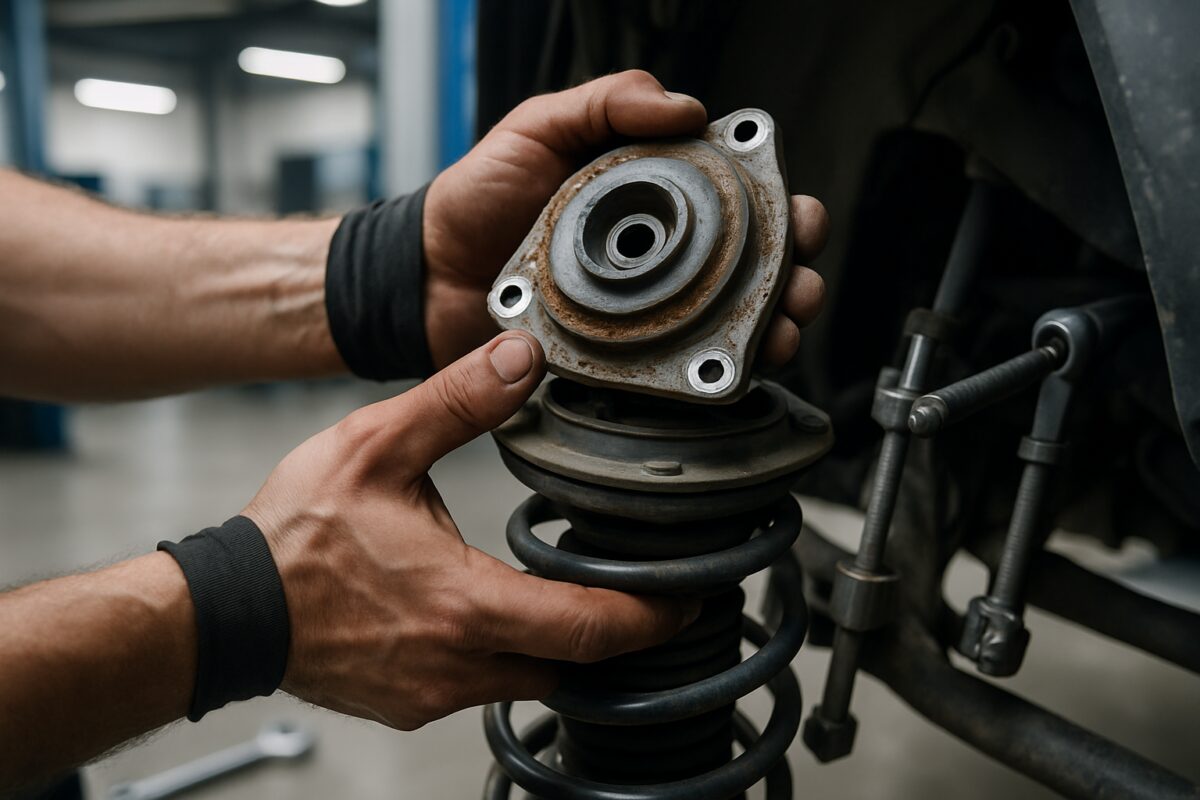
Strut bearing problems can turn your smooth driving experience into a nightmare of noise, vibration, and poor handling. These critical suspension components connect your struts to the vehicle’s body, allowing for proper wheel alignment and steering response. When strut bearings fail, you’ll notice clear warning signs that demand immediate attention to maintain safe driving conditions.
Excessive noise during steering
One of the most common signs of failing strut bearings is unusual noise when turning the steering wheel. You’ll typically hear grinding, creaking, or clicking sounds that become more pronounced when making sharp turns or parking manoeuvres.
These noises occur because worn strut bearings can no longer rotate smoothly. The metal components inside the bearing assembly start grinding against each other, creating that distinctive harsh sound. The noise often becomes worse in cold weather when lubricants thicken.
Our AutoPartsPro mechanics report that customers frequently mistake these sounds for issues with the [power steering pump](https://www.autopartspro.co.uk/carparts-online/power-steering-pump) or steering rack. However, strut bearing noise typically happens only during low-speed turns and parking, whilst power steering problems create noise at all speeds.
Don’t ignore these warning sounds. Continued driving with damaged strut bearings can lead to complete bearing failure, making steering extremely difficult and potentially dangerous. The grinding action also accelerates wear on surrounding components like [suspension springs](https://www.autopartspro.co.uk/carparts-online/suspension-springs) and [shock absorbers](https://www.autopartspro.co.uk/carparts-online/shock-absorber).
Steering wheel vibration and wandering
Faulty strut bearings create noticeable vibrations through the steering wheel, particularly during low-speed manoeuvres. This vibration feels different from wheel balancing issues or problems with [tie rod ends](https://www.autopartspro.co.uk/carparts-online/tie-rod-end), as it occurs specifically when turning rather than at highway speeds.
You might also notice your vehicle pulling to one side or requiring constant steering corrections to maintain straight-line driving. This happens because damaged strut bearings prevent proper wheel alignment, causing uneven tyre contact with the road surface.
The steering may feel loose or imprecise, making it difficult to maintain your intended path. This symptom becomes particularly dangerous during emergency manoeuvres where precise steering control is crucial for safety.
These symptoms often develop gradually, so drivers sometimes adapt to the poor handling without realising how compromised their vehicle’s steering has become. Regular inspection of suspension components, including [strut bearings](https://www.autopartspro.co.uk/carparts-online/strut-bearing), helps catch these problems before they affect vehicle safety.
Uneven tyre wear patterns
Worn strut bearings create distinctive tyre wear patterns that experienced mechanics can easily identify. You’ll typically see irregular wear on the inside or outside edges of your front tyres, known as camber wear.
This happens because failing strut bearings can’t maintain proper wheel alignment angles. The affected wheel tilts slightly, causing uneven contact between the tyre and road surface. Over time, this creates visible wear patterns and reduces tyre life significantly.
Check your tyres regularly for cupping, scalloping, or feathering patterns. These indicate suspension problems that may involve strut bearings, [ball joints](https://www.autopartspro.co.uk/carparts-online/ball-joint), or [suspension arm bushings](https://www.autopartspro.co.uk/carparts-online/suspension-arm-bushing).
Catching tyre wear early can save you money on premature tyre replacement. More importantly, uneven wear reduces traction and braking performance, creating safety risks especially in wet conditions. Don’t wait until the wear becomes severe – address the underlying suspension issues promptly.
Warning signs your car has a problem
Recognising strut bearing problems early prevents costly repairs and maintains vehicle safety. Watch for these key warning signs:
- Grinding or clicking noises when turning the steering wheel
- Steering wheel vibration during low-speed manoeuvres
- Vehicle pulling to one side whilst driving straight
- Uneven or rapid tyre wear on front wheels
- Loose or imprecise steering feel
Pay attention to how these symptoms develop. Strut bearing problems typically worsen gradually, making them easy to overlook until they become severe. Regular maintenance checks help identify issues before they compromise safety.
Professional tip: Test your strut bearings by turning the steering wheel whilst stationary with the engine running. Grinding or resistance indicates bearing wear that requires immediate attention.
How to fix the problems
Strut bearing repair requires specific tools and expertise, but understanding the process helps you make informed decisions about repairs:
| Repair Method | Difficulty Level | Cost Range | Time Required |
|---|---|---|---|
| DIY Replacement | Advanced | £50-£120 | 3-5 hours |
| Professional Service | N/A | £200-£400 | 2-3 hours |
| Complete Strut Assembly | Moderate | £300-£600 | 2-4 hours |
The most cost-effective approach depends on your mechanical skills and available tools. DIY replacement requires spring compressors and proper safety equipment. Many car enthusiasts prefer replacing the entire strut assembly, which includes new bearings, springs, and [shock absorber boots](https://www.autopartspro.co.uk/carparts-online/shock-absorber-boots).
Professional replacement ensures proper installation and safety. Technicians have access to specialised tools and can inspect related components like [top mounts](https://www.autopartspro.co.uk/carparts-online/top-mount) and [steering rack boots](https://www.autopartspro.co.uk/carparts-online/steering-rack-boot) during the repair.
Safety reminder: Never attempt strut bearing replacement without proper spring compression tools. Compressed suspension springs store enormous energy and can cause serious injury if handled incorrectly.
Additional repair considerations
When replacing strut bearings, consider these additional factors that affect repair costs and vehicle performance:
| Component | Replace When | Additional Cost | Benefits |
|---|---|---|---|
| Suspension Springs | If sagging or broken | £80-£200 | Restored ride height |
| Shock Absorbers | Over 80,000 miles | £150-£300 | Improved handling |
| Top Mount Assembly | If rubber deteriorated | £40-£100 | Reduced noise |
Always replace strut bearings in pairs to maintain balanced handling. Mixing new and old bearings can create handling inconsistencies and premature wear of the new component.
Consider upgrading to higher-quality bearings if you frequently drive on rough roads or carry heavy loads. Premium bearings last longer and provide better performance than basic replacement parts.
When to see a mechanic
Some strut bearing problems require immediate professional attention. Don’t delay seeking expert help if you experience:
- Sudden loss of steering control or excessive play
- Loud grinding noises that worsen quickly
- Steering wheel that won’t return to centre after turns
- Visible damage to suspension components
- Multiple suspension warning signs occurring together
Professional diagnosis becomes essential when symptoms overlap with other suspension problems. Issues with [hub bearings](https://www.autopartspro.co.uk/carparts-online/hub-bearing), [CV joints](https://www.autopartspro.co.uk/carparts-online/cv-joint), or [steering knuckles](https://www.autopartspro.co.uk/carparts-online/steering-knuckle) can mimic strut bearing problems.
Experienced technicians use specialised diagnostic equipment to pinpoint the exact source of suspension problems. They can also identify related issues that might not be obvious during visual inspection, such as worn [sway bar bushings](https://www.autopartspro.co.uk/carparts-online/sway-bar-bushings) or damaged [suspension arms](https://www.autopartspro.co.uk/carparts-online/suspension-arm).
How much does strut bearing replacement typically cost in the UK?
Strut bearing replacement costs range from £200-£400 per side including labour, with premium parts and complex installations reaching £600.
Can you drive with a faulty strut bearing?
Driving with worn strut bearings is dangerous as it reduces steering control and can lead to sudden bearing failure.
How long do strut bearings typically last?
Quality strut bearings last 80,000-120,000 miles under normal driving conditions, though harsh environments accelerate wear significantly.
What causes premature strut bearing failure?
Common causes include poor road conditions, contamination from road salt, inadequate lubrication, and excessive loads or aggressive driving.
Should you replace both strut bearings at the same time?
Yes, replacing strut bearings in pairs ensures balanced handling and prevents premature wear of the new bearing.
Final recommendation
Strut bearing problems demand prompt attention to maintain vehicle safety and prevent costly secondary damage. Based on our extensive experience at AutoPartsPro, we recommend addressing bearing noise or steering issues within 1,000 miles of first noticing symptoms.
Don’t compromise on quality when selecting replacement parts. Premium strut bearings may cost more initially, but they provide better durability and performance than budget alternatives. Consider replacing related components like [mounting kits](https://www.autopartspro.co.uk/carparts-online/mounting-kit) and protective boots during the repair to maximise value and reliability.
Professional installation ensures proper torque specifications and alignment, protecting your investment and maintaining warranty coverage. If you’re experienced with suspension work, quality replacement parts are readily available through AutoPartsPro’s comprehensive catalogue. Remember that suspension safety affects everyone on the road – invest in quality repairs that keep you and others safe.

 Loading...