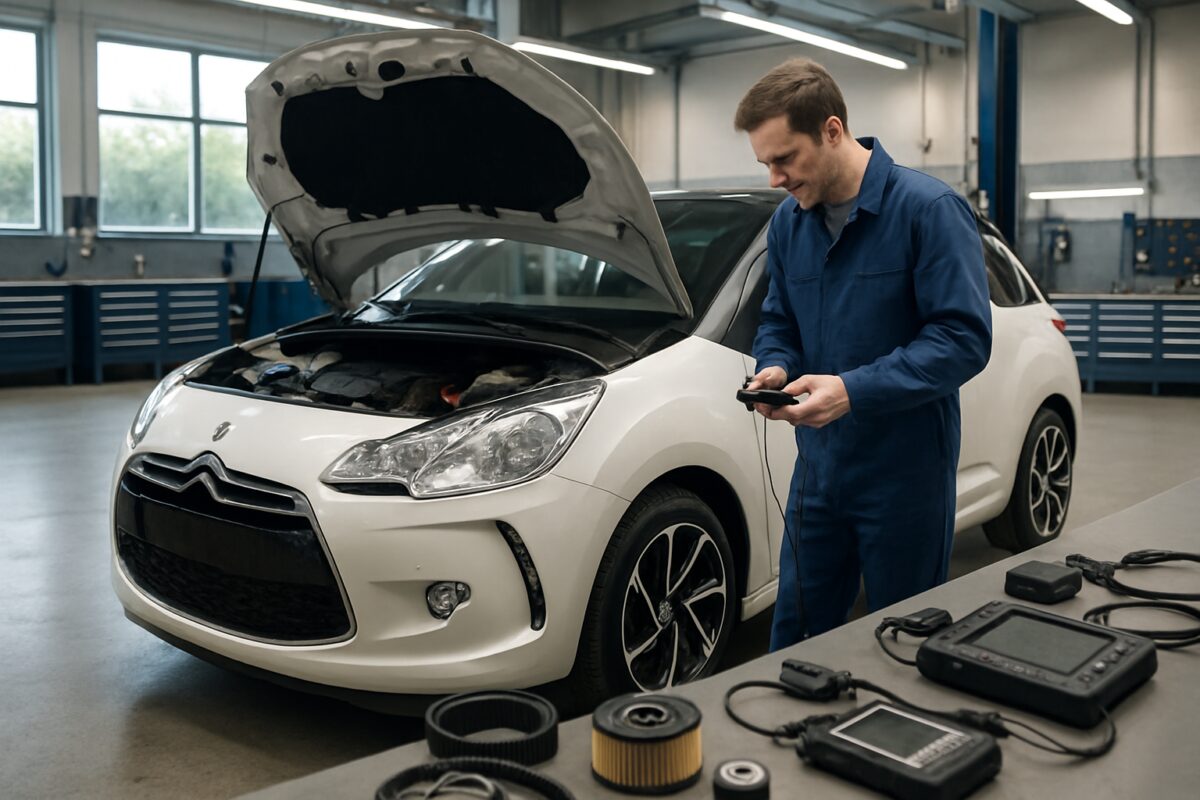
The Citroën DS 3 is a stylish compact car that has won many hearts across the UK. However, like any vehicle, it comes with its share of common problems that owners should know about. Understanding these issues early can save you from expensive repairs and keep your DS 3 running smoothly for years to come.
Diesel particulate filter issues
One of the most frequent problems with the Citroën DS 3 involves the particulate filter system. This component is crucial for reducing emissions in diesel models, but it often becomes clogged with soot particles.
The DPF works by collecting and burning off soot particles during regular driving. However, if you primarily drive short distances or in stop-and-go traffic, the filter doesn’t reach the high temperatures needed for regeneration. This leads to a build-up of soot that can eventually block the system entirely.
Symptoms include warning lights on the dashboard, reduced power output, and increased fuel consumption. In severe cases, the engine may enter “limp mode” to protect itself from damage. The problem is particularly common in DS 3 models from 2010-2014.
Professional tip: Take your DS 3 on a 20-minute motorway drive at least once a week to help the DPF regenerate naturally and prevent costly blockages.
Electronic power steering failures
Another significant issue affects the electric power steering system in the DS 3. This problem typically manifests as sudden loss of power assistance while driving, making the steering wheel extremely heavy and difficult to turn.
The root cause often lies within the electric power steering column itself. Internal components can fail due to wear or electrical faults, particularly in vehicles with higher mileage. The steering rack and associated sensors may also contribute to the problem.
Drivers report that the steering assistance can cut out without warning, creating a potentially dangerous situation. The problem seems to affect DS 3 models manufactured between 2009 and 2012 more frequently than later versions.
Whilst the steering remains functional without power assistance, the increased effort required makes parking and low-speed manoeuvres extremely challenging. This issue requires immediate professional attention as it directly impacts vehicle safety.
Timing belt and water pump complications
The timing belt system in the Citroën DS 3 presents another area of concern for owners. These components work together to maintain precise engine timing and cooling system circulation.
Timing belt failure can cause catastrophic engine damage, as the DS 3 uses interference engines where pistons and valves can collide if timing is lost. The cam belt typically needs replacement every 60,000 to 80,000 miles, but premature failure has been reported.
Simultaneously, the water pump often fails around the same time as timing belt issues. Since both components are located in the same area of the engine, many mechanics recommend replacing them together using a water pump timing belt kit.
Signs of impending failure include squealing noises from the engine bay, coolant leaks, and overheating. Regular inspection of these components is essential, particularly in vehicles approaching the recommended service intervals.
Turbocharger problems
Turbocharger issues plague many DS 3 models, especially those equipped with the 1.6 HDi engine. The turbocharger experiences premature wear due to oil contamination and inadequate lubrication.
Common symptoms include blue or black smoke from the exhaust, whistling noises during acceleration, and noticeable loss of power. The turbo’s variable geometry mechanism can stick due to carbon build-up, affecting performance and fuel economy.
Oil starvation represents the primary cause of turbo failure in the DS 3. This occurs when oil changes are overdue or when inferior oil grades are used. The high-speed rotating components within the turbo require clean, high-quality oil to function properly.
Additionally, the turbocharger hose connections can develop leaks, leading to boost pressure loss and reduced engine performance. These hoses deteriorate over time due to heat cycling and pressure variations.
Warning signs your car has a problem
Recognising early warning signs can prevent minor issues from becoming major expensive repairs. Pay attention to these key indicators:
– Dashboard warning lights, particularly engine management or DPF symbols
– Unusual noises from the engine bay, steering, or exhaust system
– Changes in power delivery or acceleration performance
– Increased fuel consumption without explanation
– Steering becoming heavy or unresponsive
– Smoke or unusual emissions from the exhaust
– Coolant leaks or overheating symptoms
– Difficulty starting the engine, especially when cold
Expert advice from AutoPartsPro mechanics: Never ignore warning lights on your DS 3’s dashboard. Modern vehicles have sophisticated diagnostic systems that can detect problems before they cause serious damage.
How to fix the problems
| Problem | DIY Solution | Professional Required |
|---|---|---|
| DPF Blockage | Regular motorway drives, DPF cleaner additives | Professional regeneration, filter replacement |
| Power Steering | Check fuses, battery condition | Column replacement, diagnostic scan |
| Timing Belt | Visual inspection only | Complete belt and pump replacement |
| Turbocharger | Regular oil changes, quality fuel | Turbo rebuild or replacement |
| Maintenance Task | Frequency | Cost Prevention |
|---|---|---|
| Oil changes | Every 6 months / 10,000 miles | Prevents turbo and engine damage |
| Air filter replacement | Every 20,000 miles | Protects turbo and improves efficiency |
| Coolant system check | Every 12 months | Prevents overheating and pump failure |
| Timing belt inspection | Every 40,000 miles | Avoids catastrophic engine damage |
When to see a mechanic
Certain problems with the DS 3 require immediate professional attention. Contact a qualified technician if you experience complete loss of power steering assistance, as this creates a safety hazard.
Engine warning lights should never be ignored, particularly those relating to emissions or engine management. These systems are complex and require diagnostic equipment to identify the root cause accurately.
Any signs of coolant loss or overheating warrant immediate investigation. The DS 3’s engine can suffer severe damage if allowed to overheat, potentially requiring complete engine replacement.
Timing-related noises from the engine bay also demand urgent attention. If the timing belt fails while driving, the resulting damage can cost thousands of pounds to repair. Early intervention can save significant expense.
Turbocharger problems should be addressed promptly to prevent further damage to the engine’s intake system. A failing turbo can contaminate the intercooler and associated components.
Frequently Asked Questions (FAQ)
How often should I replace the particulate filter on my DS 3?
The DPF typically lasts 80,000-100,000 miles with proper maintenance, but city driving may require earlier replacement due to incomplete regeneration cycles.
Can I drive my DS 3 without power steering assistance?
Whilst technically possible, driving without power steering creates safety risks and should only be done to reach a repair facility immediately.
What causes premature timing belt failure in the DS 3?
Oil leaks, overheating, and incorrect tension are primary causes. Regular inspections and timely replacement prevent catastrophic engine damage in interference engines.
How much does turbocharger replacement cost for a DS 3?
Turbocharger replacement typically costs £800-1,500 including labour, but early detection and proper maintenance can extend turbo life significantly.
Should I use premium fuel in my DS 3 to prevent problems?
Premium fuel can help reduce carbon build-up in direct injection engines and turbochargers, potentially extending component life and improving performance.
Final recommendation
The Citroën DS 3 remains an excellent choice for UK drivers despite these common problems. Regular maintenance and early problem detection are your best defences against expensive repairs.
Our AutoPartsPro specialists recommend establishing a relationship with a DS 3-experienced mechanic who understands these specific issues. Keep detailed maintenance records and never delay addressing warning signs.
Invest in quality replacement parts when repairs are needed. Genuine or OEM-equivalent components from AutoPartsPro ensure reliability and longevity. Remember that preventive maintenance costs far less than emergency repairs, especially with timing-sensitive components like the cam belt and turbocharger system.
With proper care and attention, your DS 3 can provide many years of reliable, stylish motoring across Britain’s roads.

 Loading...