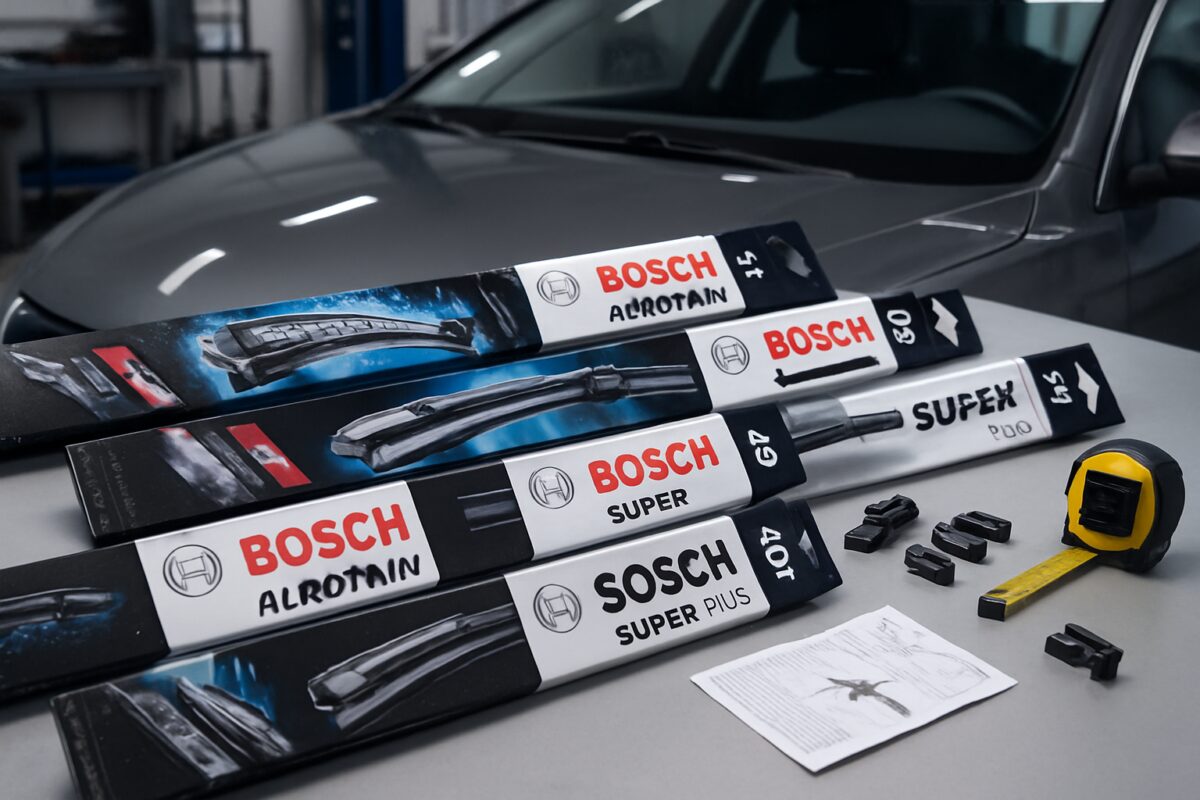
Finding the correct Bosch wiper blades for your vehicle requires checking your car’s make, model, and year, then matching these details to Bosch’s compatibility charts. Most vehicles use either hook, pin, or push-button fitting systems, with blade lengths typically ranging from 13 to 28 inches. The driver’s side usually requires a longer blade than the passenger side, and some cars need specific aerodynamic profiles for optimal performance.
Choosing the right wiper blades isn’t just about visibility – it’s about safety. Poor-fitting wipers can scratch your windscreen, create annoying streaks, or fail completely during heavy rain. That’s why our mechanics at Autopartspro always recommend checking three key factors before purchasing.
Understanding Bosch wiper blade types and technologies
Bosch manufactures several distinct wiper blade ranges, each designed for different driving conditions and vehicle types. Their premium lines incorporate advanced rubber compounds and aerodynamic designs that deliver superior performance.
The Bosch Aerotwin series represents their flagship technology. These flat beam blades use a single-piece steel spring design that maintains consistent pressure across the entire blade length. This eliminates the traditional metal framework, reducing wind lift and ice buildup.
Traditional Bosch Super Plus blades feature the classic bracket design with multiple pressure points. These work brilliantly on older vehicles and provide excellent value for money. The metal framework distributes pressure evenly, making them suitable for curved windscreens.
For extreme weather conditions, Bosch Icon blades offer dual rubber compounds. The graphite-treated edge provides smooth wiping action, whilst the longer-lasting rubber backing ensures durability through harsh British winters.
Key features that matter most
Modern Bosch wipers incorporate several technologies that enhance performance. The ClearMax coating reduces chattering and provides streak-free wiping for up to twice as long as standard blades.
Aerodynamic design becomes crucial at motorway speeds. Flat beam construction reduces wind noise and prevents lift-off, maintaining contact pressure even at 70mph. This is particularly important for drivers who regularly travel on Britain’s motorway network.
How to identify your current wiper blade size and fitting
Before selecting replacement wipers, you’ll need to measure your existing blades and identify the attachment mechanism. This process takes just a few minutes but prevents costly mistakes.
Start by lifting your wipers away from the windscreen. Measure each blade from end to end using a tape measure. Round to the nearest inch – most blades come in standard sizes like 18″, 20″, 22″, and 24″.
The driver’s side blade is typically 2-4 inches longer than the passenger side. Some vehicles use identical lengths, but this varies significantly between manufacturers. Never assume both blades are the same size.
Identifying attachment types
Three main attachment systems dominate the UK market. Hook-style fittings feature a J-shaped metal hook that clips into the wiper arm. This traditional design remains common on vehicles manufactured before 2005.
Pin-type connections use a small metal pin that locks into the blade assembly. These provide a more secure connection but require specific blade designs. Push-button fittings incorporate a spring-loaded mechanism for tool-free installation.
Step-by-step guide to finding your perfect Bosch match
Determining compatibility requires systematic checking of your vehicle specifications. Start by locating your vehicle identification details in the owner’s manual or registration documents.
Visit Bosch’s official compatibility checker online. Input your registration number or manually select make, model, year, and engine size. The system will display recommended blade sizes and fitting types for your specific vehicle.
Alternative identification methods
If online tools aren’t available, check the existing blade packaging or manufacturer stamps. Most quality blades display size information on the rubber element or metal framework.
Automotive retailers often maintain paper-based compatibility guides. These comprehensive charts list virtually every vehicle sold in the UK market, cross-referenced with appropriate blade sizes.
Common vehicle fitments and popular Bosch models
Understanding typical fitments for popular UK vehicles helps narrow down your choices. Ford Focus models typically require 26″ and 16″ blades, whilst Volkswagen Golf variants commonly use 24″ and 19″ combinations.
BMW 3 Series vehicles often need 24″ and 20″ blades, but this varies between generations. Always verify against your specific model year, as manufacturers frequently change wiper specifications during mid-cycle updates.
| Vehicle Model | Driver Side | Passenger Side | Recommended Bosch Model |
|---|---|---|---|
| Ford Focus (2011-2018) | 26″ | 16″ | Aerotwin |
| VW Golf (2013-2020) | 24″ | 19″ | Aerotwin Plus |
| BMW 3 Series (2012-2019) | 24″ | 20″ | Aerotwin |
| Audi A4 (2015-2021) | 24″ | 20″ | Aerotwin Plus |
Installation considerations for different models
Some Bosch blades come with multiple adapter clips, allowing compatibility across various fitting types. These universal designs simplify purchasing but require careful attention during installation.
Premium vehicles sometimes use specific blade profiles designed for their curved windscreen geometry. Using incorrect profiles can result in poor contact and reduced wiping effectiveness.
Installation tips and best practices
Proper installation ensures optimal performance and longevity from your new Bosch wipers. Our experienced technicians recommend replacing both blades simultaneously, even if only one appears worn.
Start installation with the vehicle parked and engine switched off. Lift the wiper arm carefully – excessive force can damage the spring mechanism or scratch your windscreen.
For hook-style fittings, align the blade hook with the wiper arm curve. Push firmly until you hear a distinct click, indicating secure attachment. Test the connection by gently pulling the blade – it shouldn’t detach easily.
Post-installation testing
Before driving, test your new wipers using the [windscreen washer pump](https://www.autopartspro.co.uk/carparts-online/windshield-washer-pump). Check for smooth operation across the entire windscreen area. Any chattering or streaking indicates incorrect installation or incompatible blade selection.
Adjust the wiper arm tension if necessary. Some vehicles allow minor adjustments to improve blade-to-glass contact pressure. Consult your owner’s manual for specific procedures.
Seasonal considerations and performance optimisation
British weather demands versatile wiper performance throughout the year. Summer heat can degrade rubber compounds, whilst winter conditions challenge blade flexibility and clearing ability.
During winter months, check your [windscreen washer reservoir](https://www.autopartspro.co.uk/carparts-online/windscreen-washer-reservoir) regularly. Use appropriate screen wash concentrate to prevent freezing and improve cleaning effectiveness.
Ice buildup can damage wiper blades permanently. Never force frozen wipers to operate – allow them to defrost naturally or use de-icer products designed for automotive glass.
Maintenance tips from our specialists
“Clean your wiper blades monthly with warm soapy water to remove road grime and extend their lifespan. This simple maintenance can double blade life in urban environments.” – AutoPartsPro Service Team
Regular cleaning prevents premature wear and maintains optimal performance. Use a soft cloth to wipe the rubber edge, removing accumulated dirt and debris that causes streaking.
Troubleshooting common fitment issues
Even with careful selection, fitment problems occasionally arise. Understanding common issues helps identify solutions quickly and avoid returning incorrectly chosen products.
Streaking patterns often indicate incorrect blade size rather than worn rubber. Oversized blades may contact window seals or pillars, preventing complete windscreen coverage. Undersized blades leave unwiped areas that compromise visibility.
Chattering noises suggest inadequate contact pressure or damaged rubber edges. This commonly occurs when mixing blade technologies – using one Aerotwin and one traditional blade creates uneven pressure distribution.
When professional assistance helps
Some vehicles require specialist knowledge for correct fitment. European luxury brands occasionally use proprietary attachment systems that demand specific Bosch part numbers.
Modified vehicles present unique challenges. Lowered suspension, altered windscreen angles, or aftermarket components may require non-standard blade sizes. Professional assessment ensures proper selection in these situations.
Cost considerations and value analysis
Bosch wiper pricing reflects the technology and materials used in construction. Premium Aerotwin blades cost more initially but often provide superior longevity and performance compared to economy alternatives.
Budget-conscious drivers might consider Bosch’s traditional bracket-style wipers for older vehicles. These proven designs deliver reliable performance at lower cost points, making them ideal for high-mileage cars.
| Blade Type | Initial Cost | Expected Lifespan | Best For |
|---|---|---|---|
| Bosch Aerotwin | High | 12-18 months | Modern vehicles, frequent drivers |
| Bosch Super Plus | Medium | 8-12 months | Older vehicles, standard use |
| Bosch Twin | Low | 6-10 months | Budget applications, light use |
| Bosch Icon | Premium | 15-24 months | Extreme conditions, performance cars |
Long-term value assessment
Consider your driving patterns when evaluating wiper blade investments. Daily commuters benefit from premium blades that maintain performance through frequent use. Weekend drivers might find standard options perfectly adequate.
Factor in replacement frequency when calculating costs. Higher-quality blades that last twice as long often provide better value despite increased initial expense.
Advanced fitting scenarios and special applications
Some vehicles present unique challenges that require specialist attention. Rear window wipers, whilst less common on modern cars, still need proper sizing and selection.
Commercial vehicles and vans often use heavy-duty wiper systems with reinforced arms and larger blade sizes. Bosch manufactures specific ranges for these applications, featuring robust construction for extended service life.
Performance modifications can affect wiper requirements. Lowered vehicles may need shorter blades to prevent contact with altered body panels. Racing applications might require aerodynamic profiles to maintain effectiveness at high speeds.
Compatibility with related components
Consider your [wiper motor](https://www.autopartspro.co.uk/carparts-online/wiper-motor) condition when upgrading to premium blades. Worn motors may struggle with heavier aerodynamic designs, potentially causing premature failure.
The [wiper linkage](https://www.autopartspro.co.uk/carparts-online/wiper-linkage) system affects blade performance significantly. Worn bushings or damaged arms can prevent proper blade contact regardless of quality. Address these issues before installing new wipers for optimal results.
Finding the perfect Bosch wiper blades for your car becomes straightforward once you understand the key identification factors. Start with accurate measurements of your existing blades, verify the attachment type, and cross-reference with Bosch compatibility data. Remember that investing in quality blades pays dividends through improved visibility, longer service life, and enhanced driving safety. Whether you choose aerodynamic Aerotwin technology or traditional Super Plus designs, proper fitment ensures your wipers perform reliably through Britain’s challenging weather conditions.
Frequently Asked Questions (FAQ)
How do I know which size Bosch wiper blades I need?
Measure your existing blades from end to end and check your vehicle’s manual. Most cars use different sizes for driver and passenger sides.
Can I mix different Bosch wiper blade types on the same car?
It’s not recommended as different blade designs have varying pressure distributions, which can cause uneven wiping performance and potential streaking.
How often should I replace my Bosch wiper blades?
Replace them every 12-18 months or when you notice streaking, chattering, or reduced clearing effectiveness during rain or washing.
What’s the difference between Bosch Aerotwin and Super Plus wipers?
Aerotwin uses flat beam technology without metal framework, whilst Super Plus features traditional bracket design with multiple pressure points for older vehicles.
Do all Bosch wiper blades come with universal fittings?
Many Bosch blades include multiple adapter clips for different attachment types, but some vehicle-specific models require exact fitting matches for proper installation.

 Loading...