


Turbo for your car

Turbos from leading manufacturers






















Turbochargers for Top models
- BMW 3 Series turbo
- VW GOLF turbo
- BMW 5 Series turbocharger
- AUDI A4
- MERCEDES-BENZ C-Class turbo
- FORD FOCUS turbo
- MERCEDES-BENZ E-Class turbocharger
- BMW 1 Series
- FORD FIESTA turbo
- AUDI A3 turbo
- AUDI A6 turbocharger
- VW POLO
- VAUXHALL ASTRA turbo
- VW TRANSPORTER turbo
- VW PASSAT turbocharger
- MINI Hatchback
- NISSAN QASHQAI turbo
- HONDA CIVIC turbo
- VAUXHALL CORSA turbocharger
- FORD MONDEO
 Lambda sensor (10000 items)
 Exhaust mounting kit (10000 items)
 Exhaust manifold gasket (10000 items)
 Exhaust silencer (10000 items)
 Exhaust flex pipe (3013 items)
 Catalytic converter (10000 items)


Your Turbo worn out? » Read more about common malfunctions • Repair • Replacement manual
Better performance & improved fuel efficiency with the turbocharger
The exhaust turbocharger, installed in the engine, is a small component, ensuring additional air supply to improve fuel combustion. Simple as a component it may be, the turbo charger is subject to high strain. Defects often occur due to inadequate maintenance. Replacement can be very expensive.
Turbocharger: construction and function
The turbocharger is a turbine driven by the exhaust flow, consisting of a box containing two paddle wheels which are connected to a common shaft. The dual turbine's drive side is driven by the exhaust from the engine. The operational end is connected to the engine's intake channel. The turbocharger uses the energy of the hot exhaust flow to boost the engine's intake of fresh air.
More air = better combustion
A petrol or diesel engine takes its drive power from fuel combustion. A combustible gas is compressed and ignited. A higher the amount of oxygen in the gas mix causes a more complete combustion of hydrocarbons in the injected fuel. There are various ways of boosting the amount of air. The simplest way is the air intake cooler, cooling and compressing the air intake. The intake cooler is a simple and sturdy component. Racing cars are often equipped with switchable compressors, either electrically driven or connected to the engine by a belt drive. They offer variable and high compression of the air intake. An alternative option is the so-called G-lader, driven by the crankshaft. Apart from Volkswagen no other car manufacturer took up this option. Today's most evident solution remains the turbocharger.
Why not injecting oxygen?
Everyone who ever used a cutting torch knows how destructive pure oxygen can be on metal. A direct injection of oxygen is therefore no option, as the combustion temperature would get way too high. A few seconds of excessive performance would turn the engine into a glowing lump of scrap. Boosting performance by air compression must always be calculated precisely.
Turbocharger defects
With adequate maintenance, the turbocharger will keep a long time. In most cases, no replacement is necessary within a car's life span, provided the user follows the maintenance manual. The turbocharger consists of a dual turbine rotating at more than ten thousand rpm, causing it to glow. Most turbocharger defects are the result of penetrating foreign objects. A leaking intake channel or an aged air filter cause dust particles to enter the turbocharger. Even the smallest dust grain acts like a projectile, chipping parts off the paddle wheels. Damaged paddle wheels make the turbocharger run irregularly, resulting in damage of the bearing and gaskets. Sooner or later exhaust gas and oil from the drive side penetrate the intake, where it is directed back into the combustion chamber. A defective turbocharger causes the following symptoms:
- strong smoke development from the exhaust
- impaired performance
- the typical sound is not occurring
- oil leaking out
A turbocharger cannot be repaired. In most cases there is no alternative to replacement. Despite the high costs for the component it is always recommended to use a new turbocharger. The history of a used turbocharger is unknown and it might have sustained previous damage. The installation of the turbocharger is a rather delicate business and installing a used part you run the risk of doing all the work in vain.
Costs for a turbocharger
A new turbocharger costs at least 500 EUR (± £450). More often, prices start at 700 EUR (± £625). Depending on car model a new turbocharger could even set you back 3,000 EUR (± £2,680) or more. Yet, repairing or regenerating an old turbocharger is an option. This is however a case for a professional garage. In this way, you can easily save several hundreds of pounds.

- Charge Type: Exhaust Turbocharger
- Shape: round
- Supplementary Article / Supplementary Info: with gasket/seal
- Condition: new

- Charge Type: Turbo
- Operating Mode: Electric
- Supplementary Article / Supplementary Info: without fastening/mounting material
- Specification: VNT / VTG
- Condition: new

- Charge Type: Exhaust Turbocharger
- Supplementary Article / Supplementary Info: without fastening/mounting material
- Specification: VNT / VTG
- Condition: Remanufactured

- Charge Type: Turbo
- Condition: new
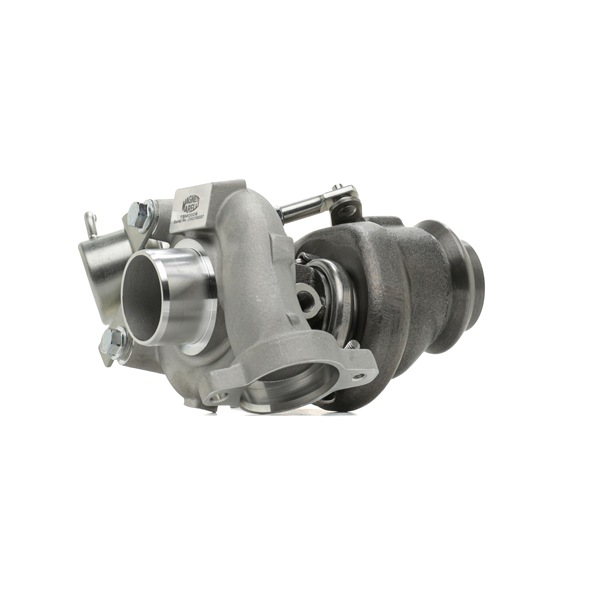
- Charge Type: Exhaust Turbocharger
- Supplementary Article / Supplementary Info: Incl. Gasket Set, with fastening/mounting material
- Quantity Unit: Piece
- Fuel Type: Diesel
- Operating Mode: pneumatic
- Condition: new

- Operating Mode: pneumatic
- Charge Type: Exhaust Turbocharger
- Cooling Type: Oil-cooled
- Supplementary Article / Supplementary Info: with an electric divert-air valve, with gaskets/seals
- Supplementary Article / Supplementary Info Info 2: without exhaust manifold
- Material: Aluminium
- Condition: new

- Observe technical data
- New Part
- Supplementary Article / Supplementary Info: Incl. Gasket Set, with fastening/mounting material
- Quantity Unit: Piece
- Fuel Type: Diesel
- Quality: Neuteil
- Charge Type: VTG turbocharger
- Operating Mode: pneumatic
- Cooling Type: Oil-cooled
- Article number of recommended accessories: 10921809, 10921010, 10921020, 10921038, 10921045, 10921046
- Condition: new

- Charge Type: Exhaust Turbocharger
- Quantity Unit: Piece
- Supplementary Article / Supplementary Info: without fastening/mounting material
- Operating Mode: electronically controlled
- Condition: new

- Charge Type: Exhaust Turbocharger
- Weight [g]: 6610
- Supplementary Article / Supplementary Info: with fastening/mounting material, Incl. Gasket Set
- Emission Standard: Euro 4
- Operating Mode: Vacuum-controlled
- Material: Aluminium, Steel
- Condition: new

- Operating Mode: pneumatic
- Charge Type: Exhaust Turbocharger
- Cooling Type: Oil-cooled
- Supplementary Article / Supplementary Info: with gaskets/seals
- Supplementary Article / Supplementary Info Info 2: without exhaust manifold
- Emission Standard: Euro 4
- Exhaust System: for vehicles with factory fitted soot -/particulate filter
- Weight [g]: 5900
- Quantity Unit: Piece
- Material: Aluminium, Steel
- Condition: Remanufactured

- Charge Type: Exhaust Turbocharger
- Quantity Unit: Piece
- Condition: new

- Charge Type: Exhaust Turbocharger, Turbocharger/Charge Air cooler
- Quantity Unit: Piece
- Fuel Type: Diesel
- Emission Standard: Euro 4
- Operating Mode: pneumatic
- Regulator: with vacuum governor
- Supplementary Article / Supplementary Info: without gaskets/seals
- Condition: new


