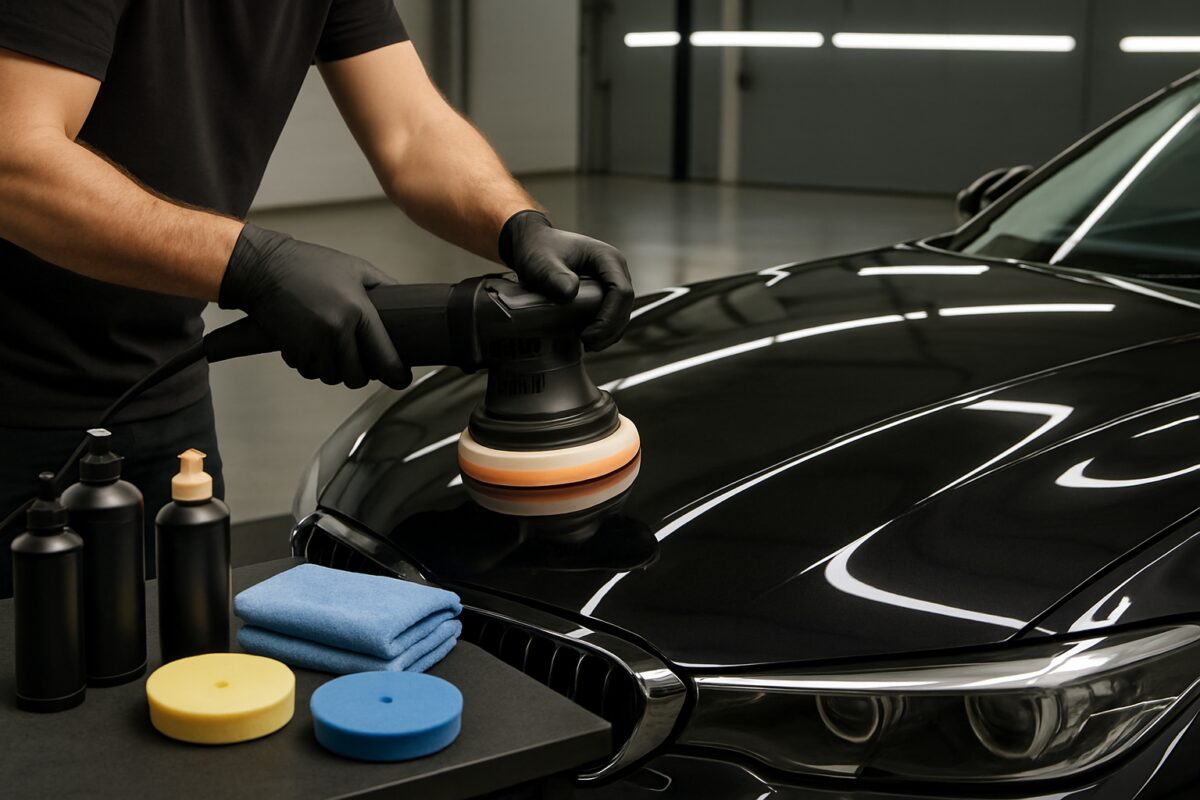
Machine polishing removes swirl marks, oxidation, and minor scratches whilst restoring your car’s paint to showroom condition. You’ll need a dual-action polisher, quality polish, microfibre cloths, and proper preparation techniques. The process involves cleaning, applying polish in sections, and finishing with protection for lasting results.
Tools and parts required
Getting the right equipment makes all the difference between amateur results and professional-grade finish. Quality tools protect your paintwork whilst delivering superior outcomes.
Parts needed:
- Cutting compound (for heavy correction)
- Polish (medium to fine grade)
- Finishing polish
- Car wax or sealant
- Clay bar lubricant
Tools required:
- Dual-action polisher (6-inch backing plate)
- Polishing pads (cutting, polishing, finishing)
- Microfibre cloths
- Spray bottles
- Masking tape
- Work lights
Safety precautions
Machine polishing generates heat and friction that can damage paint if done incorrectly. Always work in shade, keep the polisher moving, and test products on hidden areas first. Wear safety glasses and ensure adequate ventilation when working indoors.
Step-by-step instructions
Step 1: Prepare the vehicle
Wash your car thoroughly to remove all dirt and debris. Even tiny particles can cause scratching during polishing. Work in a shaded area away from direct sunlight – ideally in a garage or on an overcast day.
Mask off plastic trim, rubber seals, and textured surfaces with quality masking tape. Polish residue on these materials is difficult to remove and can cause permanent staining.
Step 2: Assess paint condition
Inspect the paintwork under good lighting to identify swirl marks, scratches, and oxidation. This determines which grade of polish to start with. Heavy defects require cutting compound first, whilst light swirls need only fine polish.
Clay the paint surface if it feels rough or has embedded contaminants. This step ensures the polisher doesn’t drag particles across the paint, causing further damage.
Step 3: Set up your polisher
Attach the appropriate pad to your dual-action polisher. Start with a cutting pad for heavy correction, then move to polishing and finishing pads. Set the speed to 3-4 for initial work – you can adjust based on the paint’s response.
Professional tip: Prime new pads by applying polish directly to the pad and spreading it evenly before starting the machine. This prevents initial scratching and ensures even product distribution.
Step 4: Apply polish systematically
Work in 2×2 foot sections to maintain control and prevent product drying. Apply 5-6 small dots of polish to the pad, then spread at low speed before increasing to working speed. Use overlapping passes in a crosshatch pattern.
Keep the polisher flat against the surface and maintain steady pressure. Work the polish until it begins to turn clear – this indicates the abrasives have broken down properly. Remove residue immediately with a clean microfibre cloth.
Step 5: Progress through polish grades
After cutting compound, switch to a polishing pad and medium polish to refine the finish. Follow with a finishing polish on a soft pad to remove any remaining marks. Each stage should improve the gloss and clarity.
Check your progress frequently with good lighting. The goal is glass-like clarity without visible swirls or scratches. Don’t rush – proper technique takes time but delivers lasting results.
Step 6: Apply protection
Once polishing is complete, apply a quality wax or paint sealant to protect your work. This step locks in the shine and provides barrier protection against environmental damage.
AutoPartsPro mechanics recommend waiting 24 hours after polishing before applying protection products. This allows any remaining polish oils to fully cure and ensures maximum bonding of the protective layer.
Common mistakes to avoid
These errors can undo hours of careful work or even damage your paintwork permanently:
- Working in direct sunlight: Heat causes polish to dry too quickly, creating difficult-to-remove residue and potential paint damage
- Using too much pressure: Let the machine do the work – excessive pressure generates heat and can burn through paint
- Neglecting pad maintenance: Dirty pads redistribute contaminants and reduce polishing effectiveness
- Skipping preparation steps: Polishing over dirt or contaminants creates more scratches than it removes
- Working too large sections: Product dries out before proper working, leading to poor results
Always test your technique on an inconspicuous area first. Different paint types respond differently to machine polishing, and modern clear coats can be surprisingly thin.
When should you machine polish your car?
Most vehicles benefit from machine polishing every 12-18 months, depending on usage and storage conditions. Cars exposed to harsh elements or frequent washing may need attention more often.
Look for these signs indicating it’s time to polish:
- Visible swirl marks in sunlight
- Dull or hazy paint finish
- Water doesn’t bead properly
- Fine scratches from automated car washes
- Oxidation or chalky appearance
Addressing these issues promptly prevents more serious paint damage that requires professional restoration. Regular polishing maintains your vehicle’s value and appearance far more cost-effectively than repainting.
Related maintenance you can do at the same time
Whilst you have your polishing equipment out, consider these complementary tasks:
- Clean and polish headlamp lenses to improve visibility and appearance
- Apply trim restorer to faded plastic bumpers and exterior trim
- Clean and condition leather interior surfaces
- Polish wing mirror housings and chrome details
- Apply tyre shine for a complete detailed finish
These additional steps maximise the impact of your polishing work and create a cohesive, professional appearance. The same attention to detail that produces excellent paint results applies to every aspect of vehicle presentation.
Frequently asked questions
Can I use a rotary polisher instead of dual-action?
Rotary polishers are more aggressive and require significant experience. Dual-action polishers are safer for beginners whilst still delivering professional results on most paint correction tasks.
How often should I change polishing pads?
Clean pads after each panel section and replace when they become hard, contaminated, or lose their cutting ability. Quality pads last longer and deliver better results.
What’s the difference between polish and wax?
Polish contains abrasives to correct paint defects, whilst wax provides protection without cutting action. Always polish first, then apply wax or sealant for protection.
Can machine polishing remove deep scratches?
Machine polishing removes scratches that don’t catch your fingernail. Deeper scratches require professional repair or wet sanding before polishing can be effective.
Is machine polishing safe for all paint types?
Modern dual-action polishers are safe for most automotive paints when used correctly. Single-stage paints require more caution than modern clear-coated finishes.
Machine polishing transforms your vehicle’s appearance when done with proper technique and quality products. The investment in time and equipment pays dividends in maintained value and pride of ownership. Starting with the right polishing equipment ensures results that rival professional detailing services whilst developing skills that serve you for years to come.

 Loading...