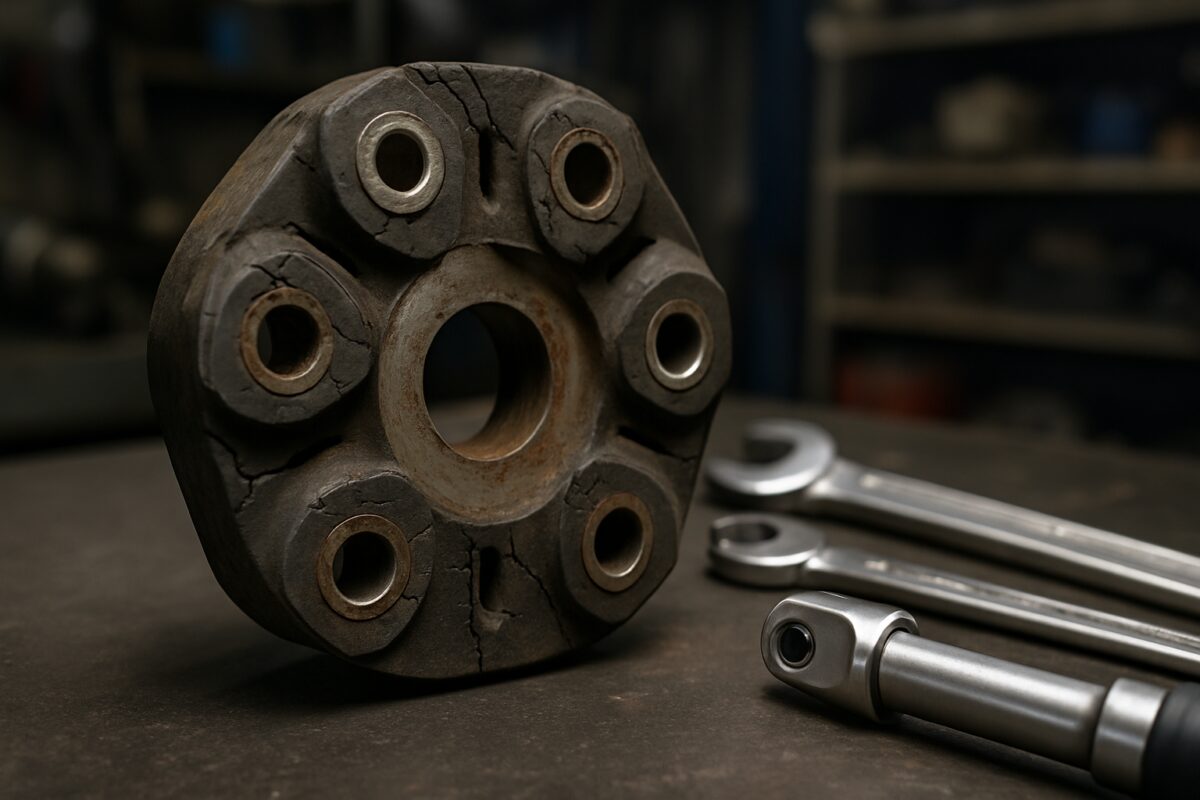
The drive shaft coupler is a crucial component that connects your vehicle’s transmission to the drive shaft, transferring power from the engine to the wheels. This flexible coupling absorbs vibrations and compensates for slight misalignments whilst maintaining smooth power delivery. When this component fails, it can cause serious drivability issues that require immediate attention.
Worn or damaged rubber elements
The most common failure in drive shaft couplers involves deterioration of the rubber or polyurethane elements. These flexible components absorb engine vibrations and allow for minor angular misalignments between the transmission output shaft and drive shaft input.
Over time, heat, oil contamination, and normal wear cause these rubber elements to crack, split, or completely separate. High-performance vehicles experience accelerated wear due to increased torque loads and operating temperatures.
When rubber elements fail, you’ll notice increased vibration through the floor pan, particularly during acceleration or deceleration. The coupling may also produce a distinctive rumbling noise that changes with engine RPM. In severe cases, complete separation can occur, leaving you stranded.
AutoPartsPro mechanics frequently observe that vehicles with modified engines or those subjected to aggressive driving patterns show premature coupler wear. Regular inspection of these components during routine maintenance can prevent unexpected failures.
Metal fatigue and stress fractures
The metal portions of drive shaft couplers can develop stress fractures due to repetitive loading cycles and material fatigue. These failures typically occur at connection points where bolts attach to the coupling disc or where the coupling meets the flywheel housing assembly.
High-torque applications, such as diesel engines or turbocharged petrol engines, place additional stress on these metal components. Temperature cycling from normal operation also contributes to metal fatigue over thousands of miles.
Stress fractures begin as hairline cracks that gradually propagate until complete failure occurs. During this progression, drivers may experience intermittent vibrations, particularly under load conditions like climbing hills or towing.
Professional inspection using magnetic particle testing can detect early-stage cracks before catastrophic failure. Our specialists recommend replacement at the first sign of metal fatigue to avoid potential damage to surrounding drivetrain components like the transmission filter housing.
Bolt loosening and connection failures
Drive shaft coupler bolts can loosen over time due to vibration and thermal expansion cycles. These high-strength fasteners require specific torque specifications and thread-locking compounds to maintain proper clamping force.
Improper installation procedures, including insufficient torque or missing thread locker, accelerate bolt loosening. Once bolts begin to work loose, they create additional clearance that increases stress on remaining fasteners.
Loose coupling bolts produce a distinctive knocking sound during acceleration and deceleration. The noise typically occurs in rhythm with engine RPM and may be accompanied by a metallic rattling from the transmission tunnel area.
Complete bolt failure can cause immediate loss of drive and potential damage to the transmission tail housing or differential components. Regular torque checking during scheduled maintenance prevents this costly scenario.
Misalignment issues
Drive shaft coupler misalignment occurs when the transmission output shaft and drive shaft centrelines don’t align properly. This condition places excessive side loads on the coupling and accelerates wear of all flexible elements.
Common causes include worn engine mounts, damaged transmission mounts, or bent drive shaft components. Accident damage or improper repairs can also create alignment problems.
Misaligned couplers produce vibration patterns that vary with vehicle speed rather than engine RPM. Drivers often describe a “whirring” or “humming” noise that becomes more pronounced at highway speeds.
Professional alignment checking requires specialised tools and experience. Our technicians use dial indicators and laser alignment systems to verify proper positioning before installing new coupling assemblies. Failure to address underlying misalignment causes rapid premature failure of replacement parts.
Warning signs your car has a problem
Several symptoms indicate potential drive shaft coupler problems that require immediate attention:
- Vibration through the floor, particularly during acceleration
- Knocking or rumbling noises from beneath the vehicle
- Difficulty engaging gears or transmission slipping
- Visible fluid leaks near the transmission tail housing
- Excessive play when rocking the vehicle in park
These warning signs often develop gradually, making them easy to ignore until complete failure occurs. Early recognition allows for planned repairs rather than emergency roadside assistance.
“Professional tip: Test drive your vehicle at various RPM ranges in a safe area. Coupler problems typically manifest differently at idle, moderate RPM, and higher engine speeds.”
How to fix the problems
Drive shaft coupler repairs require proper tools and mechanical knowledge. Here’s a comprehensive approach to addressing common issues:
| Problem Type | Repair Method | Estimated Time | Difficulty Level |
|---|---|---|---|
| Worn rubber elements | Complete coupler replacement | 2-4 hours | Moderate |
| Loose bolts | Retorque to specification | 1-2 hours | Easy |
| Metal fatigue | Replace entire assembly | 3-5 hours | Advanced |
| Misalignment | Correct mounting points | 4-8 hours | Expert |
Successful repairs also depend on having quality replacement parts. OEM-specification couplers provide the best longevity, whilst aftermarket performance options suit modified vehicles.
“Always replace coupling bolts during assembly. These critical fasteners undergo significant stress cycles and shouldn’t be reused even if they appear undamaged.”
When to see a mechanic
Certain drive shaft coupler issues require professional diagnosis and repair. Attempting complex drivetrain work without proper experience can result in costly damage or safety hazards.
Schedule immediate professional inspection if you experience complete loss of drive, severe vibrations, or loud mechanical noises. These symptoms indicate potential catastrophic failure that could damage surrounding components like the clutch assembly or transmission case.
Professional mechanics have access to specialised alignment tools and torque specifications essential for proper installation. They can also identify underlying causes like worn CV joints or damaged propeller shaft components that contribute to coupler failure.
| Symptom | Urgency Level | Professional Required |
|---|---|---|
| Mild vibration | Moderate | Recommended |
| Loud noises | High | Yes |
| Loss of drive | Emergency | Immediate |
| Fluid leaks | High | Yes |
Frequently asked questions (FAQ)
How long do drive shaft couplers typically last?
Most drive shaft couplers last 80,000-120,000 miles under normal driving conditions, though performance applications may require replacement sooner.
Can I drive with a failing drive shaft coupler?
Driving with a failing coupler risks complete drivetrain failure and potential damage to expensive transmission or differential components.
What causes premature drive shaft coupler wear?
Aggressive driving, engine modifications, worn mounts, contamination from engine oil leaks, and misalignment accelerate coupler deterioration significantly.
Are aftermarket drive shaft couplers reliable?
Quality aftermarket couplers perform well when properly specified, though OEM parts typically offer the best fit and longevity.
How much does drive shaft coupler replacement cost?
Replacement costs vary from £150-400 depending on vehicle type, labour rates, and whether additional gaskets or seals require attention.
Final recommendation
Drive shaft coupler maintenance deserves attention during regular service intervals to prevent costly failures. Early detection of wear patterns allows for planned replacement rather than emergency repairs that often damage surrounding components.
Our specialists at AutoPartsPro recommend annual visual inspection of coupler condition, particularly on high-mileage or performance vehicles. Quality replacement parts, proper installation procedures, and addressing underlying causes ensure reliable long-term operation.
Don’t ignore early warning signs like mild vibrations or unusual noises. Professional diagnosis can save hundreds of pounds compared to complete drivetrain failure scenarios. Regular maintenance of related components like transmission fluid and engine mounts also extends coupler service life significantly.

 Loading...