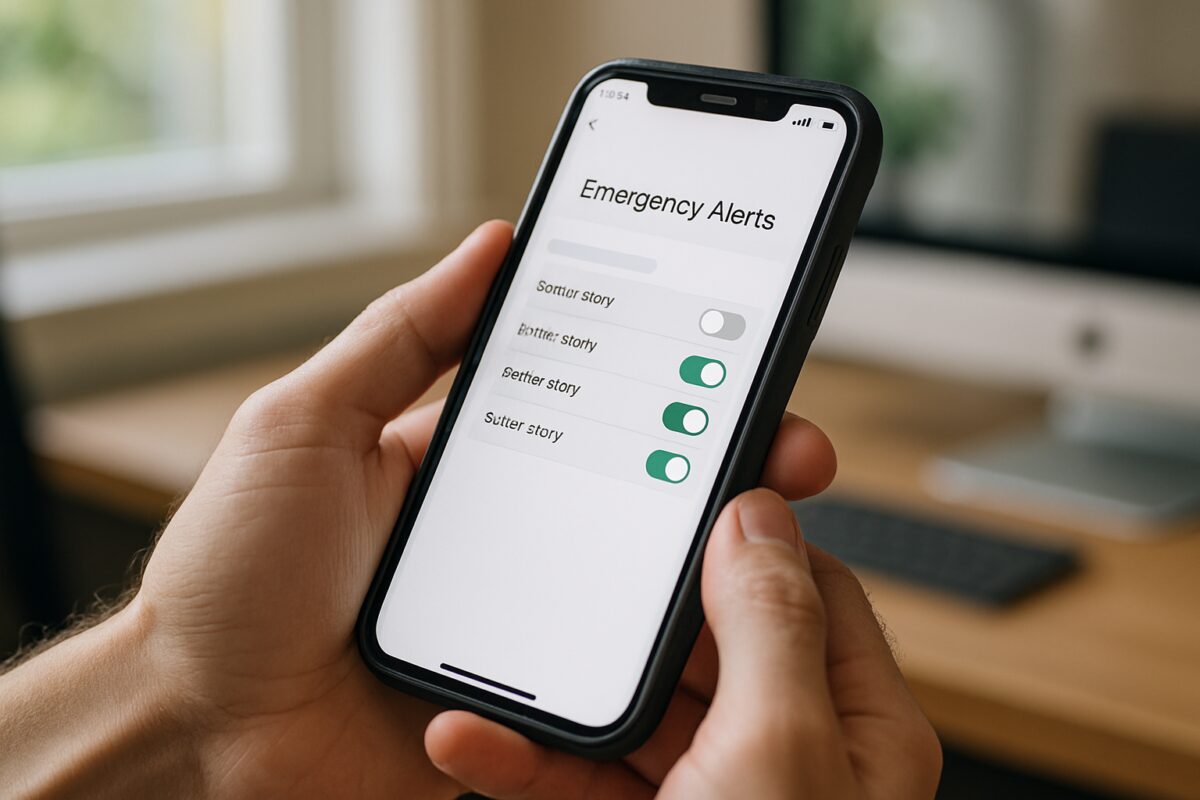
To stop emergency alerts, access your device’s settings menu, locate ‘Emergency Alerts’ or ‘Emergency Broadcasts’, and toggle off specific alert types including Amber Alerts, severe weather warnings, and public safety notifications. Most smartphones allow individual control over different emergency alert categories whilst maintaining presidential or extreme threat alerts which cannot be disabled.
Emergency alerts serve as vital safety communications, but constant notifications can become overwhelming for many users. Whether you’re experiencing alert fatigue or simply prefer alternative news sources for emergency information, understanding how to manage these notifications gives you greater control over your device experience.
These government-issued alerts utilise the Emergency Alert System (EAS) and Wireless Emergency Alerts (WEA) to broadcast critical information directly to compatible devices. The system covers various scenarios from severe weather warnings to public safety threats, ensuring widespread population coverage during emergencies.
Tools and parts required
Managing emergency alerts requires minimal equipment and can be accomplished with standard device access:
Equipment needed:
- Smartphone, tablet, or compatible device
- Administrative access to device settings
- Active network connection for settings changes
Access requirements:
- Device passcode or biometric authentication
- Basic familiarity with settings navigation
- Understanding of alert categories
Safety precautions
Before disabling emergency alerts, consider the potential consequences carefully. These notifications provide crucial information during natural disasters, terrorist threats, and missing person cases. Evaluate your alternative news sources and ensure you maintain awareness of local emergency situations through other channels.
Certain alert types, particularly presidential alerts and extreme threats, cannot be disabled due to federal regulations. This ensures critical national emergency information reaches all citizens regardless of their personal preferences.
Step-by-step instructions
Step 1: Access device settings
Navigate to your device’s main settings menu through the app drawer or home screen. Look for the gear icon typically representing system settings. On Android devices, this appears as ‘Settings’, whilst iOS users should locate ‘Settings’ on their home screen.
Some manufacturers customise their settings layout, so the exact location may vary between Samsung, Huawei, OnePlus, and other Android variants. The settings app remains consistently accessible from the notification panel’s quick settings area.
Step 2: Locate emergency alert options
Within settings, search for emergency alert configurations. Android users typically find these under ‘Apps & Notifications’ > ‘Advanced’ > ‘Emergency Alerts’ or directly under ‘Emergency Alerts’ in the main settings menu. iOS users should navigate to ‘Notifications’ and scroll to the bottom for ‘Emergency Alerts’.
Alternative locations include ‘Safety & Emergency’ sections or integrated within messaging app settings. Some carriers integrate these controls within their specific messaging applications rather than system settings.
Step 3: Configure alert categories
Review available alert categories and toggle off unwanted notifications. Common categories include Amber Alerts (missing children), severe weather warnings, public safety alerts, and test alerts. Each category operates independently, allowing selective disabling whilst maintaining others.
Consider keeping severe weather alerts active if you live in areas prone to natural disasters. Public safety alerts cover terrorist threats and other immediate dangers, whilst Amber Alerts focus specifically on child abduction cases.
Professional tip: Maintain severe weather alerts in regions with frequent storms, floods, or other natural disasters. These notifications often provide life-saving advance warning that traditional news sources might miss.
Step 4: Adjust notification settings
Fine-tune remaining alert behaviours by adjusting volume, vibration, and display settings. Most devices allow customisation of alert tones, vibration patterns, and screen activation preferences. These settings help balance awareness with personal comfort levels.
Some devices offer scheduled quiet periods or integration with Do Not Disturb modes. However, critical emergency alerts typically override these settings to ensure important information reaches recipients regardless of device status.
Step 5: Verify and test changes
Confirm your modifications by reviewing the emergency alert settings summary. Many devices display active alert types and their current status. Test alerts, when available, help verify your configuration without waiting for actual emergencies.
Consider documenting your chosen settings and alternative emergency information sources. This ensures you maintain appropriate safety awareness whilst avoiding unwanted notifications. Regular reviews help adapt settings as circumstances change.
Expert advice from our technical specialists: Document alternative emergency information sources such as local radio stations, news apps, or weather services to maintain safety awareness after disabling certain alert categories.
Common mistakes to avoid
Many users accidentally disable all emergency communications, including critical presidential alerts that provide national security information. These alerts remain active regardless of user preferences and serve essential safety functions during major emergencies.
Another frequent error involves confusing emergency alerts with regular promotional notifications from apps or services. Emergency alerts utilise specific government systems and display distinctive formatting, including unique alert tones and message structures.
Some users disable alerts assuming they’ll receive information through social media or news apps. However, emergency alert systems often provide faster, more targeted information than traditional media sources, particularly during rapidly developing situations.
Failing to establish alternative information sources represents a significant oversight. If you disable emergency alerts, ensure reliable access to weather forecasts, local news, and emergency services communications through other channels.
When should you disable emergency alerts?
Consider disabling specific alert categories if you experience frequent false alarms or receive notifications for areas outside your immediate location. Some regions generate numerous alerts due to geographic proximity to multiple jurisdictions, creating notification fatigue.
Individuals with anxiety disorders or PTSD may benefit from selective alert management whilst maintaining access to critical safety information through alternative sources. Mental health considerations should balance with practical safety needs.
Professional environments requiring minimal interruptions might necessitate adjusted alert settings during specific hours. However, maintain awareness of local emergency procedures and alternative communication methods during work periods.
Travellers in unfamiliar areas should generally maintain active emergency alerts to receive location-specific safety information. Foreign travel may require additional consideration of local emergency communication systems and language barriers.
Related safety considerations
Maintaining vehicle emergency equipment becomes more critical when disabling mobile emergency alerts. Ensure your car contains appropriate battery maintenance tools and emergency communication devices.
Consider upgrading vehicle additional lighting systems for enhanced visibility during emergency situations. Proper illumination helps emergency services locate your vehicle and provides better road awareness during severe weather.
Regular brake pads inspection ensures optimal stopping performance during emergency evacuation scenarios. Reliable braking systems prove essential when navigating challenging weather conditions or emergency route changes.
Maintain functional windscreen wipers and clear visibility systems for safe travel during severe weather events. Emergency situations often involve challenging driving conditions requiring optimal vehicle performance.
Keep fuel filter and engine systems properly maintained to ensure reliable transportation during emergencies. Vehicle reliability becomes crucial when emergency alerts might otherwise warn of approaching dangers.
Frequently asked questions
Can I completely disable all emergency alerts?
No, presidential alerts and extreme threat notifications cannot be disabled due to federal safety regulations and remain active regardless of user preferences.
Do emergency alerts work without mobile network coverage?
Emergency alerts require cellular network connectivity to receive and cannot function in areas with no mobile signal coverage.
Will disabling alerts affect my phone’s other notification functions?
No, emergency alert settings operate independently from regular app notifications and do not impact other messaging or notification systems.
Can I receive emergency alerts on older mobile devices?
Most smartphones manufactured after 2012 support emergency alerts, though older devices may have limited functionality or require carrier updates.
Do emergency alerts consume mobile data allowances?
No, emergency alerts utilise special cellular broadcast technology that does not count against data plans or require internet connectivity.
Managing emergency alerts requires balancing personal preference with safety considerations. Understanding your device’s capabilities and maintaining alternative information sources ensures you stay informed whilst controlling notification frequency. Proper vehicle maintenance and emergency preparedness complement digital safety measures, creating comprehensive protection during unexpected situations.

 Loading...