To open a Ford Focus bonnet without a key, you’ll need to access the bonnet release mechanism from inside the cabin using the interior release lever located near the driver’s left knee, followed by using the safety catch under the bonnet. This process requires no special tools and takes about 5-10 minutes to complete safely.
Getting locked out of your Ford Focus can be frustrating, especially when you need to access the engine bay for maintenance or emergency repairs. Fortunately, Ford has designed the bonnet release system to be accessible from inside the vehicle, making it possible to open the bonnet even without your keys in most situations.
Tools and parts required
- No additional parts required
- Access to vehicle interior
- Small torch or mobile phone light (optional)
- Gloves for better grip (optional)
Safety precautions
Before attempting to open the bonnet, ensure the engine has been switched off for at least 10 minutes to allow components to cool down. Never attempt this procedure whilst the engine is running or immediately after driving, as engine components can reach extremely high temperatures.
Always engage the handbrake before starting any work near the engine bay. If you’re working in low light conditions, use proper illumination to avoid injury.
Step-by-step instructions
Step 1: Gain access to the vehicle interior
The first challenge is getting inside your Ford Focus without the key. If you have a spare key or can access one, this is the simplest solution. Alternatively, if you have roadside assistance or breakdown cover, they can help you gain entry safely.
For newer Ford Focus models with keyless entry, check if the battery in your key fob is working. Sometimes the fob may have enough power to unlock the doors even if it won’t start the engine.
Step 2: Locate the bonnet release lever
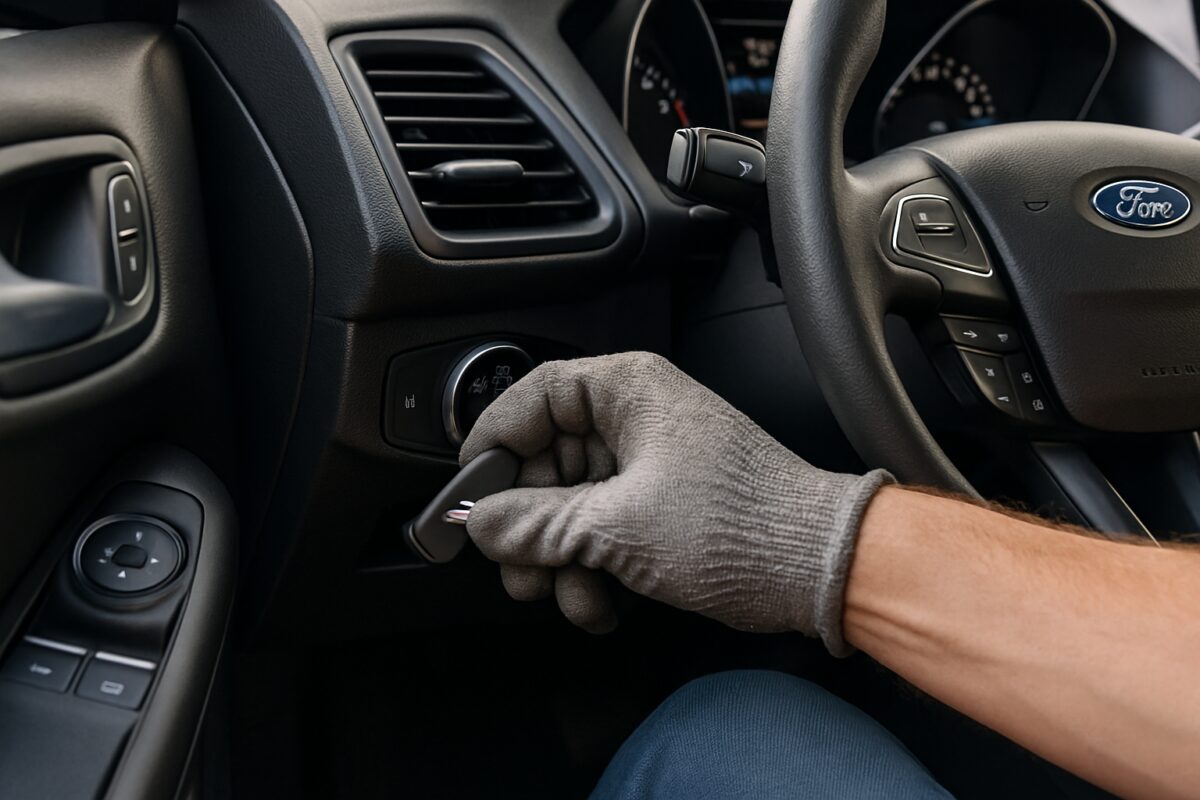
Once inside the vehicle, look for the bonnet release lever positioned to the left of the driver’s seat, typically near your left knee. In most Ford Focus models from 2005 onwards, this lever is a black plastic handle with a bonnet symbol on it.
The lever is usually mounted low on the dashboard or kick panel area. If you’re having trouble locating it in poor light, use your mobile phone torch to illuminate the area around the driver’s left leg space.
Step 3: Pull the interior release lever
Grasp the bonnet release lever firmly and pull it towards you with steady pressure. You should hear a distinct ‘click’ or ‘pop’ sound indicating that the primary bonnet latch has been released. This sound confirms that the bonnet is now partially unlatched but still secured by the safety catch.
If the lever feels stuck or requires excessive force, don’t force it. Check that you’re pulling the correct lever, as some models have multiple levers for different functions including fuel tank access.
Step 4: Exit the vehicle and locate the safety catch
Move to the front of your Ford Focus and position yourself directly in front of the bonnet. Look for a small gap between the bonnet and the front grille where you can see or feel the safety catch mechanism.
The safety catch is typically a small metal lever or button located centrally under the bonnet, just above the Ford badge area. In some Focus models, you may need to slide your hand slightly to the left or right to locate this catch.
Step 5: Release the safety catch and open the bonnet
Insert your fingers into the gap and locate the safety catch. Depending on your Focus model year, you’ll either need to push the catch to one side, lift it upwards, or press it inwards while simultaneously lifting the bonnet.
Once you’ve operated the safety catch correctly, the bonnet should lift freely. Support the bonnet with the bonnet struts or stay rod to keep it open safely while you perform your maintenance tasks.
Common mistakes to avoid
One frequent error is confusing the bonnet release with other interior levers. The fuel filler release lever is often positioned nearby and can look similar. Always check for the bonnet symbol on the correct lever before pulling.
Another common mistake is attempting to force the safety catch when it’s not properly aligned. If the catch won’t move easily, double-check that you’ve fully released the interior lever first. The safety mechanism is designed to prevent accidental opening, so it requires deliberate action.
Never try to force the bonnet open by prying it with tools, as this can damage the paintwork, bonnet structure, or the latch mechanism itself. If the standard method doesn’t work, seek professional assistance.
Professional tip: Our AutoPartsPro mechanics recommend familiarising yourself with your Ford Focus bonnet release mechanism when you first get the car, so you can operate it confidently in any situation, including emergencies or poor lighting conditions.
When should you check your bonnet mechanism?
Regular inspection of your bonnet release system should be part of your routine maintenance schedule. Check the mechanism every six months or during major services to ensure smooth operation.
Signs that your bonnet release may need attention include a stiff or unresponsive interior lever, unusual noises when operating the release, or if the bonnet doesn’t close properly after opening. These symptoms often indicate that the cable mechanism requires lubrication or adjustment.
If you’re experiencing persistent issues with bonnet operation, it’s worth checking other related components during your maintenance routine. A professional inspection can identify potential problems before they leave you unable to access your engine bay.
Related maintenance you can do at the same time
Once you’ve successfully opened the bonnet, take advantage of the access to perform other routine maintenance tasks. This is an excellent opportunity to check your engine oil level and condition, which should be done regularly.
Inspect the air filter condition whilst you have the bonnet open. A dirty air filter can reduce engine performance and fuel efficiency, making this check worthwhile during any bonnet opening procedure.
Check all visible fluid levels including brake fluid, coolant, and washer fluid. Look for any obvious signs of leaks or wear on radiator hoses and other visible components. This preventive approach can help identify potential issues before they become costly problems.
Expert insight: According to our AutoPartsPro specialists, taking a few extra minutes to perform these visual checks during bonnet access can prevent up to 70% of common engine bay related breakdowns, saving both time and money in the long run.
Frequently asked questions
Can I open the Ford Focus bonnet if the interior lever is broken?
If the interior lever is completely broken, you’ll need professional assistance or a mobile mechanic to access the engine bay safely without causing damage.
Why won’t my Ford Focus bonnet stay open after I’ve released both catches?
This usually indicates worn or damaged bonnet struts that need replacement, or the bonnet stay rod isn’t properly positioned in its support bracket.
Is it possible to lock myself out with the bonnet open?
Yes, some Ford Focus models will allow the doors to lock with the bonnet open, so always keep your keys with you when working in the engine bay.
How often should I lubricate the bonnet release mechanism?
Lubricate the bonnet release cable and catches every 12 months or 12,000 miles using appropriate automotive lubricant to ensure smooth operation.
What should I do if the safety catch seems stuck or won’t move?
Never force a stuck safety catch, as this can damage the mechanism permanently. Contact a qualified mechanic for proper diagnosis and repair.
Opening your Ford Focus bonnet without the key is a straightforward process once you understand the two-stage release system. Remember that the interior lever must be operated first, followed by the safety catch under the bonnet. Regular maintenance of these components ensures reliable operation when you need engine bay access most. For all your Ford Focus maintenance needs and replacement parts, having the right tools and quality components ensures your vehicle remains reliable and safe.

 Loading...