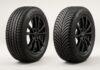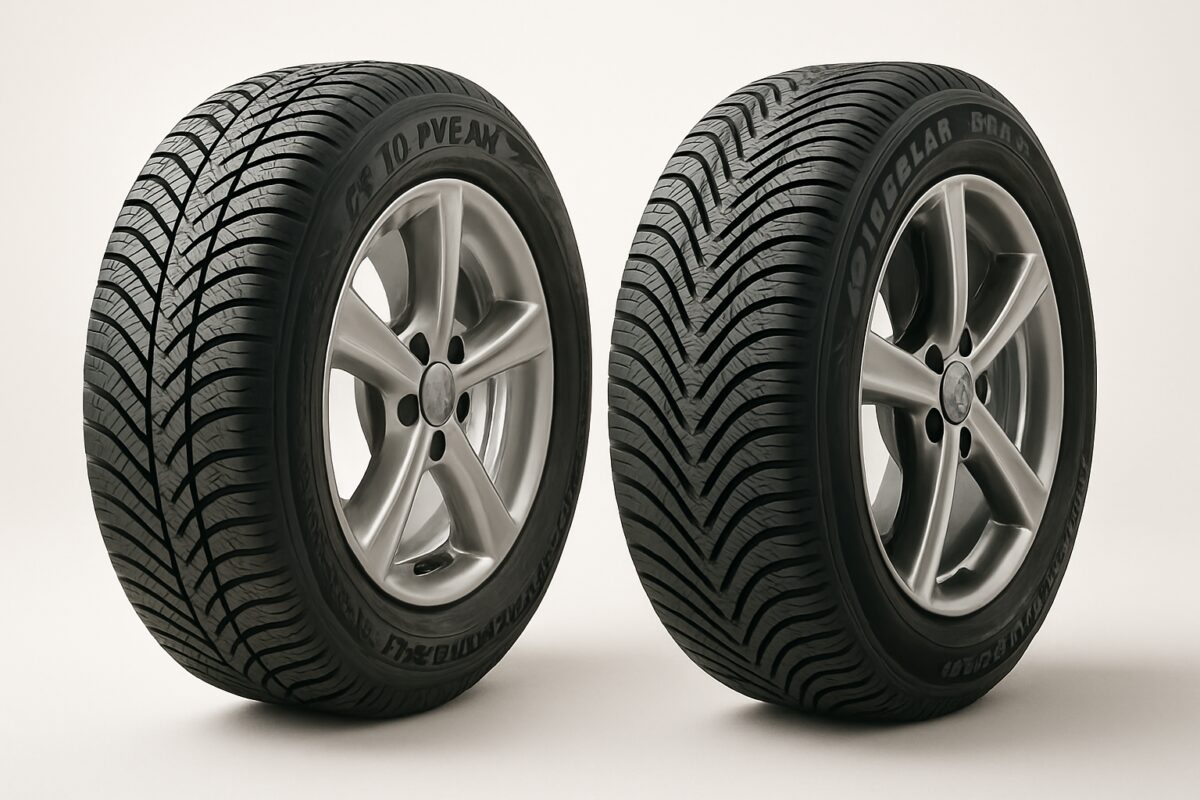
The Goodyear Vector 4Seasons Gen-3 and Michelin CrossClimate 2 represent two premium all-season tyre options, each designed to deliver year-round performance without seasonal swaps. The Vector 4Seasons Gen-3 excels in wet weather conditions and offers exceptional value for money, whilst the CrossClimate 2 provides superior dry grip and longer tread life. Both tyres meet the stringent EU regulations for winter performance (3PMSF rating), making them legal winter alternatives across Europe. Your choice depends primarily on budget considerations and specific driving priorities – the Goodyear offering better wet traction per pound spent, whilst the Michelin delivers enhanced durability and dry road performance.
Quick comparison table
| Feature | Goodyear Vector 4Seasons Gen-3 | Michelin CrossClimate 2 |
|---|---|---|
| Price Range | £85-£200 per tyre | £95-£220 per tyre |
| Wet Performance | Excellent (A-grade EU label) | Very Good (B-grade EU label) |
| Dry Performance | Good | Excellent |
| Winter Capability | Very Good (3PMSF certified) | Excellent (3PMSF certified) |
| Tread Life | 60,000-70,000 miles | 70,000-80,000 miles |
| Noise Level | 69-71 dB | 67-70 dB |
| Best Use Case | Urban driving, wet climates | Motorway driving, mixed conditions |
Goodyear Vector 4Seasons Gen-3 overview
The Vector 4Seasons Gen-3 represents Goodyear’s third-generation all-season technology, engineered specifically for European road conditions. This tyre utilises an advanced silica-enhanced compound that maintains flexibility across temperature ranges from -40°C to +40°C, ensuring consistent grip throughout the year.
The asymmetric tread pattern features deep circumferential grooves for water evacuation and over 2,000 biting edges for enhanced traction on snow and ice. Goodyear’s Weather Reactive Technology adapts the contact patch based on road conditions, maximising rubber-to-road contact regardless of weather.
Typical pricing ranges from £85 for smaller sizes (175/65 R14) to £200 for larger performance dimensions (245/40 R18). The construction incorporates twin steel belts with polyamide reinforcement, providing excellent puncture resistance and structural integrity.
Pros:
- Outstanding wet weather performance with A-grade EU rating
- Competitive pricing compared to premium alternatives
- Excellent snow traction with 3PMSF certification
- Responsive steering feel and good cornering stability
- Wide size availability covering most vehicle applications
Cons:
- Slightly higher road noise levels than premium competitors
- Dry grip performance trails dedicated summer tyres
- Tread wear rates higher than Michelin equivalent
- Limited availability in ultra-high performance sizes
The Vector 4Seasons Gen-3 suits drivers prioritising wet weather safety and value for money. It excels for urban commuters facing frequent rain and occasional snow, particularly those covering moderate annual mileages (under 15,000 miles yearly).
Michelin CrossClimate 2 overview
Michelin’s CrossClimate 2 builds upon the award-winning original CrossClimate design, incorporating enhanced compounds and tread architecture. The tyre features Michelin’s proprietary silica compounds with functional elastomers that provide exceptional grip across temperature extremes.
The directional tread pattern combines summer tyre outer zones for dry performance with winter-focused inner sections featuring V-shaped grooves and micro-pumps for water and slush evacuation. Michelin’s EverGrip technology maintains traction levels even as the tyre wears, with expanding rain grooves that widen over time.
Pricing typically ranges from £95 for compact car sizes to £220 for luxury SUV applications. The internal construction uses Michelin’s MaxTouch Construction with optimised contact patch distribution, reducing irregular wear patterns and extending service life.
Pros:
- Superior dry road grip and handling precision
- Excellent longevity with 70,000+ mile potential
- Low rolling resistance improving fuel economy
- Refined ride quality with minimal road noise
- Strong performance retention throughout tyre life
Cons:
The CrossClimate 2 appeals to drivers covering high annual mileages who value longevity and fuel efficiency. It’s particularly suitable for motorway commuters and performance car owners seeking year-round capability without compromising dry weather dynamics.
Professional tip: Check your brake pads condition when fitting new tyres, as improved grip may reveal previously masked braking system wear.
Compatibility considerations
Both tyres offer extensive size ranges covering most UK vehicle applications, from compact city cars to luxury SUVs. The Vector 4Seasons Gen-3 provides sizes from 155/80 R13 up to 275/40 R20, whilst the CrossClimate 2 ranges from 175/65 R14 to 275/35 R21.
Vehicle manufacturers’ load and speed ratings must match exactly – never fit tyres with lower specifications than originally equipped. Both options support speed ratings from T (190 km/h) to Y (300 km/h), accommodating everything from family hatchbacks to performance saloons.
Installation considerations include checking shock absorber condition and wheel alignment, as these factors significantly impact tyre performance and longevity. Modern vehicles with tyre pressure monitoring systems require sensor compatibility verification during fitment.
For vehicles with different front and rear tyre sizes (staggered fitments), both manufacturers offer appropriate size pairings. However, always consult your vehicle handbook or tyre placard for exact specifications, particularly regarding reinforcement requirements for heavy-duty applications.
Professional tip: Inspect hub bearings during tyre changes, as worn bearings can cause premature tyre wear and affect handling precision.
Final verdict
Choose the Goodyear Vector 4Seasons Gen-3 for superior wet weather performance and value-conscious purchasing decisions. Its exceptional rain grip and competitive pricing make it ideal for urban drivers facing frequent precipitation and moderate annual mileages.
Select the Michelin CrossClimate 2 for long-term ownership economics and premium driving dynamics. The extended tread life, refined ride quality, and superior dry performance justify the higher initial investment for high-mileage drivers and performance enthusiasts.
Both options eliminate seasonal tyre swaps whilst maintaining safety standards throughout the year. Your local climate, driving patterns, and budget priorities should guide the final decision. Neither choice disappoints – they represent the current pinnacle of all-season tyre technology.
Which tyre offers better fuel economy?
The Michelin CrossClimate 2 typically achieves better fuel economy ratings due to lower rolling resistance compounds and optimised tread design reducing energy loss.
Can these tyres handle motorway driving in winter conditions?
Yes, both tyres carry 3PMSF certification and meet legal winter requirements across Europe, providing adequate motorway safety in snow and ice conditions.
How do these tyres perform on gravel or unpaved roads?
Both tyres handle light gravel adequately but aren’t designed for regular off-road use. The Goodyear offers slightly better resistance to punctures on rough surfaces.
What’s the typical lifespan difference between these options?
The Michelin CrossClimate 2 generally lasts 10,000-15,000 miles longer than the Goodyear, though individual results vary based on driving habits and maintenance.
Are there any specific vehicle types these tyres don’t suit?
Both tyres suit most passenger vehicles, but track-focused sports cars and commercial vehicles may require specialized alternatives for optimal performance and load capacity.

 Loading...