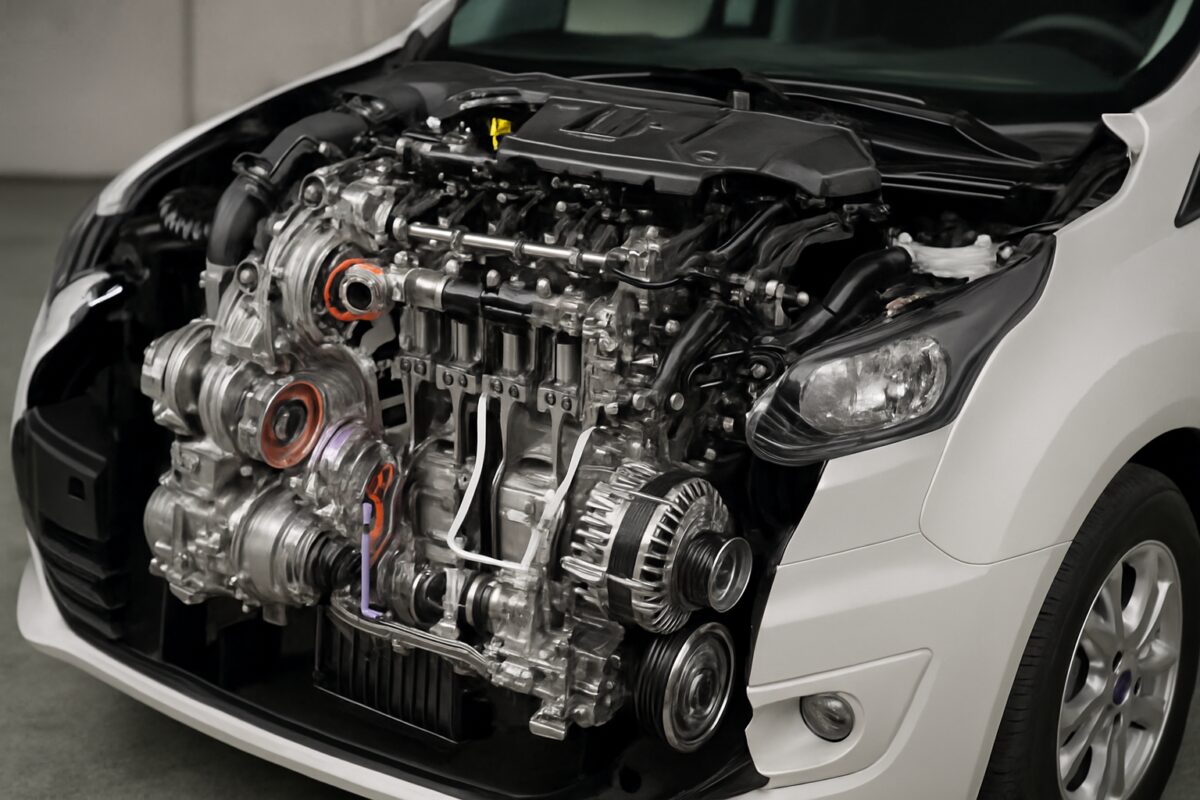
The Ford Transit Connect has established itself as a reliable workhorse in the compact commercial vehicle segment across the UK. At the heart of every Transit Connect lies a carefully engineered powerplant that must balance fuel economy, durability, and performance. This comprehensive engine guide explores the complete range of power units available, from the dependable 1.0 EcoBoost petrol to the robust 1.5 TDCi diesel options. Whether you’re after 100 bhp for urban deliveries or 120 bhp for mixed driving, understanding each engine’s characteristics will help you make an informed decision.
Comparison table of all engines
| Engine | Power output | Torque | Fuel consumption | Reliability |
|---|---|---|---|---|
| 1.0 EcoBoost (100 PS) | 100 bhp | 170 Nm | 44.1 mpg | Good |
| 1.5 TDCi (75 PS) | 75 bhp | 200 Nm | 58.9 mpg | Excellent |
| 1.5 TDCi (100 PS) | 100 bhp | 270 Nm | 57.6 mpg | Excellent |
| 1.5 TDCi (120 PS) | 120 bhp | 270 Nm | 56.5 mpg | Very Good |
Engine #1 overview
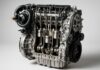
The 1.0 EcoBoost represents Ford’s three-cylinder petrol technology, featuring a 999cc displacement with advanced turbocharging and direct injection. This aluminium block engine delivers 100 PS whilst maintaining impressive thermal efficiency through Ford’s sophisticated engine management system.
This turbocharged unit utilises a single turbocharger with integrated exhaust manifold design, paired with high-pressure direct fuel injection. The petrol engine runs on standard unleaded fuel and features variable cam timing for optimised performance across the rev range.
Pros
- Smooth and refined operation
- Lower initial purchase cost
- Quick warm-up times in winter
- Responsive throttle response
- Suitable for short urban journeys
Cons
- Higher fuel consumption than diesel alternatives
- Less torque for heavy loads
- Requires premium maintenance for turbocharger longevity
- Three-cylinder vibration at idle
Engine #2 overview
The 1.5 TDCi 75 PS serves as the entry-level diesel option, featuring a 1499cc four-cylinder configuration with common rail technology. This naturally aspirated diesel unit prioritises economy and simplicity over outright performance, making it ideal for budget-conscious operators.
Built around Ford’s proven Duratorq architecture, this diesel engine employs high-pressure common rail injection with piezo injectors. The unit runs on standard diesel fuel and features a robust iron block construction designed for commercial vehicle durability.
Pros
- Outstanding fuel economy
- Simple, reliable design
- Lower maintenance complexity
- Excellent cold-starting ability
- Cost-effective operation
Cons
- Limited power for demanding applications
- Slower acceleration when loaded
- Can feel sluggish on motorways
- Basic refinement levels
Engine #3 overview
The 1.5 TDCi 100 PS represents the sweet spot in Ford’s diesel range, offering balanced performance and economy. This turbocharged four-cylinder unit features variable geometry turbocharging and advanced exhaust gas recirculation for emissions compliance.
This turbocharged diesel employs a variable geometry turbocharger (VGT) combined with cooled EGR and selective catalytic reduction. The engine utilises AdBlue injection for NOx reduction and features a diesel particulate filter for emissions control.
Pros
- Excellent torque delivery
- Superior fuel economy
- Good all-round performance
- Proven reliability record
- Suitable for mixed driving conditions
Cons
- DPF requires regular regeneration
- AdBlue consumption adds running costs
- Complex emissions system
- Not ideal for short urban trips only
Engine #4 overview
The flagship 1.5 TDCi 120 PS delivers maximum performance in the Transit Connect range, featuring enhanced turbocharging and optimised fuel injection mapping. This top-specification diesel provides strong acceleration and excellent overtaking ability whilst maintaining respectable economy figures.
Built on the same foundation as the 100 PS variant, this enhanced version features a larger variable geometry turbocharger and revised ECU mapping. The engine maintains the same emissions control systems including particulate filter and AdBlue injection.
Pros
- Strong performance across the rev range
- Excellent for highway driving
- Good fuel economy for power level
- Refined operation
- Handles heavy loads confidently
Cons
- Higher initial cost
- More complex turbocharger system
- Requires quality engine oil for longevity
- DPF system requires careful maintenance
Maintenance cost
| Engine | Recommended Interval | Estimated Cost | Cost per 10,000 miles |
|---|---|---|---|
| 1.0 EcoBoost | 12,500 miles | £220-280 | £176-224 |
| 1.5 TDCi (75 PS) | 20,000 miles | £180-240 | £90-120 |
| 1.5 TDCi (100 PS) | 20,000 miles | £200-260 | £100-130 |
| 1.5 TDCi (120 PS) | 20,000 miles | £220-280 | £110-140 |
According to our Autopartspro mechanics, regular oil filter changes are crucial for turbocharged engines, especially the EcoBoost petrol unit which operates under high stress conditions.
Engine sound and character
The 1.0 EcoBoost produces a distinctive three-cylinder thrum that’s more noticeable at idle but smooths out under acceleration. Our specialists note that whilst initially unfamiliar to some drivers, this characteristic sound becomes less apparent once underway.
The 75 PS TDCi delivers a traditional diesel character with a purposeful rumble at low speeds. The more powerful TDCi variants benefit from better sound insulation and produce a more refined note, particularly the 120 PS version which maintains quieter operation even under full acceleration.
All diesel engines exhibit typical compression ignition characteristics, with cold start noise being most pronounced during winter months. The engine mount design effectively isolates vibration from the cabin across all variants.
Professional tip from our workshop: The EcoBoost requires a specific spark plug specification – never substitute with standard plugs as this can cause misfiring and catalyst damage.
Who each engine is best for
| Engine | Daily commuters | Performance enthusiasts | Long-distance drivers | Budget-conscious owners |
|---|---|---|---|---|
| 1.0 EcoBoost | Good | Fair | Poor | Good |
| 1.5 TDCi (75 PS) | Fair | Poor | Fair | Excellent |
| 1.5 TDCi (100 PS) | Excellent | Good | Excellent | Good |
| 1.5 TDCi (120 PS) | Good | Excellent | Excellent | Fair |
Frequently Asked Questions (FAQ)
Which Transit Connect engine offers the best fuel economy?
The 1.5 TDCi 75 PS delivers exceptional fuel economy at 58.9 mpg combined, making it ideal for high-mileage commercial operations seeking lowest running costs.
How often should I service my Transit Connect engine?
Ford recommends 12,500-mile intervals for petrol engines and 20,000 miles for diesel variants, though severe duty cycles may require more frequent servicing.
Can the EcoBoost engine handle commercial use reliably?
Yes, the 1.0 EcoBoost proves reliable in commercial applications when properly maintained, though diesel alternatives better suit constant heavy-duty use.
What’s the difference between the 100 PS and 120 PS TDCi engines?
Both share identical displacement and torque figures, with the 120 PS featuring enhanced turbocharger mapping for improved high-end performance and responsiveness.
Do Transit Connect diesels require AdBlue?
Yes, all TDCi engines from 100 PS upwards use AdBlue selective catalytic reduction technology for NOx emissions compliance in Euro 6 regulations.

 Loading...