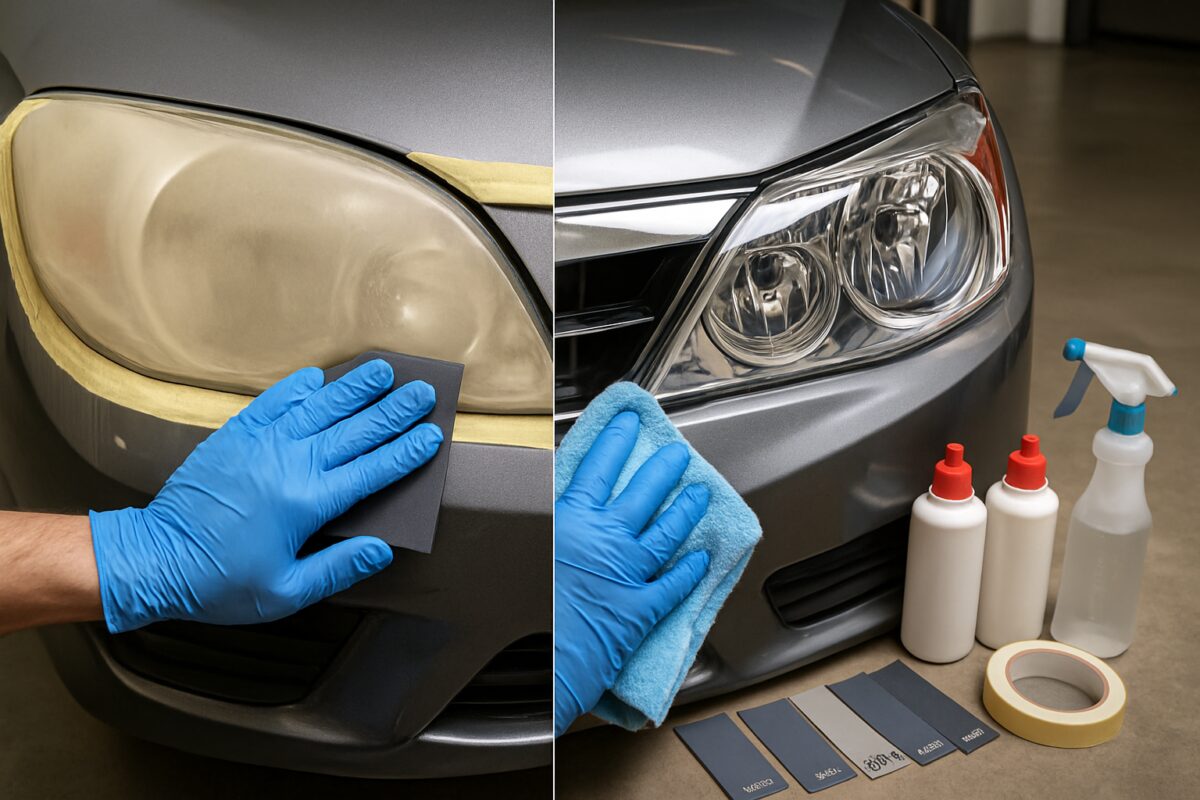
To clean oxidized headlights, you’ll need a headlight restoration kit, fine-grit sandpaper (600-3000 grit), polishing compound, and UV-resistant clear coat. The process involves sanding away the oxidized layer, polishing the lens, and applying protective coating to prevent future clouding.
Cloudy, yellowed headlights don’t just look unsightly – they significantly reduce light output and compromise road safety. This oxidation occurs when UV rays break down the polycarbonate lens protective coating over time. Fortunately, restoring crystal-clear headlights is achievable with proper technique and materials.
Tools and parts required
Parts needed:
- Headlight restoration kit
- Masking tape
- Microfibre cloths
- UV-resistant clear coat
- Polishing compound
Tools required:
- Wet sandpaper (600, 1000, 2000, 3000 grit)
- Spray bottle
- Orbital polisher (optional)
- Clean water source
- Safety glasses
Safety precautions
Always wear safety glasses when sanding to protect your eyes from debris. Work in a shaded area away from direct sunlight, as heat can cause materials to dry too quickly. Ensure the vehicle is parked on level ground with the handbrake engaged.
Keep the work area well-ventilated, especially when applying chemical products or clear coats. Never smoke or work near open flames when using restoration products.
Step-by-step instructions
Step 1: Prepare the headlight surface
Clean the headlamp thoroughly with soap and water to remove dirt and grime. Dry completely with a clean microfibre cloth.
Apply masking tape around the headlight housing to protect surrounding paintwork and plastic trim. Leave about 2mm gap between the tape edge and headlight lens.
Step 2: Initial sanding with coarse grit
Begin with 600-grit wet sandpaper, keeping both the paper and headlight surface constantly wet. Sand in horizontal strokes across the entire lens surface using light, consistent pressure.
Work systematically from one side to the other, overlapping each pass by about 50%. The lens will appear more cloudy initially – this is normal as you’re removing the damaged surface layer.
Professional tip from AutoPartsPro mechanics: Never sand in circular motions as this creates swirl marks that are difficult to remove during polishing. Always maintain straight, overlapping passes.
Step 3: Progress through finer grits
After covering the entire lens with 600-grit, clean the surface and switch to 1000-grit sandpaper. Sand in vertical strokes perpendicular to your previous direction.
Continue this pattern with 2000-grit (horizontal strokes) and finish with 3000-grit (vertical strokes). Each progressive grit should eliminate the scratches from the previous grade.
Step 4: Apply polishing compound
Clean the lens thoroughly and apply polishing compound using a microfibre cloth in small circular motions. Work in sections, applying moderate pressure.
For best results, use an orbital polisher on low speed settings. The lens should begin showing clarity as you remove the fine scratches left by sanding.
Step 5: Apply protective coating
After achieving crystal clarity, clean the lens with isopropyl alcohol to remove any polishing residue. Apply UV-resistant clear coat in thin, even layers following manufacturer instructions.
Allow proper curing time between coats. This protective layer prevents future oxidation and maintains the restored clarity for years.
Common mistakes to avoid
Using dry sandpaper creates excessive heat and can permanently damage the lens. Always keep the surface wet during sanding operations.
Skipping grit progressions leads to deep scratches that won’t polish out properly. Each grit level serves a specific purpose in the restoration process.
Applying thick clear coat layers causes runs and uneven coverage. Multiple thin applications provide superior protection and appearance.
AutoPartsPro specialist insight: Many DIY enthusiasts rush the polishing stage, but this step determines the final clarity quality. Take time to properly remove all sanding marks before applying protective coating.
Working in direct sunlight causes materials to dry too quickly, preventing proper blending and potentially creating streaks or clouding.
When should you replace headlights?
Restoration works well for moderate oxidation and surface clouding. However, severely damaged lenses with deep cracks, internal moisture, or structural damage require replacement.
If restoration doesn’t significantly improve light output or visibility, consider upgrading to new headlight assemblies. Modern LED or HID units often provide superior illumination compared to restored older units.
Headlights showing signs of internal fogging or water ingress need seal replacement or complete assembly renewal, as moisture will quickly re-damage any restoration work.
Related maintenance you can do at the same time
While working on headlight restoration, consider replacing worn light bulbs for maximum brightness improvement. Check and clean electrical connections to ensure optimal performance.
Inspect and replace the cabin filter which affects interior air quality and visibility through reduced windscreen fogging.
Consider upgrading to higher-performance bulbs or LED alternatives for enhanced visibility. Also check fog lamp condition and side indicators functionality for complete lighting system maintenance.
Frequently asked questions
How often should I clean oxidized headlights?
Professional restoration typically lasts 2-3 years with proper UV protection coating. Regular washing and waxing can extend this period significantly.
Can toothpaste really clean headlights effectively?
Toothpaste provides temporary improvement through mild abrasion, but lacks protective coating. Professional restoration kits deliver superior, longer-lasting results.
Will headlight restoration pass MOT requirements?
Properly restored headlights meeting brightness and beam pattern standards will pass MOT inspection. Ensure complete oxidation removal for optimal light transmission.
Should I restore or replace severely oxidized headlights?
Restoration suits moderate oxidation, whilst replacement becomes cost-effective for severely damaged units requiring multiple restoration attempts or structural repairs.
How do I prevent future headlight oxidation?
Apply UV-resistant clear coat annually, park in shade when possible, and regularly clean headlights during routine washing to prevent oxidation buildup.
Professional headlight restoration requires patience and proper technique, but delivers remarkable results that dramatically improve both appearance and safety. Using quality materials and following systematic procedures ensures your restored headlights maintain crystal clarity for years. Remember that proper UV protection is essential for preventing rapid re-oxidation of your newly restored lenses.

 Loading...