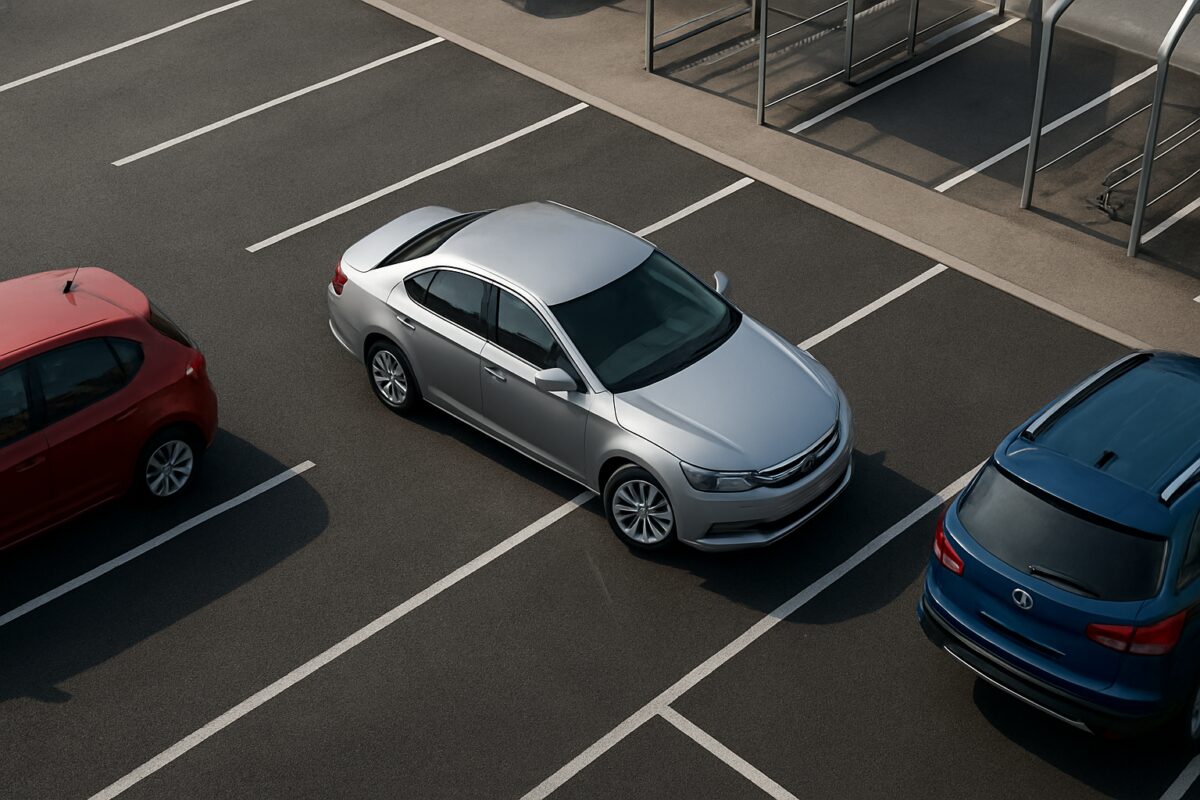
Bay parking involves reversing your vehicle into a designated parking space between two other cars or markings. Start by positioning your car parallel to the space, about one metre away from the bay. Signal appropriately, check your mirrors and blind spots, then slowly reverse whilst turning the steering wheel at the correct moment. The key is proper positioning, smooth steering input, and using reference points to guide your vehicle safely into the space.
Mastering bay parking takes practice, but following the right technique makes it straightforward. Whether you’re tackling a supermarket car park or preparing for your driving test, understanding the proper method will boost your confidence behind the wheel.
Safety precautions
Before attempting any parking manoeuvre, ensure you’ve completed all safety checks. Adjust your mirrors properly and check that your outside mirrors are clean and correctly positioned.
Always be aware of pedestrians, especially children who might be difficult to spot. Check for shopping trolleys, other vehicles, and any obstacles that could cause damage to your car or injury to others.
Step-by-step instructions
Step 1: Position your vehicle
Drive slowly past the parking bay until your car is positioned parallel to the space. Your vehicle should be approximately one metre away from the cars already parked or the bay markings.
Stop when your car’s door mirrors are roughly level with the near-side edge of the parking space. This creates the perfect starting position for your manoeuvre.
Step 2: Begin the reversing process
Select reverse gear and check all around your vehicle. Look in your rear-view mirror, both wing mirrors, and over your shoulders to ensure the area is clear.
Begin reversing slowly whilst keeping the steering wheel straight. Move until the rear of your car is roughly level with the rear of the adjacent parked vehicle.
Step 3: Turn the steering wheel
Once your car’s rear is aligned with the adjacent vehicle’s rear, turn your steering wheel fully in the direction of the parking space. Continue reversing slowly whilst maintaining this steering position.
Watch your mirrors carefully as your car begins to pivot into the space. The key is maintaining a slow, controlled speed throughout this phase.
Step 4: Straighten up the vehicle
As your car enters the bay, monitor both wing mirrors to judge your position. When your vehicle appears straight within the space, begin turning the steering wheel back to centre.
Continue reversing until your car is fully within the bay markings, leaving equal space on both sides. Don’t rush this final adjustment phase.
Step 5: Final positioning and securing
Make any final adjustments needed to centre your vehicle properly within the space. Ensure you’re not too close to either adjacent car and haven’t exceeded the bay markings.
Apply the handbrake firmly and turn off the engine. Check your handbrake cable is functioning correctly if you notice any looseness in the mechanism.
Common mistakes to avoid
Many drivers start turning too early or too late, resulting in a crooked parking position. The timing of your steering input is crucial – wait until your rear bumper is level with the adjacent car’s rear before turning.
Another frequent error is moving too quickly. Bay parking requires patience and smooth, controlled movements. Rushing leads to poor positioning and potential damage to your vehicle or others.
Don’t forget to check your surroundings continuously. Some drivers become fixated on one mirror and miss hazards approaching from other directions. Maintain awareness of pedestrians and other vehicles throughout the manoeuvre.
Professional tip: Use the white lines or kerb markings as reference points in your mirrors. When these lines appear straight in your wing mirrors, your car is properly aligned within the space.
Avoid cutting the corner too sharply when entering the bay. This can cause your front wing to clip the adjacent vehicle or scrape against the bay marking post.
When should you practise bay parking?
Regular practice in quiet car parks helps build confidence and muscle memory. Empty supermarket car parks early in the morning or late evening provide ideal training environments without pressure from other drivers.
If you’re preparing for a driving test, practise bay parking at least twice weekly. The manoeuvre appears frequently in practical examinations, and demonstrating competence will impress your examiner.
Consider practising after installing new parking sensors or mirrors, as these changes can affect your spatial awareness and reference points.
Related skills you can develop
Once you’ve mastered bay parking, parallel parking becomes much easier. The same principles of positioning, timing, and steering control apply to both manoeuvres.
Consider learning three-point turns and other reversing exercises. These skills complement bay parking and make you a more versatile, confident driver overall.
Practice different parking scenarios, including angled bays, tight spaces, and parking on slopes. Each situation requires slight adjustments to your basic technique.
Expert advice: Master the basics first before attempting advanced parking techniques. Solid foundational skills make complex manoeuvres much easier to learn.
Work on improving your spatial awareness and sensor integration if your vehicle has modern parking assistance features.
Frequently asked questions
How close should I get to adjacent cars when bay parking?
Aim for approximately 60-80 centimetres between your car and adjacent vehicles. This provides enough space for door opening whilst maximising parking efficiency.
What if I end up crooked in the parking space?
Simply drive forward and repeat the manoeuvre. Don’t attempt complex corrections whilst in the bay, as this often makes positioning worse.
Should I use parking sensors if my car has them?
Parking sensors are helpful aids, but don’t rely on them entirely. Develop your mirror skills and spatial awareness as your primary parking tools.
How do I know when to start turning the steering wheel?
Begin turning when your rear bumper aligns with the rear of the adjacent parked car. This timing works for most standard parking situations.
What’s the biggest mistake new drivers make when bay parking?
Moving too quickly and panicking when the initial attempt goes wrong. Slow, deliberate movements and staying calm are essential for success.
Bay parking becomes second nature with consistent practice and proper technique. Focus on smooth movements, accurate positioning, and maintaining awareness of your surroundings. Whether you’re using traditional mirrors or modern lighting assistance, the fundamental principles remain the same. Regular practice in various car parks will build the confidence you need for any parking situation.

 Loading...