Car headliner repair and replacement involves removing the sagging or damaged ceiling fabric, cleaning the backing board, applying new adhesive, and installing fresh headliner material. The process requires basic tools like a trim removal kit, contact adhesive, and new headliner fabric. Most repairs can be completed in 4-6 hours with proper preparation and the right materials.
Tools & parts required
Getting your headliner repair right starts with having the correct tools and materials. Missing even one essential item can turn a straightforward job into a frustrating experience.
Parts needed:
- Headliner fabric (vehicle-specific)
- Contact spray adhesive (high-temperature rated)
- Foam-backed headliner cloth
- Replacement dome light covers
- New sun visor clips (if damaged)
Tools required:
- Trim removal tool set
- Phillips and flat-head screwdrivers
- Sharp utility knife
- Clean cloth rags
- Vacuum cleaner
- Measuring tape
- Wire brush or scraper
Professional tip: Always measure your headliner board twice before ordering fabric. Adding an extra 4 inches on each side gives you room for proper stretching and trimming.
Ensure your headliner fabric matches your vehicle’s interior colour and has the correct foam backing thickness. Thin materials won’t provide adequate coverage, whilst thick fabrics may not fit properly around fixtures.
Safety precautions
Working inside your vehicle requires attention to safety details that protect both you and your car’s systems.
- Disconnect the battery to avoid electrical shorts
- Work in a well-ventilated area when using adhesives
- Wear safety glasses to protect from falling debris
- Use dust masks when removing old adhesive
- Keep fire safety equipment nearby when using spray adhesives
Spray adhesives contain flammable solvents that require proper ventilation. Never smoke or use open flames during the repair process.
Step-by-step instructions
This comprehensive process breaks down the headliner replacement into manageable stages. Each step builds on the previous one, so complete them in order.
Step 1: Remove interior components
Start by removing all components attached to the headliner. This includes dome light bulbs, sun visors, coat hooks, and grab handles. Use your trim removal tools to avoid damaging plastic clips.
Take photos before removal to remember the exact placement of wiring and fixtures. Label each component with masking tape to ensure correct reassembly.
Step 2: Remove the headliner board
Carefully lower the headliner board from the vehicle. This typically requires removing the door seals and pillar trims. The board is often larger than the door openings, so you’ll need to angle it carefully.
Have an assistant help with this step. Headliner boards are awkward to handle alone and can crack if bent too sharply.
Step 3: Clean the backing board
Remove all old fabric and foam residue from the backing board. Use a wire brush or scraper for stubborn areas. The surface must be completely clean for the new adhesive to bond properly.
Vacuum all loose debris and wipe the board with a clean, damp cloth. Allow it to dry completely before proceeding.
Step 4: Apply new adhesive
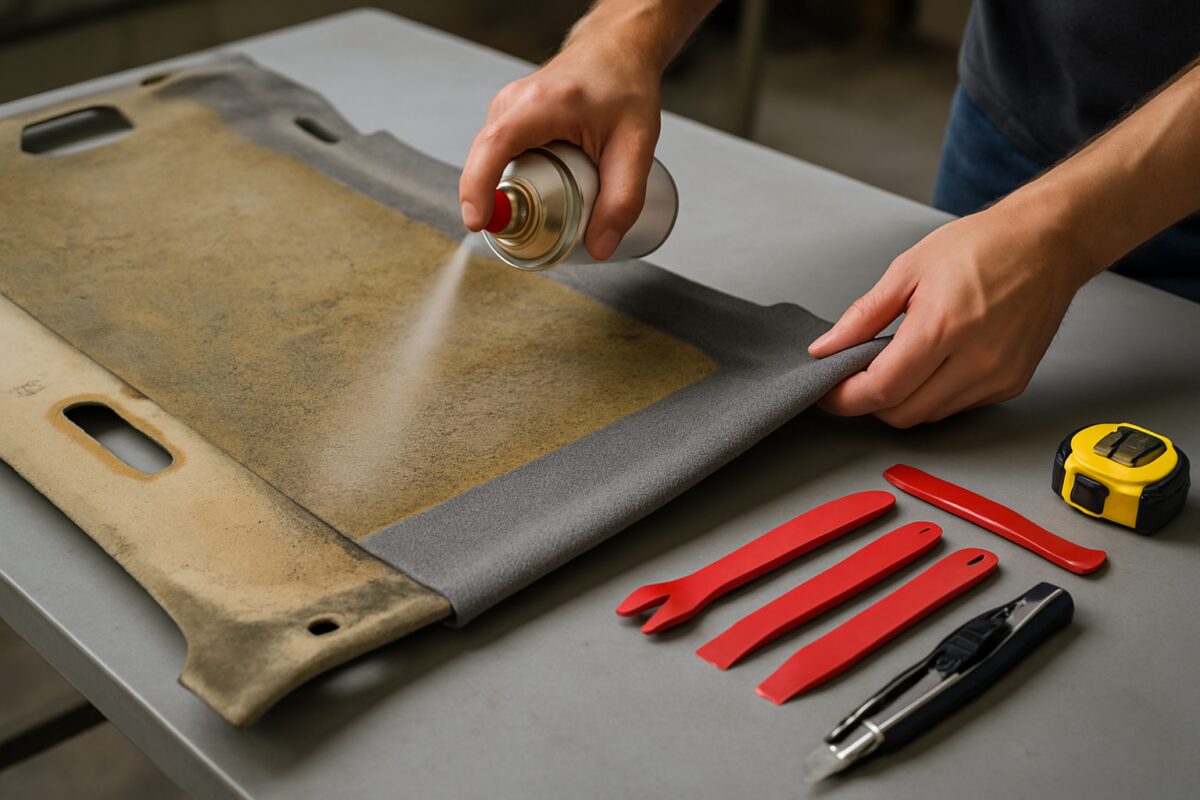
Spray contact adhesive evenly across the entire backing board surface. Follow the manufacturer’s instructions for coverage and drying time. Most adhesives require 5-10 minutes of tack time before application.
Work in sections if the board is large. Keep the spray can 6-8 inches from the surface for even coverage.
Step 5: Install new headliner fabric
Position the new fabric carefully over the board, starting from the centre and working outward. Smooth out air bubbles and wrinkles as you go. The fabric should overlap the edges by 2-3 inches.
Use firm, consistent pressure to ensure good adhesion. Pay special attention to areas around fixture holes and curved sections.
Step 6: Trim and finish edges
Trim excess fabric with a sharp utility knife, leaving enough material to wrap around the edges. Cut fixture holes carefully, making them slightly smaller than the fixtures to ensure a snug fit.
Make relief cuts at corners and curved areas to prevent bunching when the fabric is wrapped around edges.
Step 7: Reinstall the headliner
Reverse the removal process to reinstall the completed headliner. Take care not to damage the new fabric when positioning the board back into the vehicle.
Reconnect all electrical connections and test additional lighting components before final assembly.
Common mistakes to avoid
These frequent errors can ruin an otherwise successful headliner repair. Learning from others’ mistakes saves time and materials.
- Using insufficient adhesive coverage leads to premature sagging
- Rushing the tack time results in poor bonding
- Stretching fabric too tightly causes wrinkles and tears
- Cutting fixture holes too large creates unsightly gaps
- Ignoring damaged backing boards that need replacement
Expert insight: Our technicians at AutoPartsPro see many DIY repairs fail because people skip the cleaning step. Old adhesive residue prevents new materials from bonding properly.
Temperature also matters. Working in cold conditions slows adhesive curing, whilst excessive heat can cause premature setting before you’re ready.
When should you replace it?
Recognising the right time for headliner replacement prevents more extensive damage and maintains your vehicle’s interior value.
Replace your headliner when you notice:
- Fabric sagging more than 2 inches from the roof
- Staining that can’t be cleaned
- Tears or holes in the material
- Strong odours that won’t dissipate
- Foam backing deteriorating and falling
Don’t wait until the entire headliner falls down. Early replacement is easier and produces better results than emergency repairs.
Related maintenance you can do at the same time
Since you’ve already removed interior panels, this is an perfect opportunity to address other maintenance items that are normally difficult to reach.
Consider these additional tasks:
- Replace the cabin filter for improved air quality
- Clean or replace windscreen wipers mechanisms
- Inspect and clean the windscreen washer reservoir
- Check outside mirror wiring connections
- Service interior sensors and switches
This approach maximises your time investment and ensures multiple systems receive attention during one major interior service.
Frequently asked questions
How long does a professional headliner replacement take?
Professional installation typically takes 3-5 hours depending on vehicle complexity and any additional repairs needed during the process.
Can I repair small tears without replacing the entire headliner?
Small tears can be patched temporarily, but proper repairs require removing and re-covering the entire backing board for lasting results.
What causes headliner fabric to sag over time?
Heat, humidity, and age break down the foam backing adhesive, causing the fabric to separate and sag from the board.
Is special headliner fabric required, or can I use any upholstery material?
Automotive headliner fabric has specific flame-retardant properties and foam backing that regular upholstery materials lack, making proper materials essential.
How much does headliner fabric typically cost?
Quality headliner fabric ranges from £15-40 per metre, with most vehicles requiring 1.5-2.5 metres depending on size and coverage needs.
A successful headliner replacement transforms your vehicle’s interior whilst providing years of reliable service. Using quality materials and following proper techniques ensures professional results that enhance both comfort and resale value. When sourcing your dashboard and interior components, choose suppliers who understand the importance of OEM-quality materials for lasting repairs.

 Loading...