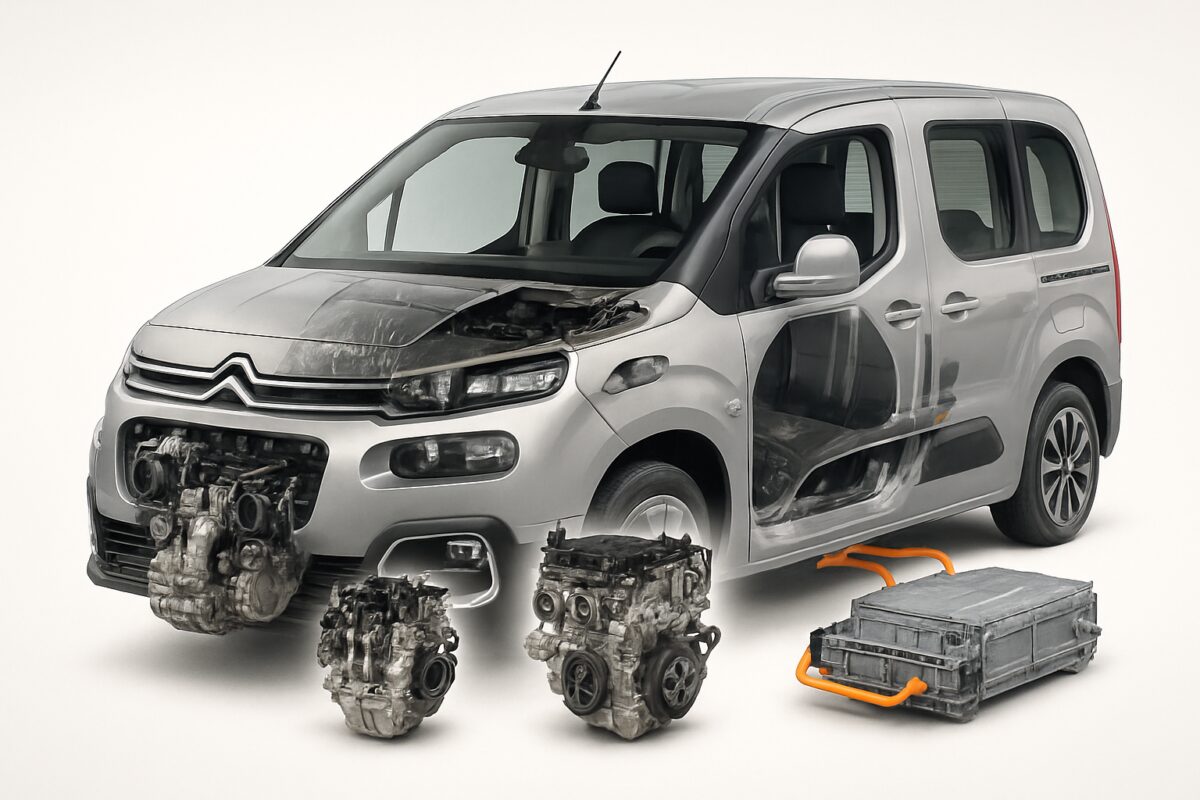
The Citroën Berlingo has established itself as a practical workhorse in the leisure activity vehicle and small van segment, equally at home ferrying families or serving tradespeople. What truly defines this versatile French creation isn’t just its boxy practicality, but the range of powerplants beneath its bonnet. Understanding these engines matters enormously because they determine running costs, performance characteristics, and long-term reliability. The Berlingo lineup spans diesel units from 75bhp to 130bhp, petrol options delivering up to 130bhp, and more recently, a fully electric variant producing 136bhp. These power units deliver torque figures ranging from 118 Nm to 300 Nm, catering to diverse buyer requirements.
Comparison table of all engines
| Engine | Power output | Torque | Fuel consumption | Reliability |
|---|---|---|---|---|
| 1.5 BlueHDi 75 | 75 bhp | 230 Nm | 58.9 mpg | Good |
| 1.5 BlueHDi 100 | 100 bhp | 250 Nm | 57.6 mpg | Very Good |
| 1.5 BlueHDi 130 | 130 bhp | 300 Nm | 55.4 mpg | Very Good |
| 1.2 PureTech 110 | 110 bhp | 205 Nm | 47.9 mpg | Average |
| 1.2 PureTech 130 | 130 bhp | 230 Nm | 46.3 mpg | Average |
| e-Berlingo Electric | 136 bhp | 260 Nm | N/A (171 miles range) | Excellent |
1.5 BlueHDi 75 overview
The entry-level 1.5 BlueHDi 75 represents the most affordable diesel option in the Berlingo range. This inline-four turbodiesel displaces 1,499cc and features a single turbocharger configuration. The unit employs common-rail direct injection technology, running exclusively on diesel fuel. Despite its modest output, this engine delivers adequate performance for unladen urban driving and represents the lowest initial purchase price.
Our specialists at Autopartspro have observed that this particular unit works hardest when fully loaded, which can accelerate wear on components like the clutch kit and turbocharger if pushed consistently beyond its comfort zone. The 75bhp variant utilises a mechanical wastegate system that’s straightforward but less sophisticated than electronic actuators found in higher outputs.
Pros
- Outstanding fuel economy approaching 60 mpg in real-world conditions
- Lower insurance grouping reduces annual premiums
- Minimal road tax obligations due to reduced CO2 emissions
- Simple mechanical construction aids affordability when repairs become necessary
- Adequate torque delivery for city driving and light commercial use
Cons
- Struggles noticeably on motorway inclines when carrying passengers or cargo
- Limited overtaking capability demands forward planning on A-roads
- Acceleration from standstill feels lethargic compared to more powerful variants
- Engine needs working hard at higher revs, potentially reducing longevity
- Resale values typically lower than better-specified models
1.5 BlueHDi 100 overview
The sweet spot for many buyers, the 1.5 BlueHDi 100 shares the same fundamental architecture as the 75bhp version but benefits from revised turbocharger mapping and enhanced fuelling. This inline-four turbocharged diesel maintains the 1,499cc displacement whilst delivering substantially improved mid-range punch. The common-rail direct injection system operates at higher pressures, extracting better performance without dramatically impacting consumption figures.
Professional mechanics appreciate this engine’s balanced nature. Regular maintenance involving quality oil filters and proper engine oil specification keeps these units running smoothly beyond 200,000 miles. The improved power output means less strain during typical driving scenarios, which translates to reduced wear on mechanical components.
Pros
- Significantly better acceleration and overtaking confidence versus 75bhp model
- Maintains excellent fuel consumption figures above 55 mpg average
- Handles fully loaded scenarios without excessive strain
- Proven reliability with numerous examples exceeding high mileages
- Better resale values reflect desirability amongst used buyers
Cons
- Slightly higher purchase price than base diesel
- Marginally increased servicing costs due to additional sensors
- Still not particularly rapid by modern standards
- DPF regeneration cycles require occasional longer journeys
1.5 BlueHDi 130 overview
Representing the flagship diesel offering, the 1.5 BlueHDi 130 extracts maximum performance from the PSA Group’s versatile four-cylinder architecture. This turbocharged unit maintains the same 1,499cc displacement but incorporates a more aggressive turbo, revised injectors, and enhanced engine management calibration. The result delivers genuinely brisk performance that transforms the Berlingo’s driving character.
According to our technical team, this engine demands respect regarding maintenance schedules. The higher specific output means components work harder, making quality replacement parts essential. Issues with the exhaust gas recirculation valve can emerge if vehicles exclusively tackle short urban journeys without sufficient temperature cycling.
Professional tip: The 130bhp diesel variant absolutely requires motorway runs every few weeks to properly regenerate the particulate filter and prevent carbon buildup affecting performance and economy.
Pros
- Genuinely quick acceleration makes motorway merging effortless
- Impressive torque figure of 300 Nm available from just 1,750 rpm
- Maintains respectable fuel economy despite increased performance
- Excellent for towing applications where extra grunt proves invaluable
- Eight-speed automatic gearbox option available enhances refinement
Cons
- Highest initial purchase cost amongst diesel options
- Increased complexity means potentially higher repair bills
- Premium fuel specifications recommended for optimal performance
- Turbine components more expensive when replacement becomes necessary
1.2 PureTech 110 overview
Breaking from diesel tradition, the 1.2 PureTech 110 brings three-cylinder petrol power to the Berlingo lineup. This compact inline-three displaces just 1,199cc yet employs turbocharging to deliver competitive outputs. Direct fuel injection combines with variable valve timing to maximise efficiency from the downsized configuration. The characterful thrum from this turbocharged unit provides an entirely different experience compared to diesel counterparts.
Autopartspro’s experienced technicians frequently encounter timing issues with earlier examples of PSA’s PureTech family. The wet cam belt design proved problematic on some production runs, leading to premature wear and costly failures. Later revisions addressed these concerns, but prospective buyers should verify service history meticulously, ensuring the timing belt and water pump received attention according to revised schedules.
Pros
- Lower purchase price versus diesel equivalents
- Smoother, quieter operation suits refined driving styles
- No diesel particulate filter concerns or AdBlue requirements
- Responsive throttle delivery feels more immediate than diesel alternatives
- Potentially cheaper insurance premiums on petrol variants
Cons
- Significantly higher fuel consumption than diesel options
- Three-cylinder configuration produces noticeable vibration at idle
- Timing belt reliability concerns on earlier production models
- Less torque available means more gearchanges required when loaded
- Resale values typically softer than diesel equivalents
1.2 PureTech 130 overview
The more powerful petrol option, the 1.2 PureTech 130 extracts additional horses from the same fundamental three-cylinder architecture. Enhanced turbo boost pressure, revised mapping, and optimised breathing deliver the extra performance. This turbocharged inline-three maintains the 1,199cc capacity whilst producing outputs competitive with larger naturally aspirated engines. Direct injection technology ensures fuel delivery remains precise across the rev range.
This variant shares the same fundamental mechanical concerns as its lower-powered sibling. Maintaining proper spark plugs and ensuring the ignition coil pack remains in good condition proves essential for smooth running. Carbon buildup on intake valves represents another consideration with direct injection petrol engines, requiring periodic cleaning to maintain optimal performance.
Pros
- Best petrol performance available in Berlingo range
- Refined operation with minimal diesel clatter
- Quick-revving nature suits enthusiastic driving
- Adequate for most driving scenarios including motorway cruising
Cons
- Fuel economy remains inferior to diesel alternatives by significant margin
- Higher servicing frequency compared to diesels
- Same timing system reliability concerns as 110bhp version
- Running costs accumulate faster with regular high-mileage use
e-Berlingo electric overview
The fully electric e-Berlingo represents Citroën’s commitment to electrification. A single permanent magnet synchronous motor delivers 136bhp and instant torque of 260 Nm. The 50 kWh lithium-ion battery pack provides a claimed range of 171 miles under WLTP testing conditions. This zero-emissions variant eliminates traditional engine components entirely, replacing them with electric drivetrain technology that requires fundamentally different maintenance approaches.
From a workshop perspective, electric vehicles dramatically reduce routine servicing requirements. There’s no oil sump to drain, no air filter to replace, and no complex emissions systems requiring attention. However, brake pads still require monitoring, and the suspension springs work harder supporting the additional battery weight.
Expert insight: Electric Berlingos excel for businesses with predictable routes and depot charging facilities. The instant torque delivery transforms the driving experience, whilst running costs plummet compared to diesel equivalents.
Pros
- Zero tailpipe emissions suit urban clean air zones perfectly
- Incredibly low running costs with cheap overnight electricity charging
- Near-silent operation enhances refinement dramatically
- Instant torque delivery provides zippy acceleration from standstill
- Minimal servicing requirements reduce ownership expenses
- Government incentives and tax benefits remain attractive
Cons
- Significantly higher purchase price creates substantial barrier to entry
- Limited range unsuitable for longer journeys without charging stops
- Charging infrastructure availability varies considerably by region
- Battery degradation concerns affect long-term residual values
- Reduced payload capacity versus conventional variants due to battery weight
Maintenance cost
| Engine | Recommended interval | Estimated cost | Cost per 10,000 miles |
|---|---|---|---|
| 1.5 BlueHDi 75 | 12,500 miles / 12 months | £280-£350 | £224-£280 |
| 1.5 BlueHDi 100 | 12,500 miles / 12 months | £290-£370 | £232-£296 |
| 1.5 BlueHDi 130 | 12,500 miles / 12 months | £310-£400 | £248-£320 |
| 1.2 PureTech 110 | 10,000 miles / 12 months | £220-£280 | £220-£280 |
| 1.2 PureTech 130 | 10,000 miles / 12 months | £230-£290 | £230-£290 |
| e-Berlingo Electric | 24 months / 25,000 miles | £120-£180 | £48-£72 |
These figures represent typical servicing costs including labour and genuine parts. Major services involving fuel filters, cabin filters, and comprehensive inspections push costs towards the upper estimates. The electric variant’s dramatically lower maintenance expenses reflect the simpler mechanical architecture, though battery replacement costs remain prohibitively expensive outside warranty periods.
Engine sound and character
The BlueHDi diesel units produce the characteristic agricultural rumble associated with compression ignition engines. At idle, the 75bhp variant exhibits noticeable vibration through the steering wheel and pedals, though this settles once underway. The 100bhp and 130bhp versions benefit from improved sound insulation and engine mounting, delivering a more refined experience. Under acceleration, all diesel variants produce a purposeful growl that suits the Berlingo’s commercial vehicle heritage.
Petrol PureTech engines offer dramatically different sonic characteristics. The three-cylinder configuration produces a distinctive offbeat thrum that some find characterful whilst others consider unrefined. At motorway speeds, the higher revolutions required versus diesel alternatives create more intrusive cabin noise. The electric variant transforms expectations entirely, delivering near-silent propulsion interrupted only by tyre roar and wind noise. This whisper-quiet operation proves particularly impressive in urban environments where traditional engines sound coarse by comparison.
Who each engine is best for
| Engine | Daily commuters | Performance enthusiasts | Long-distance drivers | Budget-conscious owners |
|---|---|---|---|---|
| 1.5 BlueHDi 75 | Acceptable | Poor | Average | Excellent |
| 1.5 BlueHDi 100 | Good | Average | Excellent | Good |
| 1.5 BlueHDi 130 | Excellent | Good | Excellent | Average |
| 1.2 PureTech 110 | Good | Average | Poor | Good |
| 1.2 PureTech 130 | Good | Average | Average | Average |
| e-Berlingo Electric | Excellent | Poor | Poor | Poor (purchase) / Excellent (running) |
Frequently asked questions
Which Citroën Berlingo engine proves most reliable long-term?
The 1.5 BlueHDi 100 demonstrates exceptional longevity with proper maintenance. Numerous examples exceed 200,000 miles without major mechanical intervention. Avoid early PureTech petrols unless timing belt replacement history confirms completion according to revised schedules.
How often should I replace the timing belt on PureTech engines?
Citroën revised recommendations to 60,000 miles or five years following early failures. Earlier guidance suggested longer intervals proved inadequate. Neglecting this critical service inevitably results in catastrophic engine damage requiring complete replacement rather than economical repair.
Can the electric Berlingo handle motorway driving adequately?
Absolutely, the e-Berlingo cruises comfortably at legal speeds with power reserves available for overtaking. However, sustained motorway speeds dramatically reduce achievable range, potentially halving the official figure. Plan charging stops accordingly for longer journeys beyond 100 miles.
What causes excessive oil consumption in BlueHDi engines?
Worn piston rings or damaged valve stem seals typically cause increased consumption. Extended oil change intervals using incorrect specifications accelerate wear. Some engines develop issues with the crankcase breather system, pressurising the sump and forcing oil past seals.
Should I choose petrol or diesel for predominantly urban driving?
For exclusively short journeys, petrol avoids diesel particulate filter regeneration issues. However, consider the electric variant for urban use where range limitations matter less. The significantly reduced running costs offset higher purchase prices surprisingly quickly with regular daily use.

 Loading...