To check tyre pressure, you’ll need a reliable tyre pressure gauge and access to your vehicle’s recommended pressure specifications. The process involves removing the valve cap, attaching the gauge, reading the measurement, and adjusting pressure as needed. Check tyres when cold for accurate readings.
Tools and parts required
Before you begin checking your tyre pressure, gather the essential equipment to ensure accurate measurements and proper inflation.
Parts needed:
- Digital or analogue tyre pressure gauge
- Vehicle owner’s manual or door jamb sticker
- Valve caps (if replacements needed)
Tools required:
- Air compressor or manual pump
- Torch or mobile phone light
- Clean cloth for wiping valve stems
Safety precautions
Always check tyre pressure when tyres are cold, preferably before driving or at least three hours after your last journey. Hot tyres give inflated readings that can lead to under-inflation. Ensure your vehicle is parked on level ground and the handbrake is engaged.
Wear safety glasses when using high-pressure air equipment, and never exceed the maximum pressure rating shown on your tyre sidewall.
Step-by-step instructions
Step 1: Locate recommended pressure
Find your vehicle’s recommended tyre pressure in the owner’s manual, fuel filler cap, or driver’s side door jamb sticker. This specification varies between front and rear tyres on many vehicles.
Note that the pressure shown on the tyre sidewall represents the maximum safe pressure, not the recommended operating pressure for your specific vehicle.
Step 2: Remove valve cap
Unscrew the plastic or metal valve cap from the tyre valve stem by turning anticlockwise. Place the cap somewhere safe where it won’t roll away or get lost.
Check the valve stem for damage or debris that might affect the seal when you attach your pressure gauge.
Step 3: Attach pressure gauge
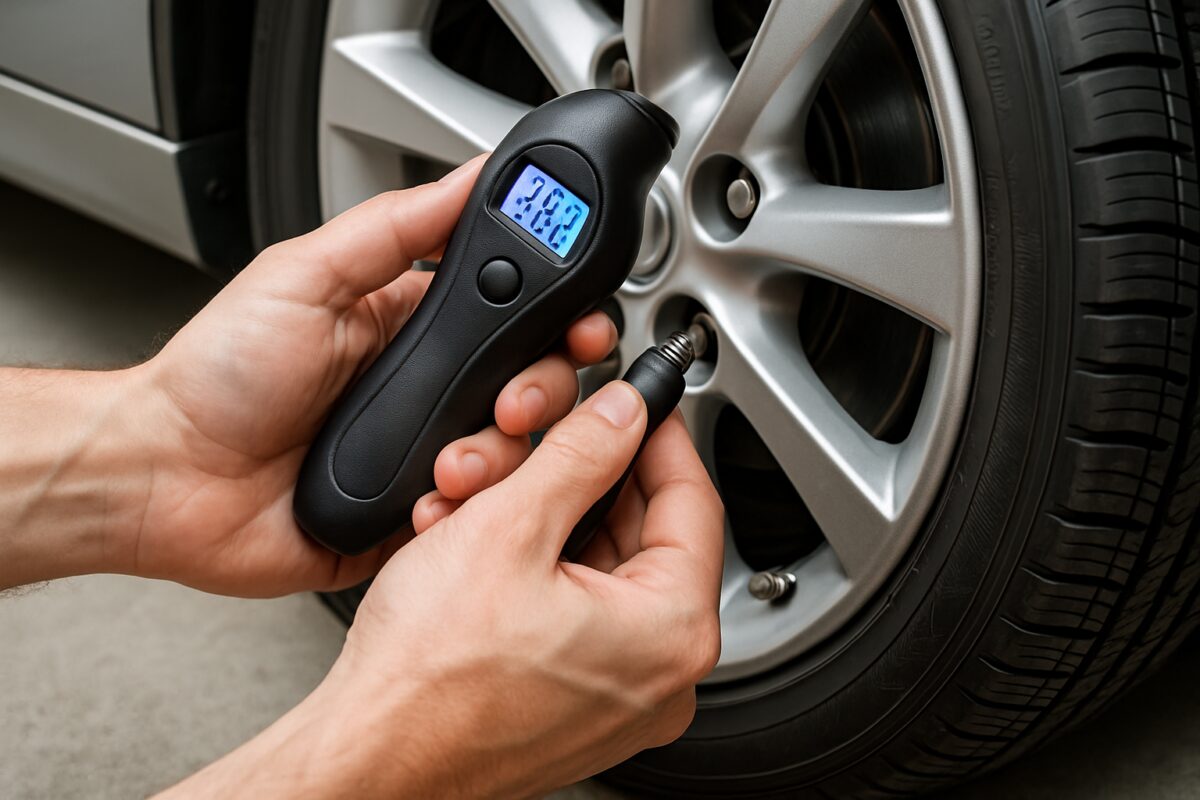
Firmly press your tyre pressure gauge onto the valve stem, ensuring a complete seal to prevent air escaping. You should hear a brief hiss as air enters the gauge.
Hold the gauge perpendicular to the valve stem for the most accurate reading. Digital gauges typically display results immediately, whilst dial gauges require a moment to stabilise.
Step 4: Read measurement
Record the pressure reading displayed on your gauge. Most UK vehicles use PSI (pounds per square inch) or bar measurements, with 1 bar equalling approximately 14.5 PSI.
Compare this reading to your vehicle’s recommended pressure specification. A variance of more than 2-3 PSI indicates adjustment is needed.
Step 5: Adjust pressure if needed
If pressure is low, use an air compressor or manual pump to add air gradually. Check pressure frequently during inflation to avoid over-inflating.
For over-inflated tyres, press the small metal pin inside the valve stem briefly to release excess air. Recheck with your gauge until you achieve the correct pressure.
Replace the valve cap securely to protect the valve mechanism from dirt and moisture.
Common mistakes to avoid
One of the most frequent errors is checking tyre pressure immediately after driving. Hot tyres can show readings 4-6 PSI higher than actual cold pressure, leading to chronic under-inflation.
Never rely solely on visual inspection to assess tyre pressure. Modern tyres can appear properly inflated even when significantly under-pressurised, particularly run-flat designs.
Avoid using garage forecourt gauges without verification, as these are often inaccurate due to heavy use and poor maintenance. Investment in a quality personal gauge ensures consistent, reliable readings.
Professional tip: Our AutoPartsPro mechanics recommend checking tyre pressure monthly and before long journeys. Temperature changes of 10°C can alter pressure by approximately 1-2 PSI.
Don’t forget to check your spare tyre pressure quarterly. Emergency situations are not the time to discover your spare is flat.
When should you check tyre pressure?
Check your tyre pressure at least once monthly, as tyres naturally lose 1-2 PSI per month through normal permeation. Seasonal temperature changes require more frequent monitoring.
Before long journeys, especially when carrying additional passengers or luggage, verify pressures match your vehicle manufacturer’s recommendations for loaded conditions.
After hitting potholes, kerbs, or road debris, inspect for visible damage and check pressure within 24 hours. Impact damage can cause slow leaks that develop over time.
Warning signs that indicate immediate pressure checking include uneven tyre wear, reduced fuel economy, or changes in vehicle handling characteristics.
Related maintenance you can do at the same time
While checking tyre pressure, inspect tyre tread depth using the 20p coin test or a proper tread depth gauge. Legal minimum tread depth in the UK is 1.6mm across the central three-quarters of the tyre.
Examine tyre sidewalls for cuts, bulges, or embedded objects that could compromise structural integrity. Look for uneven wear patterns that might indicate alignment issues or suspension problems.
Consider rotating your tyres according to your vehicle manufacturer’s schedule to promote even wear. This simple maintenance can extend tyre life significantly.
Check your air filter condition monthly, as clogged filters can reduce fuel efficiency similar to under-inflated tyres.
Expert advice: Our service specialists note that proper tyre pressure can improve fuel economy by up to 3% and extend tyre life by 25%. It’s one of the most cost-effective maintenance tasks you can perform.
Inspect brake pads through wheel spokes if visible, looking for thickness and wear indicators. Early detection prevents costly brake disc damage.
Frequently asked questions
What happens if I drive with incorrect tyre pressure?
Under-inflated tyres increase fuel consumption, cause premature tread wear, and reduce vehicle stability. Over-inflation decreases contact patch size, affecting braking performance and ride comfort.
Can I check tyre pressure in cold weather?
Yes, but remember that tyre pressure drops approximately 1 PSI for every 5°C temperature decrease. Adjust accordingly and check more frequently during winter months.
How accurate are digital vs analogue pressure gauges?
Digital gauges typically offer better accuracy and easier reading, especially in low light. Quality analogue gauges remain reliable but require proper calibration and careful reading.
Should I check pressure before or after washing my car?
Check pressure before washing or wait several hours afterward. Water temperature and ambient conditions during washing can temporarily affect tyre temperature and pressure readings.
What’s the difference between PSI and bar measurements?
PSI (pounds per square inch) is common in the UK, whilst bar is used in European specifications. One bar equals 14.5 PSI approximately.
Maintaining proper tyre pressure represents one of the simplest yet most impactful maintenance tasks for any vehicle owner. Regular monitoring prevents premature tyre wear, improves fuel economy, and enhances safety through optimal contact with the road surface. With the right gauge and consistent checking routine, you’ll maximise both performance and value from your wheel components whilst ensuring reliable motoring for years to come.

 Loading...