Oil on spark plugs is a common problem that can severely impact your vehicle’s performance and fuel economy. When lubricants contaminate the spark plug electrodes, they prevent proper ignition and can lead to expensive engine damage. Understanding this issue helps you maintain your car’s health and avoid costly repairs.
Engine oil leaking into combustion chambers
Engine oil reaches spark plugs primarily through worn valve stem seals or damaged piston rings. These components create vital barriers between the oil system and combustion chambers.
Valve stem seals deteriorate over time, especially in high-mileage vehicles. When these rubber seals fail, oil drips down the valve stems directly onto the spark plug threads and electrodes. This contamination happens gradually, making it difficult to detect early.
Worn piston rings allow oil to escape from the crankcase into the cylinder during the compression stroke. The oil then coats the spark plug, creating a conductive film that interferes with electrical discharge. This problem often affects older engines with significant wear patterns.
Our mechanics at AutoPartsPro recommend checking spark plugs every 10,000 miles in high-mileage vehicles to catch oil contamination early.
Excessive blow-by from worn cylinder walls also contributes to oil contamination. The damaged surface allows pressurised oil vapours to enter the combustion chamber, where they condense on cooler spark plug surfaces.
Faulty positive crankcase ventilation system
A malfunctioning PCV system creates excessive crankcase pressure that forces oil past seals and gaskets. This system normally removes blow-by gases and maintains proper pressure balance within the engine.
Blocked PCV valves prevent proper ventilation, causing oil vapours to accumulate in the crankcase. The increased pressure pushes oil through any available pathway, including around spark plug threads and valve guides.
Clogged breather tubes or crankcase breathers compound the problem by restricting airflow. This creates a pressure build-up that overwhelms even healthy seals and gaskets.
A failing PCV valve may stick open, creating a vacuum leak that draws oil directly into the intake manifold. This oil-laden air mixture then travels to the combustion chambers, contaminating all spark plugs simultaneously.
Regular PCV system maintenance prevents 80% of oil contamination issues according to our workshop data.
Modern engines rely heavily on proper crankcase ventilation for emissions control and engine longevity. Neglecting this system leads to accelerated wear and multiple seal failures.
Damaged cylinder head gasket
A blown head gasket allows oil passages to communicate with combustion chambers. This creates direct pathways for pressurised oil to enter cylinder bores and contaminate spark plugs.
Head gasket failure often occurs gradually, starting with small breaches that worsen over time. Initial symptoms include occasional misfires and slight oil consumption before progressing to severe contamination.
Overheating events commonly cause head gasket damage by warping the cylinder head surface. The resulting uneven contact allows oil to seep past the gasket material into adjacent areas.
Age-related deterioration affects gasket materials, particularly in engines with aluminium heads and iron blocks. Thermal expansion differences stress the gasket seal, eventually creating failure points.
High-performance engines face additional risks from increased cylinder pressures and temperatures. These conditions accelerate gasket wear and make proper sealing more challenging.
Warning signs your car has a problem
Several symptoms indicate oil contamination on spark plugs before complete failure occurs. Recognising these early warning signs prevents extensive engine damage.
- Engine misfires during cold starts that improve when warm
- Reduced acceleration and poor throttle response
- Increased fuel consumption without explanation
- Blue or white smoke from the exhaust
- Rough idling with irregular engine speed
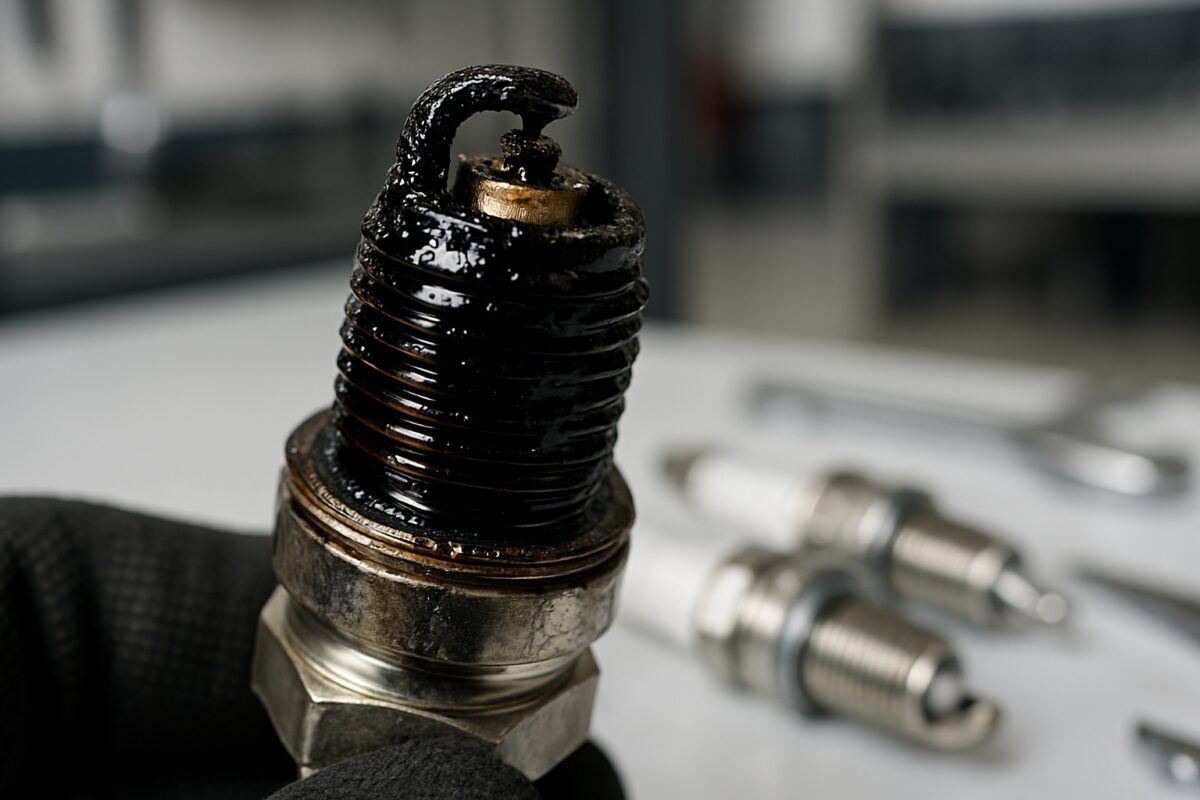
Visual inspection reveals oil-fouled plugs with wet, black deposits on electrodes. Fresh oil appears light brown or amber, while burnt oil creates dark, carbonised coatings.
The check engine light may illuminate due to misfire codes detected by the ECU. Modern vehicles monitor combustion quality and trigger warnings when cylinders fail to fire properly.
How to fix the problems
| Problem Source | Repair Method | Typical Cost Range | Labour Time |
|---|---|---|---|
| Valve stem seals | Replace seals and guides | £300-800 | 4-8 hours |
| Piston rings | Engine rebuild/overhaul | £1500-3500 | 15-25 hours |
| Head gasket | Gasket replacement/machining | £800-1500 | 8-12 hours |
| PCV system | Replace valve and hoses | £50-150 | 1-2 hours |
Start repairs with the simplest and least expensive solutions. PCV system maintenance often resolves oil contamination issues without major engine work.
For valve stem seal replacement, consider upgrading to improved materials like Viton rubber for enhanced durability. These seals withstand higher temperatures and resist chemical degradation.
Head gasket repairs require proper surface preparation and torque specifications. Use quality gasket sets and follow manufacturer procedures to prevent repeat failures.
| Prevention Method | Frequency | Benefits |
|---|---|---|
| Regular oil changes | Every 6,000 miles | Reduces seal degradation |
| PCV system inspection | Annual service | Maintains proper pressure |
| Quality oil filters | With each oil change | Prevents contamination |
When to see a mechanic
Seek professional diagnosis when oil contamination affects multiple spark plugs simultaneously. This indicates systemic problems requiring specialist equipment and expertise.
Head gasket failure symptoms warrant immediate attention to prevent catastrophic engine damage. Continuing to drive with a blown gasket risks cylinder head warping and complete engine failure.
Compression testing and leak-down tests help identify the exact source of oil contamination. These diagnostic procedures require specialised tools and interpretation skills.
For more complex repairs like engine valve maintenance, professional service ensures proper procedures and warranty coverage.
- Multiple cylinder misfires occurring simultaneously
- Coolant contamination in oil or vice versa
- Significant power loss despite recent servicing
Early intervention prevents minor issues from escalating into major engine rebuilds. Professional mechanics can often repair seal problems before they cause secondary damage.
How much oil on spark plugs is normal?
No oil should be present on spark plug electrodes in a healthy engine. Any visible oil contamination indicates seal or gasket problems requiring attention.
Can I drive with oil-fouled spark plugs?
Driving is possible but not recommended. Oil contamination causes misfires, reduces fuel economy, and may damage catalytic converters through incomplete combustion.
Will oil on spark plugs cause permanent engine damage?
Oil contamination itself doesn’t cause permanent damage, but the underlying problems can. Addressing root causes prevents expensive repairs like engine rebuilds.
How often should I check spark plugs for oil contamination?
Inspect spark plugs during routine maintenance every 10,000-15,000 miles. High-mileage vehicles benefit from more frequent checks to catch problems early.
Can using wrong oil viscosity cause spark plug contamination?
Incorrect oil viscosity may worsen existing seal problems but doesn’t directly cause contamination. Always use manufacturer-specified engine oil grades for optimal protection.
Final recommendation
Oil contamination on spark plugs demands prompt attention to prevent escalating damage and repair costs. Start with simple PCV system maintenance before considering major engine work.
Regular maintenance using quality components from AutoPartsPro ensures reliable performance and longevity. Our technical specialists recommend addressing oil contamination systematically, beginning with the most probable causes.
For comprehensive guidance on related maintenance tasks, consult our detailed guides on oil filter replacement and spark plug servicing. Proper maintenance practices prevent most oil contamination issues whilst maintaining optimal engine performance.
Consider upgrading to premium spark plugs and seals when replacement becomes necessary. Quality components provide better durability and performance, ultimately reducing long-term maintenance costs for your vehicle.

 Loading...