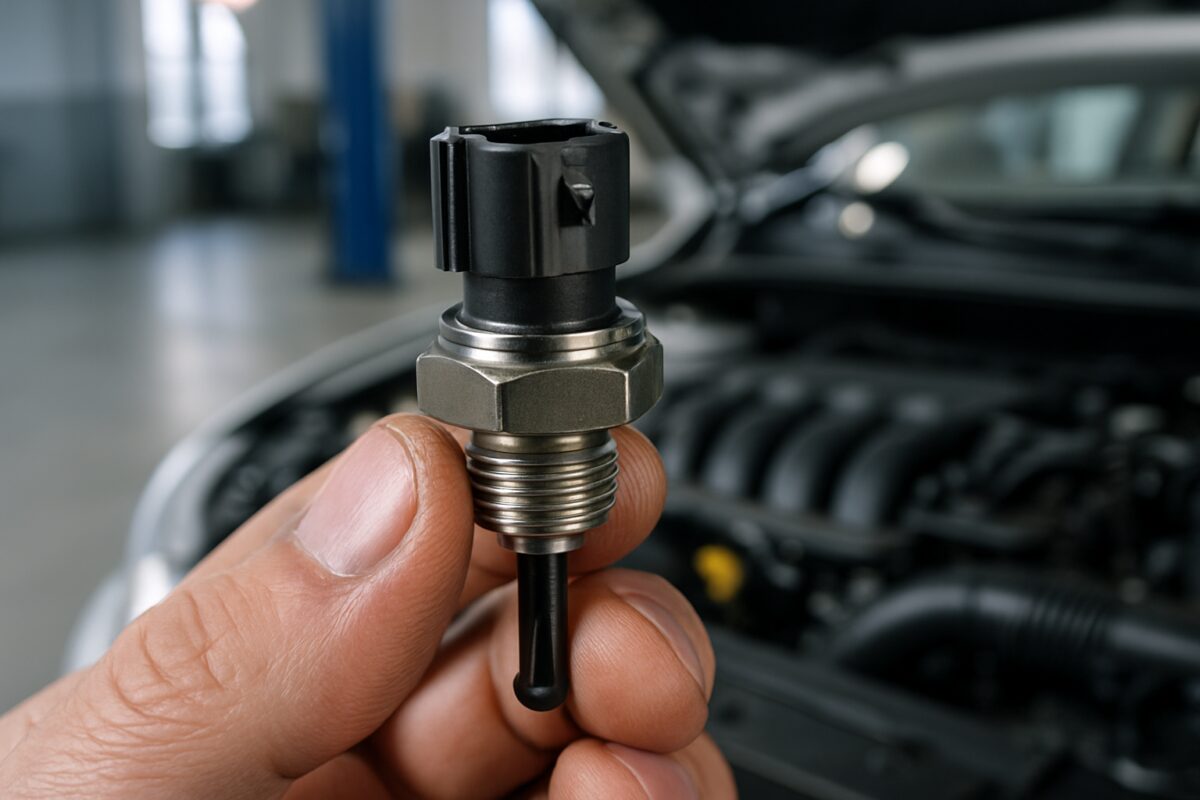
The intake air temperature sensor (IAT) plays a crucial role in modern engine management systems, measuring the temperature of incoming air to optimise fuel delivery and ignition timing. This small but vital component helps your engine’s ECU calculate the correct air-fuel mixture, ensuring efficient combustion and optimal performance. Understanding how your sensors work can save you time and money on repairs.
Engine performance issues
When the intake air temperature sensor begins to fail, one of the first symptoms you’ll notice is reduced engine performance. The sensor provides critical data to the ECU about incoming air density, which directly affects fuel injection calculations.
A faulty IAT sensor may cause your engine to run rich or lean, leading to poor acceleration, hesitation during throttle application, and reduced power output. You might experience rough idling, particularly when the engine is cold, as the ECU struggles to compensate for incorrect temperature readings.
According to our specialists at AutoPartsPro, these performance issues often worsen gradually, making them easy to overlook initially. However, addressing sensor problems promptly can prevent more serious engine damage and maintain fuel efficiency.
The sensor’s malfunction can also trigger limp mode in some vehicles, severely limiting engine power to protect internal components. This safety feature indicates that immediate attention is required.
Fuel consumption problems
Incorrect air temperature readings directly impact fuel economy, as the ECU relies on this data to determine optimal injection timing and duration. A malfunctioning sensor may cause the engine management system to deliver too much or too little fuel.
When the sensor reads incorrectly, your vehicle may consume significantly more fuel than normal. Cold air is denser than warm air, containing more oxygen molecules per cubic metre. If the sensor fails to detect actual air temperature, the ECU cannot adjust fuel delivery accordingly.
Our mechanics frequently see fuel consumption increase by 10-15% when IAT sensors fail. This occurs because the engine often defaults to a rich mixture when sensor data is unreliable, ensuring engine protection but sacrificing efficiency.
Professional tip: Monitor your fuel consumption patterns. A sudden increase without changes in driving habits often indicates sensor-related issues that require investigation.
Additionally, poor fuel mixing can lead to incomplete combustion, creating carbon deposits that further reduce engine efficiency over time.
Starting difficulties
Cold starting problems frequently relate to IAT sensor malfunctions, particularly during winter months when accurate temperature readings become critical for proper engine operation.
The sensor helps the ECU determine how much extra fuel to inject during cold starts. When this data is incorrect, your engine may struggle to start, require extended cranking, or fail to start entirely in cold conditions.
Warm restart issues can also occur when a failing sensor provides inconsistent readings. The engine may start but immediately stall, or run roughly until it reaches operating temperature and other sensors take priority in fuel calculations.
These starting problems often coincide with other symptoms, creating a pattern that experienced technicians can quickly identify. Early intervention prevents the frustration of unreliable vehicle operation.
Warning signs your car has a problem
Several clear indicators suggest IAT sensor issues requiring immediate attention. These symptoms often appear together, making diagnosis more straightforward:
- Check engine light illumination with diagnostic codes P0110-P0114
- Unusual exhaust smoke (black indicates rich mixture, blue suggests oil burning)
- Irregular idle speed or engine stalling
- Poor throttle response and sluggish acceleration
- Increased fuel consumption without explanation
Modern vehicles store diagnostic trouble codes when sensor readings fall outside expected parameters. Professional diagnostic equipment can pinpoint exact fault codes, streamlining the repair process.
Pay attention to symptoms that worsen in specific temperature conditions, as this pattern strongly suggests IAT sensor involvement.
How to fix the problems
| Problem | Solution | Estimated Cost | Difficulty Level |
|---|---|---|---|
| Faulty sensor reading | Replace IAT sensor | £25-80 | Easy |
| Corroded connections | Clean and protect wiring | £10-20 | Easy |
| Damaged wiring harness | Repair or replace wiring | £50-150 | Moderate |
| ECU calibration issues | Professional reprogramming | £80-200 | Professional |
Most IAT sensor replacements involve unplugging the electrical connector and removing a single bolt or clip. The sensor typically mounts in the air filter housing or intake manifold.
Professional tip: Always disconnect the battery before replacing sensors to prevent ECU damage and ensure proper system reset after installation.
After replacement, allow the engine to complete several warm-up cycles so the ECU can relearn optimal fuel maps. Some vehicles require professional scanning tools to clear adaptation values.
When to see a mechanic
While IAT sensor replacement is generally straightforward, certain situations require professional intervention. Seek expert help when diagnostic codes persist after sensor replacement, indicating potential ECU or wiring issues.
Complex diagnostic procedures become necessary when multiple sensors show fault codes simultaneously. Professional equipment can isolate individual circuit problems and verify proper sensor operation.
Intermittent faults prove particularly challenging for DIY diagnosis. Our experienced technicians can perform dynamic testing while driving, identifying problems that only occur under specific operating conditions.
Consider professional service when symptoms affect vehicle safety or reliability. A qualified technician can also check related components like the mass air flow sensor and throttle position sensor that work together with the IAT sensor.
How long does an intake air temperature sensor typically last?
IAT sensors generally last 80,000-120,000 miles under normal conditions, though harsh environments can reduce lifespan significantly.
Can I drive with a faulty intake air temperature sensor?
Short-term driving is possible but not recommended, as fuel economy suffers and engine damage risk increases over time.
Where is the intake air temperature sensor located in most vehicles?
The sensor typically mounts in the air intake tube, inlet manifold, or integrated with the mass airflow sensor housing.
What causes intake air temperature sensors to fail prematurely?
Heat damage, contamination from oil vapours, physical damage, and electrical connector corrosion are the most common failure causes.
How much does it cost to replace an intake air temperature sensor?
Replacement costs range from £25-80 for parts plus £40-100 labour, depending on sensor location and vehicle complexity.
Final recommendation
Regular maintenance and prompt attention to warning signs can prevent most IAT sensor-related problems. Our AutoPartsPro specialists recommend checking sensor connections during routine maintenance intervals and replacing sensors showing resistance or voltage irregularities.
Quality replacement sensors from reputable manufacturers offer reliable long-term performance. Avoid extremely cheap aftermarket options that may fail prematurely or provide inaccurate readings. When selecting replacement parts, choose OEM or equivalent specifications for optimal compatibility.
Remember that proper engine operation depends on multiple sensors working together. While IAT sensor replacement is relatively simple, comprehensive system checks ensure related components function correctly. For reliable parts and expert advice, visit our technical guides or consult with our knowledgeable parts specialists.

 Loading...