Spark plug replacement typically costs between £60-£300 in the UK, depending on your vehicle type and engine configuration. Most four-cylinder engines require replacing spark plugs every 30,000-50,000 miles for copper plugs or 60,000-100,000 miles for iridium variants. Common warning signs include engine misfiring, reduced fuel economy, rough idling, and difficulty starting your car.
Understanding spark plug function and importance
Spark plugs serve as the ignition source within your engine’s combustion chamber. These small but vital components create an electrical arc that ignites the compressed air-fuel mixture, generating the power needed to drive your vehicle forward. Without properly functioning spark plugs, your engine simply cannot operate efficiently or reliably.
The automotive specialists at AutopartsPro have observed that modern engines demand increasingly precise ignition timing. Today’s high-performance engines require spark plugs that can withstand extreme temperatures and pressures whilst maintaining consistent performance across thousands of ignition cycles.
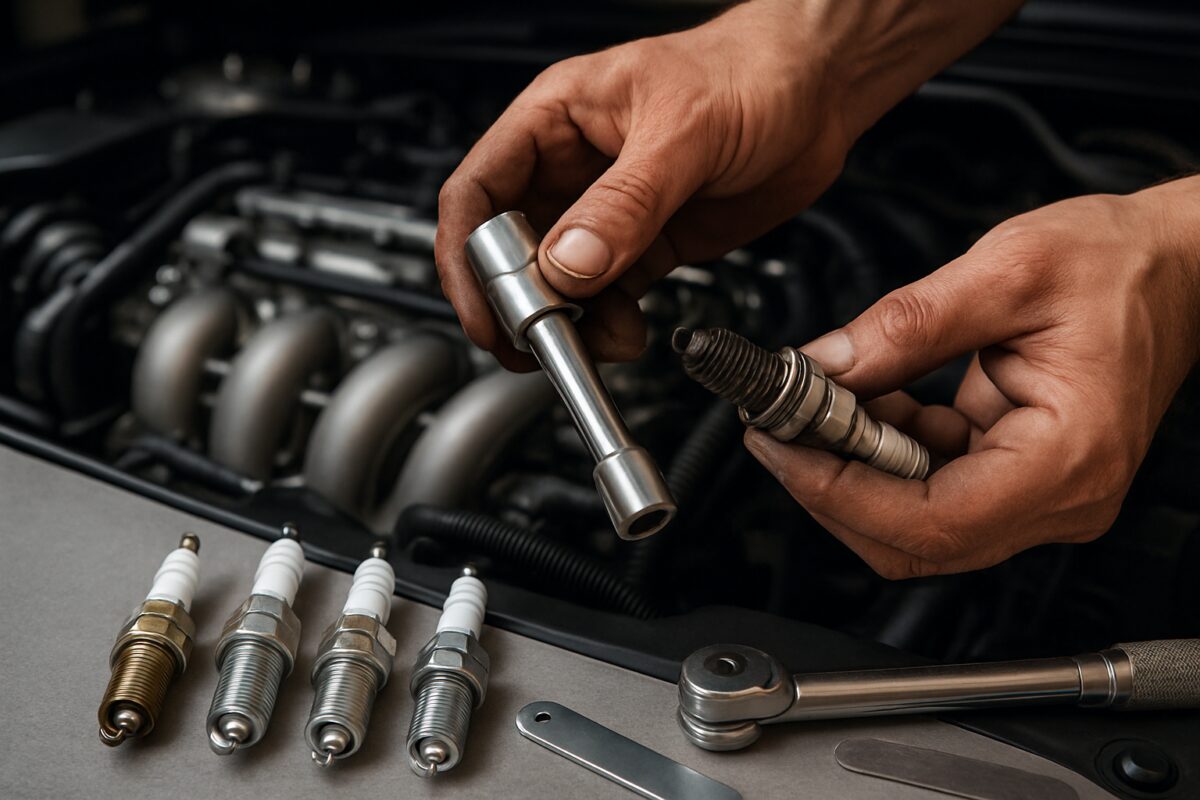
Each spark plug contains several key components: the metal shell, ceramic insulator, centre electrode, and ground electrode. The gap between these electrodes determines the intensity and timing of the electrical discharge. This seemingly simple design masks sophisticated engineering that must perform flawlessly under harsh conditions.
Common symptoms of worn spark plugs
Recognising the early warning signs of failing spark plugs can prevent costly engine damage and poor performance. Our mechanics consistently identify several telltale symptoms that indicate immediate attention is required.
Engine misfiring and performance issues
Engine misfiring represents the most obvious symptom of spark plug deterioration. You’ll feel the engine stumble, hesitate, or produce irregular power delivery during acceleration. This occurs when one or more cylinders fail to fire properly, disrupting the engine’s smooth operation.
Reduced acceleration and overall power loss frequently accompany misfiring. Your vehicle may struggle to reach motorway speeds or require excessive throttle input for normal driving situations. These performance issues directly correlate with incomplete combustion caused by weak or inconsistent spark generation.
Starting difficulties and idle problems
Hard starting, particularly in cold weather conditions, often indicates spark plug degradation. Worn electrodes struggle to generate sufficient spark intensity for reliable ignition, especially when engine temperatures are low and fuel vaporisation is reduced.
Rough idling presents another clear indicator of spark plug issues. The engine may shake, vibrate excessively, or produce uneven RPM fluctuations whilst stationary. This irregular idle pattern suggests incomplete combustion in one or more cylinders.
Factors affecting spark plug replacement costs
Several variables influence the total expense of spark plug replacement, making it essential to understand the cost components before proceeding with maintenance.
Vehicle type and engine configuration
The number of cylinders directly affects replacement costs. Four-cylinder engines typically require four spark plugs, whilst V6 and V8 engines need six and eight respectively. Some modern engines feature twin-spark technology, effectively doubling the plug count and associated costs.
Engine accessibility plays a crucial role in labour charges. Transversely mounted engines in compact cars often provide easier access compared to longitudinally mounted units in larger vehicles. Certain luxury vehicles position spark plugs beneath intake manifolds or other components, significantly increasing labour time.
| Engine Type | Number of Plugs | Typical Cost Range | Labour Time |
|---|---|---|---|
| 4-Cylinder | 4 | £60-£120 | 1-2 hours |
| V6 | 6 | £90-£180 | 1.5-3 hours |
| V8 | 8 | £120-£300 | 2-4 hours |
| Twin-Spark 4-Cyl | 8 | £120-£240 | 2-3 hours |
Spark plug types and quality differences
Copper core spark plugs represent the most economical option, typically costing £8-£15 each. However, their shorter lifespan of 20,000-30,000 miles may result in higher long-term costs due to more frequent replacements.
Platinum and iridium spark plugs command premium pricing of £15-£40 each but offer extended service intervals. These advanced materials resist electrode wear more effectively, providing consistent performance for 60,000-100,000 miles in most applications.
Professional replacement process and considerations
Proper spark plug replacement involves more than simply removing old plugs and installing new ones. Our experienced technicians follow a systematic approach to ensure optimal results and prevent potential complications.
Pre-replacement inspection and preparation
Before beginning replacement, technicians inspect the existing plugs for unusual wear patterns or deposits. These visual clues provide valuable insights into engine condition, fuel system performance, and potential underlying issues requiring attention.
Engine temperature considerations are crucial for safe and effective replacement. Cold engines allow for easier plug removal and prevent thread damage, whilst ensuring optimal gap measurements when installing new components.
Professional tip: Always replace all spark plugs simultaneously, even if only one appears problematic. Mismatched plug conditions can create performance inconsistencies and complicate future diagnostics.
Installation techniques and torque specifications
Proper installation requires precise torque application to prevent thread damage or inadequate sealing. Over-tightening can strip cylinder head threads, whilst insufficient torque may cause plug loosening and potential engine damage.
Gap verification ensures optimal spark characteristics for your specific engine application. Manufacturers specify precise electrode gaps, and even small deviations can significantly impact performance and fuel economy.
Signs indicating immediate replacement necessity
Certain symptoms demand urgent attention to prevent catastrophic engine damage or complete failure. Recognising these critical indicators can save substantial repair costs and ensure continued vehicle reliability.
Consistent misfiring under load, particularly during acceleration or climbing hills, suggests severely compromised spark plug performance. This condition can damage catalytic converters, oxygen sensors, and other expensive emission control components if left unaddressed.
Visible spark plug deterioration, including cracked insulators, eroded electrodes, or heavy carbon deposits, requires immediate replacement. These physical signs indicate the plugs have exceeded their useful service life and pose reliability risks.
Warning signs requiring urgent attention
- Engine misfiring accompanied by flashing check engine lights
- Complete failure to start despite adequate fuel and battery condition
- Severe rough idling with visible exhaust smoke
- Dramatic fuel consumption increases without explanation
- Metallic knocking sounds during acceleration
Different spark plug materials and their characteristics
Understanding the various spark plug materials available helps make informed decisions about replacement options. Each material offers distinct advantages and limitations based on your driving patterns and engine requirements.
Copper core plugs provide excellent heat dissipation and reliable performance for standard engines. Their softer electrode material requires more frequent replacement but offers superior conductivity and consistent spark generation.
Platinum-tipped plugs feature enhanced durability and extended service intervals. The harder platinum material resists electrode wear whilst maintaining precise gap dimensions throughout their extended service life.
Iridium spark plugs represent the premium option, offering exceptional longevity and performance characteristics. Their ultra-fine electrodes enable more efficient combustion and improved fuel economy, particularly beneficial for high-performance or turbocharged engines.
| Material Type | Service Life | Cost per Plug | Best Applications |
|---|---|---|---|
| Copper | 20,000-30,000 miles | £8-£15 | Standard engines, frequent replacement acceptable |
| Platinum | 60,000-80,000 miles | £15-£25 | Modern engines, extended intervals preferred |
| Iridium | 80,000-100,000 miles | £20-£40 | High-performance, turbocharged, or premium vehicles |
Maintenance intervals and replacement scheduling
Establishing appropriate replacement intervals ensures optimal engine performance whilst avoiding premature failures or unnecessary expenses. Multiple factors influence these intervals, making personalised scheduling essential for each vehicle.
Severe driving conditions accelerate spark plug deterioration significantly. Stop-and-go city driving, frequent cold starts, and extended idling periods create more demanding operating environments compared to steady motorway cruising.
Regular inspection during routine maintenance allows early detection of potential issues. Visual examination every 20,000 miles helps identify developing problems before they affect performance or cause secondary damage.
Recommended replacement intervals by driving conditions
- Normal driving conditions: Replace copper plugs every 30,000 miles, platinum/iridium every 60,000-100,000 miles
- Severe city driving: Reduce intervals by 25-30% due to increased thermal cycling and carbon buildup
- Performance applications: Monitor more frequently and replace based on condition rather than mileage alone
- Turbocharged engines: Follow manufacturer recommendations closely, typically requiring premium plugs and shorter intervals
Related components to inspect during replacement
Spark plug replacement provides an excellent opportunity to inspect related ignition coil components and address potential issues before they cause problems. Our technicians routinely examine several interconnected systems during this maintenance procedure.
Ignition coils work in direct partnership with spark plugs to generate the high-voltage electricity required for combustion. Faulty coils can cause premature spark plug failure, whilst worn plugs can damage expensive coil assemblies.
Spark plug leads or ignition wires transfer electrical energy from coils to plugs. Cracked or deteriorated leads can cause misfiring, reduced performance, and accelerated plug wear. Many vehicles now utilise coil-on-plug designs that eliminate traditional leads.
Additional inspection points
- Air filter condition affects combustion quality and plug longevity
- PCV system operation influences cylinder pressures and combustion characteristics
- Fuel injector performance impacts mixture quality and plug condition
- O2 sensor functionality ensures optimal air-fuel ratios
- Compression test results reveal overall engine health
DIY replacement considerations and limitations
Whilst spark plug replacement appears straightforward, several factors determine whether DIY replacement is advisable for your specific vehicle and skill level. Understanding these limitations prevents costly mistakes and ensures safe, effective results.
Basic four-cylinder engines with easily accessible plugs represent suitable DIY candidates for mechanically inclined individuals. However, V6 and V8 engines, particularly those with complex intake manifold arrangements, often require professional expertise and specialised tools.
Thread damage represents the most significant risk during DIY replacement attempts. Cross-threading or over-torquing can necessitate expensive cylinder head repairs or complete engine rebuilding in severe cases.
Safety consideration: Always allow engines to cool completely before attempting spark plug replacement. Hot components can cause severe burns, and thermal expansion may complicate removal procedures.
Preventive measures to extend spark plug life
Implementing proper maintenance practices significantly extends spark plug service life whilst improving overall engine performance and reliability. These preventive measures require minimal effort but provide substantial long-term benefits.
Regular oil filter and engine oil changes prevent contamination that can affect combustion quality and plug condition. Clean oil maintains proper lubrication and prevents carbon deposit formation that degrades spark plug performance.
High-quality fuel with appropriate octane ratings ensures clean combustion and reduces harmful deposits. Premium fuels often contain detergent additives that help maintain fuel system cleanliness and optimal combustion characteristics.
Engine operating practices that promote plug longevity
- Allow proper warm-up periods before demanding high performance from cold engines
- Avoid extended idling periods that promote carbon buildup and incomplete combustion
- Use recommended fuel octane ratings to prevent knock and associated electrode damage
- Address check engine lights promptly to prevent secondary damage to ignition components
- Maintain proper air filter condition to ensure optimal air-fuel mixture ratios
Understanding spark plug replacement requirements, recognising warning symptoms, and maintaining proper service intervals ensures reliable engine operation and optimal fuel economy. Professional replacement guarantees correct installation whilst addressing related system concerns. Whether choosing copper, platinum, or iridium plugs, selecting appropriate materials for your driving conditions and following manufacturer recommendations maximises performance and longevity. Regular maintenance, quality fuel, and proper operating practices extend plug life whilst preventing costly engine damage and maintaining vehicle reliability for years to come.
Frequently Asked Questions (FAQ)
How often should spark plugs be replaced in UK driving conditions?
Replace copper spark plugs every 20,000-30,000 miles, platinum plugs every 60,000 miles, and iridium plugs every 80,000-100,000 miles under typical UK driving conditions including frequent stop-start traffic.
What causes spark plugs to fail prematurely?
Common causes include poor fuel quality, incorrect gap settings, engine overheating, oil contamination, carbon buildup from short journeys, and faulty ignition coils creating excessive electrical stress.
Can I drive with a faulty spark plug?
Limited driving is possible but not recommended. Continued operation with faulty plugs can damage catalytic converters, increase emissions, reduce fuel economy, and cause engine knock or complete failure.
How much does professional spark plug replacement cost?
Professional replacement typically costs £60-£300 depending on engine type, plug material, and labour requirements. Four-cylinder engines cost less than V6/V8 configurations requiring additional access work.
Should all spark plugs be replaced together?
Yes, always replace all spark plugs simultaneously to ensure consistent performance, prevent diagnostic confusion, and avoid mismatched electrode conditions that can affect engine balance and efficiency.

 Loading...