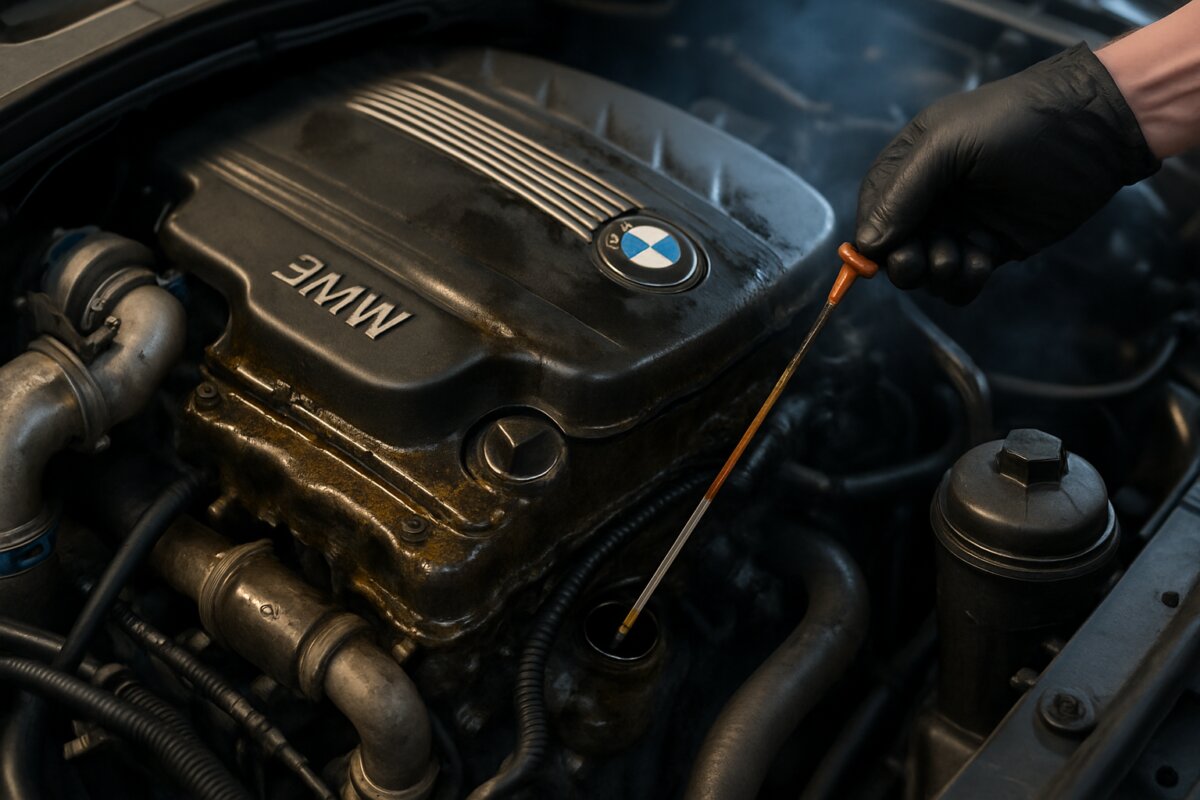
The BMW F20 high oil consumption issue has become a notorious headache for owners across the UK. This first-generation 1 Series model, produced between 2011 and 2019, suffers from excessive lubrication burn-off that can lead to catastrophic engine damage if left unaddressed. Our specialists at AutoPartsPro have seen countless cases where drivers discover their dipstick reading dangerously low between service intervals, often requiring top-ups every 500-1000 miles. This isn’t just an inconvenience—it’s a design flaw that affects multiple engine variants and can destroy your powerplant if ignored.
Worn piston rings allowing oil past the combustion chamber
The N20 and N13 engine families fitted to the F20 chassis suffer from premature piston ring wear. These components are supposed to seal combustion gases inside the cylinder whilst preventing lubricant from entering the burn zone. When they deteriorate, oil seeps past and gets incinerated during the combustion process, creating that telltale blue smoke from your exhaust.
BMW’s choice of lightweight materials and thinner piston rings contributed to this widespread failure. The rings lose their tension over time, especially if the engine runs hot or endures aggressive driving patterns. Our technicians frequently encounter F20 models with less than 60,000 miles showing significant ring wear—far earlier than expected for a premium manufacturer.
The problem intensifies during cold starts when oil viscosity changes. Thin synthetic oils can slip past weakened rings more easily, and short journeys that don’t allow full engine warm-up exacerbate the situation. Drivers who predominantly use their F20 for urban commuting report higher consumption rates than those covering motorway miles where operating temperatures stabilise.
Carbon buildup around the ring grooves compounds this issue. Deposits prevent proper ring movement and sealing action, creating channels for oil migration. Regular oil filter changes with quality filtration media help minimise particulate accumulation, though they won’t reverse existing wear damage.
Faulty valve stem seals leaking into inlet ports
The valve stem seals on F20 engines deteriorate faster than expected, allowing lubricant to drip down valve stems into the combustion chamber. This problem manifests differently from piston ring wear—you’ll notice puffs of blue smoke primarily during deceleration or after the vehicle sits idle, rather than constant exhaust discolouration.
BMW used rubber compounds that couldn’t withstand the thermal cycling of modern turbocharged engines. The N20B20 turbo four-cylinder particularly struggles with this defect. Heat from the turbocharger and exhaust gases ages these seals prematurely, causing them to harden, crack, and lose their sealing properties within 50,000-70,000 miles.
The intake side valve seals typically fail first because they experience vacuum conditions that literally suck oil down the guides. This creates a distinctive symptom: substantial oil consumption without corresponding exhaust smoke during acceleration, but visible emissions when lifting off the throttle as manifold vacuum increases.
Replacing valve stem seals requires cylinder head removal or specialised compressed-air tools to hold valves in place whilst changing seals with the head installed. Either approach demands skilled labour and several hours of workshop time. Preventative maintenance can’t stop this wear pattern—it’s fundamentally a materials specification issue that requires component replacement when symptoms appear.
PCV system failures forcing oil into intake tract
The positive crankcase ventilation system on BMW F20 models contains a cyclonic separator that removes oil vapour from crankcase gases before routing them back into the intake. When this separator membrane fails—and it frequently does—liquid oil gets drawn into the induction system, where it’s consumed during combustion.
This component sits integrated into the valve cover assembly, requiring replacement of the entire rocker cover unit. BMW’s design uses a paper-thin membrane that clogs with sludge or tears under pressure fluctuations. Our workshop data shows failure rates spike dramatically after 70,000 miles, though aggressive driving or extended oil change intervals accelerate deterioration.
A malfunctioning crankcase breather creates excessive crankcase pressure, which forces oil past every available seal—turbo seals, valve guides, and piston rings. Drivers often report oil coating the intercooler pipes and throttle body, clear evidence of PCV failure. This oil then burns in the combustion chamber, contributing to consumption figures that can exceed 1 litre per 1000 miles.
Top tip: Check your intercooler pipes for oil residue every 10,000 miles. If you find oil pooling inside, your PCV system has failed and needs immediate attention before it damages your turbocharger or clogs your intake system.
Turbocharger seal degradation allowing oil bypass
The turbocharger fitted to F20 models uses dynamic seals that rely on precise pressure balancing to keep lubricant inside the bearing housing. When these seals wear or the turbo bearing clearances increase, oil escapes into either the compressor or turbine housing, eventually burning in the engine.
Symptoms include oil in the intercooler pipework, blue smoke under boost, and rapid oil level drops after spirited driving. The turbocharger seals deteriorate from thermal stress and contamination. Blocked oil return lines cause oil to pool inside the turbo housing, overwhelming the seals and forcing lubricant into the intake tract.
AutoPartsPro specialists note that turbocharged F20 models consume oil faster than naturally aspirated variants, partly due to these seal failures. The problem worsens gradually—initially you might lose 200ml between services, but as bearing wear progresses, consumption escalates dramatically. Catching turbo seal failure early prevents expensive compressor wheel damage from oil-soaked air filter debris.
Oil starvation during aggressive cornering or low oil levels accelerates turbo bearing wear. The shaft spins at over 200,000 RPM, and even momentary lubrication loss scores the bearing surfaces. Subsequently, clearances increase and oil control deteriorates, creating a self-perpetuating cycle of consumption and damage.
Warning signs your car has a problem
Recognising oil consumption symptoms early can save your engine from terminal damage. BMW F20 owners should watch for these telltale indicators that lubrication loss has exceeded normal parameters.
- Blue exhaust smoke: Visible during cold starts, acceleration, or deceleration indicates oil burning in combustion chambers
- Frequent low oil warnings: Dashboard alerts appearing between service intervals suggest consumption rates above 1 litre per 2000 miles
- Oil residue in intake pipework: Coating inside intercooler pipes or throttle body reveals PCV or turbo seal failure
- Spark plug fouling: Carbon-coated or oil-soaked spark plugs indicate combustion chamber oil contamination
- Rough idle after sitting: Oil pooling on pistons overnight causes misfires until it burns off
- Excessive crankcase pressure: Oil filler cap blowing off or hissing when removed suggests ventilation blockage
- Catalytic converter damage: Failed emissions tests or catalytic converter overheating from oil combustion
Professional advice: Never ignore the low oil warning light. Running even 500ml below minimum can starve critical components, particularly the turbocharger and camshaft bearings, leading to failures costing thousands to repair.
How to fix the problems
Addressing BMW F20 oil consumption requires targeted interventions based on the root cause. Here’s a breakdown of solutions and their approximate costs:
| Problem | Solution | Approximate Cost | Labour Time |
|---|---|---|---|
| Worn piston rings | Engine rebuild with new pistons and rings | £2,500-£4,500 | 20-30 hours |
| Valve stem seal failure | Cylinder head removal and seal replacement | £800-£1,500 | 8-12 hours |
| PCV system failure | Valve cover assembly replacement | £400-£700 | 3-5 hours |
| Turbo seal degradation | Turbocharger replacement or rebuild | £1,200-£2,200 | 6-8 hours |
| Carbon buildup | Walnut blasting intake ports and decarbonising | £300-£600 | 4-6 hours |
For minor consumption issues caught early, switching to a higher viscosity engine oil can temporarily reduce burn-off rates. Moving from 5W-30 to 5W-40 specification provides thicker hot oil film that resists passing worn seals, though this addresses symptoms rather than underlying causes.
Preventative maintenance schedule
Implementing a rigorous maintenance regime can slow oil consumption progression, though it won’t reverse existing wear:
| Interval | Service Action | Purpose |
|---|---|---|
| Every 5,000 miles | Oil and filter change using quality synthetic | Reduces carbon deposits and maintains viscosity |
| Every 10,000 miles | PCV system inspection and cleaning | Prevents pressure buildup forcing oil past seals |
| Every 20,000 miles | Intake system decoking treatment | Removes carbon from valves and piston crowns |
| Every 40,000 miles | Compression test and leak-down analysis | Identifies ring wear before catastrophic failure |
| Every 60,000 miles | Turbocharger inspection and oil line cleaning | Ensures proper lubrication and drainage |
Using manufacturer-approved specifications for all fluids proves crucial. Cheap oils lack the additive packages that protect against thermal breakdown and deposit formation. The few pounds saved per service pale against potential engine damage costs.
When to see a mechanic
Certain symptoms demand immediate professional diagnosis rather than continued monitoring. If your F20 consumes more than 1 litre of oil per 1000 miles, seek workshop attention urgently. This consumption rate indicates severe wear that will rapidly worsen, potentially causing bearing failure or piston seizure.
Visible exhaust smoke requires immediate investigation. Blue smoke means oil burning, whilst white smoke suggests coolant entering combustion chambers—potentially indicating head gasket failure. Don’t dismiss intermittent smoke as normal; it’s your engine crying for help before complete failure.
Unusual engine noises accompanying oil consumption—ticking from the valvetrain, knocking from the bottom end, or turbo whine—signal that lubrication loss has caused component damage. Continuing to drive risks catastrophic failure that could grenade your engine, leaving you stranded and facing replacement costs exceeding £8,000.
Failed emissions tests often correlate with oil consumption problems. Hydrocarbons from burning oil overwhelm the catalytic converter, whilst oil residue coats the O2 sensor, causing incorrect fuelling adjustments. A qualified technician can trace the consumption source and prevent emissions system damage.
- Schedule diagnostic work when consumption exceeds 1 litre per 2000 miles
- Book compression testing if you notice power loss or rough running
- Arrange borescope inspection to visually assess cylinder condition without disassembly
AutoPartsPro’s network of specialist technicians understand F20-specific issues intimately. We can supply all necessary replacement components, from pistons to complete valve cover assemblies, ensuring repairs use quality parts that won’t fail prematurely like original BMW components.
Frequently Asked Questions
Is BMW F20 oil consumption covered under warranty or recall?
BMW extended warranties on certain N20 engines to ten years or 120,000 miles for consumption issues, but coverage varies by build date and location. Contact your dealer with your VIN to check eligibility, though most UK vehicles now exceed warranty periods.
Can I use oil additives to reduce consumption on my F20?
Oil additives claiming to reduce consumption provide temporary symptom relief at best. They cannot restore worn piston rings or valve seals. Some products increase viscosity, potentially causing bearing lubrication issues. Address root causes rather than masking symptoms with additives.
Which F20 engines suffer most from oil consumption problems?
The N20B20 turbocharged four-cylinder exhibits highest consumption rates, followed by the N13B16. Early production models from 2011-2013 suffer more severely than later revisions. The N47 diesel shows fewer lubrication issues but has its own timing chain problems.
How often should I check oil level on a high-consumption F20?
Check your dipstick weekly if consumption exceeds normal rates. Before long journeys, verify levels are within the safe operating range. Carry a litre of correct specification oil in your boot to avoid emergency top-ups with incorrect products.
Will fixing oil consumption improve my F20’s performance and economy?
Absolutely. Oil burning reduces effective compression, fouls spark plugs, and contaminates the intake system, all degrading performance and fuel economy. Proper repairs restore factory power figures and can improve consumption by 10-15% whilst eliminating constant top-up costs.
Final recommendation
The BMW F20 high oil consumption problem isn’t going away on its own—it only worsens with time. Our team at AutoPartsPro strongly advises addressing consumption issues promptly, before minor seal wear escalates into complete engine failure. If you’re burning more than half a litre between 5,000-mile services, diagnostic work should begin immediately to identify whether you’re facing a £400 valve cover replacement or a £4,000 engine rebuild.
Prevention through rigorous maintenance offers your best defence. Frequent oil changes using quality synthetic lubricants, regular PCV system inspection, and avoiding extended low-speed running can extend engine life substantially. However, if your F20 already exhibits high consumption, budget for repairs sooner rather than later. The difference between catching valve seal failure early and waiting until piston ring damage occurs could save you thousands of pounds. We stock all necessary replacement components at competitive prices, ensuring you can source quality parts without the premium BMW dealership markup. Don’t let this widespread design flaw destroy your engine—take action today.

 Loading...