You should not add oil to a hot engine. Wait at least 20-30 minutes after switching off to allow the engine to cool and oil to settle into the sump. Checking or topping up oil whilst the engine is hot can cause inaccurate readings, scalding burns from hot components, and potential oil spills onto heated surfaces. For accurate dipstick readings and safe handling, always work with a cooled engine and ensure the vehicle is on level ground.
Proper oil maintenance is fundamental to engine longevity, yet many motorists rush the process without considering temperature factors. Understanding why engine temperature matters during oil checks prevents costly mistakes and ensures your readings are actually useful.
Tools and parts required
Before checking or topping up your engine oil, gather the correct supplies to ensure the job is done safely and properly.
Parts needed
- Engine oil (correct grade and specification for your vehicle)
- Clean funnel (prevents spillage)
- Oil drain pan (if performing full change)
- Replacement oil filter (for complete service)
- New sump plug washer (prevents leaks)
Tools required
- Clean cloth or paper towels
- Oil dipstick (factory fitted)
- Latex or nitrile gloves
- Torch or inspection lamp
- Socket set (for filter changes)
Always verify the correct oil specification in your owner’s manual. Using incorrect viscosity grades can affect engine protection, particularly during cold starts or high-temperature operation.
Why you should never add oil to a hot engine
The risks associated with servicing a hot engine extend beyond simple inconvenience. When the engine operates, temperatures inside the block can exceed 100°C, and components like the exhaust manifold can reach over 400°C.
Hot oil expands and hasn’t fully drained back into the oil sump, meaning your dipstick reading will show falsely high levels. You might think you have sufficient oil when you’re actually a litre low. This thermal expansion can lead to overfilling once the engine cools, which creates its own problems including seal damage and excessive crankcase pressure.
According to our specialists at AutoPartsPro, the most common workshop injury involving oil changes is thermal burns. The filler cap, dipstick tube, and surrounding areas retain heat long after shutdown. Spillage onto hot exhaust components can also cause smoke, unpleasant odours, and in extreme cases, fire hazard.
Always touch the bonnet and rocker cover before attempting any oil work. If they’re too hot to rest your hand on comfortably, the engine needs more cooling time.
How long should you wait before checking oil?
The cooling period depends on several factors: ambient temperature, how long the engine ran, and whether you’ve been motorway driving or sitting in traffic.
For a typical journey, 20-30 minutes provides adequate cooling. If you’ve been on a long motorway run or towing, extend this to 45 minutes. During winter months, cooling happens faster; in summer heat, allow extra time.
Oil also needs time to drain back from the cylinder head, camshaft galleries, and oil passages. Even after the engine cools externally, oil continues trickling down for 10-15 minutes. This is why manufacturers recommend checking oil after the vehicle has been standing overnight for the most accurate reading.
Our technicians suggest this approach: switch off the engine, wait five minutes, then check. This gives a rough indication. For precise measurement, recheck after 20 minutes on level ground. The difference between these two readings shows you how much oil was still circulating.
Step-by-step instructions for checking oil safely
Following the correct procedure ensures accurate readings and prevents damage to your engine’s lubrication system.
Step 1: Prepare the vehicle
Park on level ground and apply the handbrake. Unlevel surfaces give false dipstick readings because oil settles unevenly in the sump. Switch off the engine and wait the appropriate cooling period.
Step 2: Locate and remove the dipstick
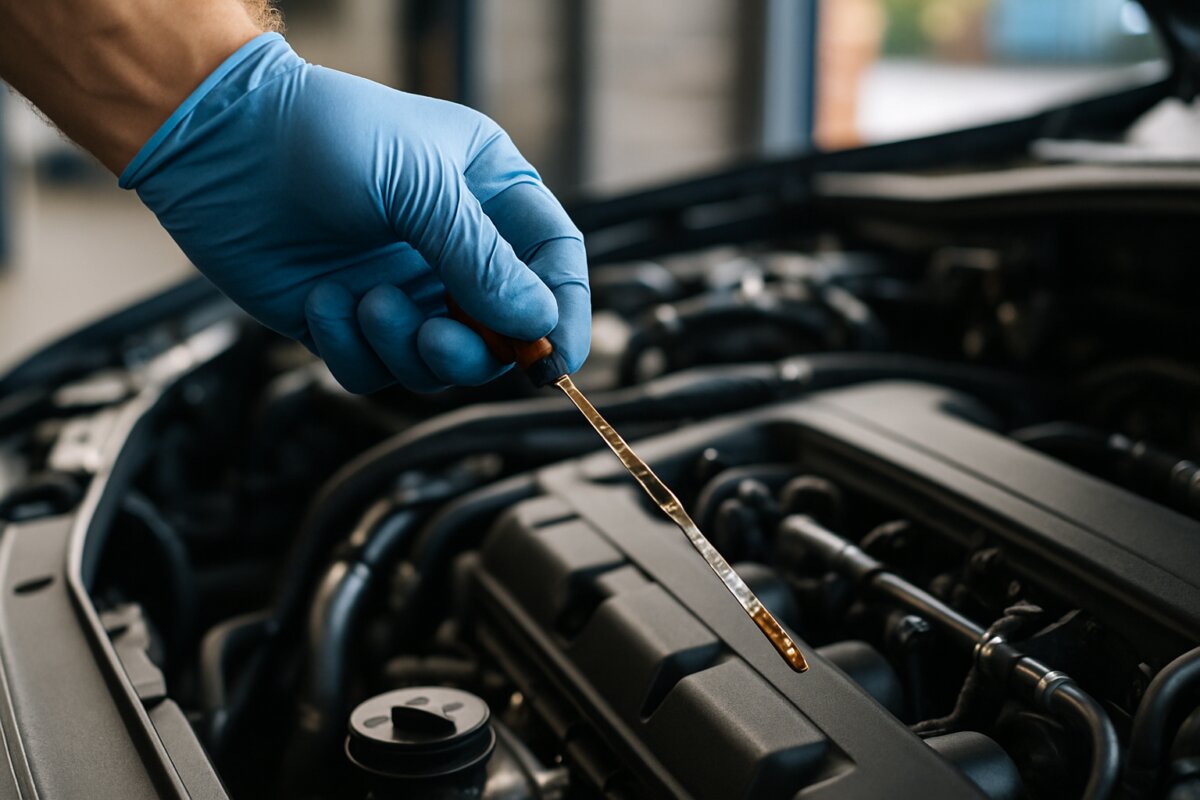
Open the bonnet and locate the dipstick, usually marked with a brightly coloured handle. Pull it straight out and wipe it completely clean with a lint-free cloth. This removes oil that splashed up during driving.
Step 3: Take your reading
Reinsert the dipstick fully into its tube, ensuring it seats properly. Remove it again and hold it horizontally. The oil level should sit between the minimum and maximum marks. These marks typically represent a one-litre difference.
Step 4: Top up if necessary
If the level sits below halfway, add oil gradually. Remove the oil filler cap from the rocker cover and use a clean funnel. Add 250ml at a time, waiting two minutes between additions for oil to drain down. Recheck the dipstick after each addition.
Step 5: Verify and secure
Once the level reaches the upper marking, replace the dipstick and filler cap securely. Start the engine and check for leaks around the filler cap. Monitor the oil pressure switch warning light, which should extinguish within seconds.
Safety precautions when working with engine oil
Engine oil contains additives and contaminants that pose health risks, whilst hot engines present burn hazards that demand respect.
Always wear protective gloves when handling oil. Modern engine oils contain detergents and anti-wear compounds that can cause skin irritation with prolonged contact. If oil contacts your skin, wash immediately with soap and water.
Keep a fire extinguisher nearby when working under the bonnet. Though rare, oil spillage onto hot exhaust components can ignite. Never smoke or use naked flames near the engine bay.
Ensure adequate ventilation if working in a garage. Running engines produce carbon monoxide, an odourless killer. Even brief exposure to high concentrations can be fatal.
Dispose of used oil responsibly. Never pour it down drains or onto the ground. Most local recycling centres and garages accept waste oil free of charge. Contaminated oil harms wildlife and water supplies for decades.
When checking oil levels, be mindful of other hot components. The engine radiator and cooling system remain pressurised and dangerously hot for 30 minutes after shutdown. Never remove the radiator cap on a warm engine.
Common mistakes to avoid
Even experienced motorists make errors during routine oil checks that can damage engines or produce inaccurate readings.
Checking on a slope: This is perhaps the most frequent error. A gradient of just five degrees can show half a litre difference between the dipstick reading and actual level. Always find level ground.
Overfilling the engine: More oil doesn’t mean better protection. Excessive oil causes the crankshaft to contact the oil surface, creating foam. This aerated oil loses its lubricating properties and can damage bearings. It also increases crankcase pressure, potentially blowing out seals around the crankshaft seal.
Using the wrong oil grade: Modern engines require specific viscosity ratings. Using thicker oil than specified increases resistance and fuel consumption. Thinner oil may not protect adequately under load. Check your handbook religiously.
Not wiping the dipstick first: Taking a reading without cleaning the dipstick shows you where oil splashed during driving, not the actual sump level. Always wipe, reinsert, then check.
Adding oil too quickly: Pouring a litre straight in often leads to overfilling because you can’t see the level rising. Add small amounts with patience, allowing time for drainage.
According to AutoPartsPro technicians, overfilling causes more engine damage than slight underfilling. The crankshaft whipping through excess oil creates pressures that blow gaskets and force oil past piston rings into the combustion chamber.
Ignoring oil condition: Whilst checking level, examine oil colour and consistency. Fresh oil appears amber; old oil turns black. Milky or frothy oil indicates coolant contamination from a failed head gasket. Metallic particles suggest bearing wear.
What happens if you add oil to a hot engine?
In most cases, adding oil to a hot engine won’t cause immediate catastrophic failure, but it creates several risks that can lead to problems.
The primary concern is thermal shock. Pouring cold oil onto components at 90°C creates localised cooling. In extreme cases, this rapid temperature change can crack castings, particularly on older engines with thicker metal sections. Modern aluminium blocks tolerate this better, but it’s still poor practice.
You’ll almost certainly get inaccurate measurements. Hot oil in the galleries hasn’t returned to the sump, so you’re topping up an artificially low reading. Once everything cools and drains back, you’ve likely overfilled.
Personal injury risk escalates significantly. The oil filler cap can be hot enough to cause second-degree burns. Spillage onto the exhaust manifold produces acrid smoke and potential ignition. Hot oil also flows differently than cold, making spills more likely.
Modern engines with tight tolerances are particularly sensitive to overfilling. The crankshaft counterweights can strike the oil surface, aerating the lubricant. This foam cannot maintain the oil film needed between moving parts, leading to accelerated wear.
When should you check your oil?
Timing your oil checks correctly ensures accuracy and forms part of a sensible maintenance routine.
The ideal time is first thing in the morning before starting the engine. After sitting overnight, all oil has completely drained back to the sump. The engine is cold, and you’re working with stable conditions. This cold check gives the most accurate reading.
For modern engines with electronic level sensors, the onboard computer often requires specific conditions: engine at operating temperature, vehicle level, and a five-minute settling period after shutdown. Consult your vehicle handbook for the exact procedure.
Check oil weekly if your vehicle is older or covers high mileage. Worn piston rings and valve stem seals allow oil into the combustion chamber, where it burns off gradually. Some oil consumption is normal, particularly on turbocharged engines.
Always check before long journeys. Running low on oil during motorway driving, where the engine works hardest, can cause bearing damage within minutes. The oil pump cannot supply adequate pressure if the pickup tube draws air from a low sump level.
After any engine work or gasket replacement, monitor oil levels daily for the first week. New seals may leak slightly before bedding in, and this early detection prevents major oil loss.
Related maintenance you can do at the same time
Whilst you’re under the bonnet checking oil, several related tasks take minimal extra time but contribute significantly to engine health.
Inspect all fluid levels including coolant in the expansion tank, brake fluid reservoir, and power steering reservoir if fitted. Low coolant might indicate a leak or failing water pump. Dropping brake fluid suggests worn brake pads.
Check the air filter condition. A clogged filter restricts airflow, reducing power and increasing fuel consumption. This takes seconds to inspect and costs little to replace.
Examine drive belts for cracks or glazing. The v-ribbed belt drives critical components including the alternator and water pump. Belt failure causes breakdowns and potential engine overheating.
Test the condition of radiator hoses by squeezing them when cold. They should feel firm but pliable. Hard, cracked hoses will fail soon, whilst soft, spongy hoses indicate internal deterioration.
If you’re due an oil change, replace the spark plugs simultaneously. This saves labour time and ensures you’re not disturbing fresh oil later. Modern iridium plugs last 60,000 miles but check your service schedule.
Look for oil leaks around the rocker cover gasket, sump, and filter housing. Fresh leaks appear wet and dark; old leaks show as dried residue with accumulated road dirt. Early detection of a failing rocker gasket prevents oil loss and potential fire risk.
Frequently asked questions
Can I check oil with the engine running?
Never check oil with the engine running. The oil pump circulates oil throughout the engine, so the dipstick shows an artificially low reading. Additionally, moving components near the dipstick tube present injury risks, and hot oil can spray out when removing the dipstick.
How much oil should I add if the dipstick shows low?
The distance between minimum and maximum marks typically represents one litre. If the level sits halfway between, add 500ml. Always add gradually in 250ml increments, allowing two minutes settling time between additions to prevent overfilling and recheck the dipstick after each pour.
Why does my oil level seem higher after a short journey?
This indicates you’re checking too soon after switching off. Oil remains distributed throughout the engine galleries and hasn’t fully drained back to the sump. Wait at least 20 minutes for accurate readings, or check first thing in the morning before starting the engine.
Is it normal for oil to turn black quickly?
In diesel engines, oil darkens within hundreds of miles due to soot particles from combustion. This is normal and shows the oil is doing its job, suspending contaminants. Petrol engines take longer to darken. However, milky oil indicates coolant contamination requiring immediate investigation.
Can I mix different oil brands if topping up?
You can mix brands provided the specification matches exactly. Check the viscosity rating and approvals on the bottle match your current oil. Mixing synthetic and mineral oils is generally acceptable for top-ups, but use the same type for complete oil changes to maintain optimal protection.
Taking the time to check your oil properly with a cooled engine protects against inaccurate readings and personal injury. Establishing a regular checking routine, ideally weekly or before extended journeys, catches developing problems early. When the time comes for a complete service, using the correct grade of engine oil matched to your vehicle specification ensures maximum protection and performance throughout the service interval.

 Loading...