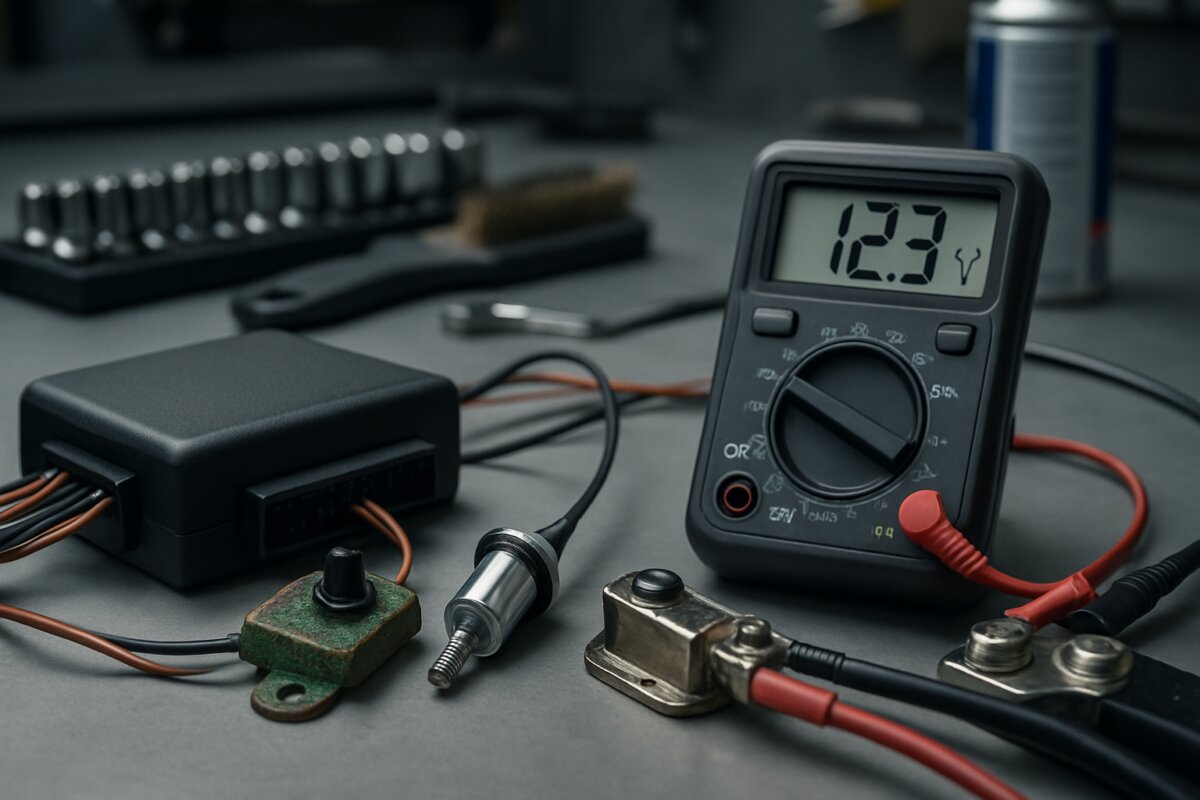
Car alarms that trigger randomly are usually caused by faulty door sensors, bonnet switches, battery voltage issues, or sensitive shock sensors. The problem can be resolved by checking and cleaning sensor connections, adjusting sensitivity settings, replacing worn components, or disconnecting the alarm system temporarily. Most cases stem from corroded wiring, low battery charge, or environmental factors like wind and passing vehicles.
Common causes of false car alarm triggers
Understanding why your car alarm keeps going off involves examining several interconnected systems. The most frequent culprit is a deteriorating battery that can’t maintain consistent voltage. When power drops below the alarm system’s threshold, it interprets this as tampering and sounds the alarm.
Door sensors and bonnet switches are another major source of false alarms. These components use simple mechanical contacts that corrode over time, especially in the UK’s damp climate. A faulty door latch sensor may register as “open” even when properly closed, triggering the alarm repeatedly at night.
According to AutoPartsPro mechanics, shock sensors calibrated too sensitively rank among the top three causes of nuisance alarms. These sensors detect vibrations and impacts, but when set too high, they respond to heavy lorries passing by, strong winds, or even cats jumping on the bonnet.
Tools and parts required
Diagnosing and fixing alarm issues requires minimal equipment, but having the right tools makes the job considerably easier.
Parts needed:
- Replacement door sensors (vehicle-specific)
- Bonnet switch
- Electrical contact cleaner
- Battery terminals and connectors
- Dielectric grease
Tools required:
- Digital multimeter
- Socket set (typically 8mm–13mm)
- Wire brush
- Screwdrivers (flathead and Phillips)
- Torch or inspection light
- Owner’s manual or alarm system documentation
Always ensure replacement sensors match your vehicle’s make, model, and year. Generic parts often fail to integrate properly with factory alarm systems, creating more problems than they solve.
Safety precautions
Before starting any diagnostic work, disconnect the negative battery terminal to prevent electrical shorts and accidental airbag deployment. Work in a well-lit area where you can clearly see sensor mounting points and wiring connections.
Wear safety glasses when working under the bonnet, particularly when cleaning corroded terminals with wire brushes. Keep a fire extinguisher nearby when handling electrical components, as short circuits can generate sparks.
Never attempt to disable alarm systems whilst the vehicle is armed, as this can cause system lockouts requiring dealer-level diagnostic equipment to reset.
Step-by-step diagnosis and repair
Step 1: Check battery voltage and connections
Start with the battery, as voltage issues cause approximately 40% of false alarms. Use a digital multimeter to measure voltage across the terminals. A healthy battery should read 12.6 volts or higher when the engine is off. Anything below 12.4 volts indicates a weak battery that may trigger alarms.
Inspect both battery terminals for corrosion, which appears as white, blue, or green crusty deposits. Remove the terminals, clean them thoroughly with a wire brush, and apply dielectric grease before reconnecting. Corroded connections create voltage fluctuations that the alarm system interprets as tampering.
Check battery voltage first thing in the morning before starting the engine. This gives the most accurate reading of the battery’s resting state and helps identify charging system problems.
Step 2: Inspect door and bonnet sensors
Door sensors typically mount inside the door jamb or latch mechanism. Open each door and locate the small plunger-style switch that the door depresses when closed. Press each sensor manually whilst watching for dashboard warning lights. A faulty sensor won’t illuminate the door ajar light when pressed.
The bonnet switch usually sits near the latch mechanism at the front of the vehicle. This sensor often suffers from road spray and moisture exposure, leading to corrosion. Remove the sensor, clean the contacts with electrical contact cleaner, and test continuity with a multimeter.
Our specialists at AutoPartsPro recommend replacing sensors rather than attempting repairs on heavily corroded units. Modern sensors cost £15–30 and install in minutes, whereas repaired sensors often fail again within months.
Step 3: Test the alarm’s shock sensor
The shock sensor, usually mounted under the dashboard or behind the front bumper, detects impacts and vibrations. Most systems include an adjustment dial that controls sensitivity levels.
Arm the alarm and gently tap the vehicle’s bodywork with your palm. If the alarm sounds immediately from light contact, the sensor is too sensitive. Locate the adjustment dial (consult your owner’s manual) and turn it anticlockwise to reduce sensitivity. Test again with progressively firmer taps until you find the optimal setting.
Some vehicles have dual-stage sensors with warning chirps for minor impacts and full alarms for significant strikes. Adjust both stages separately if your system includes this feature.
Step 4: Examine wiring and connections
Trace alarm system wiring from sensors back to the control unit. Look for chafed insulation where wires pass through grommets or rub against metal edges. Damaged insulation allows moisture ingress, creating intermittent short circuits that trigger false alarms.
Pay particular attention to wiring in the door jambs, which flexes thousands of times and eventually develops breaks in the copper strands. Flex suspect wires whilst an assistant monitors the alarm system for faults. Replace damaged sections with automotive-grade wire and protect connections with heat-shrink tubing.
Step 5: Review recent modifications or repairs
False alarms often start after bodywork repairs, window regulator replacement, or accessory installations. Technicians sometimes fail to reconnect sensors properly or damage wiring during the work.
If problems began after such work, return to that area and verify all connections were restored correctly. Check that no wires were trapped or pinched when panels were refitted.
Common mistakes to avoid
Many owners adjust shock sensors to maximum sensitivity thinking this provides better security, but it actually causes constant false alarms that train you to ignore the system entirely. Set sensitivity to trigger only from genuine break-in attempts, not passing traffic or weather.
Another frequent error involves replacing only obvious components like door sensors whilst ignoring the underlying cause. A weak battery makes all sensors behave erratically, so replacing sensors without addressing power supply issues wastes time and money.
Never use WD-40 or penetrating oil on electrical contacts. These products attract dirt and eventually cause more corrosion. Use dedicated electrical contact cleaner followed by dielectric grease for lasting results.
Disconnecting alarm systems without following proper procedures can trigger anti-theft lockouts in modern vehicles. Some systems prevent engine starting until dealer-level diagnostics reset the security codes. Always consult manufacturer procedures before disconnecting control units.
Document your alarm system’s sensitivity settings before making adjustments. This allows you to return to factory specifications if your changes create new problems.
When should you seek professional help?
If basic checks and adjustments don’t resolve false alarms, the control unit itself may have failed. Modern alarm systems integrate with the vehicle’s CAN bus network, and faults in other systems can cascade into alarm problems.
Professional diagnostics become necessary when you experience any of these symptoms:
- Alarm triggers with no pattern or identifiable cause
- Control unit shows visible corrosion or water damage
- System fails to arm or disarm with remote
- Dashboard warning lights accompany alarm activation
- Aftermarket alarm conflicts with factory security
Dealerships and specialist auto electricians have diagnostic equipment that reads alarm system fault codes, pinpointing failures that basic testing can’t identify. Expect to pay £60–120 for professional diagnosis, which often proves cheaper than replacing multiple components through trial and error.
Preventive maintenance for alarm systems
Regular maintenance prevents most alarm issues before they start. Clean door and bonnet sensors every six months using electrical contact cleaner and a soft brush. This removes accumulated dirt and moisture that causes intermittent operation.
Test your battery voltage quarterly, especially before winter when cold temperatures reduce capacity. Replace batteries showing consistent readings below 12.4 volts at rest, as they’re approaching the end of their service life.
Apply a thin coat of dielectric grease to all electrical connections annually. This waterproof compound prevents corrosion whilst maintaining conductivity, dramatically extending component life in the UK’s harsh climate.
Related maintenance you can do at the same time
Whilst diagnosing alarm issues, address related electrical systems to prevent future problems. Check your starter motor connections, as the same corrosion affecting alarm sensors often impacts starting circuits.
Inspect windscreen wiper connections and light bulb contacts, cleaning any corroded terminals you discover. Replace aged tail light assemblies where moisture has penetrated the housing.
Consider upgrading to a higher-quality battery if yours is due for replacement. Premium batteries maintain more stable voltage under varying loads, reducing electrical system stress that contributes to alarm faults.
Frequently asked questions
Why does my car alarm go off in the middle of the night?
Night-time alarms typically result from temperature-related voltage drops as batteries cool, or from increased sensitivity to environmental vibrations when traffic noise is minimal. Check battery health and reduce shock sensor sensitivity to eliminate these triggers.
Can a flat battery cause false alarms?
Yes, a weak or failing battery creates voltage fluctuations that alarm systems interpret as tampering. Any battery reading below 12.4 volts at rest should be tested under load and likely replaced to prevent false alarms.
How do I disable my car alarm temporarily?
Most vehicles allow alarm disabling by unlocking with the key rather than remote, though this varies by manufacturer. Consult your owner’s manual for the specific procedure, as incorrect disabling can trigger security lockouts.
Will disconnecting the battery stop false alarms?
Disconnecting the battery stops alarms immediately but erases radio presets and potentially triggers anti-theft lockouts. Use this only as a temporary measure whilst arranging proper repairs, and ensure you have radio security codes before disconnecting.
How much does it cost to fix a faulty car alarm?
Simple repairs like sensor replacement cost £20–50 for parts plus fitting time. Complex issues requiring control unit replacement run £200–600 depending on the vehicle. Professional diagnosis typically costs £60–120 and prevents unnecessary part replacement.
Resolving false alarm issues requires systematic diagnosis rather than random part replacement. Start with the fundamentals—battery condition and sensor cleanliness—before moving to more complex electrical testing. Most problems stem from corroded connections and weak batteries, both easily addressed with basic tools and quality replacement parts. When simple solutions don’t work, professional diagnostics save money by identifying exact failures rather than guessing. Regular maintenance of electrical connections and battery monitoring prevents most alarm issues from developing, keeping your security system reliable without the frustration of constant false triggers.

 Loading...