Using washing up liquid to clean your car is not recommended as it strips protective waxes and can damage paintwork over time due to harsh degreasers. The best car wash to use is a pH-neutral, automotive-specific shampoo designed to preserve protective coatings whilst effectively removing dirt. These formulations contain lubricants that prevent scratching and maintain your vehicle’s finish between professional detailing sessions.
Products and equipment needed
Getting the right cleaning products makes a significant difference in protecting your car’s finish. Here’s what you’ll need for a proper wash:
Cleaning products
- pH-neutral car shampoo (automotive-grade)
- Two buckets with grit guards
- Microfibre wash mitt
- Separate wheel cleaner
- Drying towels or chamois
- Glass cleaner
Optional equipment
- Pressure washer or hose with spray nozzle
- Foam cannon or pump sprayer
- Soft-bristle brushes for wheels
- Clay bar for decontamination
- Wax or sealant for protection
Always ensure your car shampoo specifies compatibility with waxed surfaces and clear coat finishes. This prevents unintentional damage to protective layers you’ve previously applied.
Why washing up liquid damages your car
Kitchen detergents contain powerful surfactants designed to cut through grease on dishes. When used on paintwork, these same chemicals strip away protective wax layers and can cause oxidation.
The pH levels in washing up liquid typically range between 9 and 10, making them alkaline. Car paint and clear coat finishes perform best with neutral pH products (around 7). Repeated exposure to alkaline cleaners accelerates paint degradation, leading to dullness and increased vulnerability to environmental contaminants.
Our specialists at Autopartspro have observed that vehicles regularly washed with household detergents show premature clear coat failure, particularly on horizontal surfaces like bonnets and roofs where UV exposure compounds the damage.
Beyond paintwork, washing up liquid affects rubber seals around doors and windows, causing them to dry out and crack prematurely. It also leaves residues that attract dirt more quickly than proper car shampoo.
What makes automotive shampoo different
Purpose-designed car shampoos contain specific ingredients that household detergents lack. These formulations include:
Polymers and lubricants: These create a slippery surface that allows dirt to slide off without scratching. Kitchen detergent lacks these protective additives.
pH balancing: Automotive shampoos maintain neutral pH levels that won’t harm paint, plastic trim, or rubber components.
Gloss enhancers: Many car shampoos include carnauba wax or synthetic polymers that enhance shine whilst you wash.
Colour brighteners: Specialised optical agents help restore depth to paintwork without aggressive chemicals.
Quality car shampoos also rinse cleanly without leaving streaks or water spots, which is particularly important in hard water areas across the UK.
Step-by-step car washing process
Following a systematic approach prevents scratches and ensures thorough cleaning. Here’s the professional method:
Step 1: Pre-rinse the vehicle
Use a pressure washer or hose to remove loose dirt and debris. Start from the top and work downwards, paying attention to wheel arches and lower panels where grit accumulates. This initial rinse prevents scratching during the wash stage.
Step 2: Clean the wheels first
Wheels harbour brake dust and road grime that you don’t want spreading to paintwork. Apply dedicated wheel cleaner and agitate with a soft brush. Rinse thoroughly before moving to bodywork. Consider checking your brake pads if you notice excessive dust accumulation.
Step 3: Apply pre-wash foam
If using a foam cannon, apply a thick layer of snow foam and let it dwell for 5-10 minutes. This loosens stubborn contamination without physical contact, reducing the risk of swirl marks.
Step 4: Two-bucket wash method
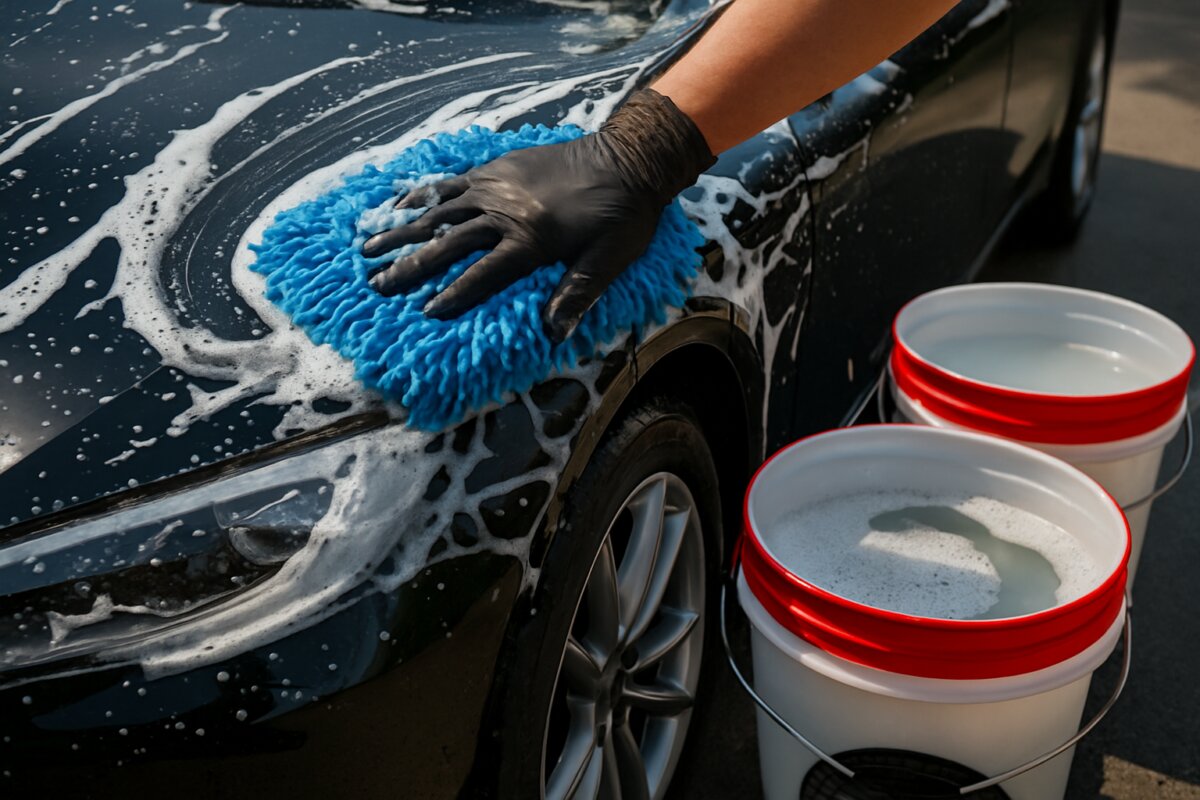
Fill one bucket with car shampoo solution and another with clean rinse water. Use a microfibre wash mitt, starting at the roof and working downwards in straight lines. Rinse the mitt in the clean water bucket after each panel before reloading with shampoo.
The grit guards in each bucket trap dirt particles at the bottom, preventing them from contaminating your mitt. This simple technique dramatically reduces the chance of inflicting scratches.
Step 5: Rinse thoroughly
Remove all shampoo residue using clean water, again working from top to bottom. Shampoo left to dry creates spots and streaks that require additional effort to remove.
Step 6: Dry properly
Use clean microfibre drying towels or a chamois to remove water before it evaporates. Air drying leads to water spots, especially in hard water regions. Pat rather than drag the towel across surfaces to minimise the risk of scratching.
Always wash your car in the shade or during cooler parts of the day. Direct sunlight causes shampoo and water to dry too quickly, leaving marks and making the process more difficult.
Common mistakes to avoid
Even with the right products, poor technique can damage your vehicle. Watch out for these frequent errors:
Using the same bucket for washing and rinsing: This contaminates your wash solution with dirt particles that then scratch your paint. Always use the two-bucket method.
Washing in circular motions: Circular washing patterns create swirl marks that become visible in sunlight. Use straight, overlapping lines instead.
Neglecting to clean your wash mitt: A dirty mitt is essentially sandpaper. Rinse it thoroughly between panels and wash it properly after each car wash.
Using too much pressure: Scrubbing hard doesn’t clean better—it just increases scratch risk. Let the chemicals do the work, and use gentle pressure.
Skipping the pre-rinse: Jumping straight to washing with a mitt drags abrasive particles across your paint. Always pre-rinse to remove loose contamination.
Reusing old sponges or cloths: These harbour dirt particles and can scratch paintwork. Invest in quality microfibre products designed for automotive use.
How to choose the right car shampoo
Not all automotive shampoos perform equally. Consider these factors when selecting one:
Wax compatibility: If your car has wax or sealant protection, choose a shampoo that won’t strip it. Look for products labelled as “wax safe” or “coating friendly”.
Concentration ratio: Higher quality shampoos require less product per wash (typically 1-2 capfuls per bucket). Whilst they cost more initially, they offer better value over time.
Foam production: Good foam helps lift dirt and provides lubrication. However, excessive foam doesn’t necessarily mean better cleaning—it’s the chemical formulation that matters.
Rinsing properties: Premium shampoos rinse away cleanly without leaving residues. This is particularly important if you have hard water.
Colour-specific formulas: Some shampoos contain colour enhancers designed for dark or light coloured vehicles. These can help restore vibrancy to faded paintwork.
Our technicians at Autopartspro recommend testing a small amount on an inconspicuous area first, particularly if your vehicle has aftermarket paint or wraps.
When should you wash your car
Regular washing prevents contaminant buildup that can cause permanent damage. Here’s a practical schedule:
Every two weeks: This frequency suits most UK driving conditions and prevents dirt from bonding to paintwork.
Weekly in winter: Road salt and grime are more aggressive during colder months. Pay particular attention to the undercarriage and wheel arches where corrosion starts.
After motorway drives: Bug splatter and tar contain acids that etch into paint if left for days. Remove them promptly.
Following bird droppings or tree sap contact: These substances are highly acidic and can permanently mark paint within hours. Clean them immediately.
Before applying wax or sealant: Proper paint protection requires a clean surface. Washing is the essential first step in any detailing routine.
Between washes, consider using a quick detailer spray and microfibre cloth to remove light dust and maintain shine. This reduces the frequency of full washes needed whilst keeping your car looking smart.
Check your windscreen washer reservoir and top up with proper screenwash when you wash your car. It’s an easy maintenance task that ensures clear visibility year-round.
Related maintenance tasks
Whilst washing your car, you can complete several other maintenance checks that help identify issues early:
Inspect windscreen wipers: Check windscreen wipers for splits or deterioration. Replace them if they’re leaving streaks or making noise.
Examine tyre condition: Look for uneven wear patterns, cracks, or embedded objects. Check tread depth using the 20p test—if the outer band is visible, your tyres need replacing.
Test exterior lighting: Walk around your vehicle checking all lights function correctly, including fog lamps and indicators. Replace any failed light bulbs immediately.
Check under the bonnet: Whilst the engine is cool, verify fluid levels including coolant, brake fluid, and engine oil. Top up as needed using the correct specifications.
Clean door and bonnet seals: Wipe rubber seals with a damp cloth to remove dirt buildup. This prevents water ingress and maintains proper sealing.
Inspect bodywork for damage: Look for stone chips, scratches, or rust spots that need attention. Early treatment prevents minor issues becoming expensive repairs.
Consider replacing your cabin filter if it’s been more than a year—clean interior air quality matters as much as exterior appearance. Similarly, check your air filter to ensure your engine breathes properly.
Professional opinion from Autopartspro specialists
Our experienced technicians have examined thousands of vehicles over the years, and the correlation between proper washing practices and paint condition is undeniable. Cars maintained with appropriate automotive products consistently show better paint preservation and higher resale values.
We’ve seen vehicles less than five years old with clear coat failure directly attributable to washing with household detergents. The damage isn’t immediately obvious—it accumulates over months and years until the paint loses its shine and protective properties.
Interestingly, we’ve also noticed that customers who invest time in proper exterior maintenance tend to be more attentive to mechanical upkeep. They’re more likely to catch issues early, whether it’s failing brake rotors, worn suspension springs, or leaking hoses.
From a practical standpoint, quality car shampoo costs approximately £10-15 and lasts for 20-30 washes. That’s roughly 50p per wash—a negligible expense compared to paint correction or respraying damaged panels.
Frequently asked questions
Can I use washing up liquid just once in an emergency?
A single wash with diluted washing up liquid won’t cause catastrophic damage, but it will strip any existing wax protection. Rewax your car immediately afterwards to restore protection. Better alternatives include waterless wash products or even plain water with a microfibre cloth for light cleaning.
How much car shampoo should I use per wash?
Most quality shampoos require just one or two capfuls per standard bucket (around 10-15 litres). More isn’t better—excessive shampoo makes rinsing difficult and can leave residues. Always follow the manufacturer’s dilution recommendations printed on the bottle.
Is it worth buying expensive car shampoo?
Premium shampoos offer better lubrication, superior cleaning, and enhanced protection compared to budget options. They’re more concentrated, so you use less per wash. Over time, the cost difference becomes minimal whilst the protection benefits are substantial, particularly for newer vehicles.
Can I wash my car with just water?
Water alone won’t remove bonded contaminants, traffic film, or oily residues. Whilst better than washing up liquid, plain water can’t match proper car shampoo’s cleaning and protective qualities. Use shampoo for thorough washes and reserve water-only rinses for light dust removal between proper washes.
Should I wax my car after every wash?
Full waxing every wash is unnecessary and wasteful. Apply wax or sealant every 2-3 months, or when water no longer beads on the paintwork. Between applications, use a wax-safe shampoo that maintains existing protection. This approach balances protection with practicality.
Maintaining your vehicle’s appearance requires minimal investment in proper products and techniques. The discipline of using pH-neutral car shampoo, following the two-bucket method, and drying thoroughly protects your paintwork whilst making each wash more effective. These habits also create opportunities to spot maintenance needs early, whether that’s checking shock absorbers for leaks or ensuring your battery terminals remain clean and tight. Proper exterior care isn’t vanity—it’s practical vehicle preservation that pays dividends when you eventually sell or trade your car.

 Loading...