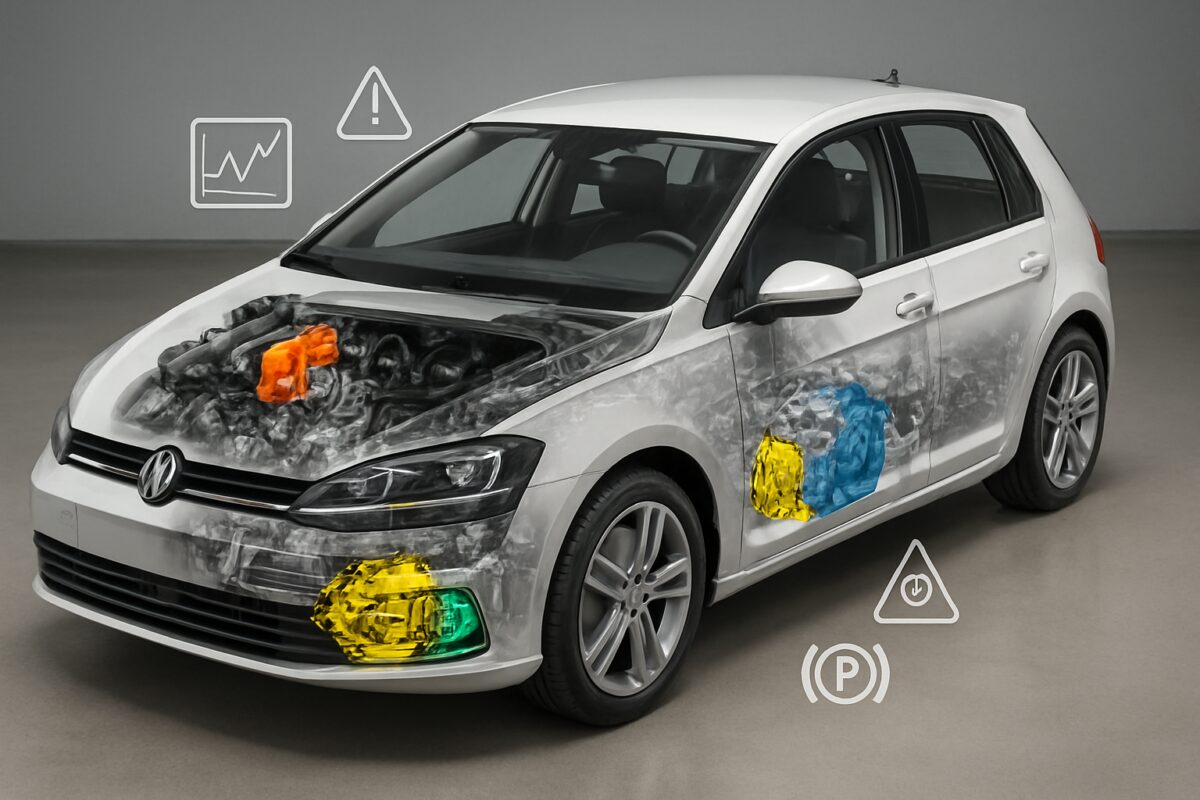
The Volkswagen Golf 7, produced from 2012 to 2019, remains one of the most popular hatchbacks in the UK market. However, like many vehicles, it’s not without its share of common issues that owners frequently encounter. Understanding these problems early can save you considerable expense and frustration down the line.
DSG gearbox malfunctions
The dual-clutch DSG transmission in the Golf 7 is notorious for developing issues, particularly in earlier models. Our mechanics at Autopartspro regularly see these gearboxes failing due to mechatronic unit problems and clutch pack wear.
The DSG system uses two separate clutches for odd and even gears, controlled by a complex mechatronic unit. When this unit fails, you’ll experience harsh gear changes, loss of power, or complete transmission failure. The clutch packs themselves are also prone to premature wear, especially in stop-start city driving conditions.
“We’ve seen DSG repairs cost anywhere from £1,500 to £4,000 depending on the severity of the damage. Regular oil changes every 40,000 miles can prevent many of these issues.” – Senior Technician at Autopartspro
The most affected variants are the 1.4 TSI and 2.0 TDI models equipped with the 7-speed DSG. Symptoms include juddering during acceleration, delayed gear engagement, and warning lights on the dashboard. Many owners report problems occurring between 60,000 to 80,000 miles.
Turbocharger failures
Turbocharged engines in the Golf 7, particularly the 1.4 TSI and 2.0 TSI variants, suffer from turbocharger problems more frequently than naturally aspirated engines. The turbo units are susceptible to carbon build-up and oil starvation.
Carbon deposits accumulate on the intake valves and turbocharger components, reducing efficiency and eventually causing complete failure. Oil starvation occurs when drivers don’t allow proper cool-down time after spirited driving, leading to coking in the oil feed lines.
Early warning signs include blue or white smoke from the exhaust, loss of power, and unusual whistling noises. The 1.4 TSI engine is particularly problematic, with many owners reporting turbocharger replacement before 100,000 miles.
“Always let your turbocharged engine idle for 30 seconds before switching off. This allows the turbo to cool down and prevents oil coking in the bearings.” – Autopartspro Engine Specialist
Electronic parking brake problems
The electronic parking brake (EPB) system in the Golf 7 is prone to multiple failures, particularly with the actuator motors and brake calipers. These systems replace traditional handbrakes with electronic controls, adding complexity and potential failure points.
Common issues include the parking brake failing to release, unusual grinding noises during operation, and complete system failure. The actuator motors, located on the rear brake calipers, are particularly vulnerable to moisture ingress and wear.
Many owners experience problems with the EPB not engaging properly on slopes or failing to release after engine startup. The system relies heavily on proper battery voltage, so weak batteries often cause EPB malfunctions.
Warning signs your car has a problem
Recognising early warning signs can prevent minor issues from becoming major repairs. Here are the key symptoms to watch for:
- Unusual noises from the engine bay or transmission
- Warning lights appearing on the dashboard
- Changes in driving behaviour or performance
Pay particular attention to any grinding, whining, or clicking sounds, as these often indicate mechanical wear. Dashboard warning lights should never be ignored, even if they appear intermittently.
- Excessive smoke from the exhaust (blue, white, or black)
- Difficulty starting the engine or rough idling
- Steering problems or vibrations through the wheel
These symptoms often develop gradually, making them easy to dismiss initially. However, early intervention typically costs significantly less than waiting for complete component failure.
- Brake pedal changes in feel or travel distance
- Transmission hesitation or harsh shifting
- Electrical faults affecting lights or charging systems
How to fix the problems
Addressing Golf 7 issues requires a systematic approach, with costs varying significantly depending on the problem’s severity and your chosen repair method.
| Problem | DIY Solution | Professional Repair | Average Cost |
|---|---|---|---|
| DSG Oil Service | Possible with tools | Recommended | £200-300 |
| Turbo Replacement | Not recommended | Essential | £1,200-2,000 |
| EPB Actuator | Difficult | Recommended | £400-600 |
| Carbon Cleaning | Not possible | Required | £300-500 |
For DSG issues, regular servicing every 40,000 miles using the correct specification oil can prevent many problems. Oil filter replacement should accompany every service to ensure optimal transmission health.
Turbocharger problems often require complete unit replacement, though some carbon cleaning services can restore performance in early-stage failures. Prevention through proper driving habits and regular air filter replacement is crucial.
| Component | Replacement Interval | Warning Signs | Prevention Method |
|---|---|---|---|
| DSG Oil | 40,000 miles | Harsh shifting | Regular servicing |
| Turbocharger | 80,000-120,000 miles | Power loss, smoke | Proper cool-down |
| EPB Motors | 60,000-100,000 miles | Grinding noises | Keep clean and dry |
When to see a mechanic
Certain Golf 7 problems require immediate professional attention to prevent catastrophic damage or safety risks. Never delay seeking help if you experience complete transmission failure, as continued driving can cause expensive internal damage.
Dashboard warning lights indicating engine, transmission, or brake system faults should prompt immediate garage visits. These systems are critical for safe vehicle operation, and ignoring warnings often leads to roadside breakdowns.
If you notice any fluid leaks under your vehicle, especially red transmission fluid or dark engine oil, book a diagnostic appointment immediately. Small leaks quickly become major problems in the Golf 7’s complex systems.
Unusual noises from the transmission, particularly grinding or whining during gear changes, indicate internal wear that worsens rapidly. Our garage visit guide can help you prepare for diagnostic appointments.
Any performance issues combined with multiple warning lights suggest ECU problems requiring professional diagnosis with proper scanning equipment. These electrical faults often affect multiple systems simultaneously.
Frequently asked questions
How reliable is the VW Golf 7 compared to other hatchbacks?
The Golf 7 ranks average for reliability, with DSG and turbo issues affecting overall ratings compared to naturally aspirated competitors.
What’s the most expensive problem to fix on a Golf 7?
DSG transmission replacement typically costs £3,000-4,000, making it the most expensive single repair for most owners.
Should I buy a Golf 7 with high mileage?
High-mileage examples can be good value if major components have been recently serviced or replaced professionally.
How often should I service my Golf 7 DSG transmission?
DSG oil changes every 40,000 miles prevent most transmission problems and extend component life significantly.
Are Golf 7 turbo engines more problematic than naturally aspirated ones?
Yes, turbocharged variants require more maintenance and suffer from additional complexity-related failures compared to naturally aspirated engines.
Final recommendation
The VW Golf 7 remains a capable and enjoyable hatchback, but potential buyers should budget for higher maintenance costs than equivalent naturally aspirated vehicles. DSG-equipped models require particular attention to servicing schedules, whilst turbocharged engines need careful driving habits to ensure longevity.
For existing owners, preventive maintenance is crucial. Regular DSG services, proper turbo cool-down procedures, and immediate attention to warning signs can significantly reduce repair costs. The car maintenance guide provides detailed schedules for optimal vehicle care.
Despite these issues, the Golf 7 offers excellent driving dynamics and build quality when properly maintained. Choose manual transmission variants if you want maximum reliability, or ensure DSG models have complete service histories before purchasing. With proper care and quality replacement parts from reputable suppliers like Autopartspro, your Golf 7 can provide many years of reliable service.

 Loading...