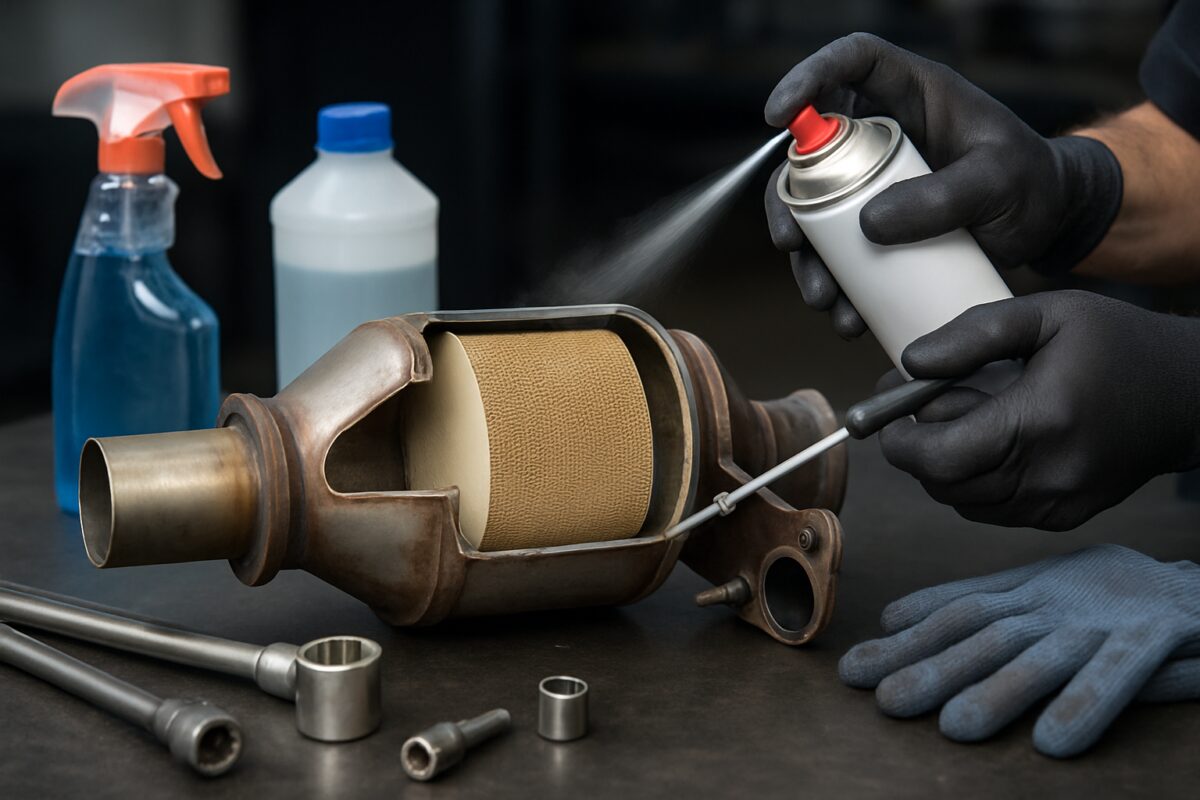
A clogged catalytic converter can be cleared using engine flush products, high-octane fuel treatment, or professional cleaning chemicals applied through the fuel system or directly to the converter. Most blockages respond to chemical cleaning methods when caught early, though severely damaged converters require replacement.
Tools & parts required
Before attempting to clean your catalytic converter, gather the necessary supplies. The right products and tools make all the difference between success and wasted effort.
Parts needed:
- Catalytic converter (if replacement needed)
- Catalytic converter cleaner solution
- High-octane petrol (minimum 97 octane)
- Engine flush product
- Replacement oxygen sensors (if required)
Tools required:
- Socket set (10mm to 19mm)
- Ramps or axle stands
- Jack and jack stands
- Torque wrench
- Wire brush
- Safety gloves and goggles
- OBD2 scanner
Always verify your catalytic converter’s compatibility with your engine type and emission standards before purchasing cleaning products.
Safety precautions
Working with catalytic converters involves exposure to hot surfaces and potentially harmful chemicals. Take these essential safety measures seriously.
Allow the engine to cool completely before starting work – catalytic converters operate at temperatures exceeding 800°C. Work in a well-ventilated area when using chemical cleaners, and disconnect the car battery to prevent accidental engine starts.
Wear protective gloves and safety glasses throughout the process. Keep a fire extinguisher nearby when working with flammable cleaning products.
Step-by-step instructions
Step 1: Diagnose the problem
Connect an OBD2 scanner to verify error codes. Common codes include P0420, P0430, or P0421, indicating catalyst efficiency below threshold. Check for accompanying codes that might indicate oxygen sensor faults or engine misfires.
Step 2: Try the fuel additive method
Add catalytic converter cleaner to your fuel tank according to manufacturer instructions. Fill up with high-octane petrol (minimum 97 octane) to help burn off carbon deposits. Drive normally for 150-200 miles, including motorway speeds to heat the converter thoroughly.
Step 3: Perform Italian tune-up
Take your vehicle on a sustained high-speed drive (within legal limits) to heat the catalytic converter to optimal operating temperature. This helps burn off accumulated carbon deposits naturally. Maintain speeds above 50mph for at least 30 minutes.
Step 4: Remove and inspect (if chemical cleaning fails)
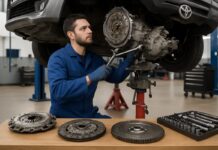
Raise the vehicle safely using ramps or axle stands. Locate the catalytic converter between the exhaust manifold and muffler. Remove the upstream and downstream oxygen sensors first, then unbolt the converter using your socket set.
Step 5: Clean the converter physically
Inspect the honeycomb structure inside for obvious blockages. Use a wire brush to carefully remove loose deposits, avoiding damage to the ceramic substrate. Soak heavily clogged converters in specialised cleaning solution following manufacturer guidelines.
Step 6: Reinstall and test
Reinstall the cleaned converter using proper torque specifications. Replace any damaged gaskets or seals. Reconnect oxygen sensors and clear diagnostic codes using your OBD2 scanner. Test drive the vehicle and monitor for returning error codes.
Common mistakes to avoid
Never attempt to clean a catalytic converter with water or pressure washers – this damages the ceramic substrate irreparably. Avoid using aggressive solvents or acids not specifically designed for catalytic converters.
Don’t ignore underlying engine problems causing the blockage. Issues like oil consumption, misfiring cylinders, or faulty fuel pumps will quickly re-contaminate a cleaned converter.
Resist the temptation to hammer or shake a clogged converter – the internal ceramic honeycomb structure is extremely fragile. Physical damage typically necessitates complete replacement.
Professional mechanics recommend addressing root causes like engine misfires or oil leaks before attempting converter cleaning to prevent rapid re-contamination.
When should you clean it?
Clean your catalytic converter when you notice reduced acceleration, poor fuel economy, or failed emissions tests. Warning signs include engine hesitation during acceleration, strong sulphur smells from the exhaust, or rattling noises from underneath the vehicle.
Most converters benefit from preventive cleaning every 60,000 miles in normal driving conditions. City driving with frequent stop-start patterns may require more frequent attention due to incomplete combustion.
If diagnostic codes return within 100 miles of cleaning, the converter likely requires replacement rather than further cleaning attempts.
Related maintenance you can do at the same time
While accessing the catalytic converter, consider replacing the air filter to improve combustion efficiency. Check and replace spark plugs if they show signs of wear or fouling.
Inspect the entire exhaust system for leaks or damage. Replace worn exhaust gaskets to prevent air leaks that affect converter efficiency. Consider performing an oil and filter change if contaminated oil contributed to the blockage.
This comprehensive approach ensures optimal engine performance and prevents premature converter re-contamination.
Frequently asked questions
Can you drive with a clogged catalytic converter?
Yes, but performance suffers significantly. Expect reduced power, poor fuel economy, and potential engine damage from excessive back pressure buildup.
How long does catalytic converter cleaner take to work?
Most fuel additives show results within 150-200 miles of normal driving, including motorway speeds to properly heat the converter.
Will premium petrol clean a catalytic converter?
High-octane fuel burns cleaner and helps prevent deposits, but won’t remove existing blockages without dedicated cleaning chemicals.
Can a completely blocked catalytic converter be cleaned?
Severely blocked converters with melted or damaged substrate require replacement. Cleaning only works on carbon deposit accumulation, not physical damage.
How much does catalytic converter cleaning cost?
Professional cleaning services cost £150-300, whilst DIY chemical cleaners range from £15-40. Complete replacement costs £200-800 depending on vehicle type.
Successfully cleaning a catalytic converter requires patience and the right approach for your specific situation. Chemical treatments work well for carbon buildup, whilst physical cleaning addresses more stubborn blockages. Remember that proper maintenance prevents most converter problems, making regular engine servicing your best defence against costly repairs.

 Loading...