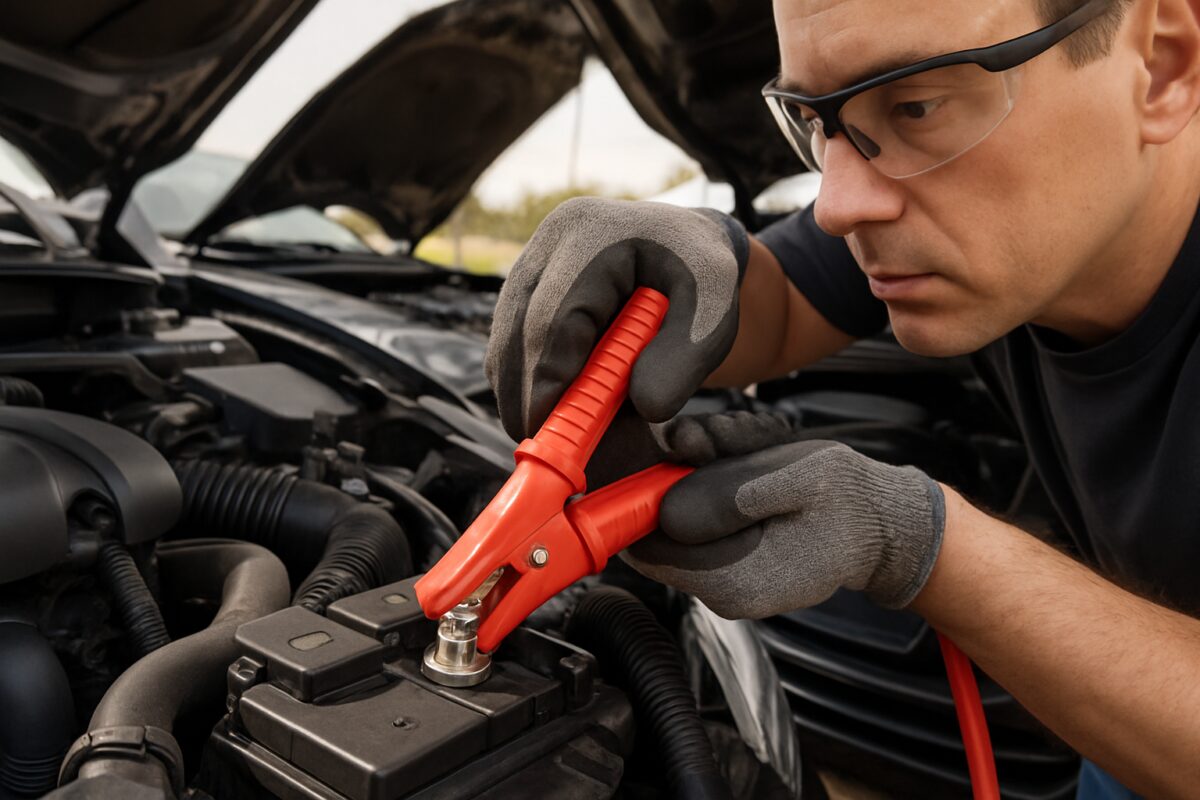
To attach jump leads properly, you’ll need quality jump leads, two vehicles, and basic safety equipment. Connect the red clamps to positive terminals first, then black clamps – one to the dead battery negative and the other to an earthing point. This method ensures safe power transfer and reduces sparking risks.
Tools & Parts Required
Before starting any jump-starting procedure, gather the essential equipment to ensure a safe and effective process.
Parts Needed:
- Heavy-duty jump leads (minimum 16mm² cable thickness)
- Safety gloves
- Safety glasses
- Wire brush for terminal cleaning
- Terminal protector spray
Tools Required:
- Socket set for terminal removal
- Multimeter for voltage testing
- Torch or head lamp
- Cleaning cloth
Professional tip: Always choose jump leads with at least 400-amp capacity for petrol engines and 600-amp for diesel vehicles to ensure adequate power transfer.
Safety Precautions
Jump-starting involves working with electrical systems and potentially explosive gases, making safety protocols essential.
Ensure both vehicles are parked on level ground with handbrakes engaged. Switch off all electrical accessories including headlamps, radio, and air conditioning before connecting leads.
Work in well-ventilated areas away from naked flames or cigarettes. Batteries emit hydrogen gas which is highly flammable. Wear safety glasses and gloves to protect against acid splashes.
Never allow jump lead clamps to touch each other whilst connected to batteries. This creates dangerous sparks and potential short circuits.
Step-by-Step Instructions
Follow this precise sequence to connect jump leads safely and effectively restore power to your vehicle.
Step 1: Position Vehicles Correctly
Park the donor vehicle close enough for jump leads to reach both batteries comfortably. Ensure vehicles don’t touch each other as this can cause electrical interference.
Engage handbrakes on both vehicles and ensure automatic transmissions are in ‘Park’ or manual transmissions in neutral gear.
Step 2: Identify Battery Terminals
Locate positive and negative terminals on both batteries. Positive terminals are marked with ‘+’ symbols and usually have red caps or markings.
Clean terminals with a wire brush if corrosion is present. Poor connections reduce current flow and jumping effectiveness.
Step 3: Connect Red Positive Leads
Attach one red clamp to the positive terminal of the dead battery first. Ensure the clamp grips securely with good metal-to-metal contact.
Connect the other red clamp to the positive terminal of the donor vehicle’s battery. Double-check both connections are tight and secure.
Step 4: Connect Black Negative Leads
Attach one black clamp to the negative terminal of the donor vehicle’s battery. This creates the return path for electrical current.
Connect the final black clamp to an unpainted metal surface in the dead vehicle’s engine bay, away from the battery. This earthing point reduces sparking risk near the battery.
Expert advice from AutoPartsPro mechanics: Never connect the final black clamp directly to the dead battery’s negative terminal as this increases explosion risk from hydrogen gas ignition.
Step 5: Start the Donor Vehicle
Start the donor vehicle and allow it to run for 2-3 minutes. This charges the dead battery slightly and stabilises the electrical system.
Rev the engine gently to around 2000 RPM to increase alternator output and charging current.
Step 6: Attempt Starting Dead Vehicle
Try starting the dead vehicle. If it doesn’t start immediately, wait 5 minutes before attempting again to avoid starter motor overheating.
Once started, keep both engines running for several minutes to allow the alternator to begin recharging the previously dead battery.
Step 7: Remove Leads in Reverse Order
Remove jump leads in exact reverse order of connection. Start with the black clamp from the earthing point, then the black clamp from donor battery.
Finally, remove red clamps – donor vehicle first, then the previously dead vehicle. This sequence prevents dangerous sparking.
Common Mistakes to Avoid
Several critical errors can damage electrical systems or create safety hazards during jump-starting procedures.
Never reverse polarity by connecting positive to negative terminals. This causes massive current surge that can destroy electronic control units, fuses, and expensive components.
Avoid touching clamp terminals together whilst connected to batteries. This creates dangerous short circuits and intense sparking.
Don’t attempt jumping vehicles with significantly different voltages. Connecting a 12V system to a 24V system causes catastrophic damage.
Never smoke or use naked flames near batteries during jump-starting. Hydrogen gas emissions are highly explosive in confined spaces.
When Should You Replace Battery
Understanding battery replacement timing prevents unexpected breakdowns and ensures reliable vehicle operation.
Most car batteries last 3-5 years under normal conditions. Replace batteries showing slow cranking, dim lights, or requiring frequent jump-starts.
Cold weather significantly reduces battery capacity. If your vehicle struggles starting in winter temperatures below -10°C, consider battery replacement before complete failure.
Check battery voltage regularly with a multimeter. Readings below 12.4V when engine is off indicate reduced capacity requiring replacement.
Related Maintenance You Can Do at the Same Time
Jump-starting situations provide excellent opportunities for additional electrical system maintenance and inspections.
Inspect alternator output whilst engine runs. Voltage should read 13.8-14.4V at idle, indicating proper charging system function.
Check battery terminal condition and apply terminal protector spray to prevent future corrosion. Clean terminals ensure optimal electrical connections.
Examine drive belts for alternator operation. Loose or worn belts reduce charging efficiency and may cause battery drain issues.
Test spark plugs if starting problems persist. Worn plugs increase cranking load and accelerate battery discharge.
Frequently Asked Questions
Can I jump start a completely flat battery?
Yes, but severely discharged batteries may require several minutes of charging from the donor vehicle before attempting to start the dead vehicle.
How long should jump leads remain connected?
Keep connections for 2-3 minutes minimum before starting attempts, allowing partial charge transfer to the dead battery for easier starting.
Is it safe to jump start in wet weather?
Exercise extreme caution in wet conditions. Ensure connections are completely dry and avoid standing in puddles whilst handling electrical connections.
Can jump starting damage modern car electronics?
Proper connection sequence and polarity prevent damage. However, voltage spikes during connection can affect sensitive electronic systems if done incorrectly.
What cable thickness do I need for jump leads?
Minimum 16mm² cable cross-section for petrol engines, 25mm² for larger diesel engines to handle the required current safely and effectively.
Mastering proper jump lead connection technique ensures safe emergency starting procedures whilst protecting valuable electrical components. Using quality equipment and following correct sequences prevents costly damage and maintains optimal vehicle performance throughout the jumping process.

 Loading...