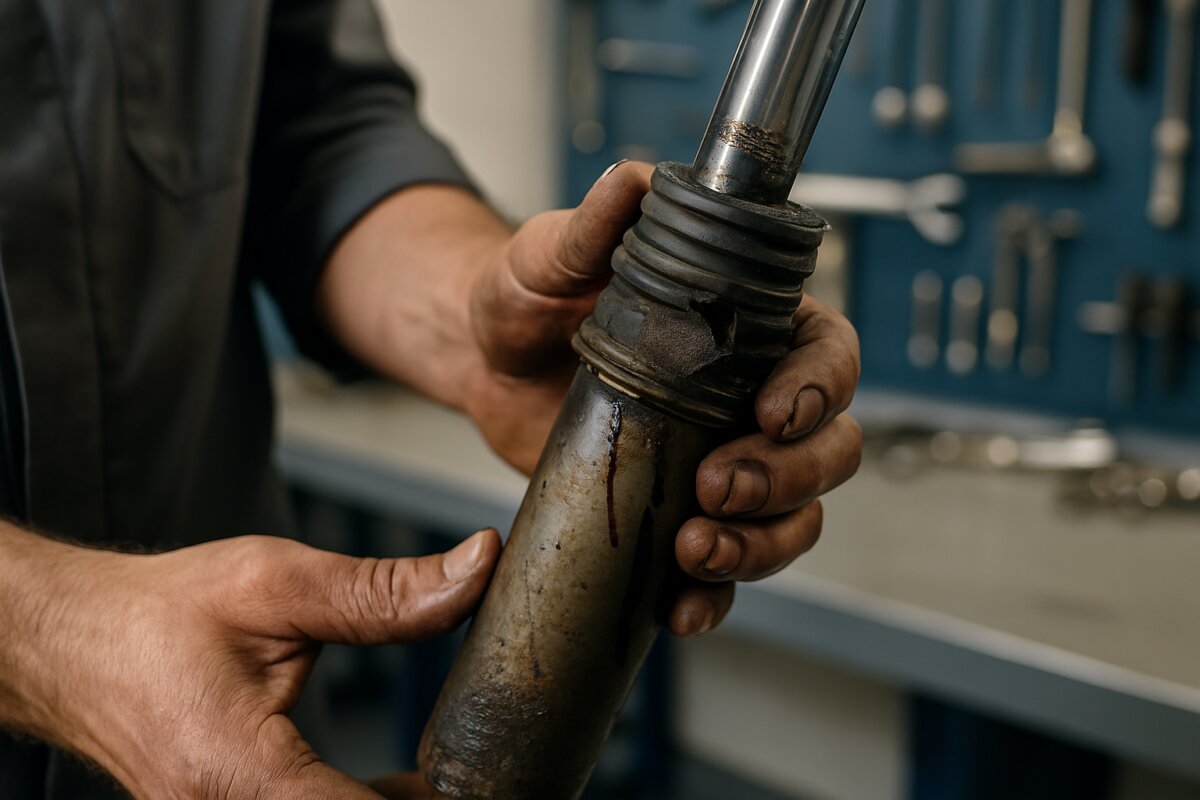
Bad shock absorber symptoms include excessive bouncing after hitting bumps, uneven tyre wear, nose diving during braking, body roll during cornering, and visible fluid leaks on the shock absorber unit. You may also experience longer stopping distances, instability on rough roads, and rattling noises from the suspension. Identifying these signs early prevents further damage to suspension components and maintains vehicle safety.
Understanding shock absorbers and their function
Shock absorbers are hydraulic devices that control spring and suspension movement in your vehicle. They dampen oscillations that occur when your wheels encounter road irregularities. Unlike what many believe, shocks don’t support the vehicle’s weight – that’s the job of suspension springs. Instead, they prevent the springs from bouncing excessively, keeping your tyres in contact with the road surface.
Inside each shock absorber, a piston moves through hydraulic fluid. This creates resistance that converts kinetic energy into thermal energy, which dissipates into the atmosphere. When functioning properly, shocks complete this cycle thousands of times during a typical journey, maintaining stability and control.
The Autopartspro mechanics emphasise that modern vehicles rely heavily on shock absorber performance for safety systems like ABS and stability control to function optimally. Degraded shocks compromise these systems’ effectiveness, even if the electronic components are working perfectly.
Tools and parts required
Diagnosing bad shock absorber symptoms requires minimal specialist equipment, though proper inspection demands attention to detail and safety.
Parts needed:
- Shock absorber (vehicle specific)
- Shock absorber boots if damaged
- Top mount components
- Strut bearing for MacPherson strut systems
- Replacement mounting hardware
Tools required:
- Jack and axle stands
- Wheel chocks
- Tyre pressure gauge
- Torch or inspection light
- Clean cloth for wiping components
- Measuring tape
- Pry bar for suspension movement testing
Always match replacement shocks to your vehicle’s exact specifications, including chassis number and engine variant. Generic fitment can compromise handling characteristics and void warranties on related suspension components.
Safety precautions
Before inspecting your suspension system, take proper safety measures. Work on level, solid ground and engage the parking brake firmly. Place wheel chocks behind wheels that remain on the ground. Never rely solely on a jack to support the vehicle – always use rated axle stands.
Disconnect the battery negative terminal if you’re working near electronic components or airbag systems. Wear safety glasses to protect against falling debris and hydraulic fluid spray. Keep fire extinguishing equipment accessible, particularly when working near fuel lines or electrical systems.
Suspension components store considerable energy. Compressed springs can cause serious injury if released improperly. If you lack experience with spring compressor tools, leave strut disassembly to qualified technicians.
Primary symptoms of failing shock absorbers
Excessive bouncing and body movement
The bounce test remains one of the simplest diagnostic methods. Push down firmly on each corner of your stationary vehicle and release. A healthy suspension should rebound once and settle. If the vehicle bounces more than twice, the shock absorber at that corner has likely lost damping ability.
During normal driving, you’ll notice the vehicle continues moving up and down after crossing speed bumps or uneven surfaces. This floating sensation indicates the shocks can’t control spring oscillation effectively. The problem becomes particularly noticeable at motorway speeds, where even minor road imperfections trigger excessive body movement.
Uneven or accelerated tyre wear
Failed shocks allow tyres to bounce on the road surface rather than maintaining consistent contact. This creates cupped wear patterns – scalloped dips worn into the tread at regular intervals around the tyre circumference. You’ll often hear a rhythmic humming noise that changes with speed.
Check tyre wear across the full width of each tyre. Worn shocks contribute to uneven weight distribution, which accelerates edge wear. While alignment issues also cause irregular wear, shocks that can’t control wheel movement exacerbate any existing geometry problems.
Nose diving and rear squatting
When you apply brakes moderately, the front end shouldn’t dip excessively. Bad front shocks allow momentum to compress the front suspension dramatically, creating a nose-down attitude. This weight transfer reduces rear brake efficiency and extends stopping distances.
Similarly, acceleration shouldn’t make the rear end squat noticeably or the front lift. Worn rear shocks permit excessive weight transfer, which affects traction and can trigger stability control intervention unnecessarily. This symptom is particularly evident in rear-wheel-drive vehicles with significant torque.
Excessive body roll in corners
Cornering forces naturally cause some body lean. However, worn shocks allow excessive roll that continues building throughout the turn. The vehicle feels unstable, and you’ll sense delayed response to steering inputs. This occurs because the outside shocks can’t resist lateral weight transfer effectively.
Combined with worn sway bar links or damaged sway bar bushings, bad shocks create genuinely dangerous handling characteristics. The vehicle may feel like it’s leaning on the door handles during moderate cornering.
Fluid leaks and physical damage
Visible hydraulic fluid on the shock body confirms internal seal failure. Fresh leaks appear wet and may attract road dust. Older leaks leave dried, crusty deposits. Any leak indicates the shock has lost damping fluid and can’t function properly, regardless of how minor it appears.
Inspect the shock body for dents, corrosion, or damage to the piston rod. A bent or scored rod will damage internal seals and cause rapid failure. Check the shock absorber boots for splits or deterioration – damaged boots allow contaminants to reach the seal area.
Step-by-step diagnostic procedure
Step 1: Visual inspection
Begin with the vehicle on level ground. Walk around and look for any obvious sagging at one corner. Unequal ride height often indicates a failed shock or broken spring. Measure from the wheel arch to the ground at each corner and compare measurements side-to-side.
Inspect each shock absorber for oil leaks, paying attention to the area where the piston rod enters the body. Clean the shock body with a cloth, drive the vehicle briefly, then re-inspect for fresh fluid. Check mounting points for cracks, rust, or separation from the chassis.
Step 2: Bounce test
Perform the bounce test at each corner individually. Apply your full weight to push down on the bumper or wing, then release quickly. Count the number of oscillations before the vehicle settles. Document results for each corner to identify which shocks require replacement.
A functioning shock absorber should stop body movement within one and a half cycles. Two or more bounces indicate damping loss. Remember that this test is subjective – it confirms problems but can’t measure damping performance precisely.
Step 3: Road test evaluation
Drive over various road surfaces at different speeds. Note how the vehicle responds to bumps, dips, and expansion joints. Degraded shocks produce a harsh, jarring ride over sharp bumps but allow excessive float over undulating surfaces.
Test braking from moderate speeds on a quiet road. The vehicle shouldn’t dive dramatically or pull to one side. Try emergency stop practice in a safe area – failed shocks noticeably increase stopping distances. During cornering, assess body roll and how quickly the suspension settles after exiting the turn.
Step 4: Wheel and tyre inspection
Raise the vehicle safely on axle stands and remove the wheels. Inspect each tyre for cupping, feathering, or uneven wear patterns. Rotate the tyre slowly and look for variation in tread depth around the circumference.
Check hub bearing condition by grasping the tyre at 12 and 6 o’clock, then rocking it. Excessive play indicates bearing wear, which can mimic shock absorber symptoms. Repeat at 3 and 9 o’clock to check ball joint and tie rod end condition.
Step 5: Suspension component inspection
With wheels removed, examine the entire suspension assembly. Look at suspension arm bushings for cracking, tearing, or excessive movement. Use a pry bar to check for play in mounting points.
Inspect coil springs for cracks or breakage. Check that springs sit properly in their locating cups. Examine the shock absorber mounting bolts for tightness and thread condition. Loose mounting hardware creates noise and allows excessive movement that accelerates wear.
Step 6: Comparative testing
Compare the resistance feel when manually compressing and extending each shock if accessible. They should move smoothly with consistent resistance throughout the stroke. Jerky movement or sections with no resistance indicate internal damage.
For vehicles with electronic damping adjustment, use a diagnostic scanner to check for stored fault codes. Electronic shock systems report sensor failures and valve malfunctions through the control units. Even mechanical shocks can affect wheel speed sensors and trigger ABS warnings.
Common mistakes to avoid
Many people replace only one shock absorber when it fails. This creates mismatched damping characteristics side-to-side, which affects handling balance and may cause the vehicle to pull during braking. Always replace shocks in axle pairs at minimum.
Ignoring related component wear is another frequent error. When shocks fail, they allow excessive suspension movement that damages suspension arm bushings, ball joints, and steering components. Inspect these parts during shock replacement to avoid repeat labour costs.
Reusing old mounting hardware saves pennies but risks safety. Stretch bolts lose clamping force when removed. Corroded or damaged mounting nuts may not torque properly. Always use new fasteners as recommended by the vehicle manufacturer.
Failing to check wheel alignment after suspension work wastes the investment in new parts. Changed suspension geometry from worn components affects alignment settings. Book an alignment check after replacing shocks to ensure even tyre wear and proper handling.
The specialists at Autopartspro note that many drivers confuse normal age-related firmness reduction with complete shock failure. Shocks degrade gradually – a six-year-old shock with 60,000 miles has lost approximately 30% of its original damping capacity, even without obvious symptoms.
When should you replace shock absorbers?
Manufacturers typically recommend shock absorber inspection every 20,000 miles and replacement between 50,000 and 100,000 miles, depending on driving conditions. However, these intervals serve as guidelines rather than absolutes.
Vehicles used predominantly on rough roads, for towing, or in areas with heavily salted winter roads require more frequent inspection. Sports cars with performance-oriented suspension typically need replacement sooner due to higher damping rates and increased stress.
Replace shocks immediately if you notice fluid leaks, physical damage, or any of the primary symptoms described earlier. Don’t wait for a scheduled service interval when safety is compromised. Failed shocks affect braking distance, cornering stability, and tyre contact with the road surface.
Consider replacement if your vehicle has covered 60,000 miles or more, even without obvious symptoms. Testing has shown that shocks lose damping efficiency gradually, and drivers adapt to the degradation without realising handling has deteriorated.
Related maintenance you can do at the same time
When replacing shock absorbers, inspect and consider replacing other suspension components that share similar service intervals. Check suspension springs for cracks, corrosion, or sagging. Worn springs affect ride height and place additional stress on new shocks.
Examine sway bar components including links and bushings. These wear items directly affect body roll control, and replacing them alongside shocks provides optimal handling improvement. The labour overlap makes combined replacement cost-effective.
Inspect your steering rack boot condition whilst accessing suspension components. Split boots allow contamination into the steering rack, causing expensive failures. Early replacement costs a fraction of rack replacement.
Consider fitting a new cabin filter during this work. It’s unrelated to suspension but often forgotten. A clean filter improves air quality and HVAC system efficiency.
Frequently asked questions
Can I drive with bad shock absorbers?
You can drive with worn shocks, but it’s unsafe. Braking distances increase by up to 20%, cornering stability decreases significantly, and tyre wear accelerates. Failed shocks also damage other suspension components, increasing repair costs.
How long do shock absorbers typically last?
Quality shock absorbers last between 50,000 and 100,000 miles under normal conditions. Harsh driving, heavy loads, rough roads, and exposure to road salt reduce lifespan. Regular inspection from 40,000 miles helps identify degradation early.
Should I replace all four shocks at once?
Replace shocks in axle pairs minimum to maintain balanced damping characteristics. Replacing all four provides optimal performance and handling consistency, particularly if the vehicle has covered significant mileage. Mismatched damping affects stability and braking balance.
What causes shock absorbers to fail prematurely?
Premature failure results from physical damage, manufacturing defects, overloading, or installation errors. Driving aggressively over speed bumps and potholes damages internal components. Incorrect mounting torque or using wrong parts accelerates wear significantly.
Will new shock absorbers improve my ride quality?
New shocks restore the ride quality and handling characteristics your vehicle had when new. You’ll notice improved stability, reduced body movement, better steering response, and more controlled braking. The improvement is particularly dramatic if existing shocks are severely worn.
Identifying bad shock absorber symptoms early protects other suspension components and maintains vehicle safety. The diagnostic process requires systematic inspection rather than expensive specialist equipment. Whether you notice excessive bouncing, uneven tyre wear, or simply want to restore your vehicle’s handling precision, replacing worn shocks with quality shock absorbers delivers immediate improvements in ride comfort, stability, and control. Proper diagnosis ensures you’re addressing the actual problem rather than masking symptoms, and replacing shocks in pairs maintains the balanced handling characteristics essential for safe motoring.

 Loading...