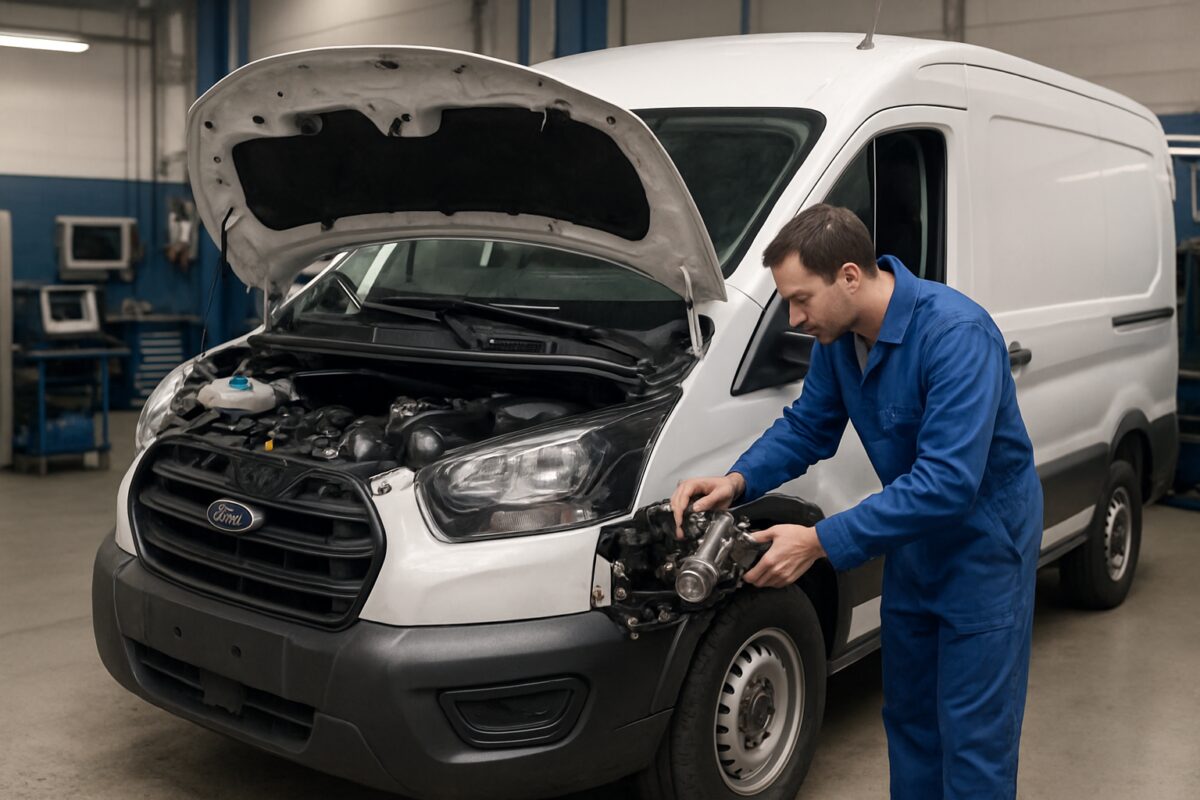
Ford Transit vans are workhorses of British roads, but even the most reliable commercial vehicles face mechanical challenges. Understanding common problems helps owners spot issues early and maintain their vehicles effectively. From turbocharger failures to fuel pump malfunctions, this guide covers everything Transit owners need to know.
Turbocharger failures in Ford Transit
Turbocharger problems represent one of the most costly issues affecting Ford Transit vans. The turbo system boosts engine power whilst maintaining fuel efficiency, but several factors can cause premature failure.
Oil starvation remains the primary culprit behind turbo breakdowns. When engine oil changes are delayed or poor-quality lubricants are used, the turbo bearings suffer damage. The turbocharger spins at extremely high speeds, requiring constant lubrication to prevent metal-on-metal contact.
Carbon build-up in the intake system also contributes to turbo problems. Over time, carbon deposits restrict airflow and force the turbo to work harder than designed. This increased strain leads to bearing wear and eventual failure.
Professional tip: Change engine oil every 10,000 miles maximum and always use manufacturer-recommended viscosity grades. Regular oil changes prevent 80% of turbo failures according to our AutoPartsPro mechanics.
EGR valve malfunctions worsen turbo problems by allowing excessive soot into the intake system. The EGR system recirculates exhaust gases, but when faulty, it creates additional stress on turbo components.
Fuel system problems affecting Transit vans
Fuel pump failures plague Ford Transit models, particularly those with high mileage. The fuel pump delivers pressurised fuel to the injection system, and when it fails, the engine loses power or stops running entirely.
Common fuel pump failure symptoms include difficulty starting, especially when the fuel tank is nearly empty. The pump struggles to maintain adequate pressure as internal components wear out. Engine hesitation during acceleration and intermittent stalling also indicate pump problems.
Contaminated fuel accelerates pump deterioration. Water in diesel fuel corrodes internal components, whilst debris particles damage the pump mechanism. Modern diesel engines require extremely clean fuel to operate properly, making fuel quality crucial.
The fuel filter plays a vital role in protecting the injection system. When filters become clogged, the pump works harder to maintain pressure. This increased workload shortens pump life and can cause complete failure. Our specialists recommend replacing diesel filters every 20,000 miles.
DPF (diesel particulate filter) malfunctions
Diesel particulate filter problems affect Transit vans used primarily for short journeys. The DPF captures soot particles from exhaust gases but requires high temperatures to burn off accumulated debris through regeneration cycles.
City driving prevents proper DPF regeneration because the exhaust system never reaches sufficient temperature. Soot builds up inside the filter, eventually blocking exhaust flow and triggering warning lights on the dashboard.
Failed regeneration cycles create multiple issues. The engine enters limp mode to protect itself, reducing power output significantly. Continued driving with a blocked DPF can damage expensive exhaust components and even cause engine problems.
Essential maintenance tip: Take your Transit on a 20-minute motorway drive monthly to allow proper DPF regeneration. This simple practice prevents most filter blockages and saves thousands in repair costs.
Professional DPF cleaning can restore filter function when caught early. However, severely damaged filters require complete replacement, which costs significantly more than preventive maintenance.
Gearbox and clutch complications
Manual gearbox problems affect Transit vans with heavy-duty use. The most common issues include difficult gear selection, particularly when shifting into reverse or first gear. Worn synchromesh rings cause grinding noises during gear changes.
Clutch wear accelerates in commercial applications due to frequent stop-start driving and heavy loads. A slipping clutch fails to transmit full engine power, reducing vehicle performance and fuel economy. The clutch pedal may feel different, with either excessive travel or a very high bite point.
Dual-mass flywheel failures compound clutch problems in newer Transit models. The dual-mass design reduces engine vibration but proves less durable than solid flywheels. When the dual-mass flywheel fails, it creates rattling noises and affects clutch operation.
Gearbox oil deterioration contributes to transmission problems. Unlike engine oil, gearbox oil changes are often overlooked during routine maintenance. Contaminated transmission fluid fails to lubricate internal components properly, leading to premature wear.
Warning signs your car has a problem
Recognising early symptoms prevents minor issues from becoming major failures. Transit owners should monitor these key indicators:
- Unusual exhaust smoke colours (black, blue, or white)
- Dashboard warning lights, particularly engine management or DPF symbols
- Changes in engine performance, including loss of power or rough idling
- Abnormal noises from the engine bay or exhaust system
- Increased fuel consumption without obvious cause
Visual inspections reveal potential problems before they cause breakdowns. Check for oil leaks under the vehicle, particularly around the turbocharger and engine. Coolant leaks appear as coloured fluid puddles and indicate cooling system problems.
How to fix the problems
| Problem | DIY Repair | Professional Required | Estimated Cost |
|---|---|---|---|
| Blocked DPF | Forced regeneration drive | Professional cleaning/replacement | £150-£2,500 |
| Fuel pump failure | Check fuel filter first | Pump replacement required | £300-£800 |
| Turbo problems | Oil change, check pipes | Turbo rebuild/replacement | £800-£3,000 |
| Clutch wear | Adjust pedal if possible | Full clutch replacement | £600-£1,200 |
| EGR valve fault | Basic cleaning possible | Valve replacement | £200-£600 |
Preventive maintenance reduces repair costs significantly. Regular oil filter changes protect turbo components, whilst quality fuel additives help maintain injection systems. Following manufacturer service schedules prevents most common problems.
| Service Item | Interval | Importance |
|---|---|---|
| Engine oil change | 10,000 miles | Critical for turbo protection |
| Fuel filter replacement | 20,000 miles | Protects injection system |
| Air filter change | 25,000 miles | Maintains engine efficiency |
| Coolant system service | 40,000 miles | Prevents overheating |
When to see a mechanic
Certain symptoms require immediate professional attention to prevent catastrophic damage. Engine warning lights should never be ignored, particularly those indicating low oil pressure or overheating. Continuing to drive with these warnings active can destroy expensive components.
Unusual noises from the engine bay warrant professional diagnosis. Grinding sounds from the turbo area indicate bearing failure, whilst knocking noises suggest serious internal engine problems. Early intervention saves thousands in repair costs.
Loss of power or poor fuel economy that develops suddenly requires expert analysis. Modern Transit engines have complex management systems that need specialist diagnostic equipment to identify faults accurately.
Professional servicing becomes essential when DIY maintenance reaches its limits. Gearbox problems, electrical faults, and emissions system issues require workshop facilities and technical expertise.
Frequently asked questions (FAQ)
How often should I service my Ford Transit?
Service your Transit every 12,500 miles or 12 months, whichever comes first, following manufacturer recommendations for optimal reliability and warranty protection.
What causes white smoke from my Transit exhaust?
White smoke typically indicates coolant entering combustion chambers through damaged head gasket or cracked cylinder head requiring immediate professional diagnosis.
Why does my Transit go into limp mode?
Limp mode activates when sensors detect problems with turbo, DPF, or engine management system protecting against further damage until repairs complete.
Can I drive with a faulty DPF?
Limited driving possible but continued use damages exhaust components and may cause complete engine failure requiring expensive repairs or replacement.
How long do Transit clutches typically last?
Transit clutches last 80,000-120,000 miles depending on driving style, load carrying, and maintenance with commercial use reducing lifespan significantly.
Final recommendation
Ford Transit reliability depends heavily on proactive maintenance and early problem recognition. Regular servicing prevents most common failures, whilst prompt attention to warning signs minimises repair costs. Our AutoPartsPro specialists recommend keeping detailed maintenance records and addressing issues immediately rather than hoping problems resolve themselves.
Quality replacement parts make significant differences in longevity and performance. Genuine or OEM-equivalent components from reputable suppliers like AutoPartsPro ensure proper fit and durability. Cheap alternatives often fail prematurely, creating false economy and additional downtime. For Transit owners, investing in proper maintenance and quality parts protects both vehicle value and business operations over the long term.

 Loading...