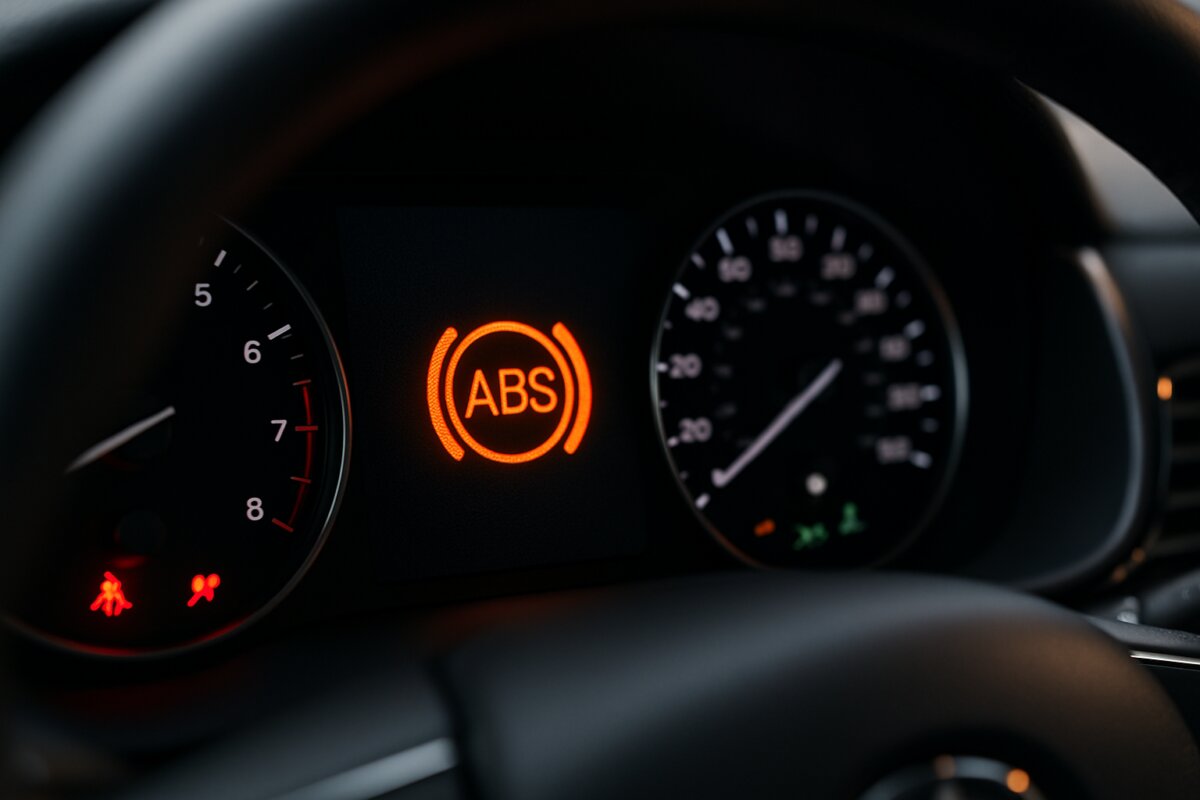
When the ABS light is on your dashboard, it signals a potential issue with your anti-lock braking system. This warning shouldn’t be ignored, as it directly affects your vehicle’s braking performance, especially during emergency stops or on slippery surfaces. Understanding what triggers this light and knowing the proper steps to address it can save you money and keep you safe on British roads.
Faulty ABS sensor
The most common reason for an illuminated ABS warning light is a malfunctioning wheel speed sensor. These ABS sensor components monitor the rotational speed of each wheel and send crucial data to the ABS control module. When one sensor fails or provides inaccurate readings, the entire system can shut down as a safety precaution.
Sensors typically fail due to accumulated road debris, corrosion from salt exposure, or physical damage from stones and kerb strikes. The electrical connectors can also deteriorate over time, causing intermittent signal loss. In our experience at AutoPartsPro, vehicles driven frequently in winter conditions are particularly susceptible to sensor contamination, as road salt accelerates corrosion around the sensor mounting areas.
Modern vehicles rely on magnetic reluctor rings that work alongside these sensors. Even minor damage to these rings can trigger the warning light. Signs of sensor problems include the ABS light coming on intermittently, especially at certain speeds, or after driving through deep puddles. The diagnostic trouble codes will typically point to which wheel’s sensor is causing the issue, making diagnosis relatively straightforward with proper scanning equipment.
Tip: Regular cleaning around the wheel sensors during routine maintenance can prevent many ABS sensor failures, particularly if you drive on salted roads during winter months.
Damaged ABS ring
The ABS ring, also known as a reluctor ring or tone ring, is a toothed metal ring that works in conjunction with the wheel speed sensor. This component sits on the hub assembly or CV joint and can crack, become corroded, or lose teeth over time. When damaged, it sends irregular signals that the control module interprets as a system fault.
Physical inspection often reveals visible damage to these rings, though sometimes the wear is microscopic. Rust build-up between the teeth can create false readings, whilst complete tooth loss creates obvious signal gaps. Heavy braking, pothole impacts, and age-related metal fatigue are primary causes of ring deterioration.
According to our specialists, tone ring failure is particularly common on older vehicles where the rings are separate components rather than integrated into the hub bearing assembly. Replacement requires removing the wheel hub or drive shaft, depending on the vehicle design. Some modern vehicles have the reluctor ring built into sealed bearing units, which means replacing the entire hub assembly when the ring fails – a more expensive repair but one that ensures long-term reliability.
Low brake fluid level
Your ABS shares the hydraulic system with your regular braking components, and low brake fluid levels can trigger the ABS warning light. The fluid reservoir has a level sensor that monitors the amount of fluid available for both conventional and anti-lock braking operations. When the level drops below the minimum threshold, the system alerts you immediately.
Brake fluid doesn’t simply evaporate – a low level usually indicates worn brake pads, a leak in the system, or a failing master cylinder. As brake pads wear down, more fluid fills the caliper pistons to compensate, gradually lowering the reservoir level. This is normal wear, but it still requires attention and eventual pad replacement.
Leaks are more serious and can occur at various points throughout the braking system. Common leak locations include corroded brake line connections, deteriorated caliper seals, and worn master cylinder seals. Never simply top up the fluid without investigating why it’s low. Our technicians emphasise that driving with low brake fluid compromises both your conventional brakes and ABS functionality, creating a dangerous situation that requires immediate attention.
Malfunctioning ABS pump or module
The ABS pump and control module form the brain and muscle of your anti-lock braking system. The module processes information from wheel sensors and commands the pump to modulate brake pressure during ABS activation. When either component fails, the entire system shuts down and illuminates the warning light.
These units are sophisticated pieces of engineering that can fail due to internal electrical faults, moisture ingress, or mechanical wear within the pump assembly. The control module contains complex circuitry that can develop solder joint failures or component degradation over time. Pump failures often result from seized valves or motor burnout, particularly in systems that have seen heavy use.
Diagnosing pump and module issues requires specialist diagnostic equipment that can communicate with the ABS system and run active tests. Some failures are intermittent and only occur under specific conditions, making them challenging to pinpoint. Cost is a significant factor here, as these components are among the most expensive ABS parts. Remanufactured units offer a cost-effective alternative to new components, though they must be programmed to your specific vehicle in most modern cars.
Blown fuse or electrical problems
Sometimes the simplest explanation is the correct one. A blown fuse protecting the ABS circuit will immediately disable the system and trigger the warning light. Electrical issues ranging from corroded connectors to damaged wiring looms can also cause ABS malfunctions without any mechanical component failure.
Checking the ABS fuse should be your first diagnostic step, as it takes mere minutes and costs nothing. However, if the fuse has blown, you need to understand why. Fuses blow to protect circuits from overcurrent situations, which suggests an underlying electrical fault that must be addressed before simply replacing the fuse.
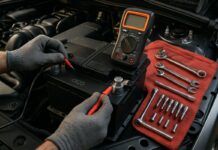
Wiring problems are particularly common on older vehicles where insulation has become brittle or where rodents have accessed engine bay wiring. Poor earth connections can create phantom faults that are frustratingly intermittent. Our experience shows that thorough visual inspection of wiring harnesses and connectors often reveals obvious damage, whilst more subtle electrical faults require methodical testing with a multimeter.
Tip: Before spending money on expensive diagnostic sessions, check your ABS fuse and inspect visible wiring around each wheel sensor – you might spot an obvious problem that saves you substantial diagnostic fees.
Warning signs your car has a problem
Beyond the illuminated ABS light itself, several symptoms indicate your anti-lock braking system requires attention:
- The brake pedal feels different during normal braking, perhaps softer or requiring more pressure than usual
- You notice unusual noises during braking, such as grinding or clicking sounds from the wheels
- The ABS light comes on intermittently, particularly at certain speeds or after driving through water
- Your brakes lock up during emergency stops rather than pulsating as they should with functioning ABS
- The traction control light illuminates alongside the ABS warning, as these systems share components
- You experience unexpected brake pedal pulsation during normal, gentle braking on dry roads
- The steering feels unstable during braking, suggesting uneven brake force distribution
Pay attention to when the light appears. If it only illuminates after specific actions like driving through deep water or hitting a pothole, this provides valuable diagnostic clues. Similarly, if the light appears alongside other warning indicators, this suggests a more complex electrical or control module issue rather than a simple sensor fault.
How to fix the problems
| Problem | Solution | Difficulty Level | Typical Cost (Parts + Labour) |
|---|---|---|---|
| Faulty wheel speed sensor | Replace the defective sensor and clean the mounting area | Moderate | £80-£200 |
| Damaged ABS ring | Replace the tone ring or hub assembly if integrated | Moderate to Difficult | £100-£350 |
| Low brake fluid | Identify and repair leak, replace worn components, refill fluid | Varies | £50-£400+ |
| Faulty ABS pump/module | Replace or reprogram the control unit | Difficult | £400-£1,500 |
| Electrical fault | Replace blown fuse, repair damaged wiring or connectors | Easy to Moderate | £20-£250 |
The repair approach depends entirely on the underlying cause. Simple sensor replacement is within the capabilities of confident DIY mechanics, whilst pump and module work requires professional equipment. Always use quality replacement parts from reputable suppliers, as cheap aftermarket sensors often fail prematurely or provide inaccurate readings.
| Repair Stage | Action Required |
|---|---|
| Diagnosis | Use professional diagnostic scanner to read ABS fault codes and identify specific component failure |
| Visual inspection | Examine sensors, wiring, and reluctor rings for obvious damage or contamination |
| Component testing | Test sensor resistance, check wiring continuity, verify power supply to components |
| Repair/replacement | Replace faulty components using quality parts matched to vehicle specifications |
| System reset | Clear fault codes and test drive to verify repair success |
After repairs, the ABS system may require bleeding to remove air from the hydraulic circuits. This process differs from conventional brake bleeding and often requires specialist equipment that can activate the ABS pump during the bleeding procedure. Improper bleeding can leave air trapped in the system, compromising ABS performance even after successful component replacement.
When to see a mechanic
Whilst some ABS issues are suitable for home diagnosis and repair, certain situations demand professional attention. If you lack diagnostic equipment, you’re essentially guessing at the problem, which can lead to unnecessary parts replacement and wasted money. Professional scanners don’t just read codes – they provide live data from sensors, allowing technicians to see exactly what’s happening in real time.
Seek professional help immediately if the ABS light is accompanied by the main brake warning light, as this indicates a serious brake system fault that could compromise your ability to stop safely. Similarly, if you’ve replaced obvious faulty components but the light remains on, there may be underlying issues requiring specialist knowledge to diagnose.
Complex repairs involving the ABS pump, control module programming, or extensive wiring diagnosis require professional tools and expertise. These aren’t jobs for weekend mechanics, as mistakes can create dangerous braking problems. AutoPartsPro’s network of specialists can access manufacturer-specific diagnostic information and have the equipment to properly test and programme ABS components.
Consider professional assistance for the following situations:
- Multiple fault codes indicating systemic problems rather than single component failure
- Intermittent faults that don’t produce consistent diagnostic codes
- Any situation where the main brake warning light illuminates alongside the ABS light
- When you’ve exhausted basic diagnostic steps without identifying the problem
- If brake pedal feel has changed significantly, suggesting hydraulic system issues
Frequently Asked Questions (FAQ)
Can I drive with the ABS light on?
You can drive, but your anti-lock braking won’t function. Your conventional brakes still work, but wheels may lock during emergency stops, increasing stopping distances particularly on wet roads. Get it diagnosed promptly.
Will my car pass MOT with ABS light on?
No. An illuminated ABS warning light is an automatic MOT failure if your vehicle was fitted with ABS as standard. The system must be fully functional to pass the test.
How much does ABS repair typically cost?
Costs range from £80 for simple sensor replacement to £1,500 for pump or module work. Diagnostic fees add £40-£80. Exact costs depend on your vehicle make, model, and the specific fault.
Can a weak battery cause the ABS light?
Yes. Insufficient voltage can prevent the ABS module from functioning correctly, triggering the warning light. This is particularly common after jump-starting or with aged battery components showing reduced capacity.
Does ABS light mean I need new brake pads?
Not directly. However, extremely worn pads can cause low brake fluid levels, which triggers the ABS light. Worn pads affect your main braking system regardless of ABS functionality and require immediate replacement.
Final recommendation
An illuminated ABS light demands prompt attention, not panic. Whilst your conventional brakes continue functioning, you’ve lost the safety advantage of anti-lock braking during emergency situations. Start with simple checks – examine your brake fluid level, inspect visible wiring, and check the ABS fuse. These quick inspections cost nothing but might identify obvious problems.
For accurate diagnosis, professional scanning is invaluable and relatively inexpensive compared to guessing and replacing parts unnecessarily. Once you’ve identified the fault, quality replacement components from AutoPartsPro ensure reliable, long-lasting repairs. Our specialists recommend addressing ABS faults before your next MOT to avoid test failure and ensure your braking system provides maximum safety. Remember that maintaining your entire braking system – including brake rotors and hydraulic components – contributes to overall ABS reliability and performance.

 Loading...