Your car’s suspension system works tirelessly to keep you comfortable and safe on UK roads. When components like shock absorbers or springs fail, the consequences extend beyond just a bumpy ride. A broken shock absorber or damaged coil spring can compromise handling, increase stopping distances, and accelerate tyre wear. Recognising the symptoms early prevents costly damage and keeps you safer behind the wheel.
Excessive bouncing after hitting bumps
One of the most obvious signs of failed suspension components is when your vehicle bounces repeatedly after driving over speed bumps or potholes. A healthy suspension system should compress when hitting a bump, then quickly return to its normal position with minimal oscillation.
Our mechanics at Autopartspro regularly see vehicles that bounce three or four times after encountering even minor road imperfections. This excessive movement indicates that your dampers have lost their hydraulic fluid or the internal seals have degraded. The shock absorber’s primary job is to control spring movement, and when it fails, those suspension springs compress and extend freely without proper dampening.
You can perform a simple bounce test in your driveway. Push down firmly on each corner of your car and release. The vehicle should return to its normal position and stop. If it continues bouncing more than twice, you’ve likely got worn dampers that need replacement.
This problem becomes particularly dangerous during motorway driving. At higher speeds, an undamped suspension cannot maintain consistent tyre contact with the road surface. Your vehicle essentially hops along the carriageway, dramatically reducing your ability to steer accurately or brake effectively. The Autopartspro team has seen numerous cases where customers ignored this symptom, only to experience frightening moments when trying to change lanes at speed.
Uneven tyre wear patterns
Failed suspension components create distinctive wear patterns on your tyres that serve as diagnostic clues. When shock absorbers lose their effectiveness, tyres develop cupped or scalloped wear patterns around the circumference. This happens because the tyre bounces against the road surface rather than maintaining smooth, continuous contact.
Broken springs cause different issues. A sagging coil spring allows one corner of the vehicle to sit lower than the others, creating uneven weight distribution. This results in accelerated wear on the tyres supporting more weight. You might notice the inside or outside edge wearing faster than the centre tread.
According to our technicians’ experience, many drivers attribute tyre wear to alignment problems alone. Whilst proper alignment is crucial, worn suspension components often contribute significantly. We’ve seen customers spend money on multiple wheel alignments without addressing underlying suspension failures, only to have their new tyres wear prematurely again.
The financial impact adds up quickly. Premium tyres can cost £100-200 each, and replacing a full set becomes necessary when suspension problems go undiagnosed. Regular visual inspections of your tyre tread can alert you to suspension issues before they become severe. Run your hand across the tyre surface – if you feel uneven high and low spots, your dampers are likely compromised.
Vehicle nose-diving during braking
When you apply the brakes, physics transfers weight from the rear to the front of your vehicle. Healthy shock absorbers control this weight transfer, limiting how much the front end compresses. If your car’s nose dips dramatically toward the road when braking, your front dampers have likely failed.
This condition, which mechanics call ‘brake dive’, extends your stopping distance measurably. The Autopartspro specialists note that excessive nose-dive affects braking performance in two ways. First, the geometric changes alter brake system leverage, reducing effectiveness. Second, the dynamic instability makes it harder to maintain steering control during emergency stops.
You’ll notice this problem most clearly when stopping quickly from moderate speeds. The bonnet drops noticeably, and the vehicle feels like it’s pitching forward uncontrollably. Some drivers compensate by braking more gently, which creates a false sense that everything is fine. However, this simply masks the underlying issue until an emergency requires full braking force.
Failed rear dampers create the opposite problem – the rear end squats excessively during acceleration, lifting the front wheels and reducing steering precision. This becomes particularly troublesome when pulling away from junctions or merging onto dual carriageways. The vehicle’s weight shifts dramatically rearward, potentially causing wheel spin in powerful vehicles or simply creating an unsettling sensation of instability. Replacing worn strut bearings and dampers restores proper weight distribution dynamics.
Fluid leaks around shock absorber bodies
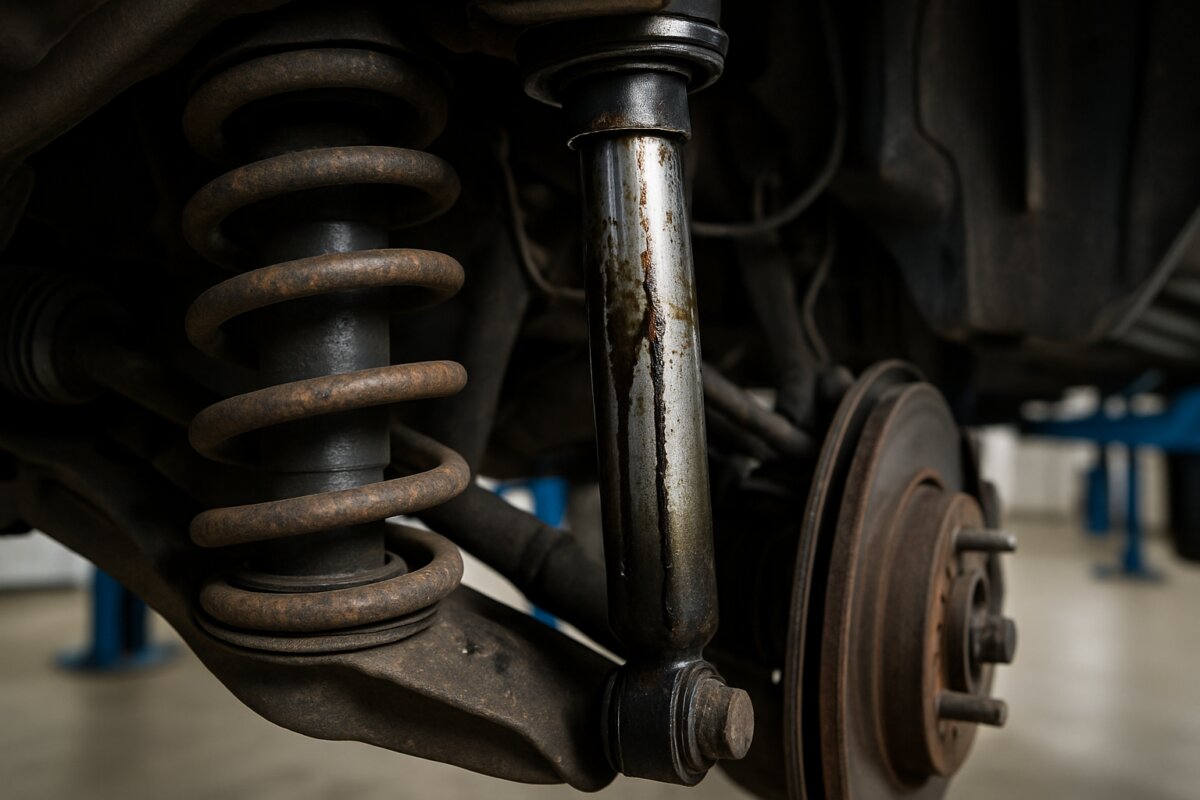
Shock absorbers function through hydraulic resistance. Internal fluid moves through calibrated valves as the piston travels up and down. When seals deteriorate, this fluid escapes, leaving visible wet patches or oily residue on the damper body.
Look for dark, oily streaks running down the shock absorber cylinder. Fresh leaks appear wet and glossy, whilst older leaks accumulate road dirt, creating a grimy, blackened appearance. Even small leaks compromise damping performance substantially. Our workshop data shows that a shock absorber loses approximately 30% of its effectiveness with only minor seal degradation.
Many motorists assume a small leak isn’t urgent. However, Autopartspro’s experienced technicians consistently advise against delaying replacement. Once seals begin failing, deterioration accelerates rapidly. The remaining fluid escapes faster, and internal components begin wearing abnormally without proper lubrication.
Professional tip: Inspect your dampers during routine services by checking behind the wheels with a torch. Catching leaks early prevents the secondary damage that occurs when vehicles continue operating with failed suspension components.
Leaking dampers also create MOT failures. The MOT inspection specifically checks suspension component condition, and visible fluid leaks constitute an automatic failure. Beyond the inconvenience, driving with compromised dampers between discovering the problem and booking repairs puts you at increased risk. The sensible approach involves immediate replacement when leaks appear, using quality components from reliable suppliers.
Clunking or rattling noises from corners
Broken springs produce distinctive metallic noises that vary depending on the failure type. A fractured coil spring rattles as the broken end moves within the spring mount. You’ll hear this most clearly when driving over uneven surfaces or during slow-speed manoeuvres in car parks.
The sound differs from worn suspension arm bushings, which create more of a creaking or groaning noise. Broken springs produce sharper, more metallic sounds. Some drivers describe it as similar to having loose tools rattling in the boot, but the noise originates from the wheel area.
According to Autopartspro’s service records, spring failures occur most frequently on the front suspension of vehicles regularly driven on poorly maintained roads. The constant compression and extension cycles, combined with corrosion from road salt, eventually cause material fatigue. The spring fractures at its weakest point, usually near the coil ends where stress concentrates.
Worn shock absorber mounting components also create noise. The top mount rubber deteriorates over time, allowing metal-to-metal contact. This produces knocking sounds when driving over bumps or during steering movements. The noise might seem minor initially, but it indicates that the damper isn’t properly secured, which affects its ability to control suspension movement effectively.
Vehicle pulling to one side whilst driving
When one shock absorber or spring fails whilst others remain functional, the resulting imbalance causes your car to drift toward one side. This differs from pulling caused by alignment issues – suspension-related pulling often varies with road conditions and driving speed.
A collapsed spring on one corner lowers that section of the vehicle, altering suspension geometry throughout that side. This changes how forces transmit through the suspension arms and affects steering response. You’ll find yourself constantly correcting the steering wheel to maintain a straight path, which becomes tiring during longer journeys.
Our diagnostic experience shows that drivers often confuse this symptom with tracking problems. They pay for wheel alignment services, which might temporarily improve the situation, but the underlying suspension failure soon causes the pulling to return. The proper diagnostic approach involves checking suspension component condition before attempting alignment adjustments.
Uneven damper performance also affects how your vehicle responds to crosswinds or the turbulence created by passing lorries on motorways. With one side damping properly and the other not, the car becomes unpredictable in gusty conditions. This creates genuine safety concerns, particularly for nervous drivers or those travelling with passengers who depend on smooth, controlled handling.
Warning signs your car has a problem
Recognising multiple symptoms together provides stronger evidence of suspension failure. Watch for these combined indicators:
- Visual body lean: Your car sits noticeably lower on one corner when parked on level ground
- Steering wheel vibration: The wheel shakes or judders when driving over rough surfaces
- Longer stopping distances: You need more space to brake safely than previously
- Difficulty steering: The wheel feels heavy or unresponsive during low-speed manoeuvres
- Excessive body roll: The vehicle leans dramatically when cornering at normal speeds
- Scraping sounds: You hear metal contact noises during full suspension compression
- Poor headlight aim: Your lights point downward or upward due to altered ride height
- Dashboard warning lights: Modern vehicles may illuminate stability control warnings
The Autopartspro technical team emphasises that you shouldn’t wait until multiple symptoms appear. Any single symptom warrants investigation. Suspension components deteriorate gradually, and early intervention prevents more expensive repairs.
Expert insight: Modern vehicles with electronic stability control systems may mask suspension problems temporarily through automated interventions. Don’t rely solely on how the car feels – regular physical inspections remain essential.
Pay particular attention after striking potholes or kerbs forcefully. Impacts that feel severe enough to concern you often cause immediate spring damage or accelerate existing wear. If your vehicle’s behaviour changes noticeably after such an incident, schedule an inspection promptly rather than waiting for your next service interval.
How to fix the problems
| Problem identified | Recommended repair action | Typical timeframe |
|---|---|---|
| Leaking shock absorber | Replace both dampers on the same axle | 2-3 hours per axle |
| Broken coil spring | Replace spring pair on affected axle | 2-4 hours per axle |
| Worn top mounts | Replace mounting assemblies during damper replacement | Additional 30 minutes per side |
| Failed anti-roll bar bushings | Replace worn bushings and drop links | 1-2 hours |
| Damaged bump stops | Replace protective bump stops and covers | 30 minutes per corner |
Always replace suspension components in pairs across the same axle. Installing just one new damper whilst leaving the worn opposite side creates imbalanced handling that can be worse than having two worn units. This principle applies equally to springs, which settle over time and should be replaced together to maintain even ride height.
After replacement, your vehicle requires four-wheel alignment. New components change suspension geometry slightly, and proper alignment ensures even tyre wear and straight-line stability. Quality replacement parts from trusted suppliers combined with professional fitting provide the best long-term results.
Component replacement costs and options
| Component | Budget range (parts) | Premium range (parts) | Labour time estimate |
|---|---|---|---|
| Front shock absorbers (pair) | £60-120 | £180-350 | 2-3 hours |
| Rear shock absorbers (pair) | £50-100 | £150-300 | 1.5-2.5 hours |
| Coil springs (pair) | £40-80 | £120-220 | 2-4 hours |
| Complete strut assemblies (pair) | £140-280 | £350-600 | 1.5-2 hours |
| Anti-roll bar links (pair) | £15-30 | £40-70 | 1 hour |
Premium components typically offer longer warranties and superior materials. Whilst budget parts suffice for older vehicles with limited remaining service life, investing in quality suspension components makes sense for cars you plan to keep for several years. The improved ride comfort and handling justify the additional cost.
When to see a mechanic
Don’t delay professional inspection when you notice suspension symptoms. Several scenarios demand immediate attention rather than waiting for your next scheduled service. If you experience any loss of steering control, particularly when braking or cornering, stop driving and arrange for professional assessment.
Visible damage from kerb strikes or pothole impacts warrants same-day inspection. The initial impact might seem minor, but internal damage to dampers or hairline spring fractures often worsen rapidly. What starts as a small problem can escalate to complete component failure within days or weeks.
Book an inspection within the week if you notice any of these situations:
- Your car fails the bounce test described earlier
- You hear new noises from the suspension area
- The vehicle sits unevenly when parked on flat ground
- Steering behaviour changes noticeably
- You spot fluid leaks around wheel areas
The Autopartspro technical advisors recommend annual suspension inspections for vehicles over five years old or those regularly driven on poor road surfaces. Preventive checks cost far less than emergency repairs following complete component failure. Modern diagnostic equipment can measure damper performance precisely, identifying deterioration before it becomes dangerous.
Choose a workshop equipped to perform comprehensive suspension diagnostics. Basic visual inspections catch obvious problems like leaks or broken springs, but subtle wear requires proper testing equipment. Facilities with hydraulic ramps and damper testing machines provide more thorough assessments. Quality workshops will also check related components like tie rod ends and wheel bearings during suspension evaluation, as these parts often wear simultaneously.
Frequently asked questions
Can I drive with a broken shock absorber?
Driving with failed dampers is legal but dangerous. Your stopping distance increases significantly, and handling becomes unpredictable during emergency manoeuvres. Replace worn dampers promptly to maintain safe vehicle control and prevent damage to other suspension components.
How long do shock absorbers typically last?
Quality shock absorbers generally last 80,000-100,000 miles under normal driving conditions. However, UK roads with numerous potholes and speed bumps accelerate wear. Vehicles used primarily for motorway driving often exceed this mileage, whilst city cars may require replacement sooner.
Should I replace all four shock absorbers simultaneously?
Replace dampers in axle pairs minimum. Fitting just one new unit creates handling imbalance. If your vehicle has high mileage and front dampers fail, consider replacing all four together. This prevents returning to the workshop months later when the rears inevitably fail.
Will worn suspension affect my MOT test result?
Absolutely. MOT testers specifically examine suspension condition, checking for leaks, secure mounting, and excessive wear. Broken springs or leaking dampers constitute immediate failures. Excessively worn components that affect vehicle control also fail the test, even without visible damage.
Can I replace shock absorbers myself at home?
DIY replacement is possible with proper tools and mechanical knowledge. However, coil spring compression requires specialist equipment and poses serious injury risk if done incorrectly. Unless you have experience and appropriate spring compressors, professional fitting ensures safety and correct installation.
Final recommendation
Your vehicle’s suspension system deserves regular attention and prompt repairs when problems emerge. The symptoms discussed throughout this article – excessive bouncing, uneven tyre wear, nose-diving, fluid leaks, strange noises, and pulling – all indicate that suspension components require professional evaluation. Ignoring these warning signs compromises your safety and leads to more expensive repairs as secondary damage accumulates.
Based on decades of combined experience from Autopartspro’s technical specialists, we recommend establishing a preventive maintenance schedule rather than waiting for complete failure. Annual inspections catch developing problems early, when repairs cost less and haven’t yet affected other components. When replacement becomes necessary, invest in quality parts from reputable suppliers. Budget components might save money initially, but premium shock absorbers and springs deliver superior performance, longer service life, and better warranty protection.
Remember that suspension work typically requires wheel alignment afterwards to optimise handling and tyre life. Consider this an essential part of the repair rather than an optional extra. Your car’s suspension connects you to the road surface – keeping it properly maintained ensures you remain in control regardless of what UK roads throw at you. Browse our extensive range of suspension components to find the right parts for your vehicle and restore that smooth, confident ride you remember.

 Loading...