Audi clutch replacement typically costs between £450 and £1,200 depending on the model, with A3 and A4 variants averaging £600-£800 for parts and labour, while performance models like the S4 or RS6 can exceed £1,500. The total expenditure includes the clutch kit, labour charges, and additional components such as the clutch release bearing and flywheel resurfacing. Selecting quality OEM or premium aftermarket parts ensures optimal performance and longevity for your vehicle.
Understanding Audi clutch systems and when replacement becomes necessary
Audi vehicles employ sophisticated clutch assemblies that vary significantly across their model range. The German manufacturer integrates either single-mass or dual-mass flywheels depending on the engine configuration and torque output. Modern Audi models feature clutch systems designed to handle specific power ratings whilst maintaining smooth engagement characteristics.
According to our mechanics at Autopartspro, most Audi clutches demonstrate remarkable durability, typically lasting between 60,000 and 100,000 miles under normal driving conditions. However, this lifespan can be dramatically shortened by aggressive driving habits, frequent stop-start traffic, or towing heavy loads. We’ve observed that quattro models with all-wheel drive systems often place additional stress on clutch components due to the increased drivetrain complexity.
Several warning signs indicate your Audi requires clutch attention:
- Slipping sensation during acceleration, particularly in higher gears
- Difficulty engaging gears or grinding noises when shifting
- Vibrations or juddering when releasing the clutch pedal
- Burning smell during normal driving operations
- Higher biting point or increased pedal resistance
Breaking down Audi clutch replacement costs
The financial investment for clutch replacement varies substantially based on multiple factors. Our extensive experience servicing Audi vehicles reveals that parts typically constitute 40-50% of the total bill, whilst labour accounts for the remainder.
Labour costs fluctuate depending on geographical location and workshop rates. In the UK, expect to pay between £60 and £120 per hour for professional clutch installation. The job duration ranges from 4 to 8 hours for most Audi models, though vehicles with complex quattro systems or engine configurations may require additional time.
Component pricing breakdown
| Component | Budget Range | Premium Range |
|---|---|---|
| Clutch friction disc | £80-£150 | £200-£400 |
| Pressure plate assembly | £100-£180 | £250-£500 |
| Release bearing | £25-£50 | £60-£120 |
| Dual-mass flywheel | £200-£400 | £500-£900 |
Our specialists strongly recommend replacing the flywheel simultaneously with the clutch assembly, particularly on higher-mileage vehicles. This preventative approach avoids repeated labour costs should the flywheel fail shortly after clutch installation. Additionally, components like the clutch master cylinder or slave cylinder should be inspected during replacement.
Selection criteria for Audi clutch components
Choosing appropriate clutch parts requires balancing quality, performance requirements, and budget constraints. The Audi aftermarket offers three distinct quality tiers, each suited to different driving scenarios and ownership expectations.
OEM (Original Equipment Manufacturer) parts represent the premium choice, manufactured to Audi’s exact specifications. These components guarantee perfect fitment and performance characteristics matching your vehicle’s original specification. Brands like LuK, Sachs, and Valeo supply clutches directly to Audi production lines and offer identical parts through aftermarket channels.
Premium aftermarket alternatives provide excellent value whilst maintaining high quality standards. Manufacturers such as Sachs Performance, Clutch Masters, and Exedy develop clutch systems that often exceed OEM specifications. Our technicians at Autopartspro frequently recommend these options for customers seeking enhanced durability without compromising reliability.
Budget-friendly options suit cost-conscious owners planning shorter vehicle retention periods. Whilst these clutches meet basic functional requirements, they typically feature shorter service lives and may exhibit less refined engagement characteristics compared to premium alternatives.
Model-specific considerations
Different Audi models demand specific clutch configurations:
- A3/A4/A6 with four-cylinder engines: Standard organic clutches suffice for most applications, with dual-mass flywheels providing optimal vibration damping
- S-line and performance variants: Uprated clutches with increased clamping force accommodate higher torque outputs and spirited driving
- Quattro all-wheel drive models: Reinforced components handle additional drivetrain stress from power distribution across all wheels
- TDI diesel engines: Heavy-duty clutches designed for elevated torque characteristics from turbocharged diesel powerplants
Always verify your Audi’s specific clutch requirements using the VIN number before purchasing components. Models within the same series may utilise different clutch specifications depending on engine code, production year, and transmission type.
Complete clutch kit versus individual components
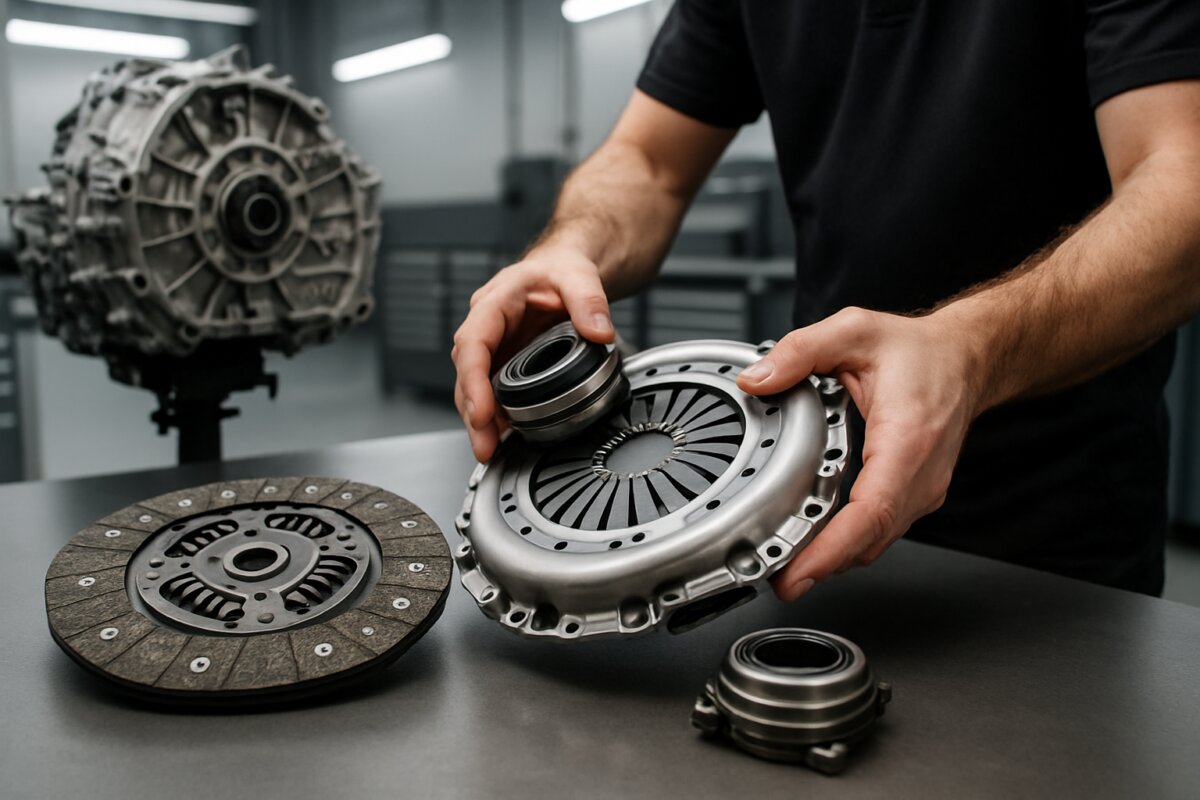
Purchasers face the choice between comprehensive clutch plate assemblies or individual parts. Complete kits bundle all necessary components into a single package, ensuring compatibility and eliminating potential sourcing errors. These typically include the friction disc, clutch pressure plate, release bearing, and alignment tools.
From our professional perspective, complete kits offer superior value for full replacements. They eliminate guesswork regarding component compatibility and often include upgraded release bearings that outlast economy alternatives. The bundled pricing typically undercuts purchasing individual components separately by 15-25%.
Individual component replacement makes sense only when diagnosing specific failures on low-mileage clutches. For instance, a defective release bearing on a recently installed clutch warrants targeted replacement rather than full system renewal. However, this scenario rarely applies to typical wear-related failures on high-mileage vehicles.
Installation considerations and additional components
Professional clutch replacement involves more than simply swapping worn friction plates. Comprehensive service includes several critical procedures that significantly impact longevity and performance.
Flywheel inspection and resurfacing forms a crucial step. Dual-mass flywheels cannot be resurfaced and require complete replacement when worn or damaged. Single-mass variants can often be machined, though replacement proves more cost-effective on high-mileage examples. Our technicians check flywheel runout and surface condition using precision measuring equipment.
The clutch cable on manual adjustment systems or hydraulic lines on assisted systems require thorough inspection. Deteriorated rubber hoses or frayed cables compromise pedal feel and clutch operation. Similarly, worn engine mount components can transmit excessive vibration, accelerating clutch wear.
Essential accompanying work
- Gearbox input shaft seal replacement prevents oil contamination of new clutch surfaces
- Release fork and pivot pin inspection identifies potential failure points
- Clutch alignment using proper tools ensures concentric positioning
- Spline lubrication on the gearbox input shaft facilitates smooth engagement
- Hydraulic system bleeding removes air from clutch actuation circuits
Where to purchase Audi clutch components
Several purchasing channels exist, each offering distinct advantages. Online automotive parts retailers like Autopartspro provide extensive catalogues with detailed fitment information and competitive pricing. The convenience of home delivery and comprehensive product descriptions makes online shopping increasingly popular amongst DIY enthusiasts and professional workshops alike.
Main dealer parts departments guarantee genuine Audi components with full manufacturer warranties. Whilst premium pricing applies, this route suits owners prioritising authenticity and complete peace of mind. Dealers also provide detailed technical support and installation guidance from factory-trained personnel.
Motor factor networks offer immediate availability and face-to-face advice from experienced counter staff. These establishments prove invaluable when requiring urgent parts or professional recommendations for specific applications. Many factors maintain relationships with local workshops, facilitating trade pricing and priority service.
Performance and upgraded clutch options
Enthusiasts modifying Audi vehicles for increased power output require uprated clutch systems. Standard clutches cannot reliably handle torque increases beyond 20-30% above stock specifications. Performance clutches employ various technologies to accommodate elevated power levels whilst maintaining drivability.
Organic clutches with increased clamping force represent the entry level for mild performance upgrades. These maintain relatively stock-like engagement characteristics whilst supporting moderate power gains. Single-mass flywheel conversions reduce rotational mass, improving throttle response and acceleration, though they sacrifice some refinement in noise and vibration levels.
Paddle-style clutches suit track-focused applications and heavily modified engines. These aggressive setups provide exceptional holding capacity but exhibit on/off engagement behaviour unsuitable for daily driving. Multi-plate configurations offer the ultimate solution for extreme power applications, though installation costs and complexity increase substantially.
Torque capacity reference
| Clutch Type | Torque Capacity | Driving Character |
|---|---|---|
| OEM standard | Up to 350 Nm | Smooth, refined |
| Uprated organic | 350-500 Nm | Slightly firmer pedal |
| Paddle clutch | 500-700 Nm | Aggressive, track-oriented |
| Multi-plate | 700+ Nm | Race application |
DIY replacement versus professional installation
Clutch replacement demands significant mechanical aptitude and specialised equipment. Home mechanics with proper facilities can successfully complete the work, realising substantial savings on labour costs. However, several factors warrant careful consideration before attempting DIY installation.
Essential equipment includes a quality transmission jack, engine support apparatus, and clutch alignment tools. Without proper equipment, the task becomes exponentially more difficult and risks component damage. Access limitations on certain Audi models necessitate removing subframes, suspension arms, or exhaust systems, compounding complexity.
Our professional opinion strongly favours workshop installation for most owners. The labour cost represents worthwhile investment when considering the expertise required and potential complications from improper installation. Incorrectly aligned clutches cause premature failure, whilst damaged CV joints or mounting points create expensive secondary failures.
Warranty coverage and quality assurance
Reputable clutch manufacturers provide warranties ranging from 12 months to lifetime coverage, depending on component quality and intended application. Premium brands typically offer 2-3 year warranties on complete kits, demonstrating confidence in their engineering and manufacturing standards.
Warranty terms usually stipulate professional installation by qualified technicians. DIY installations may void coverage, creating financial risk should premature failure occur. Retaining installation receipts and adhering to recommended bedding-in procedures proves essential for warranty claims.
Quality clutch components exhibit specific characteristics our technicians verify upon receipt. Friction material should appear uniform without contamination or damage. Pressure plate fingers must show correct height and alignment. Release bearings should rotate smoothly without play or roughness. These inspection points identify substandard parts before installation, preventing wasted labour and subsequent comebacks.
Maximising clutch lifespan after replacement
New clutches require proper bedding-in to achieve optimal performance and longevity. The initial 500 miles prove critical for allowing friction surfaces to mate correctly. During this period, avoid aggressive launches, excessive slipping, or heavy loads that generate excessive heat.
Driving technique significantly influences clutch lifespan. Resting your foot on the pedal whilst driving causes slight disengagement, generating heat and accelerating wear. Similarly, holding the vehicle on hills using clutch slip rather than the handbrake dramatically reduces service life. Our mechanics emphasise that proper clutch operation represents the most cost-effective method of maximising replacement intervals.
Regular gearbox gear oil changes maintain smooth shifting characteristics and reduce strain on clutch components. Contaminated or degraded oil increases shift effort, encouraging drivers to slip the clutch excessively during gear changes. Following Audi’s recommended service intervals for transmission fluid prevents this common issue.
Common mistakes when purchasing clutch components
Ordering incorrect parts represents the most frequent error. Audi produced numerous variants within model designations, each potentially requiring different clutch specifications. Engine codes, transmission types, and production dates all influence correct part selection. Always cross-reference part numbers using your vehicle identification number before purchasing.
Prioritising absolute cheapest pricing often proves counterproductive. Bargain-basement clutches may initially save money but typically fail prematurely, requiring repeated replacement and additional labour costs. Our experience demonstrates that mid-range quality components offer optimal value, balancing initial outlay against realistic service life expectations.
Neglecting ancillary components during replacement creates false economies. Reusing worn release bearings or damaged pilot bearings frequently causes premature clutch failure. The modest additional component cost pales compared to repeating the entire labour-intensive replacement procedure within months of the original work.
Technical specifications and compatibility
Audi clutches are specified by diameter, spline count, and torque capacity. Common diameters include 215mm, 228mm, and 240mm, with larger discs handling higher torque outputs. Spline counts typically measure 23 or 26 teeth, matching the gearbox input shaft configuration. Mismatched specifications prevent installation or cause immediate failure.
Dual-mass flywheels incorporate spring assemblies that dampen torsional vibrations from the engine. These sophisticated components require careful handling during installation to prevent internal damage. Our technicians always verify flywheel free-play before installation, ensuring spring mechanisms function correctly. Excessive play indicates internal wear necessitating replacement rather than reuse.
Self-adjusting clutches appeared on later Audi models, automatically compensating for friction material wear throughout the service life. These systems require specific installation procedures, including proper preload settings. Incorrect adjustment causes either premature wear from excessive clamping force or slippage from insufficient pressure.
Sourcing quality components for various Audi models
Popular models like the A3, A4, and A6 benefit from extensive aftermarket support with numerous quality options at competitive prices. Rarer variants or older models may present sourcing challenges, sometimes requiring direct OEM parts at premium pricing. Early consultation with parts specialists prevents project delays when working on uncommon vehicles.
Performance models including the S4, S5, and RS range demand uprated clutches even for standard power outputs. These vehicles generate significant torque that quickly overwhelms economy clutch options. Investing in proven performance brands ensures reliability and driver satisfaction. Our specialists recommend Sachs Performance or LuK RepSet Pro for these applications based on extensive field experience.
Classic Audi models require particular attention to part quality. Reproduction components for older vehicles vary dramatically in quality, with some barely achieving minimal functional standards. Sourcing NOS (new old stock) genuine parts or premium remanufactured options provides better long-term results, though availability limitations occasionally necessitate compromise.
Making informed purchasing decisions
Successful clutch replacement combines quality component selection with professional installation and proper break-in procedures. Understanding your specific Audi model’s requirements, driving habits, and performance expectations guides appropriate product choices. Consultation with experienced automotive parts specialists helps navigate the extensive options available.
Whilst initial outlay appears substantial, proper clutch replacement delivers years of trouble-free motoring. Penny-pinching on critical drivetrain components invariably proves expensive through premature failures and repeated repair costs. Investment in proven quality parts from reputable suppliers represents genuine value that protects your vehicle and wallet over the ownership period.
At Autopartspro, we stock comprehensive clutch components for all Audi models, backed by expert technical support and competitive pricing. Our catalogue includes everything from basic brake pads to complex turbocharger assemblies, ensuring you find all necessary parts in one convenient location. Whether you’re a professional workshop or enthusiastic home mechanic, we provide the components and knowledge required for successful repairs.
Frequently Asked Questions (FAQ)
How long does an Audi clutch typically last?
Most Audi clutches last between 60,000 and 100,000 miles under normal driving conditions. Aggressive driving, frequent city traffic, or towing can reduce this significantly, whilst gentle motorway driving may extend lifespan beyond 120,000 miles.
Should I replace the flywheel when changing the clutch?
Yes, replacing the flywheel simultaneously prevents future labour costs if it fails shortly after. Dual-mass flywheels cannot be resurfaced and should always be replaced. This approach proves more economical than separate replacement jobs.
Can I fit a performance clutch to a standard Audi?
Performance clutches work on standard vehicles but may compromise daily drivability. They typically feature firmer pedal pressure and less progressive engagement. Choose uprated organic clutches rather than aggressive paddle designs for mixed-use applications.
What causes premature clutch failure in Audi vehicles?
Common causes include riding the clutch pedal, aggressive launches, excessive slipping during gear changes, contamination from gearbox oil leaks, and incorrect installation. Proper driving technique and quality installation significantly extend clutch lifespan.
Are aftermarket clutches as good as genuine Audi parts?
Premium aftermarket brands like LuK, Sachs, and Valeo often supply OEM clutches to Audi. These manufacturers offer identical quality through aftermarket channels at lower prices. Budget alternatives sacrifice longevity and refinement for cost savings.

 Loading...