Replacing AUDI brake pads and discs in the UK typically costs between £150 and £600 depending on your model, with front axle replacements averaging £200-£400 for parts and labour combined. Premium brands like Brembo or ATE command higher prices but offer superior stopping power and longevity, whilst budget options start around £80 for a complete set. Understanding which components to choose and where to source them ensures you maintain your Audi’s renowned braking performance without overspending on unnecessary upgrades.
The braking system remains your vehicle’s most critical safety feature, and Audi models demand particular attention to quality. Whether you’re experiencing juddering, squealing, or reduced braking efficiency, recognising when replacement becomes necessary protects both your wallet and your wellbeing on British roads.
When do Audi brake components need replacement
Most Audi vehicles require brake pads replacement every 30,000 to 70,000 miles, whilst brake rotors typically last between 50,000 and 100,000 miles. However, these figures vary dramatically based on driving style, urban versus motorway use, and whether you favour spirited acceleration that requires harder braking.
According to Autopartspro mechanics who specialise in German marques, Audi owners often underestimate wear on rear brake components. Many drivers assume front brakes handle all the work, but quattro all-wheel-drive systems distribute braking forces differently than conventional vehicles, meaning rear disc and pad wear can surprise unprepared owners during MOT inspections.
Visual inspection provides the most reliable indicator. Brake pad thickness below 3mm demands immediate replacement, whilst discs showing scoring deeper than 1mm, visible cracks, or uneven wear patterns require renewal. Dashboard warning lights, particularly the brake wear indicator, shouldn’t be ignored even briefly.
Physical symptoms demanding attention
- Squealing or grinding noises when applying brakes, indicating worn friction material
- Vibration through the brake pedal or steering wheel during braking
- Vehicle pulling to one side when stopping, suggesting uneven pad wear or seized brake calipers
- Increased stopping distances requiring earlier and firmer pedal pressure
- Visible rust or deep grooves on disc surfaces through wheel spokes
UK pricing breakdown for Audi brake replacements
Costs fluctuate significantly across different Audi models and regional labour rates. Independent garages throughout the UK charge between £50 and £90 per hour, whilst main dealerships command £90 to £150 hourly. The job typically requires 1.5 to 3 hours depending on component accessibility and whether additional parts like corroded fixings need addressing.
| Component | Budget Range | Premium Range |
|---|---|---|
| Front brake pads (set) | £25-£45 | £60-£120 |
| Front brake discs (pair) | £40-£80 | £100-£250 |
| Rear brake pads (set) | £20-£40 | £50-£100 |
| Rear brake discs (pair) | £35-£70 | £80-£200 |
Performance models like the S-line or RS variants require larger, ventilated discs with higher specifications. An Audi A3 standard model might need £150 worth of parts for a front axle refresh, whilst an RS6 could demand £400+ in components alone before labour enters the equation.
Labour costs across the UK
London and the South East typically charge 20-30% more than Northern regions, Midlands, or Wales. A complete four-wheel brake overhaul including pads, discs, and fresh brake fluid might cost £350 in Manchester but £500 in Surrey for identical parts and workmanship quality.
Mobile mechanics offer competitive rates, often undercutting traditional garages by £30-£50 per job. They eliminate premises overheads whilst providing convenient driveway service, though warranty provisions and specialist equipment access may be limited compared to established workshops.
Selecting the right brake components for your Audi
Original Equipment (OE) specification parts guarantee compatibility and performance matching factory standards. Brands like ATE, Textar, and Zimmermann supply many Audi models from the factory, offering these same components through aftermarket channels at reduced prices compared to Audi-branded packaging.
Autopartspro specialists recommend against mixing brake component brands on the same axle. Friction characteristics vary between manufacturers, potentially causing uneven braking force distribution that compromises stability and increases stopping distances during emergency manoeuvres.
Material composition matters
Ceramic brake pads produce less dust, operate quieter, and last longer than semi-metallic alternatives. They cost approximately 40% more but maintain consistent performance across temperature ranges and spare your alloy wheels from unsightly black deposits. Semi-metallic pads offer superior initial bite and better heat dissipation for spirited driving but wear discs faster.
Ventilated discs with internal cooling vanes suit front axles and performance applications, whilst solid discs suffice for most rear applications on smaller Audi models. Drilled or slotted performance discs enhance wet weather performance and reduce brake fade but typically last 20-30% fewer miles than standard alternatives.
Always replace brake components in axle sets, never individual sides. Mismatched friction materials create dangerous braking imbalances that compromise vehicle stability, particularly in wet conditions or during emergency stops.
Where to buy Audi brake parts in the UK
Online retailers like Autopartspro stock comprehensive ranges covering all Audi models from the A1 through to Q7 and e-tron variants. Digital platforms offer detailed compatibility checkers preventing incorrect purchases, competitive pricing due to lower overheads, and home delivery within 24-48 hours across mainland Britain.
Main dealerships stock genuine Audi-branded parts with full traceability and warranty backing. Prices typically exceed aftermarket OE-equivalent parts by 30-60%, though some drivers value the peace of mind despite identical manufacturing origins for many components.
Buying options compared
- Online specialists provide widest selection, competitive pricing, and detailed technical specifications with registration-based compatibility checking
- Local motor factors offer immediate availability, personal advice, and the ability to physically inspect parts before purchase
- Breakers yards occasionally stock low-mileage genuine components at substantial discounts, though verification of condition and remaining life proves challenging
- Main dealers guarantee authentic parts and expert fitting but command premium pricing throughout the transaction
Package deals bundling pads, discs, and associated hardware like brake caliper repair kits offer better value than purchasing components separately. These kits include necessary clips, anti-rattle shims, and mounting bolts that prevent comebacks due to missing ancillaries.
DIY replacement versus professional fitting
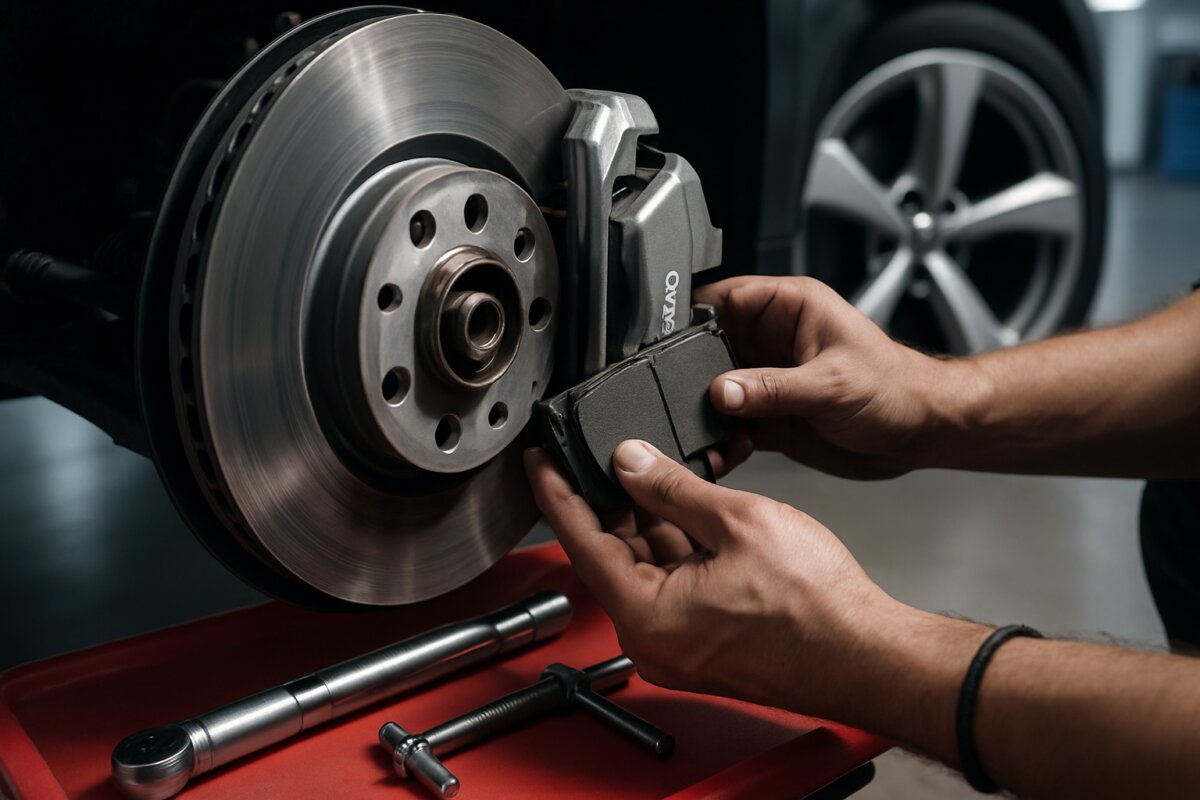
Competent home mechanics with proper equipment can replace brake pads in 45-90 minutes per axle. Disc replacement demands additional tools including a torque wrench, proper jack stands rated for your vehicle’s weight, and ideally a brake piston wind-back tool for electronic parking brake systems fitted to newer Audi models.
According to Autopartspro technical advisors, the most common DIY errors involve improper torque specifications on caliper bolts and neglecting to reset electronic brake systems through diagnostic software. Modern Audi vehicles with electronic parking brakes require VCDS or dealer-level diagnostics to retract calipers safely, making professional assistance nearly essential for post-2015 models.
Essential tools for home replacement
- Hydraulic jack and axle stands with minimum 2-tonne capacity per stand
- Torque wrench calibrated between 20-200 Nm for accurate bolt tensioning
- Brake piston compression tool or C-clamp for retracting caliper pistons
- Copper grease for slider pins and anti-seize compound for wheel bolts
- Diagnostic tool for electronic parking brake systems on 2015+ models
Understanding brake component specifications
Brake discs carry specific minimum thickness measurements stamped on the friction surface. Operating below this threshold, typically around 22-26mm for front discs depending on model, compromises structural integrity and heat dissipation capacity. Continuing use risks catastrophic failure where the disc fractures during heavy braking.
Pad friction ratings follow ECE R90 certification throughout Europe, ensuring minimum performance standards. Premium manufacturers exceed these baselines, offering improved cold bite, reduced fade at elevated temperatures, and longer service intervals. Cheaper uncertified pads from unknown suppliers risk unpredictable performance and potentially invalidate insurance coverage.
| Audi Model | Front Disc Diameter | Rear Disc Diameter |
|---|---|---|
| A1 (standard) | 288mm | 232mm |
| A3 (standard) | 312mm | 272mm |
| A4 (standard) | 314mm | 300mm |
| Q5 (standard) | 350mm | 330mm |
Additional components requiring attention
Fresh brake fluid service coincides logically with pad and disc replacement. Fluid absorbs moisture over time, reducing boiling point and promoting internal corrosion within brake lines and the ABS pump. Complete system flushes cost £40-£70 in labour plus £15-£25 for DOT 4 fluid suitable for most Audi applications.
Seized caliper slider pins account for premature pad wear and uneven braking performance. During brake service, technicians should strip, clean, and re-lubricate these components with high-temperature ceramic grease. Replacement guide pins cost £8-£15 but prevent £200+ repairs when neglected sliders cause caliper seizure.
When to replace related components
- Brake lines showing surface corrosion, cracking, or weeping require immediate replacement before MOT failure or sudden pressure loss
- Caliper pistons with torn rubber boots allow moisture ingress causing internal corrosion and eventual seizure
- Worn brake wear indicators trigger dashboard warnings prematurely, creating unnecessary concern and diagnostic confusion
- Corroded brake disc securing screws often shear during removal, demanding drilling and extraction adding 30-60 minutes labour
Performance upgrades worth considering
Uprated brake packages suit drivers frequently using mountain roads, towing, or enjoying track days. Larger diameter discs require wheel clearance verification but dramatically improve heat dissipation and reduce fade during repeated heavy braking. Costs start around £600 for quality four-wheel upgrades including braided lines.
High-performance brake fluid with DOT 5.1 specification resists moisture absorption better than standard DOT 4, maintaining higher boiling points under extreme conditions. This upgrade costs merely £10-£15 extra during service but provides worthwhile insurance for performance-oriented driving.
Braided stainless steel brake lines replace rubber hoses, eliminating expansion under pressure for firmer pedal feel and marginally reduced stopping distances. They prove particularly beneficial on older Audi models where original rubber lines show age-related deterioration. Expect £80-£150 for a full vehicle set plus 2-3 hours fitting including proper bleeding procedures.
Common mistakes to avoid
Neglecting to clean caliper brackets and mounting surfaces allows corrosion build-up that prevents proper pad movement. This oversight causes uneven wear, reduced performance, and premature component failure within months. Wire brushing and applying copper grease to contact points takes minutes but extends service life substantially.
Forcing caliper pistons back without opening the brake fluid reservoir risks damaging the master cylinder and introducing air into the ABS sensor circuits. Always crack open the reservoir cap and monitor fluid levels throughout piston retraction, siphoning excess to prevent overspilling contaminated fluid.
Autopartspro mechanics report frequent issues with customers over-torquing wheel bolts after brake work. Audi specifications typically call for 120 Nm on most models, but enthusiastic home mechanics sometimes apply 150+ Nm, stretching bolt threads and risking wheel detachment. Always use calibrated torque wrenches and follow manufacturer specifications exactly.
Maintaining your new brake components
Bedding-in procedures remain essential for optimal performance and longevity. New pads and discs require 200-300 miles of varied braking to properly mate friction surfaces. Avoid heavy braking during this period, and if possible, perform 8-10 moderate stops from 60mph to 20mph allowing cooling between applications.
Regular inspection every 6,000 miles catches developing issues before they escalate. Check pad thickness through wheel spokes, examine discs for scoring or rust build-up, and verify even wear across both sides of each axle. Uneven patterns indicate caliper problems requiring attention before expensive secondary damage occurs.
Winter driving accelerates brake component deterioration through road salt exposure. Washing wheel wells monthly during November through March removes corrosive deposits that attack caliper pistons, mounting hardware, and disc surfaces. This simple maintenance extends component life by 20-30% in coastal regions where salt concentration peaks.
Warranty considerations and documentation
Quality brake components carry 12-24 month warranties covering manufacturing defects but exclude wear items under normal use. Retain purchase receipts and fitting invoices documenting installation dates and mileage. Professional fitting often extends warranty coverage compared to DIY installation where proof of correct procedure proves challenging.
Main dealer service histories don’t necessarily demand genuine Audi parts for warranty validity. EU Block Exemption regulations permit quality aftermarket components maintaining vehicle warranties provided they meet OE specifications. Always verify parts carry appropriate certifications and retain packaging showing compliance markings.
Insurance companies may scrutinise brake components following accidents, particularly if non-standard parts were fitted. Maintaining documentation proving quality alternatives meet or exceed original specifications protects against potential claim disputes. Premium aftermarket brands like Brembo, ATE, or Pagid satisfy insurers whilst offering performance advantages over base-specification genuine parts.
Regional supplier recommendations
Scotland, Northern Ireland, and Wales benefit from competitive online pricing with delivery charges minimal for orders exceeding £50. Rural areas sometimes face longer delivery windows, making local motor factor relationships valuable for urgent requirements despite slightly higher pricing.
Checking multiple suppliers before purchasing often reveals price variations exceeding 40% for identical components. Autopartspro’s registration-based search guarantees compatibility whilst competitive pricing eliminates the penalty traditionally associated with convenience. Their technical support assists with specification queries that generic retailers cannot address adequately.
Seasonal promotions around MOT peaks in March and September offer savings opportunities. Planning brake replacements around these periods can reduce total costs by 15-25% through package deals bundling related components like suspension springs or shock absorbers requiring concurrent attention.
Environmental and safety regulations
Proper disposal of worn brake components follows hazardous waste protocols due to friction material composition. Reputable garages include disposal costs within quoted prices, whilst DIY mechanics must transport old parts to approved civic amenity sites. Household bins cannot legally accept brake pads or contaminated brake fluid.
Asbestos-free brake pads became mandatory throughout the EU in 2004, yet some imported products of dubious origin still circulate. Stick with established brands displaying ECE R90 approval markings ensuring compliance with British safety standards. Health risks from asbestos exposure far outweigh any monetary savings from suspect components.
MOT testing centres apply increasingly strict standards to brake performance and component condition. Advisories noted during tests shouldn’t be ignored, as marginal passes often deteriorate to failures within 3,000-5,000 miles. Addressing brake concerns immediately after advisory notices prevents failed re-tests and maintains roadworthiness continuously.
Choosing quality components, sourcing them intelligently, and ensuring proper installation maintains your Audi’s legendary stopping power whilst controlling costs. Whether tackling replacement yourself or selecting a trusted garage, understanding specifications, pricing structures, and quality indicators empowers informed decisions protecting both safety and budget. The braking system demands no compromise, but smart purchasing through established suppliers like Autopartspro delivers premium performance without premium penalties.
Frequently Asked Questions (FAQ)
How often should I replace brake pads on my Audi?
Most Audi brake pads require replacement between 30,000-70,000 miles depending on driving style and conditions. Inspect them every 10,000 miles or during routine servicing to catch wear before it becomes critical.
Can I replace just brake pads without changing discs?
Yes, if discs measure above minimum thickness and show no scoring, cracking, or warping. However, replacing both together ensures optimal performance and eliminates future labour duplication within 12-18 months.
What causes brake discs to warp on Audi vehicles?
Excessive heat from heavy braking followed by rapid cooling creates uneven metal stress. Seized caliper sliders, over-torqued wheel bolts, and running through deep water whilst brakes are hot accelerate warping significantly.
Do I need special tools for Audi electronic parking brakes?
Yes, models from 2015 onwards typically require diagnostic equipment to retract electric parking brake calipers safely. VCDS software or dealer-level tools prevent motor damage during pad replacement procedures.
Are aftermarket brake pads as good as genuine Audi parts?
Quality aftermarket brands like ATE, Textar, and Brembo often manufacture original equipment for Audi. They offer identical or superior performance at reduced cost compared to Audi-branded packaging of the same components.

 Loading...