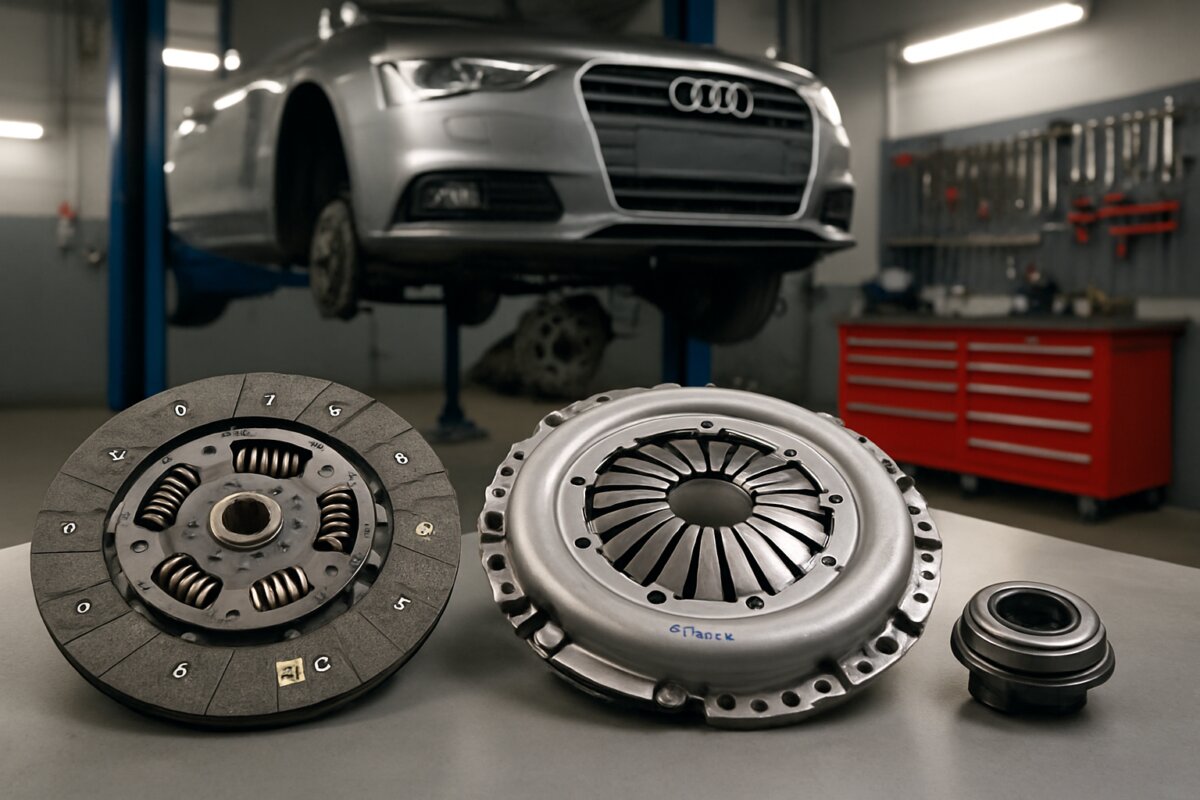
Audi clutch replacement typically costs between £400 and £1,200, depending on your model and whether you choose original equipment manufacturer (OEM) or aftermarket parts. The price includes the clutch kit, labour charges, and additional components like the release bearing or flywheel if needed. For most Audi models, expect to pay around £600-£800 for a complete job at an independent garage, whilst main dealerships charge considerably more.
Your Audi’s clutch system represents one of the most critical mechanical links between engine and transmission. When it starts slipping or juddering, you need accurate information fast. This guide walks you through everything from recognising symptoms to selecting quality replacement parts.
Understanding when your Audi needs a new clutch
Recognising clutch wear early saves money and prevents secondary damage to your flywheel or transmission. The specialists at Autopartspro have identified several telltale signs that appear across all Audi models.
Slipping clutch represents the most common symptom. Your engine revs increase without corresponding acceleration, particularly noticeable when climbing hills or overtaking. This happens when the friction material wears thin and can no longer grip the flywheel properly.
Juddering during engagement indicates uneven wear or oil contamination on the clutch plate. The vehicle shakes noticeably when pulling away, especially from a cold start. This often points to a failing clutch pressure plate or worn dual-mass flywheel.
Physical symptoms requiring immediate attention
- Heavy or spongy pedal feel suggests problems with the hydraulic system, potentially the clutch master cylinder or slave cylinder
- Burning smell during normal driving indicates severe friction material degradation
- Difficulty selecting gears points to incomplete clutch disengagement
- Strange noises when pressing the pedal often mean a worn clutch release bearing
According to our mechanics with over 15 years of Audi experience, the A3 and A4 models with 2.0 TDI engines typically need clutch replacement between 60,000 and 90,000 miles under normal driving conditions. Aggressive driving or frequent stop-start traffic reduces this considerably.
Pricing breakdown for Audi clutch replacement
Understanding cost components helps you budget appropriately and spot unreasonable quotes. The total expense divides into parts and labour, with significant variation based on your specific model.
| Audi Model | Parts Cost (OEM) | Labour Hours | Total Estimate |
|---|---|---|---|
| A1 1.4 TFSI | £250-£350 | 4-5 hours | £550-£750 |
| A3 2.0 TDI | £300-£450 | 5-6 hours | £650-£900 |
| A4 2.0 TDI Quattro | £400-£600 | 6-8 hours | £800-£1,200 |
| A6 3.0 TDI | £500-£750 | 7-9 hours | £1,000-£1,500 |
Labour costs fluctuate dramatically between locations. London garages charge £80-£120 per hour, whilst northern regions average £50-£70. Main dealerships add a premium of 30-50% over independent specialists.
Additional components that might need replacing
A complete clutch job often requires more than just the basic kit. The flywheel needs inspection and possible replacement, especially on dual-mass variants fitted to most modern Audis. A worn flywheel costs £200-£500 but replacing it later means repeating the entire labour process.
Your hydraulic system components deserve attention too. If the clutch cable (on older models) or hydraulic lines show wear, replace them whilst the transmission is out. This preventative approach saves money long-term.
Always request a flywheel inspection before approving clutch replacement work. Autopartspro mechanics recommend replacing the flywheel if surface grooves exceed 0.3mm depth or if you hear rattling noises at idle. Skipping this check leads to premature clutch failure and wasted money.
Selecting the right clutch kit for your Audi
Three main categories dominate the aftermarket: original equipment (OE), OEM equivalents, and performance upgrades. Each serves different needs and budgets.
Original equipment parts match factory specifications exactly. Brands like LuK, Sachs, and Valeo supply directly to Audi production lines. These manufacturers offer identical parts through aftermarket channels at 40-60% below dealership prices.
Comparing quality tiers
- OE specification parts (LuK, Sachs, Valeo) – Premium pricing, guaranteed fitment, typically include all necessary components
- Quality aftermarket brands (Blue Print, Borg & Beck) – Mid-range pricing, reliable performance, suitable for standard driving
- Budget alternatives – Lowest cost, shorter lifespan, adequate for vehicles near end of life
- Performance upgrades (Helix, Competition Clutch) – Enhanced torque capacity, firmer pedal feel, ideal for modified engines
Our technical team at Autopartspro consistently recommends OE specification parts for Audi applications. The marginal cost difference between quality aftermarket and OE specification rarely justifies accepting shorter service life or potential fitment issues.
What comes in a complete clutch kit
Standard kits include three essential components working together as a matched set. The friction plate connects to your transmission input shaft, whilst the pressure plate bolts to the flywheel. The release bearing slides along the input shaft and pushes against pressure plate fingers.
Quality kits also include alignment tools, mounting bolts, and detailed fitting instructions. Some manufacturers add the pilot bearing, though this isn’t universal.
Component specifications to verify
- Friction plate diameter matches your engine and transmission combination exactly
- Spline count corresponds to your gearbox input shaft
- Pressure plate clamp load suits your engine torque output
- Release bearing type (hydraulic or mechanical) matches your existing system
Quattro models require special attention. The four-wheel-drive transmission demands specific clutch specifications with higher clamp loads. Using a front-wheel-drive clutch kit in a Quattro model results in rapid failure.
OEM versus aftermarket: making the right choice
Price differences seem tempting, but false economy hits hard when components fail prematurely. The debate between original and aftermarket parts confuses many Audi owners.
| Factor | OEM Parts | Quality Aftermarket |
|---|---|---|
| Typical Lifespan | 80,000-100,000 miles | 60,000-80,000 miles |
| Warranty Period | 2-3 years | 1-2 years |
| Price Premium | Baseline | 20-30% less |
| Fitment Guarantee | Exact match | Usually correct |
From professional experience, Autopartspro specialists observe that cheap clutch kits under £150 rarely last beyond 30,000 miles in Audi applications. The friction material uses inferior compounds that glaze quickly under the thermal loads modern diesel engines generate.
Premium brands engineer their friction materials to withstand specific temperature ranges and pressures. This matters tremendously in turbocharged applications where clutch temperatures exceed 300°C during spirited driving.
DIY replacement versus professional fitting
Clutch replacement demands significant mechanical skill and specialist tools. You’ll need a transmission jack, clutch alignment tool, and torque wrench at minimum. The job takes 6-10 hours even for experienced home mechanics.
Front-wheel-drive Audis require removing the nearside driveshaft and disconnecting numerous electrical connectors. Quattro models add complexity with the propshaft and centre differential considerations. Models with electronic parking brakes need diagnostic equipment to release the calipers.
Tools and equipment requirements
- Transmission jack or suitable support (crucial for safety)
- Clutch alignment tool matching your specific spline count
- Torque wrench capable of 60-80 Nm for flywheel bolts
- Full socket set including E-Torx bits for modern fasteners
Professional fitting includes proper flywheel inspection, correct torque specifications, and warranty protection. Most importantly, garages carry insurance against damage during installation. A dropped transmission can write off your entire gearbox.
How to purchase quality Audi clutch components
Buying the right parts first time saves frustration and money. You need your vehicle identification number (VIN), engine code, and transmission type before ordering.
The VIN lives on a plate visible through the windscreen on the driver’s side. Engine codes appear on a sticker in the service book and stamped on the engine block. Transmission codes are stamped on the gearbox casing.
Online retailers like Autopartspro.co.uk offer search functions using registration numbers, but always verify part compatibility against your VIN. Model year changes, mid-life updates, and regional variations mean identical-looking cars sometimes need different components.
Verification steps before purchase
- Cross-reference part numbers against your existing components
- Confirm the kit includes all necessary bearings and alignment tools
- Check warranty terms and return policies
- Verify delivery times if you’ve booked garage time
Quality suppliers provide technical support and application guides. If a retailer can’t confirm fitment or answer basic technical questions, shop elsewhere. The few pounds saved aren’t worth ordering wrong parts.
Extending your new clutch lifespan
Proper driving habits dramatically affect clutch longevity. Simple changes in technique add tens of thousands of miles to component life.
Avoid riding the clutch pedal. Resting your foot on the pedal, even lightly, maintains constant pressure on the release bearing. This seemingly innocent habit reduces bearing life by half.
Hill starts require proper technique. Use the handbrake rather than balancing on the clutch. This single change prevents excessive slipping and heat buildup in the friction material.
Engine modifications demand clutch upgrades. Remapping your Audi for extra power overloads standard clutches. The increased torque exceeds design parameters, causing slipping and rapid wear. Budget for a performance clutch if you’re planning tuning work.
Driving practices that preserve clutch life
- Select neutral at traffic lights rather than holding the clutch depressed
- Engage gears smoothly without rushing the shift
- Avoid launching hard from standstill unless absolutely necessary
- Match engine speed to road speed before downshifting
Regular transmission oil changes benefit clutch longevity too. Fresh gear oil reduces friction and heat transfer to clutch components. Follow Audi’s service schedules religiously, particularly if you drive in heavy traffic.
Common mistakes during clutch replacement
Even professional garages occasionally make errors that compromise new clutch performance. Understanding these pitfalls helps you avoid problems.
Contamination ruins new clutches fast. Oil leaks from crankshaft seals or transmission input shaft seals must be fixed before installing fresh components. Even small amounts of oil destroy friction material within weeks.
Improper alignment causes immediate issues. The friction plate must centre perfectly on the flywheel using the correct alignment tool. Misalignment prevents proper gear engagement and damages the transmission input shaft bearing.
According to Autopartspro’s senior technicians, the most frequent error involves reusing old flywheel bolts. These are stretch bolts designed for single use. Reusing them risks catastrophic failure at highway speeds when the flywheel detaches.
Never reuse flywheel bolts, pressure plate bolts, or any stretch-type fasteners. The £20 saving isn’t worth the risk of transmission failure. Always order new bolts when purchasing your clutch kit.
Troubleshooting after installation
New clutches need a brief bedding-in period. The first 500 miles are critical for proper friction material mating to the flywheel surface.
Avoid heavy acceleration, aggressive starts, or towing during this period. Drive normally but consciously, allowing components to seat properly. Some initial noise or light judder during this phase is normal.
Warning signs requiring immediate attention
- Persistent juddering after 500 miles suggests contamination or warped flywheel
- Slipping under moderate load indicates incorrect kit or installation error
- Grinding noises point to release bearing problems or poor alignment
- Difficulty selecting gears means incomplete clutch disengagement
If problems persist beyond the bedding period, return to your installer immediately. Most issues stem from installation errors rather than parts defects, but warranty claims require prompt action.
Supporting components deserving attention
Related systems affect clutch performance and longevity. Your engine mount condition matters more than most realise. Worn mounts allow excessive engine movement, placing unusual loads on the clutch and causing premature wear.
The transmission mounting bushes deserve inspection during clutch replacement. These rubber components deteriorate over time, allowing the gearbox to shift position. This movement affects clutch pedal feel and can cause vibration.
For models using cable operation, the cable typically needs replacing alongside the clutch. Cables stretch and fray internally, affecting pedal feel and engagement point. Hydraulic systems benefit from fresh fluid and inspection of the master and slave cylinders.
Model-specific considerations for Audi owners
Different Audi models present unique challenges during clutch replacement. The A1 and A3 share similar layouts with straightforward access, making them the least expensive to service.
A4 and A5 models, particularly with Quattro, require more labour. The subframe sometimes needs dropping for transmission removal. Factor this into your budget, especially for 3.0 TDI variants where space constraints increase complexity.
The A6 and A7 with longitudinal engines demand specialist knowledge. These transmissions are heavy and awkward, requiring specific jigs and support equipment. Attempting DIY replacement on these models risks serious injury.
S and RS models use performance clutches as standard. Replacement costs run 50-100% higher than equivalent standard models. The enhanced components use exotic materials and more complex designs to handle increased power outputs.
Making your purchase decision
Armed with comprehensive information, you can now make an informed choice about your Audi clutch replacement. Quality parts from reputable suppliers represent the best value long-term, even if initial costs seem higher.
Consider the complete picture: part costs, labour charges, warranty coverage, and expected lifespan. A £200 clutch kit lasting 40,000 miles costs more per mile than a £400 kit achieving 90,000 miles.
Source your components from established retailers offering proper technical support and returns policies. Verify part compatibility meticulously and don’t hesitate to request professional advice when uncertain. Your Audi deserves quality components that restore the precise, connected feel that makes these vehicles special to drive. Investing in proper parts and professional installation protects your vehicle’s value whilst ensuring years of reliable, engaging performance.
Frequently Asked Questions (FAQ)
How long does an Audi clutch typically last?
Most Audi clutches last between 60,000 and 100,000 miles depending on driving style and conditions. City driving with frequent stops reduces lifespan, whilst motorway miles extend it. Proper technique significantly affects longevity.
Can I replace just the clutch plate or do I need the complete kit?
Always replace the complete kit including pressure plate, friction plate, and release bearing. Mixing old and new components causes premature failure. The modest extra cost prevents repeating the expensive labour within months.
Should I replace the flywheel when fitting a new clutch?
Inspect the flywheel carefully for heat damage, cracks, or deep grooves. Replace dual-mass flywheels showing wear or producing rattling noises. Single-mass flywheels can be machined if within tolerance limits.
Why does my new clutch feel different from the old one?
New clutches have firmer pedal feel and higher bite points. This normalises during the 500-mile bedding period as friction material seats properly. If the pedal feels excessively heavy, check for hydraulic problems.
Is a performance clutch worth the extra cost for a standard Audi?
Performance clutches suit modified engines or aggressive driving styles. For standard vehicles used normally, OE specification parts offer better value. Performance clutches have heavier pedals and less progressive engagement than standard.

 Loading...