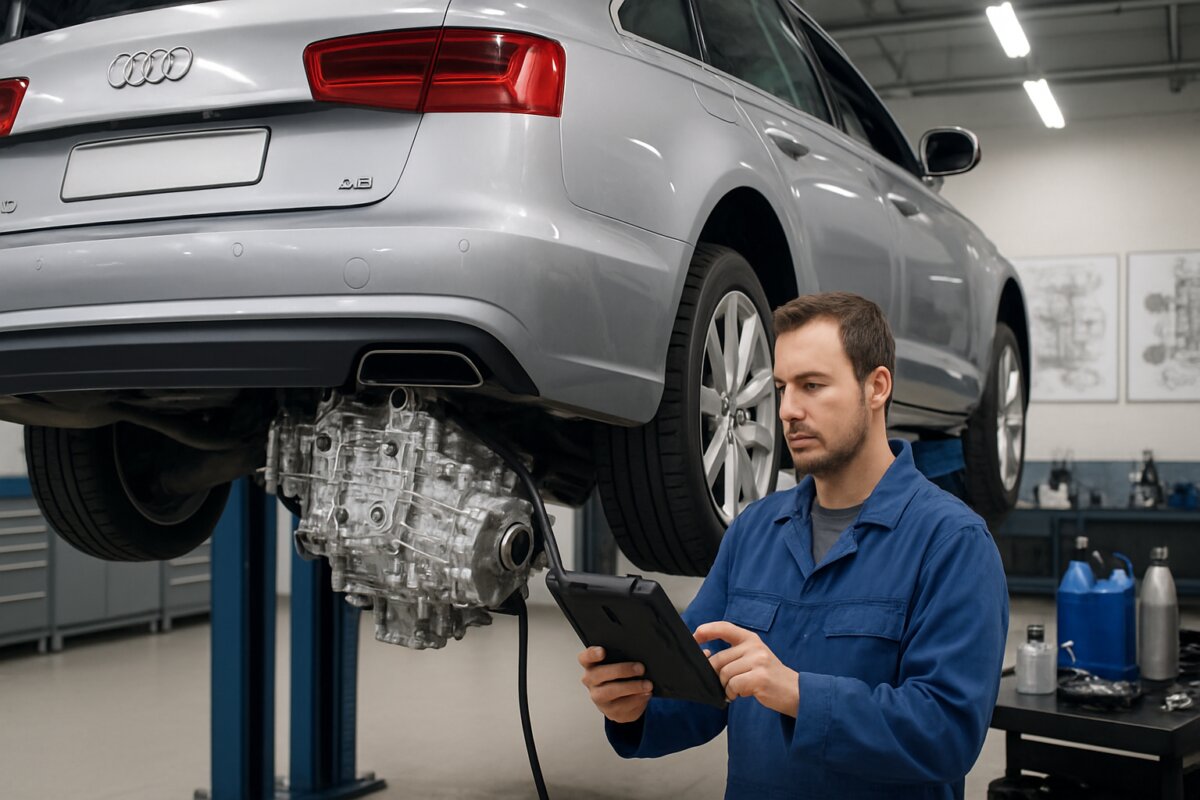
The Audi A6 stands as a sophisticated executive saloon that combines German engineering with luxury. However, owners frequently encounter issues with the automatic gearbox alongside several other mechanical problems. Understanding these Audi A6 automatic gearbox problems and common faults helps you maintain your vehicle properly and avoid expensive repairs down the road.
Problem #1: Multitronic CVT transmission failures
The Multitronic continuously variable transmission found in many Audi A6 models from 2004 to 2011 represents one of the most troublesome components. This gearbox uses a chain-driven system rather than traditional gears, which makes it vulnerable to premature wear. According to our mechanics at Autopartspro, this transmission often fails between 60,000 and 100,000 miles.
The chain inside the Multitronic stretches over time, causing slipping, juddering, and complete transmission failure. The issue stems from inadequate lubrication and heat buildup during normal operation. Many owners report a distinctive whining noise before complete failure occurs.
Proper maintenance using the correct automatic transmission fluid specification is absolutely critical. Audi recommends G 052 180 A2 fluid specifically designed for CVT applications. Regular fluid changes every 40,000 miles can extend transmission life, though many dealers initially claimed the fluid was “lifetime” – a claim that proved disastrously wrong.
Replacement costs typically range from £3,000 to £5,000 for a reconditioned unit, making this one of the most expensive repairs on the Audi A6. Some specialists offer chain replacement services for around £2,000, though success rates vary considerably depending on overall transmission condition.
Problem #2: S-Tronic dual-clutch gearbox juddering
The S-Tronic dual-clutch automatic transmission fitted to newer Audi A6 models suffers from a different set of problems. This seven-speed gearbox uses two clutches to provide rapid gear changes, but these clutches wear prematurely under certain driving conditions. Urban driving with frequent stop-start traffic accelerates clutch wear significantly.
Owners typically experience juddering during low-speed manoeuvres, particularly when pulling away from standstill or during parking. The gearbox may also exhibit jerky behaviour when changing from first to second gear. Our specialists have found that the dual-mass flywheel often contributes to these symptoms, especially in vehicles approaching 80,000 miles.
Temperature plays a crucial role in S-Tronic performance. The transmission filter can become clogged with debris from worn clutch material, reducing cooling efficiency and accelerating further deterioration. Regular software updates from Audi have attempted to address these issues through modified shift patterns.
Clutch pack replacement costs between £1,500 and £2,500 including labour. The mechatronic unit, which controls gearbox operation, can also fail and requires replacement at around £1,800. Many owners have successfully claimed repairs under extended warranty due to the widespread nature of these faults.
Problem #3: Diesel particulate filter blockages
Diesel-powered Audi A6 models frequently suffer from particulate filter blockages, particularly when used primarily for short journeys. The DPF requires regular high-temperature regeneration cycles to burn off accumulated soot, which doesn’t occur during brief urban trips.
Warning lights appear on the dashboard when the DPF reaches critical saturation levels. Continued driving without addressing the problem leads to limp mode activation, where engine power becomes severely restricted. The turbocharger can suffer damage from excessive back pressure caused by a blocked DPF.
Professional DPF cleaning services cost between £150 and £300, whilst replacement units range from £800 to £1,500 depending on the specific engine variant. Regular motorway runs at sustained speeds above 50mph help prevent blockages by allowing natural regeneration to occur.
Problem #4: Air suspension compressor failures
The optional air suspension system fitted to many Audi A6 models provides excellent ride quality but proves expensive when components fail. The air compressor typically lasts between 60,000 and 100,000 miles before requiring replacement. Continuous operation causes the compressor motor to overheat and eventually seize.
Symptoms include the vehicle sagging at one corner, error messages about suspension malfunction, and excessive compressor running time. The air springs themselves can develop leaks, though these failures are less common than compressor problems. Moisture entering the system accelerates component deterioration.
Replacing the air suspension compressor costs approximately £600 to £900 including parts and labour. Converting to conventional coil springs represents a permanent solution, with complete conversion kits available from £800. This eliminates future air suspension problems entirely, though some handling characteristics change as a result.
Problem #5: Timing chain tensioner wear
The 2.0-litre and 3.0-litre petrol engines in the Audi A6 use timing chains rather than cambelt systems, which many buyers assume means reduced maintenance. However, the chain tensioner can fail prematurely, allowing the chain to jump or break. This results in catastrophic engine damage with bent valves and damaged pistons.
A distinctive rattling noise from the engine bay during cold starts indicates tensioner wear. The noise typically disappears after the engine warms up and oil pressure increases. Ignoring this warning sign leads to complete engine failure, often whilst driving at motorway speeds.
Preventative replacement of the timing chain, tensioner, and guides costs between £800 and £1,400 depending on engine type. Engine rebuilds following chain failure easily exceed £4,000, making early intervention financially sensible. Regular engine oil changes using the correct specification help prolong tensioner life by maintaining proper hydraulic pressure.
Warning signs your car has a problem
Recognising early symptoms allows you to address Audi A6 problems before they escalate into expensive repairs. Pay attention to these indicators that suggest developing issues:
- Transmission behaviour: Hesitation during gear changes, slipping between ratios, unusual whining or grinding noises, or jerky movements at low speeds all indicate gearbox problems requiring immediate investigation.
- Engine performance: Loss of power, excessive smoke from the exhaust, rattling noises during starting, or illuminated warning lights on the dashboard demand professional diagnosis to prevent further damage.
- Suspension concerns: Uneven ride height, excessive body roll during cornering, or constant compressor operation suggest air suspension faults that will worsen without intervention.
Professional tip: Document any unusual symptoms with video recordings showing the problem. This helps mechanics diagnose issues more quickly and provides evidence for warranty claims if applicable.
How to fix the problems
| Problem | DIY Solution | Professional Solution | Estimated Cost |
|---|---|---|---|
| Multitronic CVT failure | Regular fluid changes only | Complete transmission replacement or rebuild | £2,000-£5,000 |
| S-Tronic juddering | Software updates via dealer | Clutch pack and flywheel replacement | £1,500-£2,800 |
| DPF blockage | Extended motorway driving for regeneration | Professional cleaning or replacement | £150-£1,500 |
| Air suspension failure | None – specialist equipment required | Compressor or spring replacement | £600-£1,200 |
| Timing chain wear | None – internal engine work | Chain, tensioner, and guide replacement | £800-£1,400 |
Additional maintenance considerations include regular inspection of engine mounts, which can deteriorate and cause excessive vibration. The water pump should be replaced preventatively around 80,000 miles to avoid overheating damage.
Preventative maintenance schedule
| Service Interval | Required Actions | Critical Components |
|---|---|---|
| Every 10,000 miles | Oil and filter change, visual inspection | Oil filter, air filter |
| Every 20,000 miles | Brake fluid check, tyre rotation | Brake fluid, brake pads |
| Every 40,000 miles | Transmission fluid change, spark plug replacement | Spark plugs, transmission fluid |
| Every 80,000 miles | Timing chain inspection, coolant system service | Timing components, thermostat |
Expert advice: Always use genuine Audi-approved parts or high-quality OEM equivalents when servicing your A6. Cheaper alternatives often fail prematurely and can void remaining warranty coverage.
When to see a mechanic
Certain symptoms require immediate professional attention rather than delayed investigation. Any transmission-related problems warrant urgent diagnosis, as continued driving can transform a repairable fault into complete system failure. Unusual noises from the engine bay, particularly rattling or knocking sounds, suggest internal damage that worsens rapidly.
Dashboard warning lights should never be ignored, especially those relating to engine management, transmission, or brake systems. Modern diagnostic equipment can read fault codes stored in various control units throughout the vehicle, providing precise information about developing problems.
Choose a mechanic with specific Audi experience and access to manufacturer diagnostic software. Independent specialists often provide better value than main dealers whilst maintaining comparable expertise. Request detailed written estimates before authorising major repairs, and always ask to see removed parts to verify the work was actually necessary.
Suspension problems require prompt attention when they affect vehicle stability or handling characteristics. Air suspension faults can cause dangerous ride height variations that compromise braking performance. Similarly, steering components like tie rod ends and ball joints wear gradually but fail suddenly, creating serious safety risks.
Frequently asked questions (FAQ)
How long does an Audi A6 automatic gearbox typically last?
Multitronic CVT transmissions often fail between 60,000 and 100,000 miles with standard maintenance. S-Tronic dual-clutch units generally last 100,000 to 150,000 miles if properly serviced, though clutch wear varies significantly based on driving style and conditions.
Can I drive my Audi A6 with a failing transmission?
Continuing to drive with transmission problems causes additional damage and increases repair costs substantially. Slipping gears create excessive heat that destroys internal components. Stop driving immediately when you notice severe juddering, complete loss of drive, or burning smells.
What causes the DPF to block on diesel Audi A6 models?
Short journeys prevent the exhaust system reaching temperatures needed for regeneration cycles. Soot accumulates faster than it burns off during brief urban trips. Regular motorway runs at sustained speeds allow natural regeneration, preventing blockages from developing over time.
Is it worth repairing or replacing a failed Multitronic transmission?
Replacement with a reconditioned unit costs £3,000 to £5,000, which exceeds the value of many older A6 models. Consider the overall vehicle condition and your planned ownership duration. Sometimes selling the car as non-runner represents better financial value.
How often should I change the transmission fluid in my Audi A6?
Despite Audi’s initial “lifetime fluid” claims, change transmission fluid every 40,000 miles for CVT systems and every 60,000 miles for S-Tronic gearboxes. This single preventative measure significantly extends transmission life and prevents many common failures.
Final recommendation
The Audi A6 remains an excellent executive saloon when properly maintained, but automatic gearbox problems represent the most significant ownership concern. Our mechanics at Autopartspro strongly recommend purchasing extended warranty coverage for any A6 with automatic transmission, as repair costs frequently exceed £2,000. Regular servicing using correct fluid specifications prevents many common failures.
Budget at least £1,000 annually for maintenance beyond routine servicing, especially for vehicles exceeding 60,000 miles. The sophisticated technology throughout the A6 demands proper care and genuine replacement parts. When problems do arise, address them immediately rather than hoping they’ll resolve themselves. Early intervention almost always costs less than delayed repairs.
Consider avoiding models with Multitronic CVT transmissions entirely, as these gearboxes have proven fundamentally unreliable regardless of maintenance standards. The S-Tronic dual-clutch and conventional automatic variants offer significantly better long-term reliability. Always obtain a comprehensive pre-purchase inspection focusing on transmission condition before buying any used Audi A6.

 Loading...