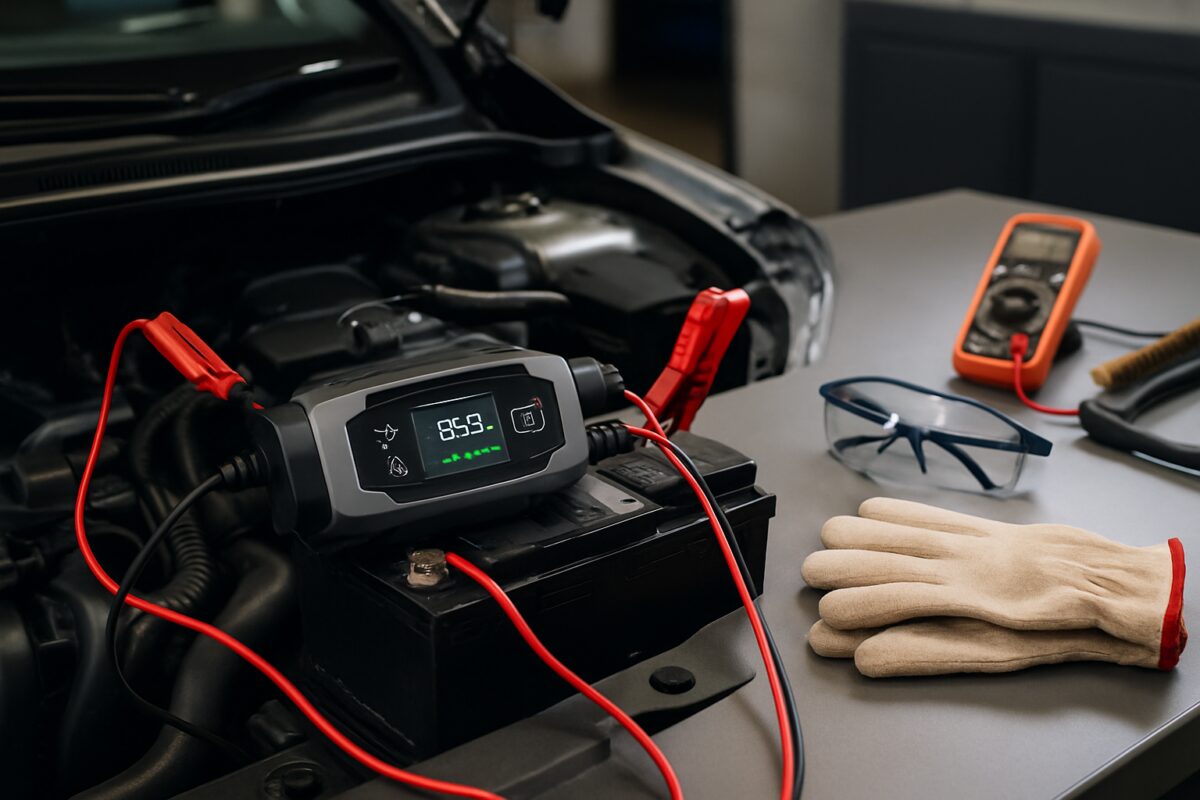
To charge a car battery effectively, you’ll need a suitable charger (trickle, smart, or jump starter), safety equipment, and 2-24 hours depending on the charging method and battery condition. The process involves connecting the charger correctly, selecting appropriate amperage, and monitoring progress until the battery reaches full charge.
Tools & parts required
Having the right equipment makes battery charging safe and efficient. The tools you select will determine both charging speed and safety levels.
Parts needed:
- Car battery (if replacement required)
- Battery terminal cleaner or baking soda
- Petroleum jelly or terminal protectant
- Distilled water (for serviceable batteries)
Tools required:
- Battery charger (smart charger recommended)
- Jump leads or booster cables
- Multimeter or voltmeter
- Wire brush or terminal cleaning tool
- Safety gloves and eye protection
- Spanner set for terminal removal
Always verify your charger’s compatibility with your battery type (lead-acid, AGM, or gel) to prevent damage and ensure optimal charging performance.
Safety precautions
Battery charging involves electrical current and potentially hazardous gases, making safety paramount throughout the process.
Work in a well-ventilated area to prevent hydrogen gas accumulation. Remove all jewellery and metal objects before starting. Ensure the vehicle is parked on level ground with the handbrake engaged. Keep sparks, flames, and cigarettes away from the battery area.
Wear safety gloves and eye protection throughout the procedure. Check for cracks or damage to the battery casing before charging. If electrolyte has leaked, clean the area thoroughly before proceeding.
Step-by-step charging instructions
Follow this systematic approach to charge your battery safely and effectively.
Step 1: Prepare the battery
Switch off the engine and remove keys from the ignition. Open the bonnet and locate the battery. Clean the terminals using a wire brush to remove corrosion. Check electrolyte levels in serviceable batteries and top up with distilled water if necessary.
Step 2: Connect the charger
Attach the positive (red) charger lead to the positive terminal first. Connect the negative (black) lead to a clean earth point away from the battery or to the negative terminal. Ensure connections are tight and secure.
Step 3: Select charging settings
Choose the appropriate amperage for your battery size. For most cars, 2-10 amps provides safe charging. Select the correct battery type on smart chargers. Modern chargers automatically adjust voltage and current as needed.
Professional mechanics at AutoPartsPro recommend using smart chargers with automatic shut-off features to prevent overcharging and extend battery life significantly.
Step 4: Monitor charging progress
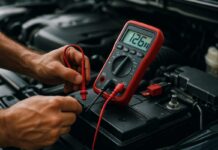
Smart chargers display charging status and completion time. Traditional chargers require periodic voltage checks with a multimeter. A fully charged 12V battery should read 12.6-12.8 volts when disconnected from the charger.
Step 5: Complete the charging process
Once charging is complete, switch off the charger before disconnecting leads. Remove the negative lead first, then the positive. Apply petroleum jelly to terminals to prevent future corrosion.
Common mistakes to avoid
Understanding frequent charging errors helps prevent damage and safety hazards.
Never attempt to charge a frozen battery, as this can cause it to explode. Avoid overcharging by using smart chargers or timing traditional chargers carefully. Don’t charge a damaged or cracked battery casing.
Connecting leads incorrectly (reverse polarity) can damage electrical systems. Always connect positive first when attaching, and remove negative first when disconnecting. Using incorrect amperage settings can damage battery cells or create safety hazards.
Charging in poorly ventilated areas allows hydrogen gas to accumulate, creating explosion risks. Regular battery health checks prevent unexpected failures.
How long does battery charging take?
Charging duration depends on battery capacity, current charge level, and charger amperage.
Trickle chargers (1-2 amps) require 12-24 hours for complete charging but provide gentler treatment for battery longevity. Standard chargers (6-10 amps) typically complete charging in 4-8 hours. Fast chargers (15+ amps) can achieve 80% charge in 2-4 hours but may reduce battery lifespan if used frequently.
A completely flat battery needs longer charging times than a partially discharged one. Temperature affects charging speed – cold batteries charge more slowly than warm ones. Smart chargers automatically adjust timing based on battery condition.
Alternative charging methods
Several charging options suit different situations and requirements.
Jump starting provides immediate power but doesn’t fully charge the battery. This method works for emergencies when you need to start the engine quickly. The alternator then charges the battery whilst driving.
Solar battery maintainers work well for vehicles stored long-term. These low-power units prevent discharge without overcharging. Alternator systems charge batteries whilst driving, typically requiring 30-60 minutes of driving to restore normal charge levels.
Professional charging services offer rapid charging using high-capacity equipment. This option suits situations where time is critical or when dealing with severely discharged batteries.
Exploring car battery maintenance helps understand optimal charging practices for different battery types.
Maintenance tips for longer battery life
Proper care significantly extends battery lifespan and reduces charging frequency.
Clean terminals monthly to prevent corrosion buildup. Check electrolyte levels in serviceable batteries and top up as needed. Test battery voltage regularly using a multimeter – healthy batteries should read above 12.4V when the engine is off.
Avoid leaving lights or accessories on when the engine isn’t running. Short journeys don’t allow sufficient alternator charging time, so consider using a battery maintainer for vehicles used infrequently.
Extreme temperatures affect battery performance. Park in garages during winter or use battery blankets in very cold conditions. Replace batteries showing signs of weakness before complete failure occurs.
Understanding routine maintenance prevents many battery-related issues from developing.
When to consider battery replacement
Recognising replacement indicators prevents unexpected breakdowns and charging difficulties.
Batteries typically last 3-5 years depending on usage and conditions. Slow cranking, dim lights, or dashboard warning lights indicate declining battery health. If charging becomes frequent or the battery won’t hold charge overnight, replacement is necessary.
Load testing at service centres determines actual battery capacity under working conditions. Professional testing provides accurate assessment of remaining battery life and performance capabilities.
Swollen battery casings, visible corrosion, or electrolyte leaks indicate immediate replacement requirements. Modern vehicles with numerous electronic systems demand reliable battery performance for proper operation.
Learning about charging problems helps identify when professional assistance becomes necessary.
Frequently asked questions
How often should I charge my car battery?
Most batteries only need charging when discharged or during long storage periods. Regular driving maintains adequate charge levels through the alternator system.
Can I leave a battery charger connected overnight?
Smart chargers with automatic shut-off can remain connected safely. Traditional chargers should not be left unattended for extended periods to prevent overcharging.
Is it safe to charge a battery whilst it’s still in the car?
Yes, but ensure good ventilation and avoid sparks near the battery. Disconnecting the battery provides additional safety but isn’t always necessary with modern chargers.
What voltage indicates a fully charged battery?
A healthy 12V battery should read 12.6-12.8 volts when fully charged and disconnected from any charging source for several hours.
Can cold weather affect battery charging?
Yes, cold temperatures slow chemical reactions in batteries, extending charging times and reducing overall capacity. Warm batteries charge more efficiently than cold ones.
Mastering proper battery charging techniques ensures reliable vehicle operation and extends battery lifespan considerably. Using appropriate equipment and following safety procedures prevents damage whilst maintaining optimal electrical system performance. Investing in quality battery components provides long-term value and dependable starting power.

 Loading...