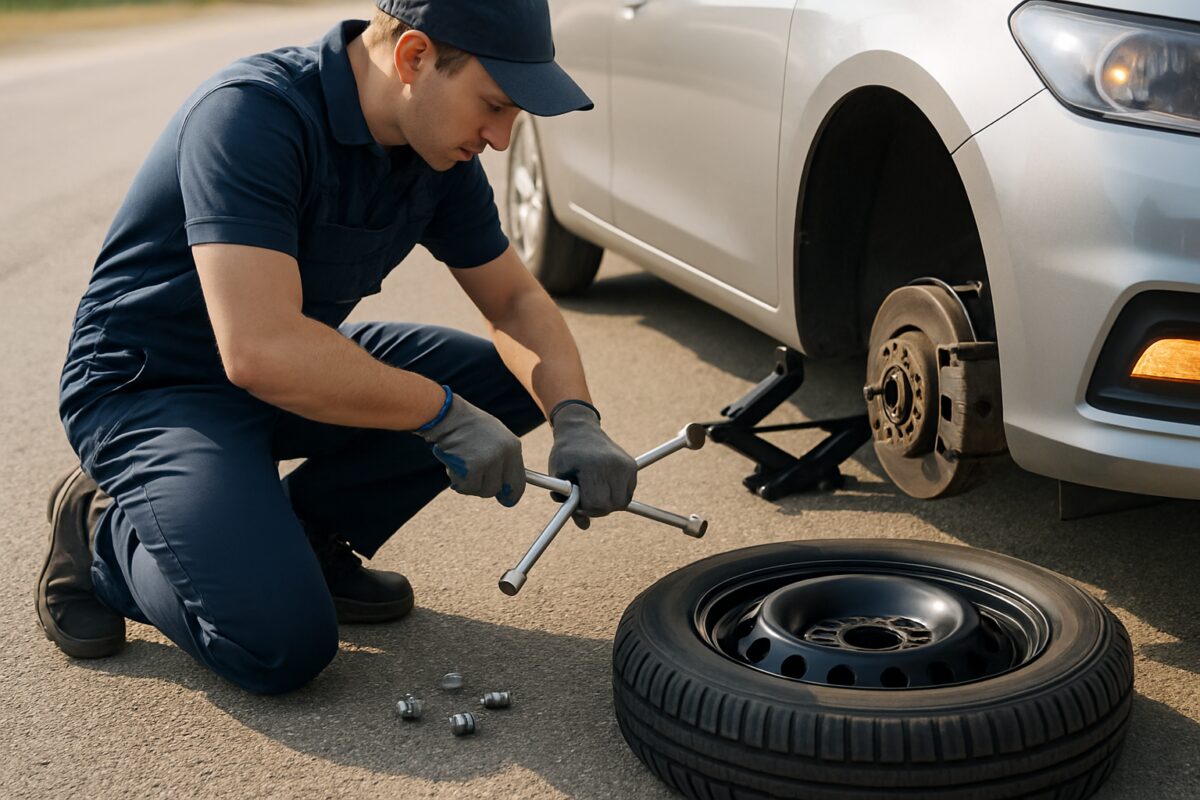
Changing a car tyre requires a spare tyre, jack, lug wrench, and wheel chock. The process involves loosening lug nuts, lifting the vehicle, removing the flat tyre, installing the spare, and lowering the car. Always ensure your spare tyre is properly inflated and the correct size before beginning.
Tools & parts required
Having the right equipment makes tyre changing straightforward and safe. These essential items should always be in your vehicle.
Parts needed:
- Spare tyre (properly inflated)
- Valve caps
- Tyre pressure gauge
Tools required:
- Car jack
- Lug wrench
- Wheel chock
- Work gloves
- Reflective warning triangle
- Torch or mobile phone light
Always check your spare tyre pressure monthly. A flat spare tyre when you need it most can leave you stranded.
Safety precautions
Safety comes first when changing tyres. Poor preparation can lead to serious accidents or injuries.
Park on level, solid ground away from traffic. Turn on hazard lights and engage the parking brake. Place reflective warning triangles 50 metres behind your vehicle. Ensure the engine is off and remove keys from the ignition.
Never change a tyre on a motorway hard shoulder unless absolutely necessary. Call breakdown services instead. Wear high-visibility clothing if available and keep passengers away from the roadside.
Step-by-step instructions
Follow these steps carefully to change your tyre safely and efficiently.
Step 1: Prepare the vehicle
Find a safe, level location away from traffic. Apply the parking brake and place wheel chocks behind the tyres (opposite end from the flat). Locate your spare tyre, jack, and lug wrench. Remove the hub bearing cover or wheel trim if present.
Step 2: Loosen the lug nuts
Using the lug wrench, loosen the lug nuts by turning anticlockwise. Don’t remove them completely yet – just break their grip. The tyre’s weight on the ground provides resistance, making this step easier before lifting the vehicle.
Step 3: Raise the vehicle
Position the jack under the vehicle’s designated jacking point (check your owner’s manual). Raise the vehicle until the flat tyre is completely off the ground. Ensure the jack is stable and the vehicle is secure before proceeding.
Step 4: Remove the flat tyre
Fully remove the loosened lug nuts and place them in a safe location where they won’t roll away. Grip the tyre firmly and pull it straight towards you to remove it from the wheel hub. Place the flat tyre under the vehicle as an additional safety measure.
Step 5: Install the spare tyre
Align the spare tyre with the wheel bolts and push it onto the hub. Replace the lug nuts and tighten them by hand initially. Using the lug wrench, tighten the nuts in a star or crisscross pattern to ensure even pressure distribution.
Step 6: Lower the vehicle and final checks
Lower the jack until the spare tyre touches the ground but still supports some vehicle weight. Fully tighten the lug nuts with the lug wrench using the star pattern. Lower the vehicle completely and remove the jack. Give the lug nuts a final check to ensure they’re properly secured.
AutoPartsPro mechanics recommend checking lug nut torque with a proper torque wrench within 50 miles of changing a tyre. Hand-tightening may not achieve the manufacturer’s specified torque.
Common mistakes to avoid
These frequent errors can cause dangerous situations or damage your vehicle.
Never attempt to change a tyre on an unstable surface or steep incline. Avoid over-tightening lug nuts, which can damage threads or make future removal difficult. Don’t forget to check your spare tyre pressure before driving – many spare tyres lose pressure over time.
Failing to use wheel chocks can result in the vehicle rolling, potentially causing serious injury. Always secure the opposite end of the vehicle from where you’re working.
Mixing different tyre types or sizes can affect handling and safety systems like ABS. Ensure your spare matches the remaining tyres’ specifications as closely as possible.
When should you replace your spare tyre?
Spare tyres require regular inspection and maintenance like standard tyres.
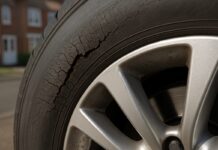
Check your spare tyre monthly for proper inflation, cracks, or signs of deterioration. Most temporary spare tyres (space-savers) are designed for emergency use only and should be replaced with a full-size tyre as soon as possible.
Full-size spare tyres age similarly to regular tyres. Replace them every six to eight years regardless of tread depth. If your spare has been used, inspect it thoroughly for damage and consider professional assessment.
Temperature extremes in your boot can affect tyre rubber. Store your spare properly and avoid placing heavy objects on top of it.
Related maintenance you can do at the same time
Tyre changes present opportunities for additional vehicle maintenance checks.
Inspect your brake pads and discs while the wheel is removed. Look for excessive wear, scoring, or unusual damage patterns. Check the condition of your shock absorber boots and suspension components for leaks or damage.
Examine the remaining tyres for even wear patterns. Uneven wear might indicate alignment issues, improper inflation, or suspension problems requiring attention. Consider rotating your tyres if they show uneven wear patterns.
Clean the wheel bolt threads and apply a thin layer of anti-seize compound to prevent corrosion and ensure easier future removal.
Frequently asked questions
How long can I drive on a temporary spare tyre?
Temporary spare tyres are designed for short distances only, typically 50 miles maximum at speeds under 50 mph.
Can I repair a punctured tyre myself?
Simple punctures in the tread area can be temporarily repaired with tyre repair kits, but professional repair is recommended.
What should I do if my lug nuts are too tight?
Use your body weight on the lug wrench or call roadside assistance. Never use extensions that might damage components.
How often should I check my spare tyre pressure?
Check spare tyre pressure monthly, just like your regular tyres. Proper inflation ensures it’s ready when needed.
Is it safe to drive with different tyre brands?
While not ideal, different brands are acceptable if they match size specifications and tread depth closely enough.
Mastering tyre changing skills provides confidence and independence on the road. Regular practice in safe conditions helps build familiarity with your vehicle’s specific requirements. Quality tools and properly maintained spare tyres ensure you’re prepared for roadside emergencies, keeping you moving safely when unexpected punctures occur.

 Loading...