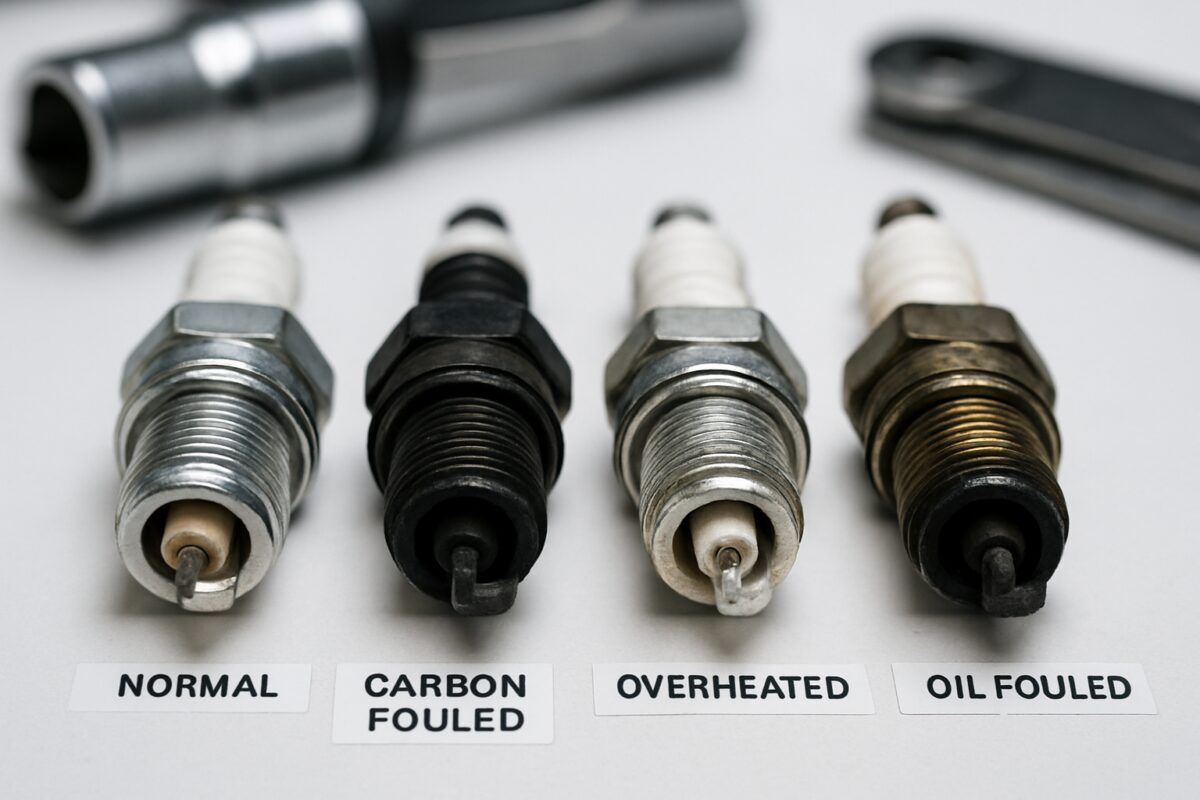
Spark plug colour serves as your engine’s diagnostic tool, revealing critical information about combustion health, fuel mixture quality, and potential mechanical issues. A properly functioning spark plug displays a light tan or grey electrode with minimal carbon buildup, whilst black, white, or oil-fouled plugs indicate specific engine problems requiring immediate attention.
Understanding spark plug colour interpretation empowers UK drivers to catch engine problems early, potentially saving hundreds in repair costs. Our mechanics at AutoPartsPro have diagnosed thousands of engine issues simply by examining spark plug conditions during routine maintenance.
What spark plug colours tell you about your engine
The colour and condition of your spark plug electrodes provide a window into your engine’s combustion chamber. Each colour pattern corresponds to specific operating conditions or potential problems.
Normal spark plug colour appears as light tan to grey deposits on the electrode tip. This indicates proper air-fuel mixture, correct ignition timing, and healthy engine operation. The porcelain insulator should be clean with minimal carbon buildup.
Black carbon deposits suggest an overly rich fuel mixture or incomplete combustion. This condition often results from clogged air filters, faulty fuel injectors, or incorrect carburetor settings in older vehicles.
White or light grey electrodes typically indicate lean running conditions. The engine receives insufficient fuel relative to air, potentially causing overheating and serious engine damage if left uncorrected.
Common spark plug colour meanings
Different colours reveal specific engine conditions that require varying levels of attention. Recognising these patterns helps identify problems before they become costly repairs.
Normal operation colours
• Light tan deposits: Ideal combustion with proper air-fuel mixture
• Grey electrodes: Normal wear from regular driving conditions
• Minimal carbon buildup: Good fuel quality and efficient combustion
• Clean porcelain: Proper engine temperature and timing
Problem indication colours
• Black sooty deposits: Rich mixture or incomplete combustion
• Wet black fouling: Oil entering combustion chamber
• White chalky deposits: Lean mixture or overheating
• Orange/red colouring: Iron additives in fuel or coolant contamination
How to check spark plug colour safely
Proper spark plug inspection requires specific tools and techniques to ensure accurate diagnosis. Always allow the engine to cool completely before beginning any inspection work.
Required tools include a spark plug socket, ratchet handle, extension bar, and gap gauge. A clean work area with adequate lighting ensures you can properly assess plug condition.
Remove spark plugs individually, keeping them in order according to cylinder number. This helps identify which cylinders may have specific issues requiring targeted repairs.
Step-by-step inspection process
1. Allow engine to cool for at least 30 minutes after operation
2. Remove ignition coils or leads from each spark plug
3. Use compressed air to clean debris from plug wells
4. Carefully unscrew each plug using proper socket size
5. Examine electrode colour under good lighting conditions
Document your findings with photographs if possible. This creates a reference for future inspections and helps communicate issues to your mechanic if professional diagnosis becomes necessary.
Reading different spark plug conditions
Beyond colour analysis, spark plug condition assessment includes electrode wear patterns, gap measurements, and overall physical condition. Each aspect provides valuable diagnostic information.
| Condition | Colour | Likely Cause | Action Required |
|---|---|---|---|
| Normal Wear | Light tan/grey | Proper operation | Replace at service interval |
| Carbon Fouling | Black sooty | Rich mixture | Check air filter, injectors |
| Oil Fouling | Wet black | Oil leakage | Engine inspection needed |
| Overheating | White/blistered | Lean mixture/timing | Immediate attention required |
Electrode erosion patterns indicate ignition system health. Rounded electrodes suggest normal wear, whilst severely worn or melted tips point to overheating or incorrect heat range selection.
Gap measurement remains crucial for proper ignition. Worn plugs often exhibit increased gaps that reduce ignition efficiency and cause misfiring under load conditions.
Professional diagnosis insights from our mechanics
Our experienced technicians at AutoPartsPro emphasise that spark plug colour diagnosis works best when combined with other engine performance indicators. Relying solely on visual inspection may miss underlying issues.
Always check spark plugs after a motorway drive rather than city driving. Highway conditions provide the most accurate representation of combustion quality and plug performance under normal operating temperatures.
Multiple cylinder analysis proves more valuable than single plug inspection. Consistent colour patterns across all cylinders suggest system-wide issues, whilst individual cylinder problems indicate localised faults.
Engine management system codes often correlate with spark plug conditions. Modern vehicles with diagnostic capabilities can pinpoint specific cylinders experiencing combustion problems before visual symptoms become apparent.
When spark plug colour indicates serious problems
Certain colour combinations demand immediate professional attention to prevent catastrophic engine damage. Understanding these warning signs helps prioritise repair urgency.
White or blistered electrodes indicate dangerous overheating conditions. Continued operation risks piston damage, valve burning, or complete engine seizure. Stop driving immediately and seek professional diagnosis.
Heavy oil fouling suggests worn piston rings, valve seals, or cylinder head problems. Whilst not immediately catastrophic, these conditions worsen rapidly without proper repairs.
Warning signs requiring immediate action
1. Melted or severely eroded electrodes
2. Cracked porcelain insulators
3. Heavy carbon deposits with rough idle
4. Metallic particles embedded in deposits
5. Coolant traces on plug threads
| Symptom | Urgency Level | Potential Damage | Estimated Repair Cost |
|---|---|---|---|
| White/blistered plugs | Critical | Engine seizure | £2000-£5000+ |
| Oil fouling | High | Ring/seal wear | £800-£2500 |
| Carbon fouling | Moderate | Performance loss | £150-£400 |
| Normal wear | Low | Reduced efficiency | £80-£150 |
Coolant contamination creates distinctive white deposits that differ from lean running conditions. This indicates head gasket failure or cracked cylinder head requiring expensive repairs.
Preventing spark plug problems through maintenance
Regular maintenance prevents most spark plug colour issues whilst extending engine life and maintaining optimal performance. Simple preventive measures save significant repair costs.
Quality fuel selection impacts combustion cleanliness and deposit formation. Premium fuels contain detergents that help maintain clean combustion chambers and reduce carbon buildup on electrodes.
Air filter replacement ensures proper air-fuel mixture ratios. Clogged filters create rich running conditions that lead to carbon fouling and premature spark plug failure.
Essential maintenance tasks
• Replace air filters every 12,000-15,000 miles
• Use quality fuel from reputable suppliers
• Service ignition systems according to manufacturer schedules
• Address engine problems promptly before they worsen
Professional engine diagnostics can identify problems before spark plug damage occurs. Modern scan tools detect misfires, fuel trim issues, and ignition timing problems that affect plug condition.
For additional guidance on engine maintenance, our comprehensive guide on changing spark plugs provides detailed instructions for UK drivers.
Choosing replacement spark plugs
Selecting appropriate replacement plugs ensures optimal engine performance and prevents colour-related diagnostic issues. Heat range selection proves critical for proper electrode temperatures.
Manufacturer specifications provide the baseline for spark plug selection. However, modified engines or extreme driving conditions may require different heat ranges or electrode materials.
Platinum and iridium plugs offer extended service life and consistent performance compared to conventional copper core plugs. These premium options justify their higher cost through reduced replacement frequency.
Factors affecting plug selection
1. Engine compression ratio and modifications
2. Driving conditions and typical journey types
3. Fuel quality and octane requirements
Our comprehensive maintenance guide covers additional aspects of keeping your engine running optimally.
Understanding spark plug colour diagnosis empowers you to maintain your vehicle proactively whilst identifying potential problems before they become expensive repairs. Regular inspection combined with proper maintenance ensures reliable engine performance and optimal fuel efficiency for years to come.
Frequently Asked Questions (FAQ)
What colour should a healthy spark plug be?
A healthy spark plug displays light tan to grey deposits on the electrode with minimal carbon buildup and clean porcelain insulator.
Why are my spark plugs black and sooty?
Black sooty plugs indicate rich fuel mixture from clogged air filters, faulty injectors, or carburetor problems requiring system cleaning.
Can white spark plugs damage my engine?
Yes, white plugs indicate dangerous overheating that can cause piston damage, valve burning, or complete engine seizure without immediate repairs.
How often should I check spark plug colour?
Check spark plug condition every 12,000 miles or during routine servicing to identify problems before they cause expensive damage.
What causes oil fouling on spark plugs?
Oil fouling results from worn piston rings, valve seals, or cylinder head problems allowing oil into combustion chambers.

 Loading...