When your car battery not charging, it’s more than an inconvenience—it’s a complete halt to your daily routine. Whether you’re stuck in a supermarket car park or notice the dashboard warning lights flickering, understanding why your battery refuses to charge can save you time, money, and frustration. Let’s examine the most common culprits behind charging failures and what you can actually do about them.
Faulty alternator causing charging problems
The alternator sits at the heart of your vehicle’s electrical charging system. This component converts mechanical energy from the engine into electrical current, replenishing the battery whilst you drive. When it fails, your battery quickly depletes its reserves.
A failing generator often announces itself through dimming headlamps, flickering dashboard lights, or strange whining noises from under the bonnet. According to our mechanics at AutoPartsPro, alternators typically develop issues between 80,000 and 150,000 miles, though harsh driving conditions can accelerate wear considerably.
The diodes inside the alternator can fail individually, creating intermittent charging issues that confuse many drivers. You might notice the battery charges fine one day but fails the next. Worn carbon brushes within the unit represent another frequent failure point, gradually reducing charging efficiency before complete breakdown occurs.
Temperature extremes common in British weather patterns stress alternator components. The voltage regulator, which maintains consistent output regardless of engine speed, frequently develops faults that either undercharge or overcharge your battery. Both scenarios damage the battery and prevent proper charging cycles.
Professional tip: Before replacing your alternator, have a qualified technician test the alternator regulator separately. Sometimes this smaller, less expensive component is the actual culprit, saving you hundreds in unnecessary repairs.
Corroded or loose battery terminals
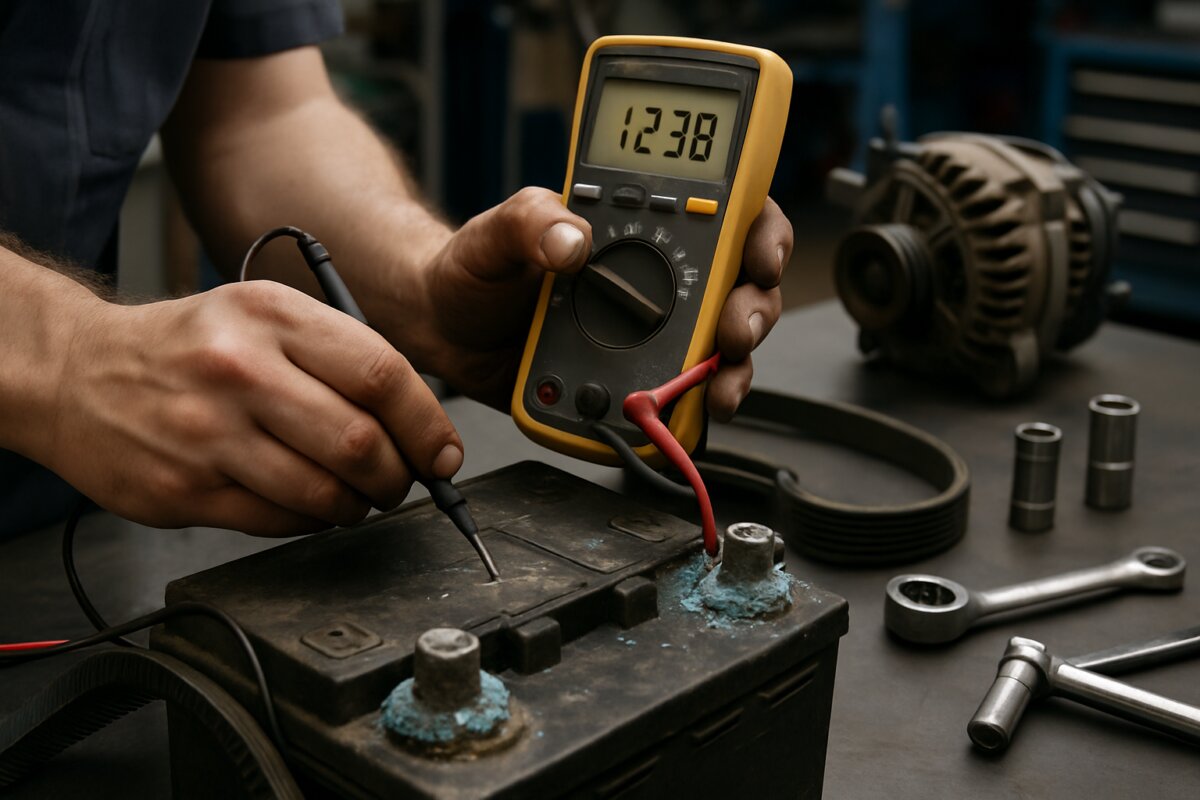
Battery terminal corrosion represents one of the simplest yet most overlooked charging problems. That white, blue, or greenish crusty buildup around your terminals isn’t just unsightly—it actively prevents electrical current from flowing between the charging system and the battery.
Corrosion develops when battery acid vapours escape from the vent caps and react with the metal terminals. In the UK’s damp climate, this process accelerates dramatically. Even minor corrosion creates significant resistance, meaning your alternator might work perfectly whilst your battery receives little to no charge.
Loose terminal connections cause similar problems. The constant vibration from driving gradually loosens the clamps, creating gaps in the electrical circuit. You might experience intermittent starting problems or notice the connection working fine when you wiggle the terminals—classic signs of loose connections rather than charging system failure.
Our specialists at AutoPartsPro emphasise that terminal issues often masquerade as more serious problems. Many drivers replace perfectly good alternators or batteries when five minutes of terminal cleaning would have solved everything. Check the earth strap connection to the chassis as well, since poor earthing creates identical symptoms.
Modern vehicles with complex electronics are particularly sensitive to terminal resistance. Even minor corrosion can trigger dashboard warning lights and error codes that suggest expensive component failures when the actual fix costs nothing.
Worn or broken serpentine belt
The v-ribbed belt connects your engine’s crankshaft to the alternator pulley, physically driving the charging system. Without this belt spinning the alternator, your battery receives no charge whatsoever, regardless of how long you drive.
Belt degradation happens gradually. The rubber compound hardens with age and heat exposure, developing cracks along the ribbed inner surface. These cracks reduce grip on the pulleys, causing the belt to slip rather than firmly drive the alternator. You’ll often hear a distinctive squealing noise, especially during cold starts or when electrical demand increases.
Complete belt failure leaves you stranded immediately. The alternator stops generating electricity, the battery warning light illuminates, and you’re running on battery reserves alone. In modern vehicles with electric power steering and brake servos, this situation becomes dangerous quickly as these systems begin failing.
Belt tension matters enormously. A loose belt slips under load, preventing the alternator from reaching optimal charging speeds. Too tight, and you’ll wear out the alternator bearings prematurely. The tensioner mechanism maintains proper tension automatically, but these components wear out and require periodic replacement.
Professional tip: Inspect your serpentine belt every 30,000 miles for cracks, glazing, or fraying. Replace it proactively rather than waiting for failure—belt replacement costs a fraction of the alternator damage a snapped belt can cause.
Dead or damaged battery cells
Sometimes the battery itself prevents charging. Lead-acid batteries contain six individual cells, each producing roughly 2.1 volts. When one or more cells fail internally, the battery cannot accept or hold a proper charge, no matter how well your alternator functions.
Internal cell damage occurs through several mechanisms. Sulphation builds up on the lead plates when batteries sit discharged for extended periods, preventing chemical reactions necessary for charging. Physical damage from vibration or impact can crack the internal plates or separators, creating short circuits within the battery case.
Deep discharge cycles significantly shorten battery life. If you’ve accidentally left interior lights on overnight or experienced repeated flat battery incidents, the cumulative damage makes the battery increasingly resistant to charging. Our technicians regularly see batteries that test fine under load but refuse to accept charge—a telltale sign of internal cell damage.
Age represents the ultimate limiting factor. Most car batteries last between three and five years in UK conditions. Beyond this timeframe, internal degradation becomes inevitable regardless of maintenance quality. Temperature fluctuations between freezing winters and warm summers accelerate the chemical breakdown of battery components.
Modern vehicles with numerous electronic systems place greater demands on batteries than older models. Start-stop technology particularly stresses batteries, requiring specialised designs that handle frequent charge-discharge cycles. Installing a conventional battery in a start-stop vehicle guarantees premature failure and charging problems.
Warning signs your car has a problem
Recognising early warning signs prevents complete charging system failure and potential breakdowns. Your vehicle communicates problems long before catastrophic failure occurs, if you know what to watch for.
Dashboard warning lights represent the most obvious indicators. The battery symbol illuminates when the alternator isn’t charging sufficiently. Some vehicles display a specific alternator warning or show error messages on information screens. Never ignore these warnings—they indicate genuine electrical problems requiring immediate attention.
Performance symptoms reveal charging issues even without warning lights:
- Dimming headlamps when idling that brighten when you accelerate
- Flickering interior lights or instrument panel illumination
- Sluggish engine cranking, especially in cold weather
- Electrical accessories operating erratically or shutting down
- Strange smells from the battery area suggesting overcharging
- Clicking sounds when attempting to start the engine
Audio system problems often indicate charging issues. If your radio cuts out, speakers produce distortion, or the infotainment system resets randomly, insufficient voltage might be the culprit rather than the electronics themselves.
Physical inspection reveals problems invisible from the driver’s seat. Check for:
- Corrosion buildup on battery terminals or cable ends
- Swollen or bulging battery case indicating internal damage
- Loose or frayed serpentine belt with visible cracks
- Burning smell or excessive heat from alternator area
- Fluid leaks around battery mounting location
How to fix the problems
Diagnosing and repairing charging issues requires systematic testing to identify the actual faulty component. Here’s what works based on decades of experience from AutoPartsPro mechanics:
| Problem | Diagnostic method | Repair solution | Approximate cost |
|---|---|---|---|
| Corroded terminals | Visual inspection; voltage drop test | Clean with wire brush and baking soda solution; apply petroleum jelly | £0-£15 DIY |
| Loose connections | Physical wiggle test; voltage measurement | Tighten terminal clamps to manufacturer specifications | £0-£10 DIY |
| Failed alternator | Multimeter test showing below 13.5V whilst running | Replace alternator assembly; check electrical connections | £150-£450 |
| Worn serpentine belt | Visual crack inspection; tension measurement | Replace belt and inspect pulleys for damage | £40-£120 |
| Dead battery | Load test; specific gravity test of cells | Replace battery with correct specification for vehicle | £60-£200 |
| Faulty voltage regulator | Voltage test showing fluctuations or overcharging | Replace regulator unit or alternator assembly | £80-£180 |
Proper diagnostic equipment makes accurate identification possible. A quality multimeter measuring voltage at the battery terminals provides essential information. With the engine off, you should see 12.4-12.7 volts. Running voltage should read 13.5-14.5 volts, indicating proper alternator output.
Testing the starter motor draw helps differentiate battery problems from charging issues. Excessive current draw during cranking suggests internal battery degradation even if voltage readings seem acceptable.
| Measurement location | Engine off (V) | Engine running (V) | What it indicates |
|---|---|---|---|
| Battery terminals | 12.4-12.7 | 13.5-14.5 | Overall system health |
| Alternator output | N/A | 13.5-14.5 | Alternator function |
| Terminal voltage drop | 0-0.2 | 0-0.2 | Connection quality |
When replacing components, quality matters significantly. Cheap alternators often fail within months, whilst premium units last years. The same applies to batteries—investing in a quality battery appropriate for your vehicle’s specifications prevents repeated problems.
When to see a mechanic
Certain situations absolutely require professional diagnosis and repair. Whilst cleaning terminals or checking belt tension suits DIY approaches, complex electrical problems demand specialist equipment and expertise.
Persistent dashboard warning lights after basic checks indicate deeper issues. Modern vehicles use sophisticated control units that monitor charging system performance constantly. Error codes stored in the ECU pinpoint specific faults, but reading these codes requires professional diagnostic equipment.
Intermittent problems prove particularly frustrating. If your charging system works perfectly sometimes but fails unpredictably, parasitic drain testing becomes necessary. Mechanics use specialised ammeter techniques to identify which circuit draws excessive current when the vehicle sits unused.
Situations requiring immediate professional attention include:
- Burning smells from the alternator or battery area
- Smoke or sparks from electrical components
- Battery repeatedly dying despite new alternator installation
- Voltage readings exceeding 15 volts, indicating dangerous overcharging
- Complete electrical failure whilst driving
- Swollen or leaking battery showing physical damage
Complex modern vehicles integrate charging system management with engine computers, requiring specialised knowledge for proper diagnosis. Hybrid and electric vehicles demand even greater expertise due to high-voltage systems that pose serious safety risks to untrained individuals.
Our AutoPartsPro specialists recommend annual charging system inspections for vehicles over five years old. Preventative testing identifies developing problems before they leave you stranded, saving considerable money compared to emergency repairs or recovery costs.
Frequently asked questions (FAQ)
Can a car battery be too dead to charge?
Yes, batteries discharged below approximately 10.5 volts often suffer permanent damage. The alternator cannot revive deeply discharged batteries, and standard chargers may refuse to recognise them as viable.
How long should I drive to recharge a flat battery?
After jump-starting, drive for at least 30 minutes at speeds above 40 mph to provide meaningful charge. Short urban trips with frequent stops won’t sufficiently recharge a depleted battery.
Why does my battery keep dying if the alternator tests good?
Parasitic drain from faulty electronics, interior lights staying on, or alarm systems can discharge batteries overnight. Even small constant drains exceed what the alternator replenishes during short journeys.
Can I drive without an alternator belt?
Only briefly on battery reserves alone. Modern vehicles drain batteries rapidly without alternator charging. Power steering, brake servos, and cooling fans will fail, creating dangerous driving conditions within minutes.
Does battery age affect charging ability?
Absolutely. Batteries older than five years develop internal resistance and sulphation that prevents proper charging. Old batteries also self-discharge faster when the vehicle sits unused for extended periods.
Final recommendation
Car battery charging problems rarely resolve themselves and typically worsen without intervention. Based on our extensive experience at AutoPartsPro, we strongly recommend addressing warning signs immediately rather than waiting for complete failure. The inconvenience and expense of roadside breakdown far exceed preventative maintenance costs.
Start with simple checks: clean corroded terminals, verify belt condition, and measure voltage with a basic multimeter. These straightforward steps resolve the majority of charging complaints without expensive repairs. When basic checks don’t restore proper charging, professional diagnosis becomes essential to avoid replacing components unnecessarily.
Invest in quality replacement parts matched to your vehicle’s specifications. The alternator, battery, and related electrical components form an integrated system where one cheap component compromises everything else. Regular inspection every 12 months catches developing problems whilst they’re still minor, inexpensive fixes rather than emergency repairs. Remember, your charging system powers everything from ignition coils to fuel pumps—maintaining it properly ensures reliable motoring and prevents being stranded at the worst possible moment.

 Loading...