VW Golf 7 owners frequently face cooling system issues that can lead to expensive repairs if ignored. Water pump and thermostat housing leaks are amongst the most common problems affecting this popular hatchback. Understanding these issues helps you spot early warning signs and take action before major engine damage occurs.
Water pump failure and coolant leaks
The Golf 7’s water pump is a critical component that circulates coolant through your engine. When it fails, you’ll notice several telltale signs that shouldn’t be ignored.
Coolant puddles beneath your parked car often indicate pump seal deterioration. The pump’s impeller can also develop cracks, reducing circulation efficiency. Most Golf 7 water pumps start showing problems around 60,000-80,000 miles, though some fail earlier due to poor maintenance or overheating episodes.
Early symptoms include rising engine temperatures, especially during traffic or uphill driving. You might hear unusual whining noises from the engine bay, particularly when the engine is cold. The cooling fan may run more frequently as the system struggles to maintain proper temperatures.
Our AutoPartsPro specialists recommend checking your water pump annually after 50,000 miles. Preventive replacement often costs less than emergency repairs when the pump fails completely.
Thermostat housing problems and plastic degradation
The Golf 7’s plastic thermostat housing is notorious for developing cracks and leaks. This component houses the thermostat and connects multiple coolant hoses, making it vulnerable to thermal stress and pressure changes.
Plastic degradation typically occurs around mounting points and hose connections. Temperature fluctuations cause the material to become brittle over time. The housing may develop hairline cracks that gradually worsen, leading to significant coolant loss.
Common failure points include the upper and lower housing sections where they join together. O-ring seals within the housing also deteriorate, allowing coolant to seep through connection points. These leaks often start small but can quickly escalate into major cooling system failures.
Replacement housing units vary in quality, with OEM parts offering superior longevity compared to aftermarket alternatives. When replacing the housing, always renew all seals and gaskets simultaneously to prevent future leaks.
Engine overheating and related damage
Ignoring cooling system leaks can result in catastrophic engine damage. The Golf 7’s turbocharged engines are particularly sensitive to overheating, which can warp cylinder heads and damage internal components.
Initial overheating episodes may cause head gasket stress without immediate visible damage. Repeated overheating cycles weaken gasket materials and can lead to combustion gas leakage into the cooling system. This creates pressure buildup that accelerates further component failures.
Aluminium engine components expand differently than iron parts during heating cycles. This differential expansion puts additional stress on gaskets and seals throughout the engine. Once overheating damage begins, repair costs escalate rapidly beyond simple cooling system fixes.
The turbocharger also suffers from inadequate cooling, potentially requiring expensive replacement. Oil degradation accelerates under high temperatures, leading to premature wear of internal engine parts. These cascading failures make prompt cooling system repairs essential for maintaining your Golf 7’s reliability.
Warning signs your car has a problem
Recognising early symptoms helps prevent minor leaks from becoming major repairs. Watch for these key indicators:
- Sweet-smelling coolant odour inside or outside the vehicle
- Coolant level dropping without obvious external leaks
- White steam from the exhaust on warm days
- Temperature gauge reading higher than normal
- Heater producing lukewarm air instead of hot air
Visual inspection reveals additional clues about cooling system health. Check beneath the car for coloured fluid puddles, particularly after overnight parking. Green, orange, or pink stains indicate coolant leakage requiring immediate attention.
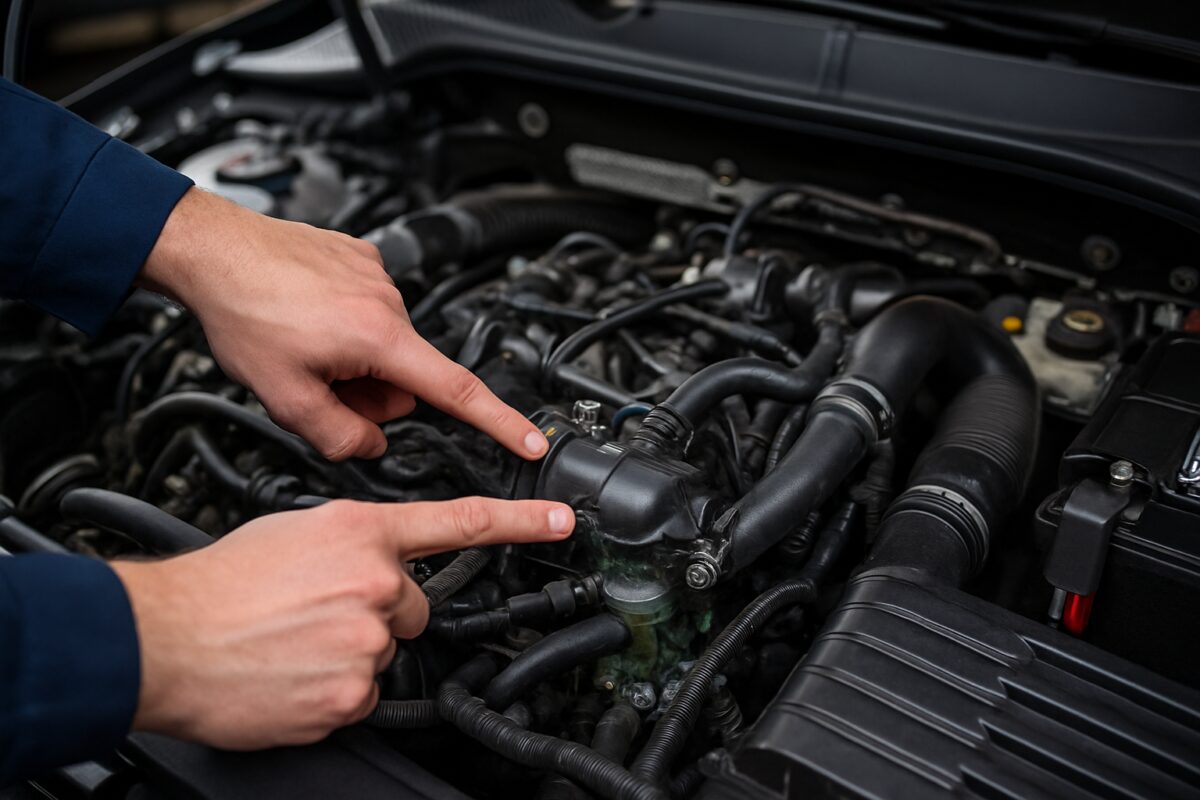
Engine bay examination may show crystallised coolant residue around pump and housing connections. This crusty buildup forms when small leaks dry repeatedly, leaving mineral deposits that indicate ongoing seepage.
How to fix the problems
Addressing cooling system issues requires systematic diagnosis and quality replacement parts. Professional repair ensures proper system bleeding and prevents air pockets that cause overheating.
| Component | Labour Time | Part Cost Range | Total Repair Cost |
|---|---|---|---|
| Water Pump | 3-4 hours | £80-150 | £250-400 |
| Thermostat Housing | 2-3 hours | £40-80 | £180-300 |
| Complete System Flush | 1-2 hours | £15-25 | £80-150 |
“Always replace the thermostat when changing the housing – it’s cheap insurance against repeat failures,” advises our senior technician with 15 years of VW experience.
Proper repair includes system pressure testing before reassembly. This identifies additional weak points that might fail shortly after main repairs. Using genuine or OEM-equivalent parts ensures compatibility and longevity.
System bleeding requires following VW’s specific procedure to prevent air pockets. Inadequate bleeding causes hotspots that accelerate component wear and reduce cooling efficiency.
When to see a mechanic
Seek professional diagnosis immediately when cooling system problems arise. Attempting DIY repairs without proper tools and knowledge often worsens the situation and increases repair costs.
Temperature warning lights demand immediate attention – continuing to drive risks severe engine damage. Pull over safely and allow the engine to cool before checking coolant levels or attempting restart.
Book a diagnostic appointment if you notice any warning signs mentioned earlier. Early intervention prevents minor leaks from escalating into expensive engine rebuilds. Professional workshops have specialised tools for pressure testing and system bleeding that ensure lasting repairs.
Choose mechanics familiar with VW systems, as cooling system bleeding procedures vary between manufacturers. Experience with Golf 7 specific issues helps identify related problems that might not be obvious to general repair shops.
Frequently Asked Questions (FAQ)
How long does a Golf 7 water pump typically last?
Most Golf 7 water pumps last 60,000-80,000 miles, though some fail earlier due to poor maintenance or overheating episodes.
Can I drive with a small coolant leak?
No, even small leaks can quickly worsen and cause engine overheating. Stop driving and seek professional diagnosis immediately.
Why does the thermostat housing crack on Golf 7s?
Plastic degradation from temperature cycles and pressure changes causes brittleness, leading to cracks around mounting points and connections.
How much does thermostat housing replacement cost?
Expect £180-300 total cost including labour, with genuine parts costing £40-80 and labour taking 2-3 hours typically.
Should I replace both components together?
Yes, replacing water pump and thermostat housing simultaneously saves labour costs and prevents repeat cooling system failures soon after.
Final recommendation
VW Golf 7 cooling system maintenance requires proactive attention to prevent expensive repairs. Regular coolant changes and system inspections help identify problems before they cause engine damage. When issues arise, choose quality replacement parts and experienced technicians familiar with VW systems.
“Prevention costs far less than cure – annual cooling system checks after 50,000 miles can save thousands in engine repairs,” notes our workshop manager.
Don’t ignore warning signs or attempt temporary fixes with leak-stop products. These solutions rarely work long-term and can damage cooling system components. Proper diagnosis and professional repair ensure your Golf 7 remains reliable for years to come. Quality parts and expert installation provide peace of mind and protect your investment in this popular hatchback.

 Loading...