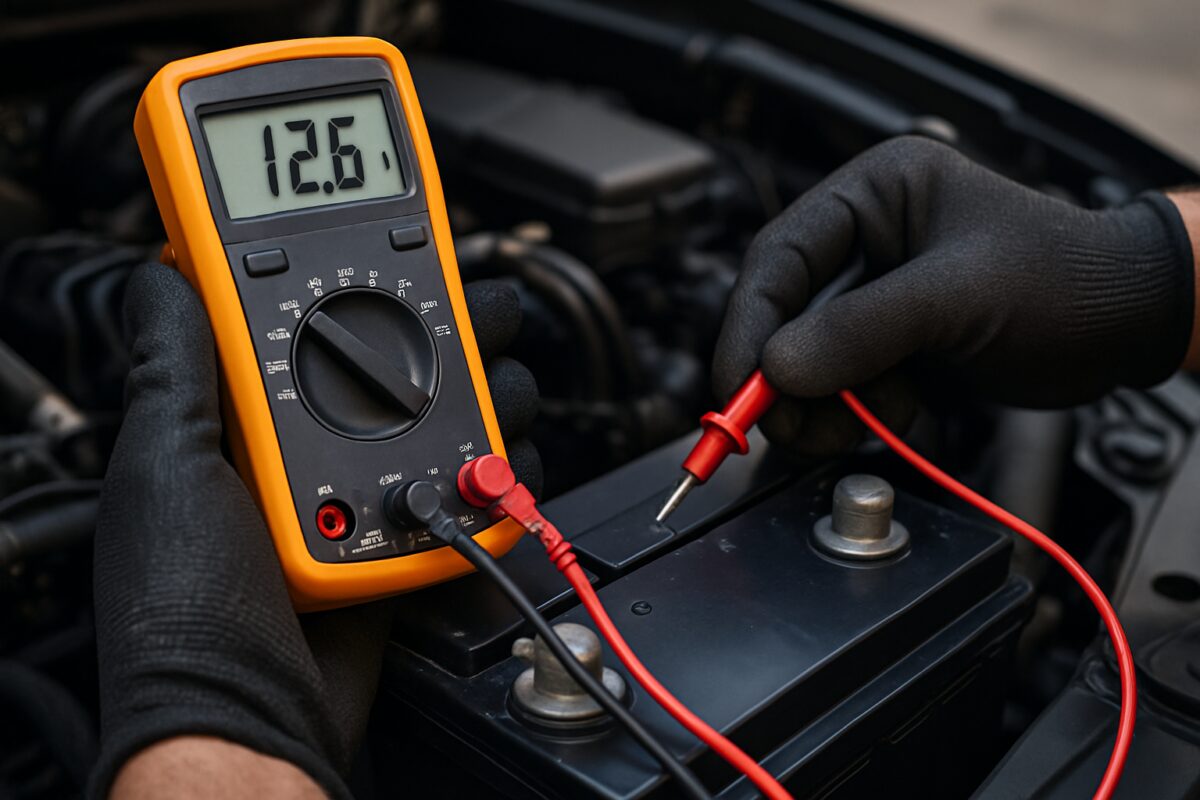
To check battery health, you’ll need a digital multimeter, battery tester, or diagnostic scanner. The process involves testing voltage under load, checking specific gravity in serviceable batteries, and monitoring cranking performance. A healthy 12V battery should read 12.6V when off and maintain above 10.5V during cranking.
Tools and parts required
Proper battery testing requires specific tools to measure voltage, current draw, and internal resistance accurately. Having the right equipment ensures reliable readings and helps identify battery issues before they leave you stranded.
Parts needed:
- Replacement battery (if testing reveals failure)
- Battery terminal cleaner
- Terminal protectant spray
- Distilled water (for serviceable batteries)
Tools required:
- Digital multimeter
- Battery load tester
- Hydrometer (for serviceable batteries)
- Wire brush
- Safety gloves
- Safety glasses
Always ensure your multimeter can handle automotive voltage ranges and has fresh batteries for accurate readings.
Safety precautions
Battery testing involves working with electrical components and potentially corrosive materials. Always prioritise safety to prevent injury or damage to your vehicle’s electrical system.
- Work in a well-ventilated area away from sparks
- Wear safety gloves and eye protection
- Remove metal jewellery before testing
- Keep tools organised to prevent accidental shorts
- Have a fire extinguisher nearby when working with batteries
Step-by-step instructions
Follow these systematic steps to properly assess your battery’s condition. Each test provides different information about battery health and performance capabilities.
Step 1: Visual inspection
Begin by examining the battery case for cracks, bulges, or corrosion. Check terminals for white, blue, or green deposits that indicate corrosion. Look for loose connections or damaged cables that could affect performance.
Clean corroded terminals with a wire brush and terminal cleaner. Tight, clean connections are essential for accurate testing and proper electrical flow throughout your vehicle’s systems.
Step 2: Test resting voltage
With the engine off for at least 12 hours, connect your multimeter to the battery terminals. A healthy battery should read between 12.6V and 12.8V. Readings below 12.4V indicate the battery needs charging before further testing.
This resting voltage test reveals the battery’s state of charge but doesn’t indicate its ability to deliver current under load. Record this measurement for comparison with load test results.
Step 3: Perform load test
Apply a load equal to half the battery’s cold cranking amp (CCA) rating for 15 seconds. During this test, voltage should remain above 9.6V for a healthy battery. Lower readings suggest internal damage or capacity loss.
Use a proper battery load tester rather than improvised methods. This equipment applies controlled resistance and provides accurate measurements of the battery’s ability to deliver power when needed.
Step 4: Check specific gravity (serviceable batteries)
For batteries with removable caps, use a hydrometer to test electrolyte specific gravity in each cell. Readings should be between 1.265 and 1.280, with no more than 0.050 difference between cells.
Low or uneven readings indicate sulphation, cell damage, or electrolyte loss. Add distilled water only if levels are low, never acid or tap water.
Step 5: Test cranking performance
Monitor voltage during engine cranking using your multimeter. Healthy batteries maintain voltage above 10.5V while cranking. Lower readings suggest insufficient capacity or internal resistance problems.
Poor cranking performance often correlates with slow engine turnover, dim lights, or clicking sounds from the starter solenoid during attempts to start.
Common mistakes to avoid
These frequent errors can lead to inaccurate test results or unnecessary battery replacement. Understanding these pitfalls helps ensure reliable diagnosis of battery condition.
- Testing immediately after driving – surface charge gives false high readings
- Using corroded or loose connections during testing
- Attempting load tests on severely discharged batteries
- Ignoring ambient temperature effects on battery performance
- Replacing batteries based on age alone without proper testing
Always allow batteries to rest before testing and ensure clean, tight connections. Temperature significantly affects battery capacity – cold weather reduces available power whilst heat accelerates chemical reactions inside the battery.
When should you replace it?
Battery replacement becomes necessary when testing reveals capacity loss, internal damage, or inability to hold charge. Understanding these indicators helps prevent unexpected failures and roadside breakdowns.
Replace your battery if it fails load testing, shows significant voltage drop during cranking, or cannot maintain charge overnight. Age alone isn’t always decisive – some batteries fail within three years whilst others last seven or more.
Warning signs include slow cranking, dim headlights, dashboard warning lights, or needing jump-starts. Modern vehicles with extensive electronics place higher demands on batteries, potentially shortening service life.
Professional testing every two years after the battery reaches three years old helps identify declining performance before complete failure occurs.
Related maintenance you can do at the same time
Battery maintenance coincides well with other electrical system checks. Performing these tasks together saves time and ensures your entire electrical system operates reliably.
- Clean and inspect all battery connections
- Test alternator charging rate and regulation
- Check starter current draw
- Inspect ignition leads for damage
- Test ignition coil resistance
- Verify proper operation of charging system components
These complementary checks help identify problems that could affect battery life or performance. A failing alternator, for example, can destroy even a new battery through overcharging or insufficient charging.
Frequently asked questions
How often should I check my battery health?
Test your battery twice yearly, typically before summer and winter seasons. Extreme temperatures stress batteries and can reveal developing problems before they cause failures.
Can a battery be too old even if it tests good?
Yes, batteries over five years old may pass basic tests but lack reserve capacity for emergencies or extreme conditions. Consider replacement based on age and performance together.
Why does my battery fail in cold weather?
Cold temperatures reduce chemical reaction rates inside batteries, decreasing available capacity whilst increasing engine oil viscosity and cranking requirements simultaneously.
Should I disconnect the battery for testing?
Disconnection isn’t necessary for voltage testing but helps isolate the battery from vehicle loads during capacity testing for more accurate results.
Can I test maintenance-free batteries?
Yes, use voltage and load testing methods. Maintenance-free batteries cannot be tested with hydrometers but respond well to electronic testing equipment.
Regular battery health checks prevent unexpected failures and help maintain reliable vehicle operation. Using proper testing procedures with quality equipment ensures accurate results and helps you make informed decisions about battery replacement. Quality batteries from reputable suppliers provide dependable service and peace of mind for your daily driving needs.

 Loading...