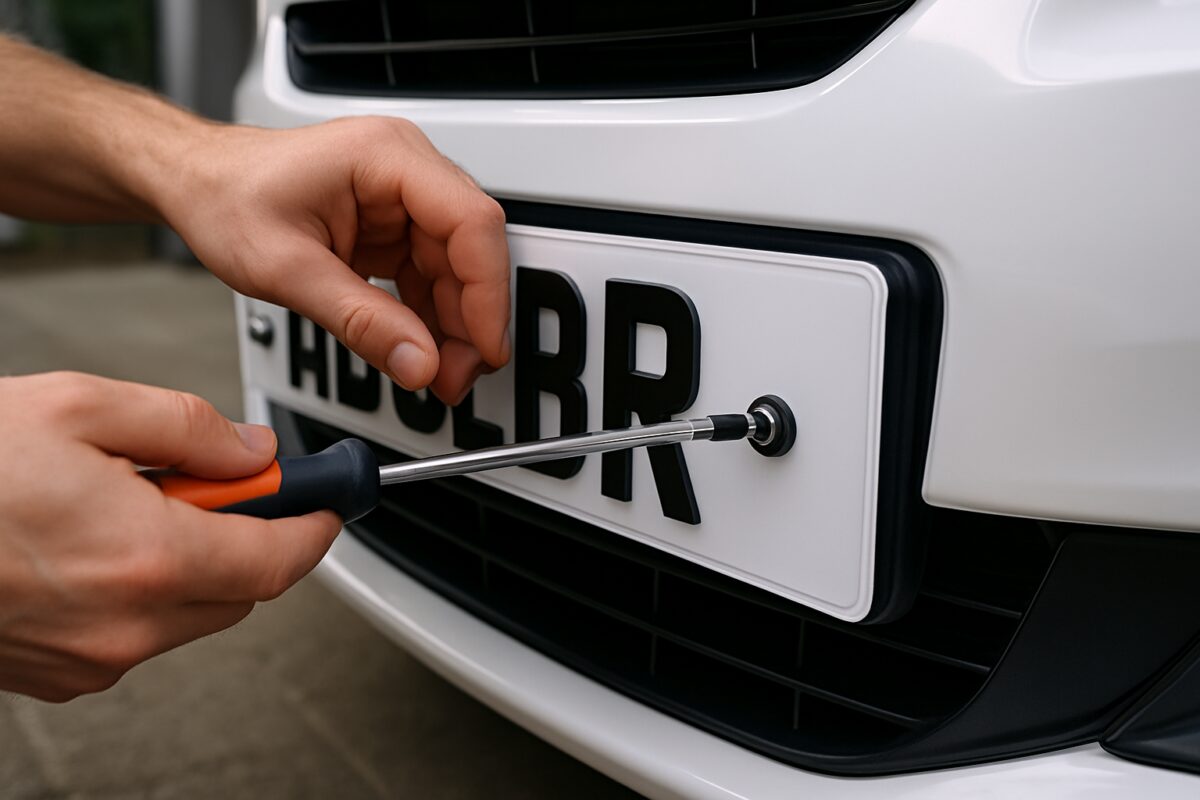
Changing a number plate is a straightforward process that requires basic tools, proper mounting hardware, and attention to legal requirements. You’ll need vehicle-specific number plate screws, a screwdriver set, and the correctly formatted replacement plates. The process involves removing old mounting screws, positioning the new plate correctly, and securing it with appropriate fasteners whilst ensuring compliance with DVLA regulations.
Tools and parts required
Before starting your number plate replacement, gather all necessary components to ensure a smooth installation process.
Parts needed:
- New number plates (DVLA compliant)
- Number plate screws (stainless steel recommended)
- Anti-theft security screws (optional)
- Mounting brackets (if damaged)
- Rubber washers or grommets
Tools required:
- Screwdriver set (Phillips and flathead)
- Electric drill with bits
- Measuring tape
- Spirit level
- Centre punch
- Wire brush (for cleaning mounting points)
Always verify your new plates meet current DVLA standards for font, spacing, and material specifications before installation.
Safety precautions
Working around your vehicle requires basic safety considerations to prevent injury and damage.
Park on level ground with the handbrake engaged. Ensure adequate lighting around your work area. Wear safety glasses when drilling or using power tools. Keep your workspace organised to prevent losing small components like screws.
Check that replacement plates are legally compliant and correspond to your vehicle’s registration document. Using incorrect or non-compliant plates can result in fines and MOT failures.
Step-by-step instructions
Step 1: Remove the old number plate
Locate the mounting screws on your existing number plate. Most plates use either two or four screws positioned at the corners or centre points. Use the appropriate screwdriver to carefully remove each screw, turning anti-clockwise.
Place screws in a container to prevent loss. If screws are corroded or damaged, plan to replace them with new stainless steel alternatives.
Step 2: Clean the mounting area
Remove any dirt, rust, or adhesive residue from the mounting surface using a wire brush. This ensures proper adhesion and prevents corrosion beneath the new plate.
Inspect mounting holes for damage. If holes are enlarged or corroded, consider using slightly larger screws or filling and re-drilling as necessary.
Step 3: Position the new plate
Hold the new number plate against the mounting position, ensuring it’s centred and level. Use a spirit level to confirm horizontal alignment. Mark screw hole positions with a pencil if drilling new holes.
For vehicles with existing mounting points, align the new plate holes with the original positions. Ensure adequate clearance around the plate edges.
Step 4: Secure the new plate
Insert screws through the plate holes and into the mounting points. Tighten screws gradually, alternating between positions to ensure even pressure distribution. Don’t over-tighten, as this can crack the plate material.
If using rubber washers, position them between the screw head and plate surface to prevent water ingress and plate damage.
Step 5: Final inspection
Check that the plate is securely mounted and properly aligned. Verify all characters are clearly visible and unobstructed. Ensure the plate doesn’t interfere with additional lighting or other vehicle components.
Test plate security by gently attempting to move it. Properly installed plates should have no movement or flexing.
Common mistakes to avoid
Several frequent errors can compromise your number plate installation or legal compliance.
Using incorrect spacing: DVLA regulations specify exact spacing between characters and groups. Ensure your supplier provides correctly formatted plates.
Over-tightening screws: Excessive force can crack acrylic plates or strip mounting holes. Tighten screws snugly but don’t force them.
Ignoring legal requirements: Only use BSAU 145d approved plates with correct fonts, colours, and reflective properties. Non-compliant plates result in MOT failures.
Poor positioning: Plates must be clearly visible and unobstructed. Avoid mounting positions that interfere with vehicle sensors or lighting systems.
Always keep your old plates until confirming the new ones are correctly installed and legally compliant, as you may need them for reference.
When should you replace number plates?
Several circumstances necessitate number plate replacement beyond simple damage or wear.
Damage or deterioration: Cracked, faded, or illegible plates require immediate replacement to maintain legal compliance and avoid penalties.
Format changes: When regulations change, older format plates may need updating to meet current standards.
Vehicle ownership transfer: New owners often prefer fresh plates, especially when purchasing used vehicles.
Personalisation: Many motorists choose to install personalised plates for aesthetic or personal reasons.
Replace plates showing any signs of damage, as police can issue fixed penalty notices for illegible or non-compliant registration displays.
Related maintenance you can do at the same time
While working around your vehicle’s front and rear sections, consider addressing other maintenance items for maximum efficiency.
Check and clean your headlamp lenses for optimal visibility. Inspect tail lights for proper operation and clean lens covers.
Examine bumper mounting points for security and damage. Clean and protect radiator grill surfaces from road debris accumulation.
Consider upgrading to number plate light LED bulbs for improved longevity and brightness. Check that mounting brackets and surrounding trim pieces remain secure.
Frequently asked questions
Can I install number plates myself legally?
Yes, you can legally install your own number plates provided they meet DVLA standards and are correctly positioned and secured on your vehicle.
What happens if my number plate screws come loose?
Loose plates can result in fines and MOT failures. Check mounting security regularly and replace worn screws with stainless steel alternatives immediately.
Do I need special tools for anti-theft plate screws?
Anti-theft screws require specific removal tools, usually provided with the screw set. Keep these tools safe as standard screwdrivers won’t work.
How often should I replace my number plates?
Replace plates when they become damaged, illegible, or non-compliant. Quality plates typically last several years under normal driving conditions.
Can I reuse old number plate screws?
Reuse screws only if they’re in good condition. Corroded or damaged screws should be replaced to ensure secure mounting.
Installing fresh number plates enhances your vehicle’s appearance whilst ensuring legal compliance. Quality mounting hardware and proper installation techniques will provide years of reliable service. Using appropriate tools and light bulbs for illumination ensures your registration remains clearly visible in all conditions.

 Loading...