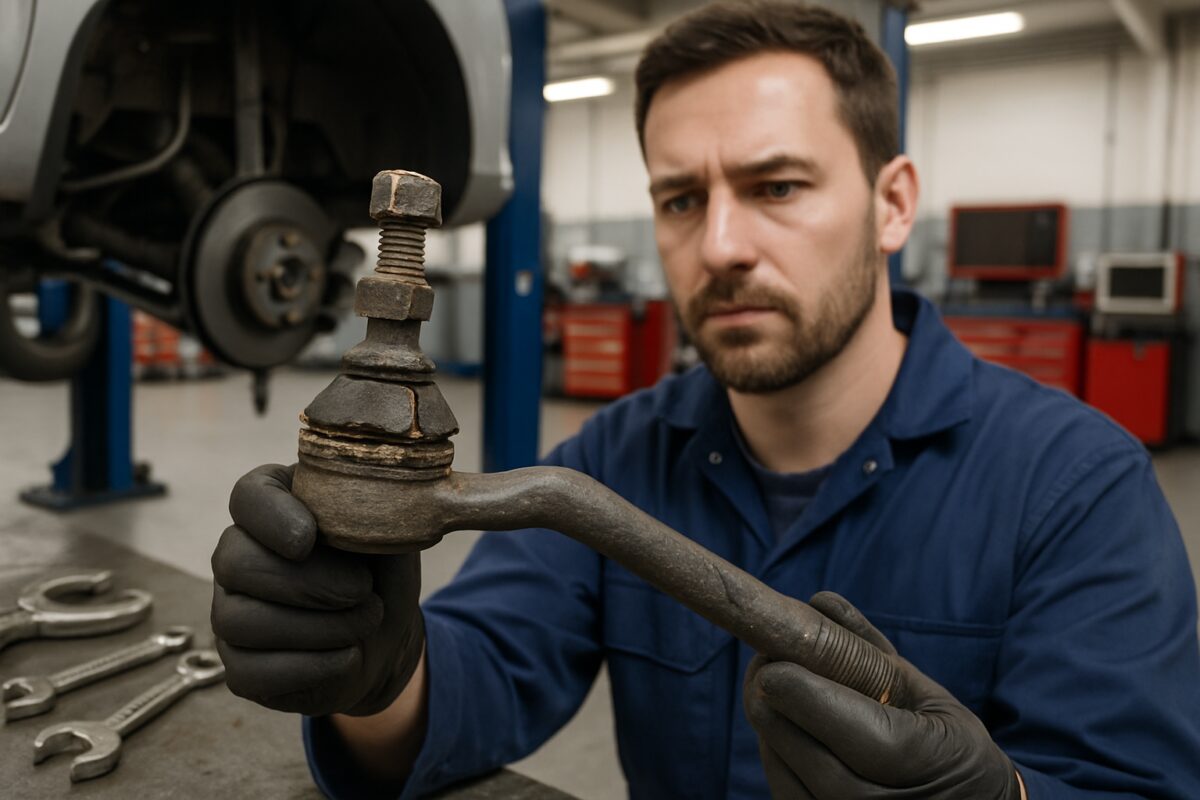
The tie rod end is a crucial steering component that connects your vehicle’s steering rack to the wheels. This small but vital part ensures precise steering control and vehicle stability. Understanding its function and recognising early warning signs can prevent costly repairs and potentially dangerous steering failures.
Excessive play in steering wheel
One of the most common symptoms of a failing track rod end is excessive play in the steering wheel. When these components wear out, you’ll notice the steering wheel moves more than usual before the wheels respond. This creates a loose, vague feeling when driving, particularly noticeable at motorway speeds.
The play occurs because worn track rod ends allow unwanted movement in the steering linkage. Instead of providing a solid connection between the steering rack and wheel hub, damaged components create gaps where none should exist. This translates to delayed steering response and reduced driving precision.
Early detection is crucial as excessive play worsens rapidly once wear begins. Our mechanics at AutopartsPro recommend checking for steering play during routine maintenance inspections. A simple test involves turning the steering wheel whilst stationary – any movement before the wheels turn indicates potential track rod end wear.
Uneven tyre wear patterns
Worn track rod ends directly affect wheel alignment, causing distinctive tyre wear patterns that trained eyes can easily spot. When these components fail, they allow wheels to move independently rather than maintaining precise angles set during alignment procedures.
The most common wear pattern shows excessive wear on either the inner or outer edge of the tyre tread. This occurs because misaligned wheels don’t roll straight, causing one edge to scrub against the road surface more than the other. Left unchecked, this can destroy a tyre in just a few thousand miles.
Professional technicians look for feathering patterns where tread blocks appear smooth on one side and sharp on the other. This indicates the wheel is constantly fighting against proper alignment whilst driving. Regular tyre inspections help identify track rod end problems before they cause expensive tyre replacements or dangerous blowouts.
Knocking noises when turning
A distinct knocking or clunking sound when turning, especially at low speeds or whilst parking, often indicates severely worn track rod ends. These noises result from excessive movement within the joint as worn components knock against their housings.
The sound typically becomes more pronounced during tight turns or when navigating car parks. This occurs because turning places maximum stress on track rod ends, amplifying any wear-related looseness. The knocking may start intermittently but usually develops into a constant noise as wear progresses.
AutopartsPro specialists note that ignoring these warning sounds leads to complete joint failure. When track rod ends fail completely, steering control becomes severely compromised, creating dangerous driving conditions. The knocking noise serves as nature’s early warning system – heed it before facing expensive emergency repairs.
Warning signs your car has a problem
Several symptoms indicate potential track rod end failure requiring immediate attention. Vehicle behaviour changes often appear gradually, making early detection challenging without knowing what to observe.
- Steering wheel vibration at highway speeds
- Car pulls to one side when driving straight
- Difficulty maintaining straight-line driving
- Squeaking sounds during steering input
- Visible wear on ball joint dust covers
Professional diagnosis becomes essential when multiple symptoms appear simultaneously. Modern vehicles rely on precise steering geometry, and worn track rod ends compromise safety systems including electronic stability control.
How to fix the problems
Track rod end replacement requires specific tools and expertise, but understanding the process helps vehicle owners make informed decisions about repairs.
| Repair Step | Time Required | Difficulty Level | Special Tools Needed |
|---|---|---|---|
| Remove wheel and access component | 15 minutes | Easy | Jack, wheel spanner |
| Disconnect ball joint from hub | 20 minutes | Moderate | Ball joint separator |
| Remove old track rod end | 10 minutes | Moderate | Adjustable spanner |
| Install new component | 15 minutes | Moderate | Torque wrench |
| Wheel alignment adjustment | 30 minutes | Expert | Alignment equipment |
Always replace track rod ends in pairs to maintain balanced steering geometry and prevent premature wear of the new component.
Professional wheel alignment following replacement ensures optimal performance and tyre life. DIY repairs without proper alignment equipment often create new problems, making professional service the preferred option.
When to see a mechanic
Certain symptoms demand immediate professional attention to prevent steering system failure. Track rod end problems can escalate quickly from minor inconvenience to dangerous safety hazard.
Seek professional help immediately if you experience complete loss of steering control, severe vibration through the steering knuckle, or any grinding noises during steering input. These indicate advanced wear requiring urgent replacement.
Schedule routine inspections if you notice gradual changes in steering feel or handling characteristics. Early intervention prevents secondary damage to related components like steering rack assemblies or wheel bearings.
Never ignore steering-related symptoms, as track rod end failure can result in complete loss of directional control, especially during emergency manoeuvres.
Professional diagnosis includes comprehensive steering system inspection, identifying potential problems before they cause failures. This approach saves money compared to emergency repairs after component failure.
Frequently asked questions
How much does track rod end replacement cost?
Professional replacement typically costs £80-150 per side including labour, with quality tie rod components available for £20-40 each.
Can I drive with worn track rod ends?
Driving with severely worn track rod ends is dangerous and illegal, as they can cause steering failure and MOT failure.
How long do track rod ends last?
Quality track rod ends typically last 60,000-100,000 miles depending on driving conditions, maintenance, and component quality used during replacement.
Will worn track rod ends fail MOT test?
Yes, excessive play or wear in track rod ends constitutes an MOT failure under steering and suspension requirements.
Should I replace both track rod ends together?
Yes, replacing both sides simultaneously prevents uneven steering response and ensures balanced wheel alignment for optimal performance.
| Component Lifespan | Mileage Range | Replacement Frequency |
|---|---|---|
| Track rod ends | 60,000-100,000 miles | Every 6-8 years |
| Inner tie rods | 80,000-120,000 miles | Every 8-10 years |
| Steering rack | 100,000-150,000 miles | Every 10-12 years |
Final recommendation
Track rod ends represent critical safety components requiring regular inspection and prompt replacement when wear develops. Based on our extensive experience at AutopartsPro, early detection and professional replacement prevent expensive secondary damage whilst maintaining optimal vehicle safety.
Quality replacement parts combined with professional installation and wheel alignment ensure maximum component lifespan and driving safety. Don’t compromise on steering components – your safety depends on their proper function.
For comprehensive car maintenance guidance and quality replacement parts, visit our extensive online catalogue. Professional diagnosis and quality components prevent minor problems becoming major expenses.

 Loading...