To install a reverse camera, you’ll need a compatible camera kit for your vehicle, basic wiring tools, and access to your car’s reverse light circuit. The process involves mounting the camera, running cables through the vehicle, and connecting power to the reverse light system for automatic activation when reversing.
Tools and parts required
Success with your reverse camera installation depends on having the right equipment. Professional installation becomes much easier when you’re properly prepared.
Parts needed:
- Vehicle-specific reverse camera kit
- RCA extension cables (if needed)
- Wire connectors and terminals
- Cable ties and clips
- Rubber grommets for cable entry points
Tools required:
- Drill with metal/plastic bits
- Wire strippers and crimping tool
- Multimeter for electrical testing
- Panel removal tools
- Electrical tape and heat shrink tubing
- Socket set for trim removal
Safety precautions
Before starting, disconnect your vehicle’s battery to prevent electrical shorts. Work in a well-lit area and ensure the vehicle is on level ground. Always test electrical connections before final installation.
Step-by-step instructions
Step 1: Choose camera location and prepare mounting
Select the optimal position on your rear bumper or number plate area. The camera should provide a clear view without obstructions from the bumper or exhaust.
Mark the mounting hole location carefully. Most cameras require a 20-25mm diameter hole. Use a centre punch to prevent drill bit wandering on metal surfaces.
Step 2: Mount the camera
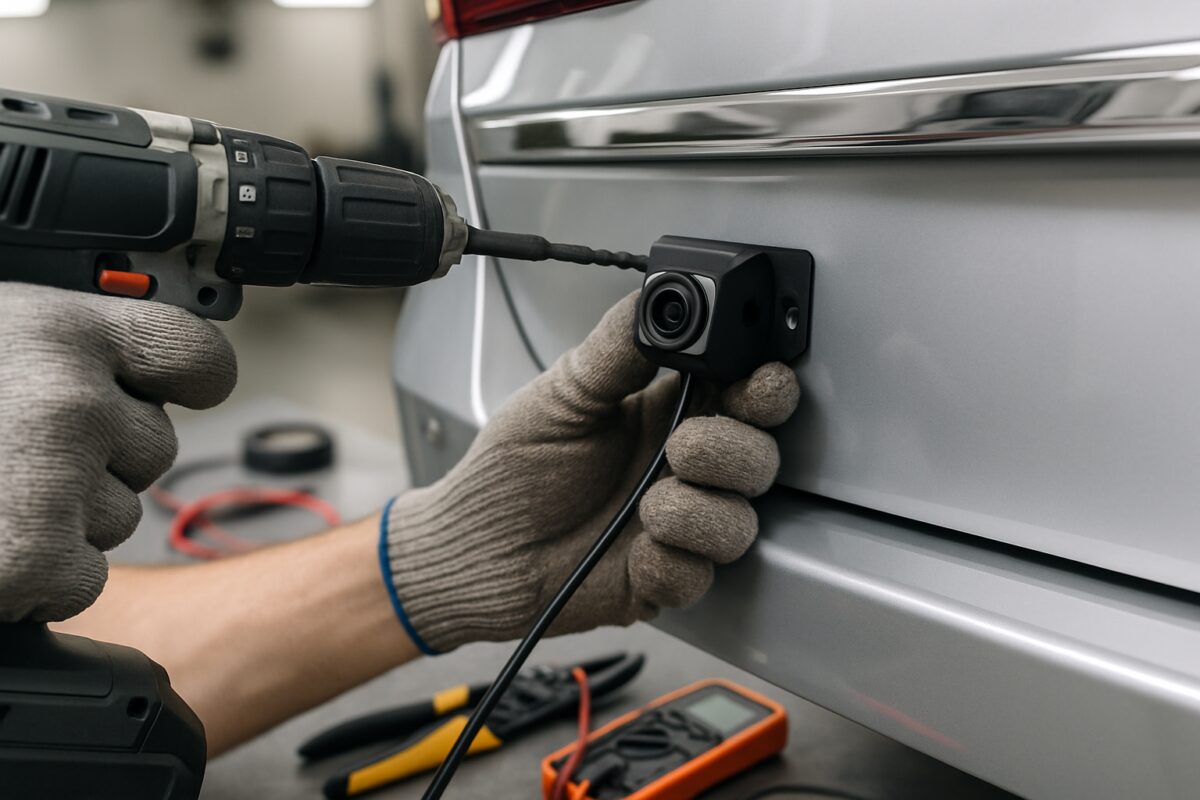
Drill the mounting hole at your marked location. Start with a small pilot hole, then gradually increase bit size to prevent cracking plastic bumpers.
Thread the camera cable through the hole and secure the camera using the supplied mounting hardware. Ensure the camera sits flush and is properly sealed against water ingress.
Professional tip: Apply a small amount of silicone sealant around the camera housing to prevent moisture damage, especially important for UK weather conditions.
Step 3: Route cables through the vehicle
Plan your cable route from the rear camera to the front display unit. Most installations run cables along the vehicle’s side, under door sill trim panels.
Remove necessary trim panels using panel removal tools. Feed cables through existing grommets where possible, or create new entry points with rubber grommets for protection.
Secure cables every 30cm using cable ties to prevent rattling and damage from moving parts.
Step 4: Connect power supply
Locate your vehicle’s reverse light wiring. This is typically found near the rear tail lights or in the boot area.
Use a multimeter to identify the positive wire that only receives power when reverse gear is engaged. Connect your camera’s power wire to this circuit using proper connectors.
Connect the ground wire to a solid metal mounting point, ensuring good electrical contact by removing any paint or corrosion.
Step 5: Install and connect display unit
Mount your display unit in the chosen location, typically replacing the rear-view mirror or installing on the dashboard.
Connect the video cable from the rear camera to the display input. Some systems require additional connections to the vehicle’s ignition circuit for automatic switching.
Reconnect the battery and test the system by engaging reverse gear. The camera image should appear automatically on the display.
Common mistakes to avoid
Many DIY installers struggle with poor cable routing, leading to interference or damage. Always use proper automotive-grade cables and avoid running them near heat sources or moving parts.
Incorrect power connections can cause system malfunctions. Never connect directly to brake lights or indicators – these circuits aren’t suitable for camera power supply.
Inadequate weatherproofing at connection points often leads to failure. All exterior connections must be properly sealed and protected from moisture.
Expert advice: Our AutopartsPro technicians recommend testing all connections before final assembly. A loose connection discovered later requires dismantling significant trim work.
When should you consider professional installation?
Complex vehicle electrical systems or integrated infotainment units often require professional expertise. Modern cars with CAN-bus systems need specific interface modules for proper integration.
If your vehicle has multiple sensors or existing parking assistance systems, professional installation ensures compatibility and prevents system conflicts.
Warranty considerations also apply – improper installation might void vehicle electrical warranties.
Related maintenance you can do at the same time
While installing your reverse camera, consider upgrading other electrical components. Replace any dim light bulbs in the rear cluster for better visibility.
Check and clean electrical connections in the boot area. Corrosion on earth points can affect camera performance and other electrical systems.
Inspect your parking sensors if fitted – clean them thoroughly as dirt accumulation reduces effectiveness.
Frequently asked questions
Can I install a reverse camera on any vehicle?
Most vehicles can accommodate aftermarket reverse cameras. However, some modern cars with factory parking systems may require specific interface modules.
How long does reverse camera installation typically take?
DIY installation usually takes 2-4 hours depending on vehicle complexity and your experience level with automotive electrical work.
Will the camera work in all weather conditions?
Quality automotive cameras are designed for UK weather conditions. Look for IP67 or higher waterproof ratings for reliable operation.
Can I connect multiple cameras to one display?
Many systems support multiple camera inputs. Check your display unit specifications for the maximum number of supported cameras.
Do I need special tools for camera installation?
Basic hand tools suffice for most installations. However, panel removal tools and a quality multimeter make the job significantly easier and safer.
Installing a reverse camera significantly improves safety when reversing, especially in tight spaces or around children. The investment in quality components and proper installation techniques ensures years of reliable service. Taking time to route cables properly and make secure electrical connections prevents future problems and maintains your vehicle’s appearance.

 Loading...